
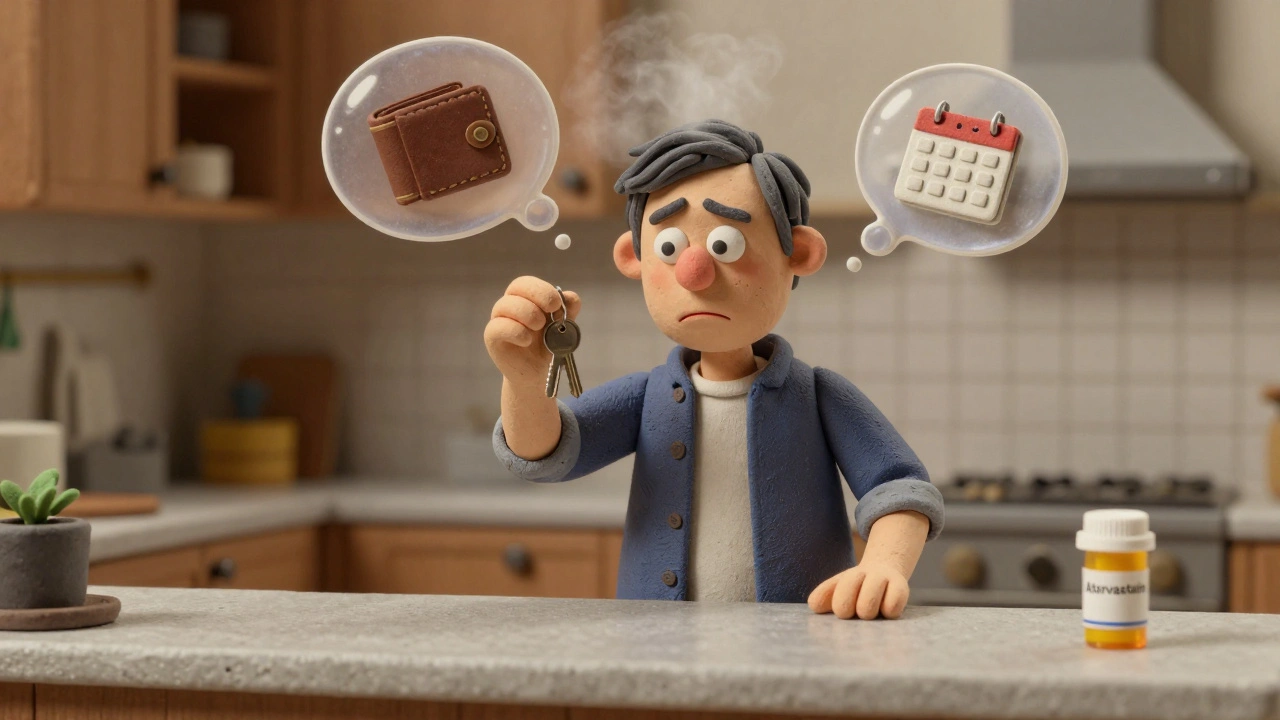
When you start taking a statin, you’re doing it to protect your heart. But for some people, something unexpected happens: they start forgetting where they put their keys, struggling to recall names, or feeling like their mind is wrapped in fog. It’s not just in their head - and it’s not rare. Since the FDA added memory loss and confusion to statin labels in 2012, thousands of patients have reported these symptoms. But here’s the twist: most of them don’t actually have measurable brain damage. So what’s really going on?
What Are Statins, and Why Do People Take Them?
Statins are drugs that lower cholesterol - specifically, they block an enzyme called HMG-CoA reductase that your liver uses to make LDL, the "bad" cholesterol. Lower LDL means less plaque in your arteries, which cuts your risk of heart attack and stroke. That’s why more than 39 million Americans take them. The most common ones include atorvastatin (Lipitor), simvastatin (Zocor), rosuvastatin (Crestor), and pravastatin (Pravachol).
They work fast. Within weeks, LDL drops by 30% to 60%, depending on the drug and dose. That’s why doctors recommend them for people with high cholesterol, diabetes, or a history of heart disease. But their effect isn’t just on the liver. Some statins can cross into the brain, and that’s where things get complicated.
Do Statins Actually Cause Memory Loss?
The short answer: sometimes - but not in the way most people think.
In 2015, a study in JAMA Internal Medicine found that people were nearly four times more likely to report sudden memory problems within 30 days of starting a statin. At first, that sounded scary. But here’s the catch: the same spike in memory complaints happened with other cholesterol-lowering drugs that aren’t statins. That suggests it’s not the statin itself causing the problem - it’s the attention. Once you hear about the risk, you start noticing every little forgetful moment. That’s called the nocebo effect - the opposite of placebo. Your brain expects trouble, so it finds it.
But that doesn’t mean it’s all in your head. The FDA reviewed over 60 case reports between 1997 and 2002. About half of those people noticed memory issues within two months of starting the drug. And when they stopped taking statins, symptoms improved in most cases. So while most people won’t have problems, a small group definitely does.
Lipophilic vs. Hydrophilic: The Brain Connection
Not all statins are the same. Some are fat-soluble (lipophilic), and some are water-soluble (hydrophilic). That difference matters for your brain.
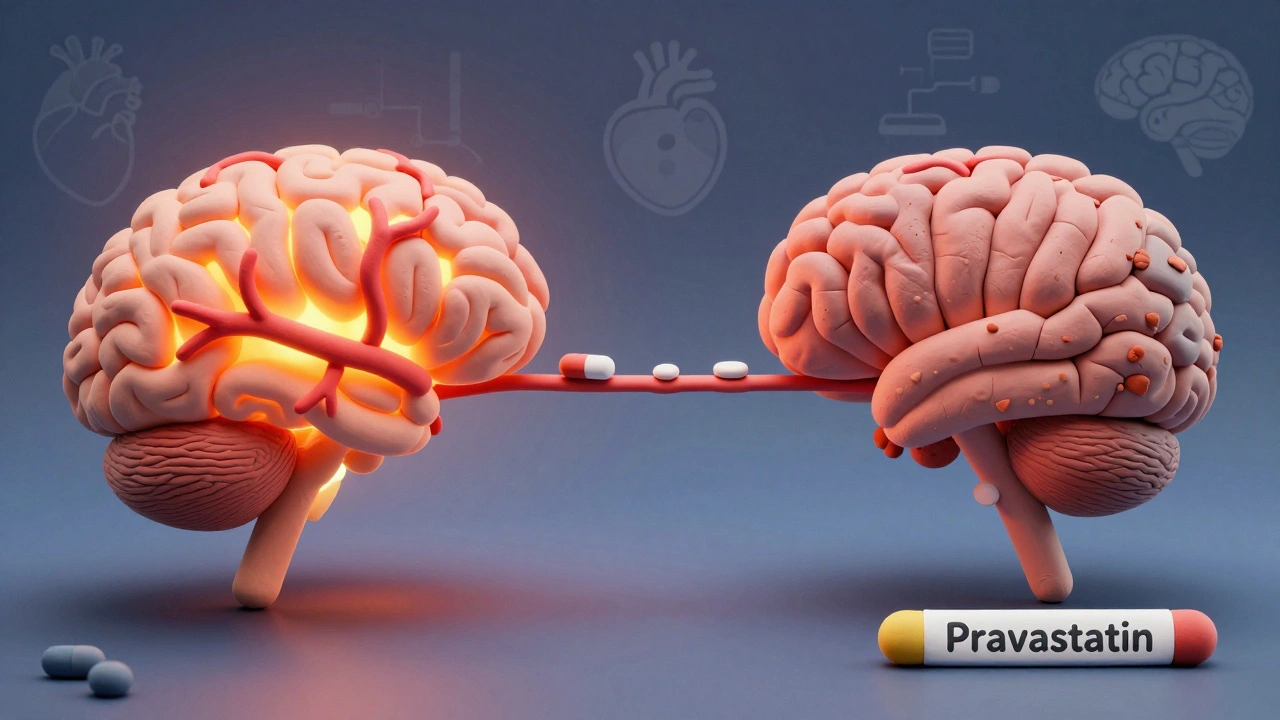
Lipophilic statins - like simvastatin, atorvastatin, and lovastatin - can slip easily through the blood-brain barrier. That means they can affect brain cells directly. Hydrophilic statins - like pravastatin and rosuvastatin - mostly stay in the bloodstream. They don’t get into the brain as much.
A 2023 analysis of 48,732 patients found that lipophilic statins were 1.42 times more likely to be linked to self-reported memory complaints than hydrophilic ones. But here’s the kicker: when researchers tested actual memory and thinking skills with standardized brain tests, there was no difference. People felt like their memory was worse - but their scores didn’t show it.
That’s why switching statins can help. If you’re on simvastatin and notice brain fog, your doctor might suggest switching to pravastatin or rosuvastatin. Many patients report feeling clearer within weeks.
What Does the Science Say About Long-Term Brain Health?
Here’s where it gets really interesting. While a few people report short-term memory lapses, the long-term picture is the opposite.
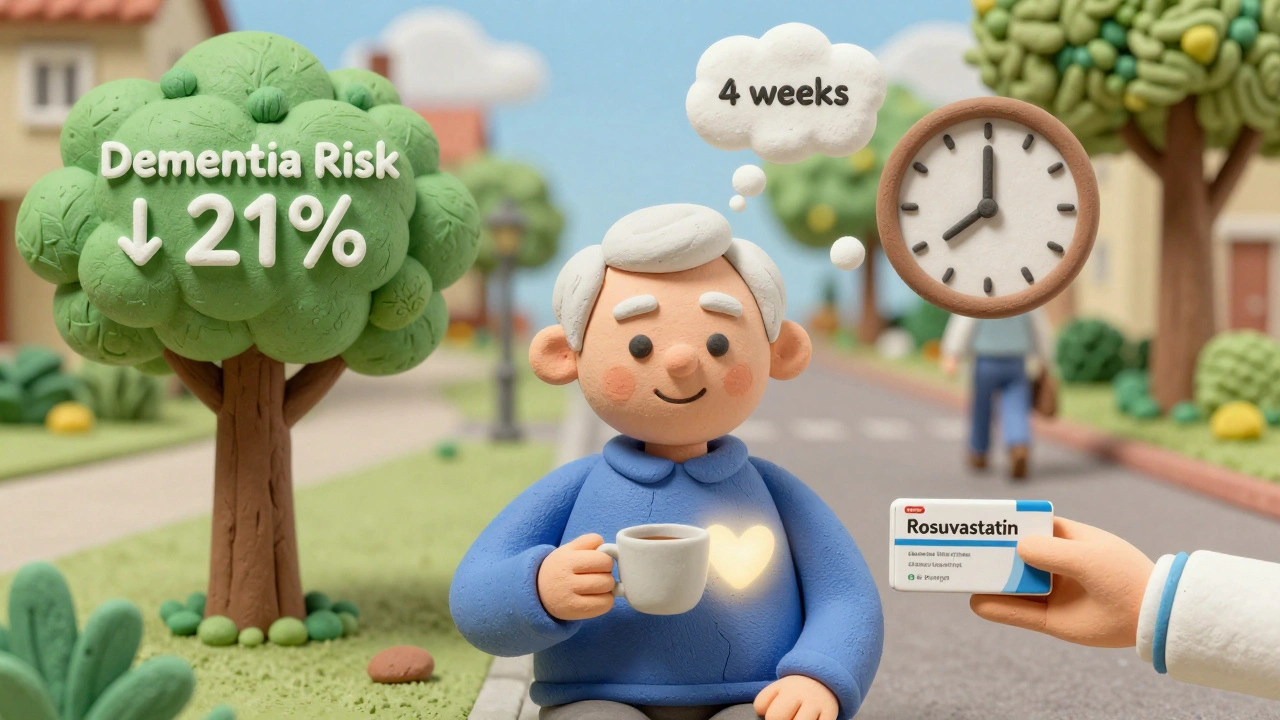
A 2022 review of 36 studies with over 1.2 million people found that statin users had a 21% lower risk of developing dementia. For vascular dementia - caused by poor blood flow to the brain - the drop was even bigger: 33%. Why? Because statins protect your blood vessels. They reduce inflammation, stabilize artery plaques, and improve circulation. Your brain needs good blood flow just like your heart does.
Studies like the Rotterdam Study, which followed 12,567 people for 15 years, showed statin users had 27% fewer cases of dementia. The Alzheimer’s Society, the American Heart Association, and the European Society of Cardiology all agree: for people who need statins, the brain benefits likely outweigh the risks.
Who’s Most at Risk for Cognitive Side Effects?
Not everyone is equally sensitive. Certain patterns show up in the data:
- People over 65 - older brains may be more sensitive to changes in cholesterol or blood flow.
- Those on high doses - especially simvastatin 80mg or atorvastatin 40mg+.
- People with mild cognitive issues already - statins might make subtle problems feel worse.
- Those with a family history of Alzheimer’s - though no genetic link has been proven, some report stronger reactions.
- People who’ve heard about statin memory loss - the nocebo effect hits harder if you’re already worried.
One 2003 study of 60 case reports found that 50% of patients noticed symptoms within 60 days. And 56% got better after stopping the drug. But here’s the important part: when they restarted the same statin, symptoms returned in 4 out of 25 patients. That’s the gold standard for proving a drug caused the problem.
What Should You Do If You Think Statins Are Affecting Your Memory?
If you’re on a statin and notice memory slips, don’t panic. Don’t quit cold turkey. Talk to your doctor. Here’s what works:
- Track your symptoms. Write down when you forget things, how often, and what you were doing. Is it just names? Or also directions, appointments, conversations?
- Ask about switching statins. Try pravastatin or rosuvastatin. Many patients feel better within 2-4 weeks.
- Ask for a "statin holiday." Stop the drug for 4-6 weeks under medical supervision. If your memory improves, that’s a strong clue.
- Get tested. A simple cognitive screening (like the MoCA test) can tell you if there’s real decline - or just perceived fog.
- Check for other causes. Sleep apnea, thyroid issues, vitamin B12 deficiency, and depression can all mimic statin side effects.
Most doctors will never take you off a statin just because you’re worried. But if you’ve got clear, reversible symptoms - and you’re not at high risk for heart disease - they might lower your dose or switch you.
Why Do Some Doctors Ignore These Reports?
Because the data doesn’t support panic. In a 2020 study, 28% of statin users said they had memory problems. But only 8% showed real decline on brain tests. That gap tells us something important: most people are experiencing anxiety, not brain damage.
Still, dismissing patient reports is a mistake. The fact that symptoms reverse after stopping the drug means it’s real for some - even if it’s rare. The American Academy of Neurology says: "Don’t assume it’s all in their head. Test it. Rule it out. Then decide."
Doctors also know that stopping statins can be dangerous. In people with heart disease, stopping increases heart attack risk by up to 30% in the first year. That’s why guidelines say: don’t quit unless you’ve ruled out other causes and confirmed a clear link.
The Bottom Line: Statins, Memory, and Your Choices
Statins save lives. That’s not up for debate. But they’re not perfect. For a small number of people, they cause temporary memory fuzziness - usually within the first few months. That doesn’t mean you’ll get dementia. In fact, the opposite is true: statins may help prevent it.
If you’re worried:
- Don’t stop your statin on your own.
- Track your symptoms carefully.
- Ask your doctor about switching to a hydrophilic statin like pravastatin or rosuvastatin.
- Give it 4-6 weeks to see if things improve after a change.
- Get checked for other causes of memory loss - it’s more likely to be sleep, stress, or a vitamin deficiency.
For most people, the brain fog fades. The heart stays protected. And the long-term risk of dementia goes down. That’s the real balance.
Can statins cause permanent memory loss?
No, there’s no evidence that statins cause permanent memory loss. In every documented case where memory issues were linked to statins, symptoms reversed after stopping the drug - usually within weeks. The FDA and major medical groups agree these effects are temporary and reversible. If you’ve had lasting problems, other causes like thyroid disease, vitamin deficiencies, or early neurodegenerative conditions should be ruled out.
Which statin is least likely to affect memory?
Pravastatin and rosuvastatin are the least likely to affect memory because they’re hydrophilic - meaning they don’t cross the blood-brain barrier easily. Studies show patients switching from simvastatin or atorvastatin to one of these two often report improved mental clarity within 2-4 weeks. If you’re concerned about brain fog, ask your doctor about switching to one of these.
Do statins increase the risk of Alzheimer’s disease?
No - the opposite is true. Large studies involving over a million people show statin users have a 21% lower risk of developing dementia overall, and up to 33% lower risk of vascular dementia. Statins protect blood vessels in the brain, reduce inflammation, and lower plaque buildup - all of which help prevent the kind of brain damage linked to dementia. Any short-term memory complaints are not a sign of long-term harm.
How long does statin-related brain fog last?
For most people who experience it, brain fog lasts between 2 and 8 weeks after starting the statin. If you stop the drug, symptoms typically improve within 1-4 weeks. In some cases, it takes up to 6 weeks to fully clear. If memory issues persist beyond 8 weeks after stopping, other causes - like sleep disorders, depression, or early neurological conditions - should be evaluated by a doctor.
Should I stop taking statins if I have memory problems?
Don’t stop without talking to your doctor. For people with heart disease or diabetes, stopping statins can dramatically increase the risk of heart attack or stroke. Instead, ask your doctor to evaluate whether your symptoms are truly linked to the statin. A 4-6 week break (under supervision) can help confirm the connection. Often, switching to a different statin or lowering the dose solves the problem without losing heart protection.
alaa ismail
December 2, 2025 AT 02:24Been on atorvastatin for 3 years and never had a single memory hiccup. But my buddy switched from simvastatin to rosuvastatin and said it was like the fog lifted. Weird how it’s not the drug itself, but which flavor you get.
Fern Marder
December 3, 2025 AT 08:09Statins = brain fog? 😒 I’ve been on pravastatin for 5 years and my memory’s sharper than my ex’s tongue. If you’re forgetting where you put your keys, maybe stop leaving them in the fridge. 🤷♀️
Girish Padia
December 4, 2025 AT 16:40People these days blame pills for everything. Back in my day, we just remembered where we put our stuff or we didn’t. Now it’s ‘oh my god my statin made me forget my wife’s birthday’-bro, you just got lazy.
Carolyn Woodard
December 6, 2025 AT 05:37It’s fascinating how the nocebo effect manifests so robustly in pharmacological contexts-particularly when cognitive monitoring is heightened post-labeling. The dissonance between subjective experience and objective neuropsychological metrics suggests a top-down perceptual bias, wherein anticipatory anxiety modulates attentional allocation toward mnemonic encoding failures. Yet, the reversibility upon discontinuation implies a neurochemical or neuroinflammatory component, possibly mediated by cholesterol-dependent synaptic plasticity pathways in the hippocampus. The lipophilicity gradient across statin subclasses offers a compelling pharmacokinetic framework for differential CNS penetration, though longitudinal fMRI studies remain conspicuously absent.
Allan maniero
December 6, 2025 AT 14:03I’ve been a GP for 22 years and I’ve seen this exact pattern repeat over and over. Patient comes in saying, ‘I can’t remember my grandson’s name,’ we check their labs, their memory tests are normal, they’re stressed, they’re sleep-deprived, they’ve been reading about statins online. Then we switch them to rosuvastatin and they say, ‘I feel like myself again.’ But here’s the thing-they didn’t get better because the drug changed. They got better because they stopped obsessing over it. The brain is a prediction engine. If it expects failure, it finds it. And once you believe the problem is gone, your mind stops looking for it. That’s not magic. That’s neuroscience.
ruiqing Jane
December 6, 2025 AT 17:10I switched from Lipitor to pravastatin after my mom had that ‘fog’ thing and holy crap, it was like someone turned the brightness up on my brain. I started remembering where I parked again. I didn’t even know I was that fuzzy until it was gone. So weird how something so small can feel so huge.
Saravanan Sathyanandha
December 8, 2025 AT 16:00As someone from India where statin use is rising rapidly among urban populations, I’ve observed this phenomenon with elderly patients-often misattributed to aging, when it’s actually the drug. The cultural stigma around mental decline makes them reluctant to speak up, but once they’re switched to hydrophilic statins, families report startling improvements. It’s not just pharmacology-it’s dignity. When an 80-year-old remembers his wife’s birthday again, it’s not a side effect reversal. It’s a restoration of identity.
Zoe Bray
December 9, 2025 AT 14:43It is imperative to underscore that the clinical imperative to preserve cardiovascular integrity supersedes the transient and non-progressive nature of subjective cognitive complaints. While anecdotal reports of memory perturbation are not inconsequential, the aggregate epidemiological evidence overwhelmingly supports a net neuroprotective benefit. Therefore, discontinuation of statin therapy without corroborative neuropsychological assessment and exclusion of confounding etiologies constitutes a clinically inadvisable intervention, potentially exposing the patient to heightened risk of atherothrombotic events. A structured, evidence-based approach-including therapeutic substitution with hydrophilic agents-is the standard of care.
Chris Wallace
December 9, 2025 AT 21:38I had the exact same experience. Started on simvastatin, felt like I was walking through peanut butter every morning. Couldn’t recall words mid-sentence. Thought I was developing early-onset dementia. Went to my doctor, he said, ‘Try rosuvastatin.’ Switched in two weeks. Within 17 days, I was back to normal-remembering names, finding my keys, even remembering what I ate for breakfast. I didn’t think it was the statin until it was gone. Now I tell everyone: if you’re foggy, don’t quit-switch. It’s not your brain failing. It’s just the wrong molecule.
Saket Modi
December 10, 2025 AT 07:19bruh i took a statin for 3 weeks and forgot my own phone number. i’m not gonna risk it. i’ll just eat kale and cry in the shower. 🥲