
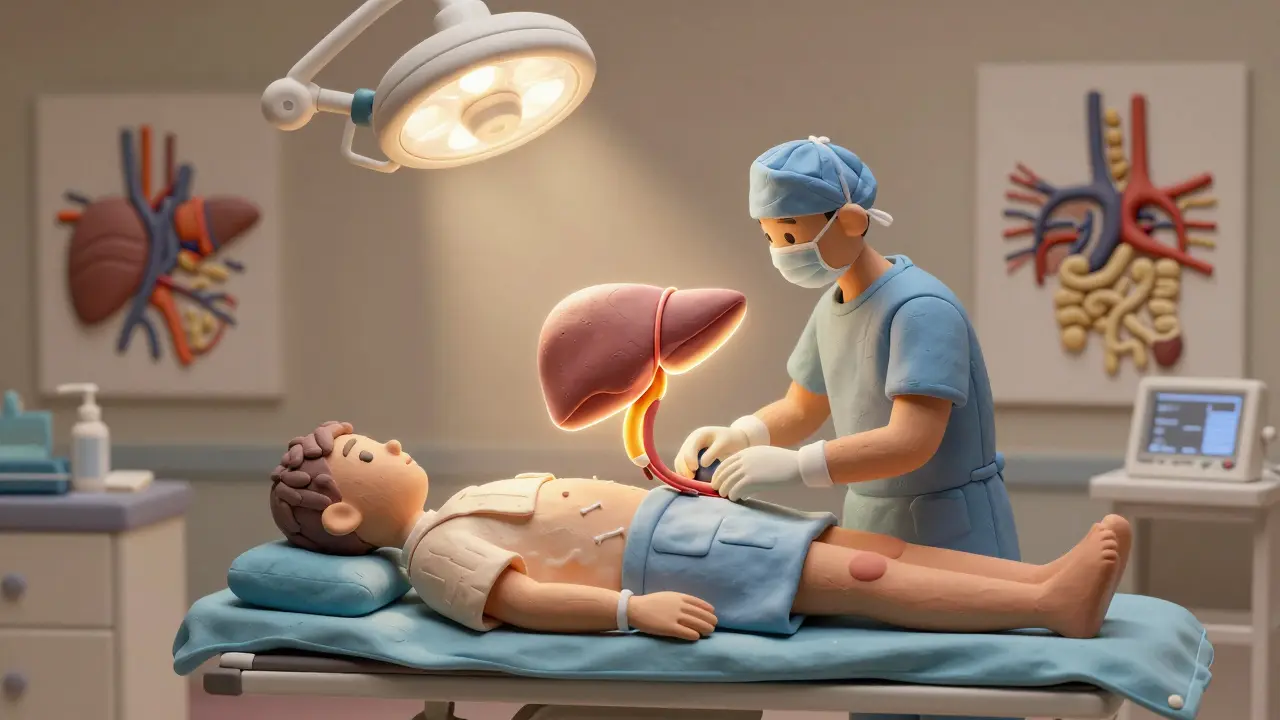
What Is a Liver Transplant and When Is It Needed?
A liver transplant is the only cure for end-stage liver disease when the organ has failed beyond repair. It replaces a damaged liver with a healthy one from a donor-either someone who has passed away (deceased donor) or a living person who donates part of their liver. Around 8,000 of these surgeries happen each year in the U.S., according to the Organ Procurement and Transplantation Network (OPTN). For many, it’s not just about living longer-it’s about getting back to normal life. One-year survival rates are about 85%, and 70% of patients are still alive five years later.
People usually need a transplant when their liver can’t do its job anymore. Common reasons include cirrhosis from long-term alcohol use, chronic hepatitis B or C, non-alcoholic steatohepatitis (NASH), and liver cancer. NASH is now the second-fastest growing reason for transplants, up from just 3% of cases in 2010 to 18% today. If medications, diet changes, or other treatments don’t work, and the patient is at risk of dying within months, a transplant becomes the only option.
Who Is Eligible for a Liver Transplant?
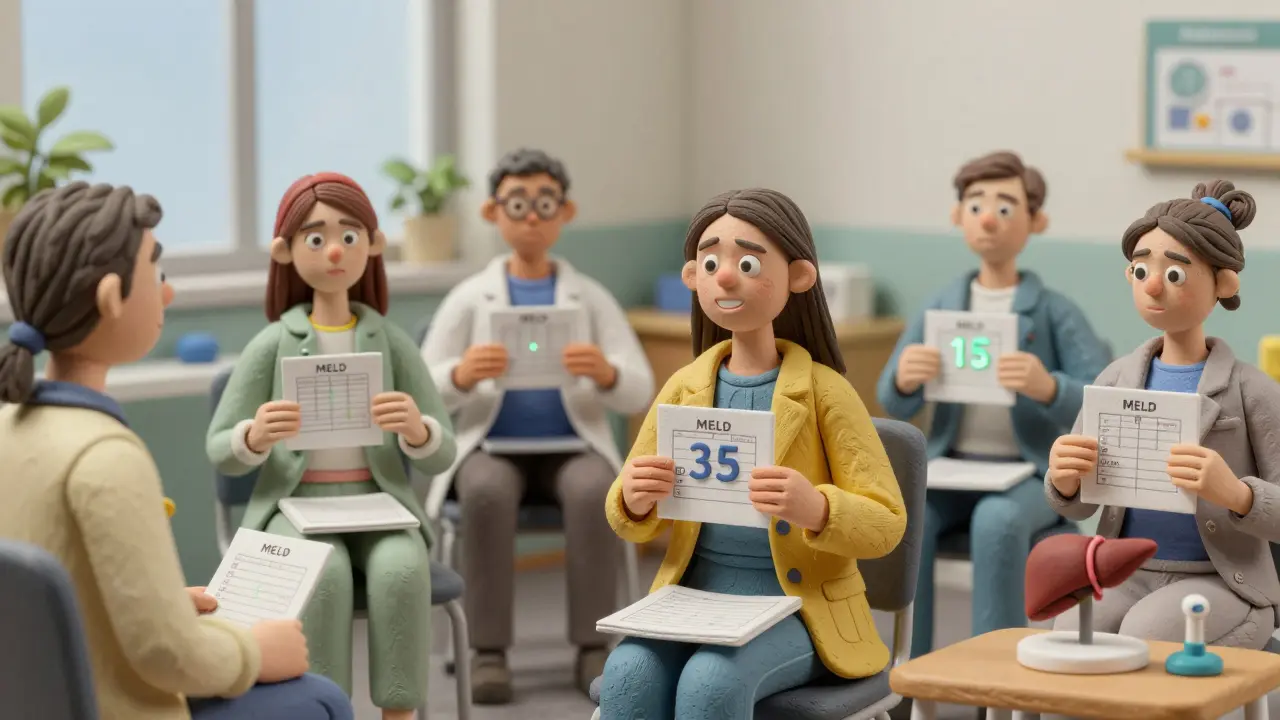
Not everyone with liver disease qualifies. Each transplant center runs a detailed evaluation that looks at medical, psychological, and social factors. The biggest medical requirement is the MELD score-Model for End-Stage Liver Disease. It’s calculated using blood tests for bilirubin, creatinine, and INR. The score ranges from 6 to 40. Higher scores mean you’re sicker and higher on the waiting list. Someone with a MELD of 35 is more likely to get a liver than someone with a MELD of 15.
But numbers aren’t everything. If you have liver cancer, you must meet the Milan criteria: one tumor under 5 cm, or up to three tumors all under 3 cm, with no spread to blood vessels. If your alpha-fetoprotein (AFP) level is above 1,000 and doesn’t drop below 500 after treatment, you’re typically not eligible unless you get special approval.
Active drug or alcohol use is an automatic disqualifier. Most centers require at least six months of sobriety before listing. But that rule is changing. Some experts argue three months is enough if the patient shows real commitment. A 2023 study found no big difference in survival between those who stopped for three months versus six.
Psychosocial factors matter just as much. You need stable housing, reliable transportation, and a support system. If you live alone with no one to help you take meds or get to appointments, centers may delay listing. Insurance coverage is another hurdle-32% of candidates report being denied coverage for pre-transplant tests, which can delay or block the entire process.
Living Donor vs. Deceased Donor Transplants
You don’t always have to wait for someone to die. A living person can donate part of their liver. The liver regrows in both the donor and recipient. About 15% of transplants in the U.S. use living donors. The main advantage? Shorter wait times. In high-MELD patients, waiting for a deceased donor can take a year. With a living donor, it’s often just three months.
But it’s not risk-free. Donors face a 0.2% chance of dying during surgery. About 20-30% have complications like bile leaks, infections, or pain. Donors must be between 18 and 55, have a BMI under 30, and no history of liver, heart, or kidney disease. They can’t smoke or drink. Some centers, like Columbia University, are now considering donors with BMI up to 35 if they’re otherwise healthy-and seeing great results.
Deceased donor livers come from two types of donors: brain-dead (DBD) and donation after circulatory death (DCD). DCD donors account for 12% of all transplants. Their livers have a higher risk of bile duct problems-25% versus 15% for DBD. But new tech is helping. Machine perfusion, which keeps the liver alive and functioning outside the body, has cut DCD complication rates by nearly a third. The FDA approved the first portable perfusion device in 2023, extending preservation time from 12 to 24 hours.
What Happens During Liver Transplant Surgery?
The surgery takes 6 to 12 hours. The most common technique is the “piggyback” method, used in 85% of cases. It leaves the recipient’s inferior vena cava (a major vein) intact, reducing blood loss and recovery time.
The procedure has three phases:
- Hepatectomy: The diseased liver is carefully removed.
- Anhepatic phase: The body has no liver for 30 minutes to 2 hours. Blood flow is redirected, and the body manages without liver function.
- Implantation: The donor liver is stitched in. Blood vessels and bile ducts are reconnected.
For living donor transplants, surgeons remove 55-70% of the right lobe for adults or the left lateral segment for children. Donors usually stay in the hospital for 5-7 days and take 6-8 weeks to fully recover.
After surgery, you’ll spend 5-7 days in intensive care. Total hospital stay is 14-21 days if there are no complications. Most patients are back to light activities in 2-3 months and full recovery in 6 months.
Immunosuppression: Keeping the New Liver Alive
Your body sees the new liver as an invader. Without drugs to suppress your immune system, it will attack and destroy the transplant. That’s why lifelong immunosuppression is required.
Most patients start with triple therapy: tacrolimus, mycophenolate mofetil, and prednisone. Tacrolimus is the backbone-doctors aim for blood levels of 5-10 ng/mL in the first year, then lower to 4-8 ng/mL. Mycophenolate is taken twice daily. Prednisone is started at 20 mg a day and slowly reduced to 5 mg by three months.
But steroid-free protocols are becoming more common. In 45% of U.S. centers, prednisone is stopped after the first month. This cuts the risk of developing diabetes from 28% to 17%. It also reduces weight gain, bone loss, and cataracts.
Side effects are real. About 35% of patients develop kidney damage from tacrolimus after five years. One in four gets diabetes. One in five has tremors or trouble sleeping. Mycophenolate causes nausea or diarrhea in 30% and lowers blood cell counts in 10%. You’ll need monthly blood tests for years to catch these early.
Rejection happens in 15% of patients within the first year. It’s often treated by increasing tacrolimus or adding sirolimus. Most rejections are caught early through routine labs and don’t lead to organ loss.
Life After Transplant: What to Expect
Success isn’t just about surviving surgery. It’s about sticking to your meds, watching for warning signs, and staying healthy.
For the first three months, you’ll have weekly blood tests. Then biweekly for months 4-6, monthly for year one, and quarterly after that. Medication costs average $25,000-$30,000 a year-without complications. Insurance helps, but gaps still exist.
You must learn to recognize rejection: fever over 100.4°F, yellow skin or eyes, dark urine, extreme fatigue, or swelling in the belly. Infection is another big risk. You’ll need to avoid crowds during flu season, wash hands often, and get all recommended vaccines-except live ones.
Transplant centers with dedicated coordinators see 87% one-year survival. Those without only hit 82%. That’s why having a team that guides you through labs, meds, and lifestyle changes makes all the difference.
Geographic and Systemic Challenges
Where you live affects your chance of getting a liver. In OPTN Region 2 (Midwest), patients with MELD 25-30 wait an average of 8 months. In Region 9 (California), they wait 18 months. Region 5 (Southwest) patients are 40% less likely to get a transplant within 90 days than those in Region 11 (Mid-Atlantic), even with the same MELD score.
Some places are fixing this. British Columbia changed its rules in November 2025 to better serve Indigenous communities, adding cultural support and adjusting sobriety requirements. Other centers are testing new ways to expand donor pools-like using livers from donors with controlled high blood pressure or slightly higher BMI.
What’s Next for Liver Transplants?
Research is pushing boundaries. At the University of Chicago, 25% of pediatric transplant patients were able to stop all immunosuppression by age five using a therapy that boosts regulatory T-cells. If this works in adults, it could mean no lifelong drugs.
Artificial liver devices are improving, but none can replace a transplant for long-term survival. They’re useful as bridges-keeping people alive until a donor liver appears.
The AASLD is updating its guidelines in 2024 to allow donors with controlled hypertension and BMI up to 32. This could increase the donor pool by 10-15% without lowering outcomes.
Final Thoughts
A liver transplant isn’t a quick fix. It’s a lifelong commitment. But for those with end-stage disease, it’s the best shot at a normal life. Success depends on strict adherence to meds, regular follow-ups, and a strong support system. If you’re considering a transplant, ask your doctor about your MELD score, your center’s success rates, and what support services they offer. The right team can make all the difference.
Sue Stone
January 23, 2026 AT 13:19Susannah Green
January 24, 2026 AT 16:48Oladeji Omobolaji
January 24, 2026 AT 23:33Laura Rice
January 26, 2026 AT 11:04Anna Pryde-Smith
January 27, 2026 AT 12:15Kerry Evans
January 28, 2026 AT 07:21Vanessa Barber
January 28, 2026 AT 11:55Janet King
January 29, 2026 AT 15:03Stacy Thomes
January 30, 2026 AT 09:22Andrew Smirnykh
February 1, 2026 AT 00:56Kerry Moore
February 2, 2026 AT 23:49dana torgersen
February 3, 2026 AT 21:17Dawson Taylor
February 4, 2026 AT 06:30Sallie Jane Barnes
February 5, 2026 AT 23:51charley lopez
February 6, 2026 AT 12:29