

Non-Opioid Pain Management Comparison Tool
Choose Your Pain Condition
Recommended Options
Treatment Comparison
Treatment Comparison
| Treatment | Effectiveness | Side Effects | Time to Work | Cost | Insurance Coverage |
|---|
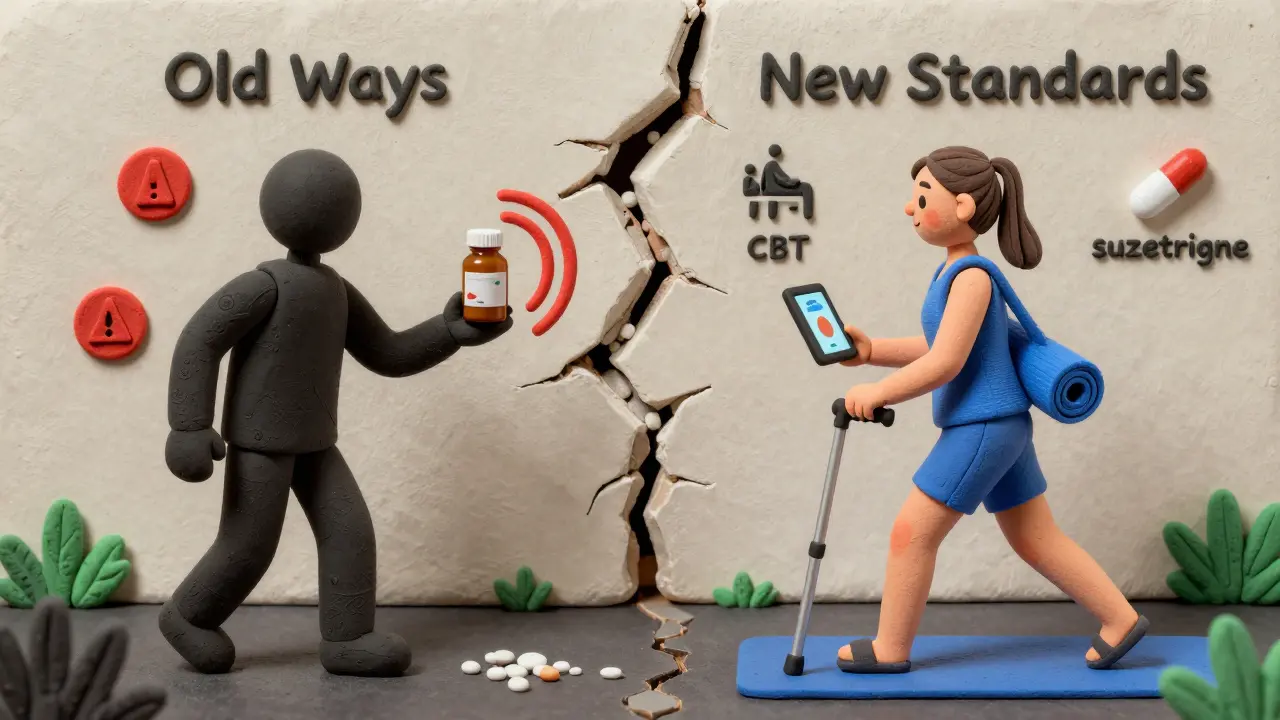
For millions of people living with chronic pain, opioids were once the go-to solution. But the reality has changed. Opioids don’t work well for long-term pain, and the risks - addiction, overdose, nausea, constipation, drowsiness - are too high. The CDC, FDA, and top medical groups now agree: non-opioid pain management isn’t just safer - it’s often just as effective, especially for conditions like osteoarthritis, back pain, and nerve pain.
Why Non-Opioid Options Are the New Standard
In 2021, over 106,000 people in the U.S. died from drug overdoses. Nearly 17,000 of those involved prescription opioids. That’s not just a statistic - it’s a crisis that reshaped how doctors treat pain. The CDC’s 2022 guidelines made it clear: for chronic pain, non-opioid treatments should come first. Opioids? Only if everything else fails, and even then, for the shortest time possible. Research backs this up. A 2022 study in JAMA Network Open followed patients with chronic back or knee pain for a year. Those on non-opioid treatments reported the same level of pain relief and improved function as those on opioids - but with far fewer side effects. On average, opioid users experienced 28.9 medication-related problems per person. Non-opioid users? Just 17.7. The shift isn’t just about safety. It’s about effectiveness. Opioids lose their punch after three months for most chronic conditions. Meanwhile, things like exercise, physical therapy, and certain antidepressants keep working - without the risk of dependence.Top Non-Opioid Medications That Work
Not all pain meds are created equal. Here are the most proven non-opioid options, backed by clinical evidence:- NSAIDs (ibuprofen, naproxen): Great for inflammation-based pain like arthritis or sprains. But long-term use can hurt your stomach, kidneys, or heart. Stick to the lowest dose for the shortest time.
- Acetaminophen (Tylenol): Safe for most people when taken under 3,000-4,000 mg a day. But overdose can cause serious liver damage - more than you think.
- Duloxetine and Venlafaxine (SNRIs): Originally antidepressants, these are now first-line for nerve pain, fibromyalgia, and chronic musculoskeletal pain. They reduce pain by 30-50% in about a third to half of users.
- Gabapentin and Pregabalin: Used for nerve pain from diabetes, shingles, or spinal issues. Works well, but side effects like drowsiness and weight gain are common.
- Topical treatments: Capsaicin cream (from chili peppers) and lidocaine patches deliver relief right where it hurts, with almost no systemic side effects.
In October 2023, the FDA approved a new drug called suzetrigine (brand name Journavx). It’s the first novel non-opioid painkiller in over 20 years, designed specifically for moderate to severe acute pain - like after surgery or injury. It works by blocking sodium channels in nerves, without touching opioid receptors. This is a big deal. For years, if you had serious acute pain, your only real option was an opioid. Now there’s another.
Non-Medication Therapies That Deliver Real Results
Medications aren’t the whole story. Some of the most powerful tools for pain relief don’t come in a pill bottle at all.- Physical therapy: Especially for back, hip, and knee pain. A typical program lasts 6-12 weeks, with 2-3 sessions per week at first. Studies show it improves movement, reduces pain, and cuts the chance of needing surgery.
- Exercise: Aerobic, strength, and water-based workouts are all effective. You don’t need to run a marathon. Just 30 minutes of walking or swimming, 3 times a week, can make a difference.
- Cognitive Behavioral Therapy (CBT): This isn’t just “thinking positive.” CBT teaches you how to change how your brain responds to pain signals. Most programs run 8-12 weekly sessions. People report less pain, less fear of movement, and better sleep.
- Acupuncture: Thousands of patients swear by it. Studies confirm it helps with chronic back pain, neck pain, and osteoarthritis. It’s not magic - it may trigger natural painkillers in your body.
- Mindfulness and yoga: These reduce stress, which worsens pain. Daily 20-minute mindfulness practice can rewire how your brain processes discomfort over 6-8 weeks.
- Massage and spinal manipulation: Useful for short-term relief, especially when combined with other therapies.
One patient in the r/ChronicPain Reddit community (345,000 members) shared how combining aquatic therapy, CBT, and low-dose naltrexone turned their fibromyalgia around. They didn’t need opioids. They didn’t feel trapped by meds. They felt in control.
What Doesn’t Work as Well - and Why
Not every alternative is right for everyone. Some have limits:- NSAIDs are risky for people with kidney disease - which affects 15% of adults over 65.
- Antidepressants like duloxetine can take 4-6 weeks to start working. If you expect instant relief, you’ll get discouraged.
- Physical therapy only works if you show up. Adherence rates? Between 30% and 70%, depending on support and motivation.
- Acupuncture and CBT aren’t available everywhere. Rural areas often lack access to these services.
And yes, even non-opioid meds have side effects. On Drugs.com, 45% of people who took NSAIDs reported stomach problems. Over 60% of pregabalin users said they felt drowsy. Weight gain was a problem for nearly 4 in 10.
Insurance, Access, and the Real Barriers
The science is clear. The guidelines are updated. So why do so many people still struggle to get these treatments? Insurance is the biggest hurdle. A 2022 survey by the U.S. Pain Foundation found that 42% of patients hit coverage walls. Medicare covers 80% of physical therapy after you meet your deductible ($240 in 2024). But private insurers often cap visits at 15-20 per year. Acupuncture? Many require pre-approval. CBT? Often excluded unless you have a mental health diagnosis. Access is worse in rural areas. A 2023 study found that 58% of rural counties in the U.S. don’t have a single physical therapist. 72% lack a psychologist. That means even if your doctor recommends these therapies, you might have to drive hours - or skip them entirely.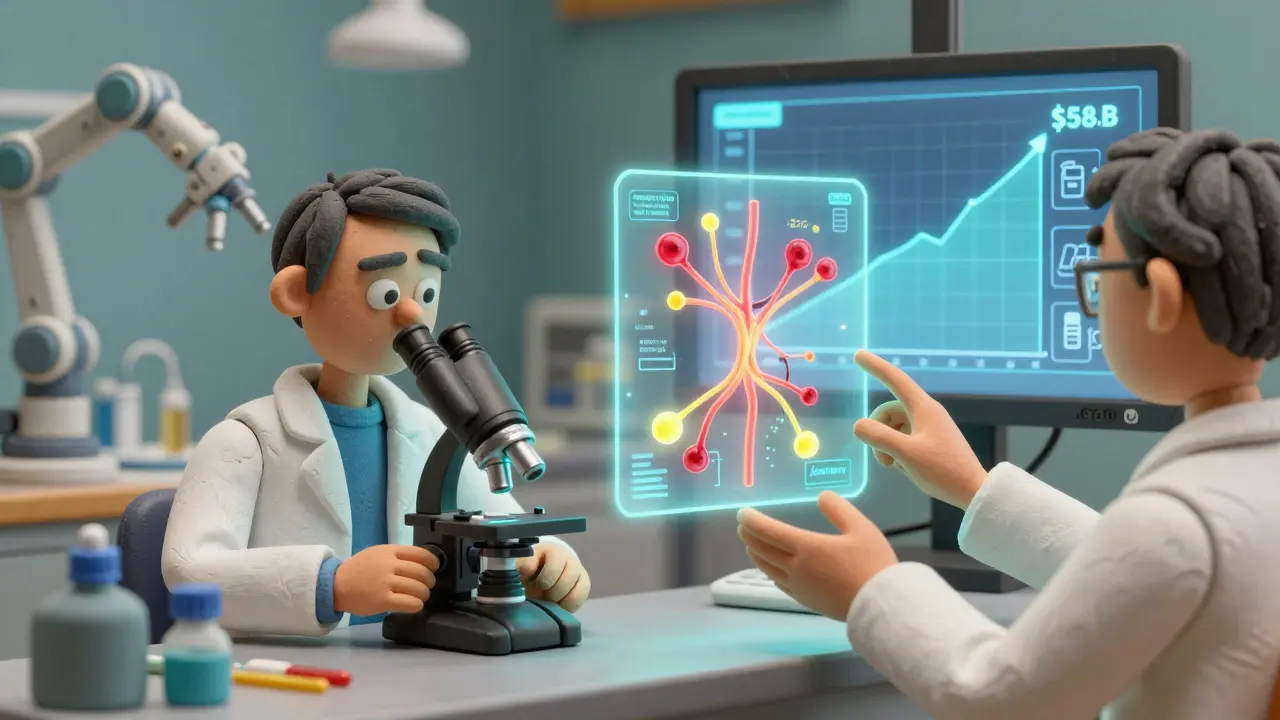
What’s Next? The Future of Pain Relief
The field is moving fast. The NIH has poured $1.36 billion into finding non-addictive pain treatments. As of mid-2024, 47 new compounds are in clinical trials. Some target specific pain pathways - like nerve inflammation or immune responses - rather than just masking symptoms. Researchers are also working on biomarker panels. In the next 5-7 years, you might get a blood test or scan that tells your doctor exactly which pain mechanism you have - and which treatment will work best. No more trial and error. The market is growing, too. The global non-opioid pain management industry was worth $35.7 billion in 2022. It’s projected to hit $58.3 billion by 2030. That’s because demand is rising - and patients are demanding better options.How to Get Started
If you’re managing chronic pain and want to move away from opioids, here’s how to begin:- Ask your doctor: “What non-opioid options do you recommend for my specific pain?”
- Request a referral to a pain specialist or physical therapist.
- Check your insurance plan: What’s covered? How many visits? Do you need pre-authorization?
- Try one non-medication therapy (like walking or CBT) alongside one medication (like acetaminophen or a topical cream).
- Track your pain, sleep, and mood daily for 4-6 weeks. Small improvements add up.
You don’t need to do everything at once. Start with one thing. Maybe it’s a 10-minute walk every morning. Maybe it’s asking your pharmacist about a capsaicin cream. Progress isn’t about perfection - it’s about consistency.
The goal isn’t to eliminate pain entirely. It’s to live well despite it. And with non-opioid options, that’s not just possible - it’s becoming the norm.
Are non-opioid pain treatments really as effective as opioids?
Yes, for most chronic pain conditions. A major 2022 study found that patients using non-opioid treatments for back or knee pain had the same level of pain relief and improved function as those on opioids - but with far fewer side effects. Opioids are not more powerful; they’re just riskier. For long-term pain, non-opioid options work better and safer.
What’s the best non-opioid painkiller for arthritis?
Topical NSAIDs (like diclofenac gel) are often the first choice because they target the joint directly with minimal side effects. Oral NSAIDs like naproxen work too, but only for short periods due to stomach and kidney risks. Acetaminophen is safer for daily use but less effective for inflammation. Physical therapy and weight loss are also critical - they reduce joint stress and improve mobility long-term.
Can I use acupuncture instead of pain meds?
Acupuncture can be very effective for chronic pain like back pain, neck pain, and osteoarthritis - especially when combined with other therapies. It doesn’t replace meds for everyone, but many people reduce or stop their painkillers after regular sessions. Insurance coverage varies, so check with your provider. A typical course is 6-12 weekly sessions.
Why do some doctors still prescribe opioids for chronic pain?
Some doctors still prescribe opioids because they’re familiar, quick to prescribe, and patients often ask for them. But guidelines have changed. The CDC, FDA, and major medical societies now strongly discourage long-term opioid use for chronic pain. Many doctors are updating their practices, but access to alternatives like physical therapy or pain psychologists remains limited in some areas, making opioids seem like the only option.
How long does it take for non-opioid treatments to work?
It varies. Topical creams and NSAIDs can help within hours or days. Antidepressants like duloxetine take 4-6 weeks to show full effect. Physical therapy usually needs 6-12 weeks of consistent sessions. Mindfulness and exercise require daily practice for at least 6-8 weeks before you notice real changes. Patience is key - these aren’t quick fixes, but they’re sustainable ones.
Is there a new non-opioid pain drug I should ask my doctor about?
Yes - suzetrigine (brand name Journavx), approved by the FDA in October 2023. It’s the first new non-opioid painkiller in over 20 years, designed specifically for moderate to severe acute pain - like after surgery or injury. It doesn’t affect opioid receptors, so there’s no addiction risk. It’s not meant for chronic pain yet, but it’s a major step forward for acute cases where opioids were the only option.
What if I can’t afford physical therapy or acupuncture?
Start with free or low-cost options. Walking, stretching, and home exercises guided by YouTube videos from certified physical therapists can help. Apps like Insight Timer offer free mindfulness sessions. Many community centers offer low-cost yoga or tai chi classes. The U.S. Pain Foundation and American Chronic Pain Association offer free educational resources. Even small, consistent efforts can reduce pain over time.
Amber Lane
January 21, 2026 AT 06:54This post hit different. I’ve been on gabapentin for 3 years and honestly? It’s the only thing that lets me sleep without feeling like my bones are on fire.
Still, the drowsiness is brutal. I just nap everywhere now. Like, at the grocery store. No shame.
Malvina Tomja
January 22, 2026 AT 04:03Let’s be real-this whole ‘non-opioid revolution’ is just Big Pharma’s way of selling you more expensive junk while they keep the opioids locked away for the rich.
NSAIDs give me ulcers. Duloxetine made me cry for no reason. And don’t even get me started on ‘mindfulness’-I meditated for 6 weeks and still couldn’t stop my back from screaming.
Someone’s making money off our suffering. It’s not healing. It’s capitalism.
MARILYN ONEILL
January 23, 2026 AT 00:53Ugh. Another one of those ‘try yoga and feel better’ posts. Like, wow, groundbreaking. I’ve been in chronic pain for 17 years and no amount of breathing exercises is gonna fix a herniated disc.
And suzetrigine? That’s not a miracle drug, it’s a Band-Aid on a gunshot wound. If you think this is the future of pain management, you haven’t been paying attention.
Real pain needs real medicine. Not cute creams and Pinterest-approved walks.
MAHENDRA MEGHWAL
January 24, 2026 AT 12:33Thank you for this comprehensive overview. In India, access to physical therapy and pain specialists remains extremely limited, particularly outside urban centers. Many patients are left with only acetaminophen or over-the-counter NSAIDs, often used improperly due to lack of guidance.
The cultural stigma around chronic pain also prevents many from seeking help. It is encouraging to see global recognition of non-opioid alternatives, but equity in access must be the next priority.
Dee Monroe
January 25, 2026 AT 15:47Here’s the thing no one talks about-pain isn’t just a signal. It’s a whole world you live in. Every day, you’re negotiating with your body, your fear, your identity.
When I started walking 10 minutes a day, I wasn’t trying to ‘cure’ my fibromyalgia. I was trying to remember what it felt like to move without dread.
CBT didn’t make the pain disappear. It made me stop fighting it. And that? That changed everything.
It’s not about being strong. It’s about being gentle with yourself while the world keeps telling you to just push through.
And yeah, the meds help. But the real shift? It happens in the quiet moments when you stop blaming yourself for being broken.
Progress isn’t linear. Some days you cry. Some days you cry because you finally laughed.
And that’s okay.
It’s more than okay. It’s enough.
You’re not failing if you need help. You’re surviving.
And survival? That’s the quietest kind of victory.
So keep going. Even if it’s just one step. Even if it’s just breathing.
You’re not alone in this.
Sangeeta Isaac
January 25, 2026 AT 17:31so like… i tried capsaicin cream and thought i was gonna set my skin on fire
turns out i just needed to not rub it in with my bare hands 😭
also acupuncture felt like being poked by a very polite ninja
and yes i cried
but also… i haven’t needed ibuprofen in 3 weeks
so… maybe magic is real?
or maybe my nerves are just tired of being yelled at
Philip Williams
January 25, 2026 AT 18:06The data presented here is compelling and aligns with current clinical guidelines. However, implementation remains inconsistent across healthcare systems. Primary care providers often lack training in multimodal pain management, and reimbursement structures disincentivize time-intensive non-pharmacological interventions. Systemic reform is required-not just patient education.
Melanie Pearson
January 26, 2026 AT 13:31Why are we letting alternative medicine hijack real science? Acupuncture? Mindfulness? These are placebo rituals dressed up as medicine. If you’re in pain, you need a real drug. Not some hippie massage or a guided breathing app.
And don’t get me started on ‘low-dose naltrexone’-that’s not even FDA-approved for pain. It’s experimental. Dangerous. And this post makes it sound like a miracle.
Real Americans don’t need to meditate their way out of pain. We need strong medicine. Period.
Jerry Rodrigues
January 26, 2026 AT 18:45I’ve been on tramadol for 8 years. I know the risks. I’ve seen the side effects.
I switched to gabapentin and physical therapy last year.
It’s not perfect.
But I can hold my niece again.
That’s worth it.
Uju Megafu
January 26, 2026 AT 20:19Y’all in the U.S. think you have it bad? In Nigeria, we don’t even have access to Tylenol in rural areas. People are dying from pain because they can’t afford a doctor, let alone a physical therapist.
Stop acting like this is some revolutionary breakthrough. It’s a luxury for the privileged.
And now you’re telling people to ‘try yoga’ while their knees are crumbling? That’s not healing. That’s cruelty wrapped in a mindfulness app.
Jarrod Flesch
January 28, 2026 AT 00:06Just had my first session with a pain psych last week. She asked me what my pain sounds like.
I said ‘a lawnmower running inside my spine.’
She nodded like that made total sense.
Then we did breathing and I cried a little.
And now I’m not scared to move anymore.
Also, suzetrigine? That’s wild. I’d take that over a pill that makes me feel like a zombie any day. 🤝
Keep sharing this stuff. It helps.
Barbara Mahone
January 28, 2026 AT 05:52The 2022 JAMA study cited is robust. However, the distinction between acute and chronic pain management must be preserved. Suzetrigine is not indicated for chronic use. Misinterpretation of its approval may lead to inappropriate off-label prescribing. Precision in language matters.
Kelly McRainey Moore
January 28, 2026 AT 23:14My mom started walking every morning after her knee replacement. No meds. Just her shoes, her playlist, and a coffee thermos.
Three months later, she says she doesn’t miss the pills.
She says she misses the quiet.
Guess that’s the real painkiller.