
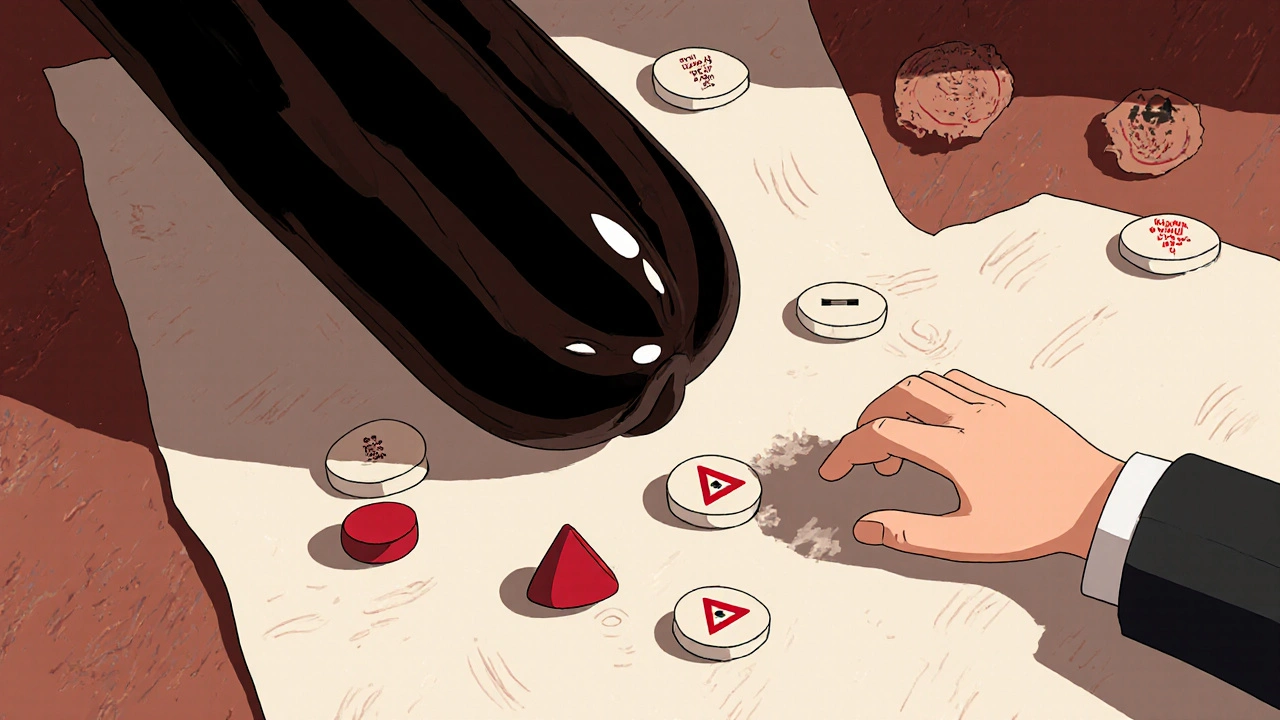
If you're taking medication for high blood pressure, you might be surprised to learn that something as simple as black licorice candy could be working against your treatment. It’s not just a myth - it’s a well-documented medical risk. Licorice contains a compound called glycyrrhizin, and even small amounts consumed regularly can raise your blood pressure and lower your potassium levels, making your meds less effective - or worse, dangerous.
How Licorice Interferes With Blood Pressure Meds
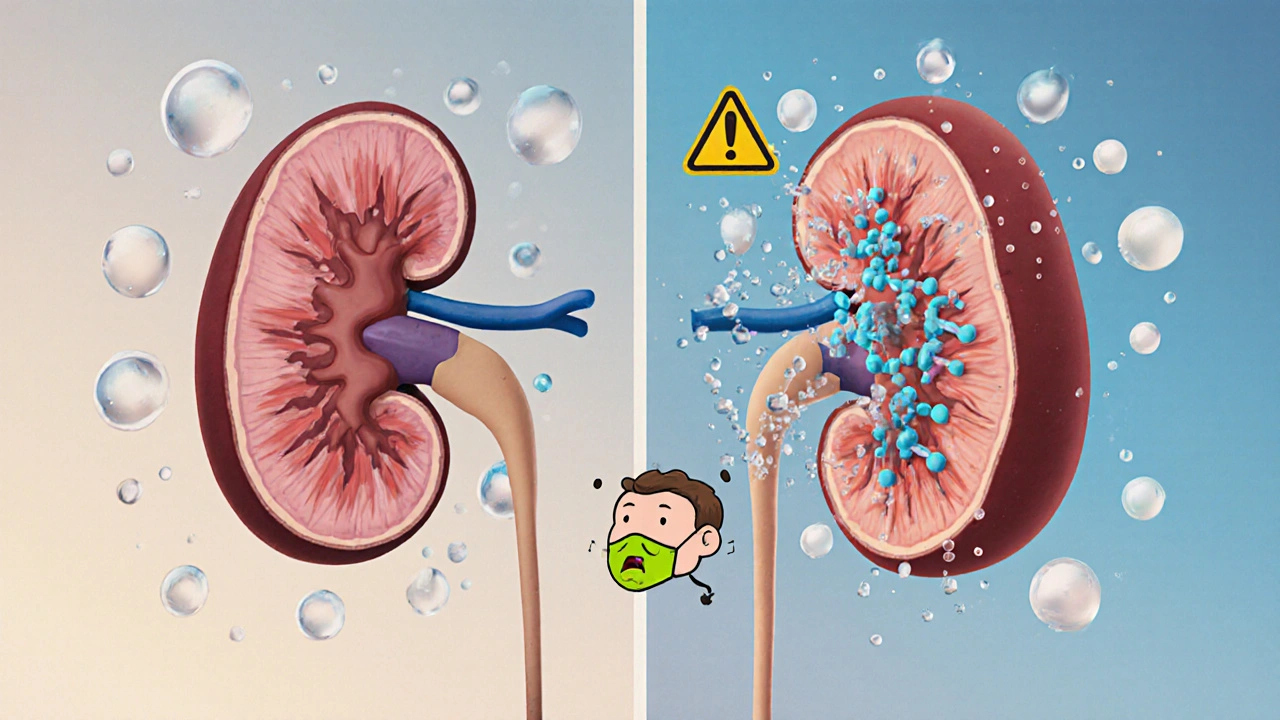
Glycyrrhizin breaks down in your body into glycyrrhetic acid, which blocks an enzyme called 11β-HSD2. This enzyme normally protects your kidneys from being overstimulated by cortisol, a hormone that acts like aldosterone - the body’s natural salt-retaining hormone. When this enzyme is shut down, cortisol starts acting like aldosterone, tricking your kidneys into holding onto sodium and water while flushing out potassium.
That sounds harmless until you realize: that’s exactly what your blood pressure medication is trying to prevent. Diuretics like hydrochlorothiazide help you pee out extra fluid. ACE inhibitors like lisinopril relax your blood vessels. Calcium channel blockers like amlodipine reduce heart strain. But if licorice is making your body hold onto fluid and lose potassium, those drugs can’t do their job.
Studies show that consuming more than 100 mg of glycyrrhizin per day - about 60-70 grams of traditional black licorice candy - can raise systolic blood pressure by over 5 mmHg on average. For someone already struggling to control hypertension, that’s enough to push them into dangerous territory.
Who’s at the Highest Risk?
Not everyone reacts the same way. Some people can eat a small piece of licorice now and then without issue. But others face serious risks, especially if they:
- Are over 60 years old
- Are female
- Already have high blood pressure or heart disease
- Take potassium-wasting diuretics (like furosemide or hydrochlorothiazide)
- Take digoxin (Lanoxin) for heart rhythm problems
Older adults and women are more sensitive to glycyrrhizin. That’s because aging slows down how fast your body clears the compound, and hormonal differences make women more prone to fluid retention. If you’re on digoxin, the danger multiplies. Low potassium from licorice lets digoxin bind too tightly to heart cells, increasing the risk of life-threatening arrhythmias. There are documented cases of older adults ending up in the hospital with heart failure after eating herbal laxatives or teas containing licorice.
Medications That Can Become Dangerous With Licorice
It’s not just one type of blood pressure drug. Licorice undermines nearly all of them:
- Diuretics: Both thiazides and loop diuretics already lower potassium. Licorice makes it worse, increasing the risk of muscle cramps, weakness, and abnormal heart rhythms.
- ACE inhibitors and ARBs: These drugs work by relaxing blood vessels and reducing fluid. Licorice floods your system with extra fluid, making them less effective.
- Calcium channel blockers: While they don’t directly interact chemically, the fluid retention from licorice can raise blood pressure enough to counteract their benefits.
- Digoxin: This is the most dangerous combo. Even small amounts of licorice can trigger digoxin toxicity - nausea, vision changes, irregular heartbeat, and even cardiac arrest.
- Warfarin: Licorice can reduce its effectiveness, raising your risk of clots. Not directly a blood pressure issue, but still a serious concern if you’re on both.
The Merck Manual and MSD Manual both warn that people with hypertension should avoid licorice entirely. There’s no safe gray area if you’re managing a chronic condition.
What Counts as ‘Licorice’?
Not all licorice-flavored products are created equal. Many red or pink licorice candies, gummies, and soft candies use anise oil or artificial flavoring instead of real licorice root. But traditional black licorice, herbal teas, dietary supplements, and some tobacco products often contain glycyrrhizin.
Check the ingredient list. If it says “licorice root,” “Glycyrrhiza glabra,” or “glycyrrhizin,” you’re getting the real thing. Supplements are especially risky because they’re not required to list glycyrrhizin content on the label. A single capsule might contain 100 mg or more - the daily limit - without you even knowing.
Teas labeled as “licorice root tea” or “digestive aid tea” often contain concentrated extracts. Drinking one cup a day for weeks can build up enough glycyrrhizin to cause problems.
Signs You Might Be Having a Reaction
Some effects are subtle. Others are urgent. Watch for:
- Unexplained rise in blood pressure readings
- Muscle weakness or cramps
- Fatigue or feeling unusually tired
- Swelling in ankles or legs (edema)
- Irregular heartbeat or palpitations
- Numbness or tingling in hands or feet
If you’re taking blood pressure meds and notice any of these, especially if they’re new, stop eating licorice immediately and contact your doctor. A simple blood test can check your potassium level - if it’s below 3.5 mmol/L, that’s a red flag. Your doctor might also test your cortisol-to-cortisone ratio to confirm glycyrrhizin exposure.
What Should You Do?
If you’re on blood pressure medication:
- Avoid black licorice candy and licorice root tea entirely.
- Read labels on supplements, herbal remedies, and even chewing tobacco.
- Ask your pharmacist or doctor if any of your other medications contain licorice root.
- If you’ve been eating licorice regularly, don’t quit cold turkey - talk to your doctor. Sudden withdrawal can sometimes cause rebound effects.
- Keep a food and symptom journal for a few weeks to track patterns.
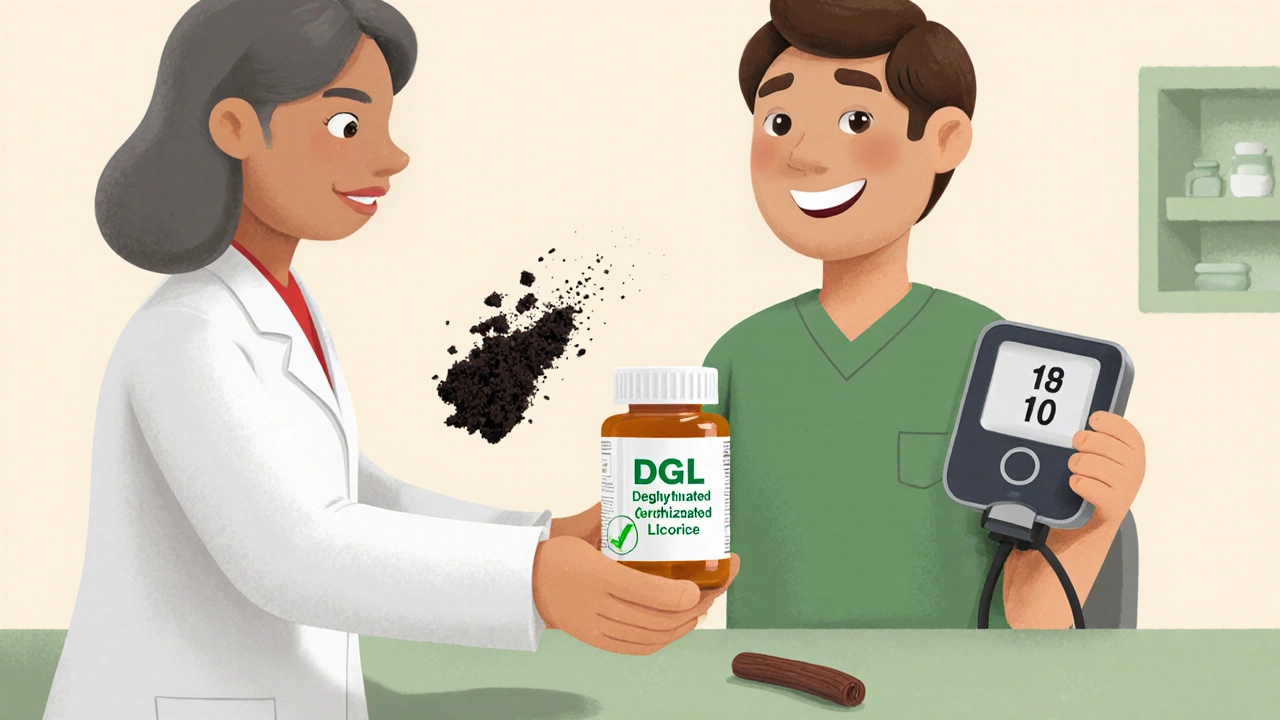
If you love the taste, look for “deglycyrrhizinated licorice” (DGL) products. These are specially processed to remove glycyrrhizin and are safe for people with high blood pressure. DGL is commonly used for heartburn and stomach ulcers - and it won’t interfere with your meds.
Why This Isn’t Common Knowledge
Most people don’t realize licorice is a problem because it’s sold as candy or herbal tea - not as a drug. The FDA doesn’t require manufacturers to list glycyrrhizin content on labels. So you could be eating a dangerous dose without knowing it.
Doctors don’t always ask about licorice either. Patients assume it’s just a treat, not a medical risk. But in clinics treating resistant hypertension, licorice is a frequent culprit when medications aren’t working. One study found that nearly 1 in 5 patients with unexplained low potassium had consumed licorice regularly.
It’s not about being paranoid. It’s about being informed. Your blood pressure meds are working hard to keep you healthy. Don’t let a candy bar undo that.
Can I eat licorice if I’m not on blood pressure medication?
If you’re healthy and under 60, occasional small amounts (like one piece of candy once a week) are unlikely to cause harm. But even healthy people can develop high blood pressure or low potassium if they eat large amounts regularly - think more than 100 mg of glycyrrhizin daily for several weeks. It’s safer to avoid it unless you’re certain of the dose and your body’s response.
Is red licorice safe?
Most red licorice in the U.S. doesn’t contain real licorice root - it’s flavored with anise or artificial extracts. These are generally safe. But always check the ingredients. Some imported or specialty brands may still use glycyrrhizin. If it says “licorice extract” or “Glycyrrhiza glabra,” avoid it.
How long does it take for licorice to affect blood pressure?
Effects can start within days, but they usually build up over 1-4 weeks of daily use. That’s why many people don’t connect their rising blood pressure to licorice - they think it’s just their condition getting worse. If you’ve been eating licorice regularly and notice your meds aren’t working like they used to, stop it and get checked.
Can licorice cause permanent damage?
In most cases, stopping licorice reverses the effects. Blood pressure and potassium levels usually return to normal within a few days to weeks. But if low potassium or high blood pressure went untreated for months, it could lead to lasting heart or kidney damage. That’s why early detection matters.
What about licorice supplements for digestion or stress?
Many herbal supplements use licorice root for its soothing properties. But unless they’re labeled as “deglycyrrhizinated” (DGL), they contain glycyrrhizin. Even “natural” doesn’t mean safe - especially if you’re on blood pressure meds. Always check with your doctor before taking any herbal supplement.
Peter Axelberg
November 29, 2025 AT 18:01I never realized licorice could mess with my blood pressure meds. I thought it was just a sweet snack. I’ve been eating that black licorice stick every afternoon since I started my diuretic, and lately I’ve been feeling pretty drained. Now I get it. I’m tossing the rest of the bag tonight. Thanks for the wake-up call.
Also, I just checked my herbal tea - turns out it’s got licorice root in it. Who knew? I thought it was just ‘soothing.’ Not anymore.
Monica Lindsey
November 30, 2025 AT 00:30If you’re eating licorice while on BP meds, you’re not just irresponsible - you’re endangering yourself. This isn’t a ‘maybe’ or a ‘maybe not.’ It’s a hard stop. No exceptions. No ‘but I only eat a little.’
Stop pretending it’s a treat. It’s a toxin with a candy wrapper.
Jennifer Wang
November 30, 2025 AT 07:48As a clinical pharmacist, I’ve seen this exact scenario play out too many times. Patients come in with resistant hypertension, and after a full workup, we discover they’ve been drinking licorice root tea daily for months. Potassium levels are dangerously low - sometimes below 3.0 mmol/L.
It’s not a myth. It’s pharmacokinetics. Glycyrrhizin inhibits 11β-HSD2, leading to mineralocorticoid excess. The mechanism is well-established in the literature since the 1970s. The problem is lack of patient education.
Always check labels. Even ‘natural’ supplements are unregulated. DGL is the only safe option. And yes, red licorice is generally fine - unless it’s imported and contains Glycyrrhiza glabra. Always verify.
stephen idiado
December 2, 2025 AT 01:34Western medical dogma again. In Nigeria, we’ve used licorice root for hypertension for generations. Your drugs are synthetic poison. Nature doesn’t lie.
Also, your ‘100mg’ threshold is arbitrary. Bioavailability varies by gut microbiome. You’re pathologizing tradition.
Andrew Keh
December 2, 2025 AT 22:19I appreciate the thorough breakdown. I’m on lisinopril and didn’t know licorice could interfere. I’ve always assumed if it’s sold in a store, it’s fine. This is a good reminder to check everything - even teas and supplements.
Thanks for highlighting DGL as an alternative. I’ll look for that next time I want something sweet and herbal. Safety first.
jamie sigler
December 3, 2025 AT 09:36Wow. So I’ve been eating this stuff for years and now I’m a walking medical hazard? Great. Just great. Guess I’ll go back to Oreos. At least they don’t come with a 12-page warning label.
Brandy Johnson
December 4, 2025 AT 20:26It is not merely a matter of personal health - it is a systemic failure of public health literacy. The FDA’s failure to mandate glycyrrhizin labeling is a dereliction of duty. Corporations profit from ignorance. Consumers pay with their kidneys.
Furthermore, the normalization of ‘natural’ as synonymous with ‘safe’ is a dangerous cultural delusion. This is not herbal wisdom - it is biochemical sabotage masked as tradition.
Every time someone ignores this warning, they contribute to the erosion of evidence-based medicine. The cost is measured in ER visits, arrhythmias, and preventable strokes.
There is no ‘moderation’ when the compound is a potent mineralocorticoid agonist. This is not a suggestion. It is a clinical imperative.
Subhash Singh
December 6, 2025 AT 00:36Thank you for this detailed analysis. I am curious - are there any studies comparing the glycyrrhizin content across different brands of black licorice? For example, does European licorice tend to have higher concentrations than American brands due to different cultivation or processing methods?
Also, is there any data on the half-life of glycyrrhizin in individuals with hepatic impairment? I ask because many elderly patients also have reduced liver metabolism, which may compound the risk.
These details would help clinicians tailor advice more precisely.