
Most people assume that if a generic drug works the same as the brand-name version, then it must interact with other drugs the same way too. And for the most part, they’re right. But sometimes, patients report strange side effects after switching to a generic - nausea, dizziness, or even changes in how well their medication seems to work. When that happens, it’s easy to blame the generic. But the real issue isn’t usually the active ingredient. It’s what’s not in the pill.
Why generics aren’t the problem - but their fillers might be
Generic drugs are required by the FDA to contain the exact same active ingredient, in the same strength, and delivered the same way as the brand-name version. That means if you’re taking a generic version of warfarin, the chemical that thins your blood is identical to what’s in Coumadin. The same goes for levothyroxine, sertraline, or phenytoin. So why do some people feel different after switching? The answer lies in the inactive ingredients - the fillers, dyes, preservatives, and binders that hold the pill together. These don’t affect how the drug works pharmacologically, but they can trigger reactions in sensitive people. For example, one patient switched from a brand-name levothyroxine to a generic version and started having stomach cramps and bloating. Turns out, the generic used lactose as a filler, while the brand used a lactose-free binder. The patient had a mild lactose intolerance they didn’t even know about. These reactions aren’t drug interactions in the traditional sense. They’re allergic or intolerant responses to something in the pill. And because generic manufacturers can change their excipients between batches - and often do to cut costs - you might get a different version of the same drug every time your pharmacy restocks. One month, your sertraline has sodium benzoate. The next, it has magnesium stearate. Neither changes how the drug treats depression. But one might cause a headache in someone sensitive to benzoates.The real culprits: drug-drug, drug-food, and drug-condition interactions
True drug interactions happen because of how the active ingredient behaves in your body. These are the same whether the drug is generic or brand-name. For instance:- Fluconazole (an antifungal) can raise simvastatin levels by 300-400%, increasing the risk of muscle damage. This happens with both the generic and brand versions.
- Grapefruit juice blocks an enzyme (CYP3A4) that breaks down many blood pressure medications. That’s true whether you’re taking amlodipine from Pfizer or a generic from Teva.
- Diphenhydramine (Benadryl) can raise eye pressure - dangerous for people with glaucoma. The risk doesn’t disappear just because it’s a store-brand version.
Why the myth persists - and who it hurts
Despite all the data, 47% of patients still believe generics work differently than brand-name drugs. A 2022 Kaiser Family Foundation survey found that nearly one in three people say they’ve had more side effects with generics. But when researchers checked their medical records, only 3.7% of those reports matched actual physiological changes. The rest? Psychology. The nocebo effect - where expecting something to go wrong makes it happen - is powerful. If you’ve been told generics are cheaper because they’re inferior, your brain might start interpreting normal side effects as proof. A 2021 study in JAMA Internal Medicine showed patients given identical pills but told one was “expensive brand-name” and the other “cheap generic” reported more side effects from the “generic.” And then there’s the warfarin myth. Thousands of patients online blame their generic warfarin for unstable INR levels. But follow-ups by pharmacists show that 89% of those cases were linked to changes in diet - eating more spinach, skipping meals, or drinking alcohol - not the pill. Warfarin is tricky because small changes in blood levels can cause bleeding or clots. But the drug itself isn’t the issue. It’s how the body responds to outside factors.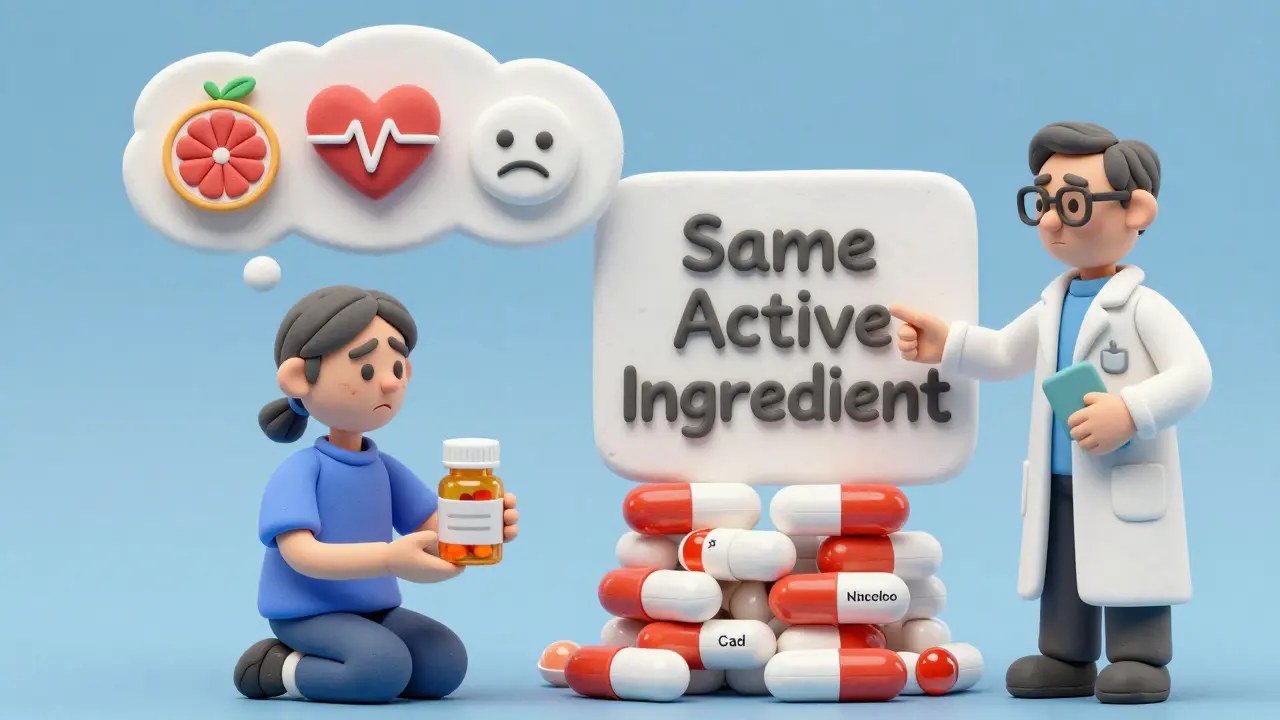
Who’s at risk - and what to watch for
Not everyone needs to worry. For most medications - antibiotics, blood pressure pills, antidepressants - switching between generics is perfectly safe. But for drugs with a narrow therapeutic index (NTI), even tiny changes can matter. These include:- Warfarin (blood thinner)
- Levothyroxine (thyroid hormone)
- Phenytoin (seizure control)
- Digoxin (heart rhythm)
What you can do - practical steps for safety
You don’t need to avoid generics. They’re safe, effective, and save billions. But here’s how to stay in control:- Know your active ingredient. If your pill says “sertraline hydrochloride,” that’s the drug. The rest is filler. Don’t confuse the two.
- Stick with one generic manufacturer. If you’re on warfarin or levothyroxine, ask your pharmacy to keep you on the same brand of generic. Most hospitals and insurers have preferred generics for these drugs for this reason.
- Track changes. Keep a simple log: date you switched, new generic name (check the label), and any new symptoms. Bring it to your next appointment.
- Ask about fillers. If you have allergies (like to lactose, gluten, or dyes), ask your pharmacist: “What’s in this pill?” They can check the manufacturer’s product information.
- Don’t assume the worst. If you feel different after switching, it’s probably not the drug. It could be stress, diet, sleep, or even a cold. Rule out other causes first.
The bigger picture - why this matters
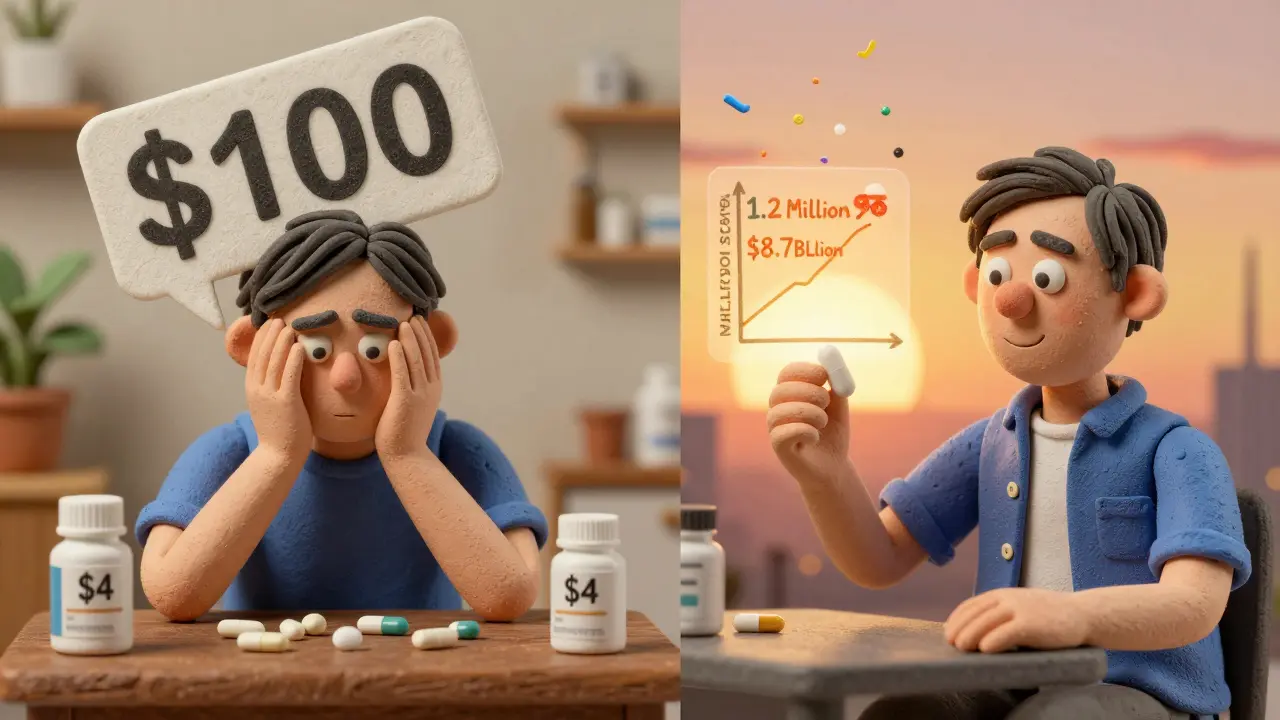
Misunderstanding generic drug safety isn’t just about confusion. It’s expensive. A 2023 Health Affairs study found that misplaced fears about generics lead to 1.2 million unnecessary brand-name prescriptions every year. That costs the U.S. healthcare system $8.7 billion. For patients, it means paying $100 for a pill that’s identical to one that costs $4. The FDA’s 2024 Generics Awareness Campaign is trying to fix this. They’re working with pharmacists, doctors, and patient groups to spread the truth: Generics are not second-rate. They’re the same medicine, just cheaper. But the real fix is education. When patients understand that drug interactions depend on active ingredients - not who made the pill - they can make smarter choices. And when doctors and pharmacists take a minute to explain this, they build trust, reduce anxiety, and keep people on their meds.Final thought: It’s not about the brand. It’s about the details.
Generics don’t cause unexpected interactions. People do - because they assume things that aren’t true. The science is clear: the active ingredient is what matters. The rest? It’s just packaging. And just like you wouldn’t blame a car for a flat tire because it’s a Toyota instead of a BMW, you shouldn’t blame a generic drug because it’s not made by the original company. If you’re on a critical medication, stay consistent. Know your fillers. Track your symptoms. Talk to your pharmacist. But don’t let myths keep you from saving money - or taking the medicine you need.Do generic drugs have the same interaction risks as brand-name drugs?
Yes. Generic drugs contain the exact same active ingredient as their brand-name counterparts, and the FDA requires them to have identical drug interaction warnings on their labels. Any interaction risk - like grapefruit juice affecting blood pressure meds or fluconazole raising statin levels - applies equally to generics and brand-name versions. Differences in side effects are almost always due to inactive ingredients or psychological factors, not the drug’s mechanism.
Can inactive ingredients in generics cause real side effects?
Yes, but not as drug interactions. Inactive ingredients like lactose, dyes, or preservatives can trigger allergic reactions or intolerances in sensitive people. For example, a patient with mild lactose intolerance had stomach issues after switching to a generic levothyroxine that used lactose as a filler - something the brand-name version didn’t contain. These aren’t pharmacological interactions; they’re individual sensitivities to fillers.
Should I avoid switching between different generic brands?
For most medications, switching is fine. But for drugs with a narrow therapeutic index - like warfarin, levothyroxine, phenytoin, or digoxin - it’s safer to stick with one generic manufacturer. Small changes in fillers can trigger reactions in sensitive people, even if the active ingredient is unchanged. Ask your pharmacist to keep you on the same version, or request a specific generic if you’ve had a good experience with it.
Why do some people say generics don’t work as well?
This is usually the nocebo effect - when expecting a drug to be less effective makes you feel like it is. Studies show patients report more side effects when they believe they’re taking a cheaper generic, even when the pill is identical to the brand-name version. In clinical reviews, only about 13% of reported differences between generics and brand-name drugs were due to actual physiological changes. The rest were psychological or linked to other factors like diet or stress.
How can I find out what’s in my generic medication?
Check the drug label - manufacturers are required to list inactive ingredients. You can also ask your pharmacist for the manufacturer’s product information sheet. If you have allergies (like to lactose, gluten, or artificial dyes), tell your pharmacist before filling a new prescription. Some generic versions use different fillers than others, even for the same drug.
Are generics monitored for safety after they’re on the market?
Yes. The FDA’s post-marketing surveillance system tracks adverse events for all drugs, including generics. Under the 2022 GDUFA III rules, manufacturers of generics for high-risk drugs must submit more frequent safety reports. In 2023 alone, 17 generic drug labels were updated based on new safety data. The FDA also uses AI to analyze real-world prescription data across 12.7 million records to spot unexpected patterns.
Cheryl Griffith
January 17, 2026 AT 13:31I switched my levothyroxine last year and started feeling like a zombie. Turned out the new generic had lactose and I didn’t even know I was sensitive. My pharmacist helped me switch back to the one without it. Seriously, ask about fillers. It’s not just about the drug.
Also, if you’re on warfarin? Keep a log. Even small changes in spinach or alcohol can mess with your INR. Blaming the generic is easier than checking your diet, but it’s not fair to the medicine.
Ryan Hutchison
January 17, 2026 AT 21:30Ugh, another ‘generics are fine’ lecture from the FDA shills. You think we’re stupid? I’ve seen people crash after switching. The FDA doesn’t test real-world interactions. They test lab rats in sterile rooms. Real people have real bodies with real allergies. Your ‘science’ ignores lived experience.
And don’t get me started on how China and India make these pills. Half the time, the ‘active ingredient’ is barely there. You think your $4 pill is the same? It’s not. It’s a gamble.
Samyak Shertok
January 19, 2026 AT 16:09Oh wow. So the real villain isn’t Big Pharma… it’s *lactose*? The humble dairy sugar, the silent assassin of modern medicine?
How poetic. We’ve been lied to by science, sold out by capitalism, and now we’re being told our suffering is caused by… a carbohydrate?
Next you’ll say my existential dread is due to magnesium stearate. I’m not mad. I’m just… disappointed in the universe.
Stephen Tulloch
January 21, 2026 AT 12:21Bro, I just switched to a generic sertraline and my brain felt like it was wrapped in wet cardboard for two weeks. I went back to the brand. Worth every penny. I don’t care if it’s ‘the same active ingredient’ - if my mood tanks, it’s not psychology, it’s chemistry.
Also, emoji time 🤡: the FDA’s audit? Cute. Try asking someone who’s been on 5 different generics in 18 months. We’re not lab mice. We’re humans with brains that notice things.
And yes, I’m paying $90 a month. I’d rather pay than feel like a ghost.
Melodie Lesesne
January 22, 2026 AT 02:34This is such a helpful breakdown! I’ve been on levothyroxine for 10 years and never thought about fillers. My pharmacist actually recommended sticking with one generic brand and I’ve been so much better since.
Also, the nocebo effect part hit hard - I used to think generics were ‘lesser’ until I learned the truth. Now I feel kinda silly for doubting them. Thanks for helping me understand!
Bianca Leonhardt
January 23, 2026 AT 02:11You people are delusional. If your body reacts to a generic, it’s because you’re weak. Stop blaming fillers. Stop blaming the system. Your anxiety is making you sick, not the pill.
And if you can’t afford the brand, tough. You’re not special. Millions take generics just fine. Your symptoms are in your head. Get over it.
Travis Craw
January 23, 2026 AT 17:52i never knew about the fillers thing. my cousin had weird stomach stuff after switching and we thought it was stress. turns out it was lactose. wow. thanks for explaining this so clearly.
also, i just asked my pharmacist to stick me with the same generic. they were like ‘oh yeah, we do that for warfarin patients all the time.’ so maybe it’s not just me being paranoid?
swarnima singh
January 25, 2026 AT 12:32how can you trust a system that lets corporations change fillers just to save a penny? this isn’t science. this is capitalism with a lab coat.
we’re not just patients. we’re victims of profit-driven medicine. the FDA is a puppet. the brand-name companies own the generics now. they just slap a different label on it.
and you wonder why people are sick? it’s not the lactose. it’s the soullessness of it all.
Rob Deneke
January 27, 2026 AT 03:08Hey everyone, just wanted to say this post is gold. Seriously.
If you’re on warfarin or levothyroxine, DO NOT SWITCH BRANDS WITHOUT TALKING TO YOUR PHARMACIST. It’s not about being picky. It’s about safety.
Also, keep a symptom log. Even a note on your phone works. You’ll be shocked how much it helps your doctor figure things out.
You got this. And don’t let the noise make you doubt yourself. You’re doing the right thing by paying attention.
evelyn wellding
January 28, 2026 AT 13:11OMG YES! I switched my generic sertraline and felt like I was drowning in slow motion 😭
Went back to the one with the blue dot on it - same generic, different maker. Magic. 🎉
Also, my pharmacist gave me a printout of the fillers! I didn’t even know that was a thing. Thanks for normalizing asking questions 💪❤️
Chelsea Harton
January 28, 2026 AT 22:26fillers matter. stop ignoring it. i had a rash from a generic. turned out it had FD&C red no. 40. never again. ask your pharmacist. it’s easy.
Corey Chrisinger
January 30, 2026 AT 15:29It’s funny, isn’t it? We live in an age where we can map the human genome but still can’t guarantee a pill won’t make someone sick because of a starch.
Maybe the problem isn’t the generic. Maybe it’s the illusion that medicine can be reduced to chemistry alone. We’re not machines. We’re messy, biological, emotional beings.
So yes, the active ingredient is the same. But the body? It remembers. It reacts. It grieves the loss of familiarity.
Maybe we need to stop calling them ‘fillers’ and start calling them ‘context’.