
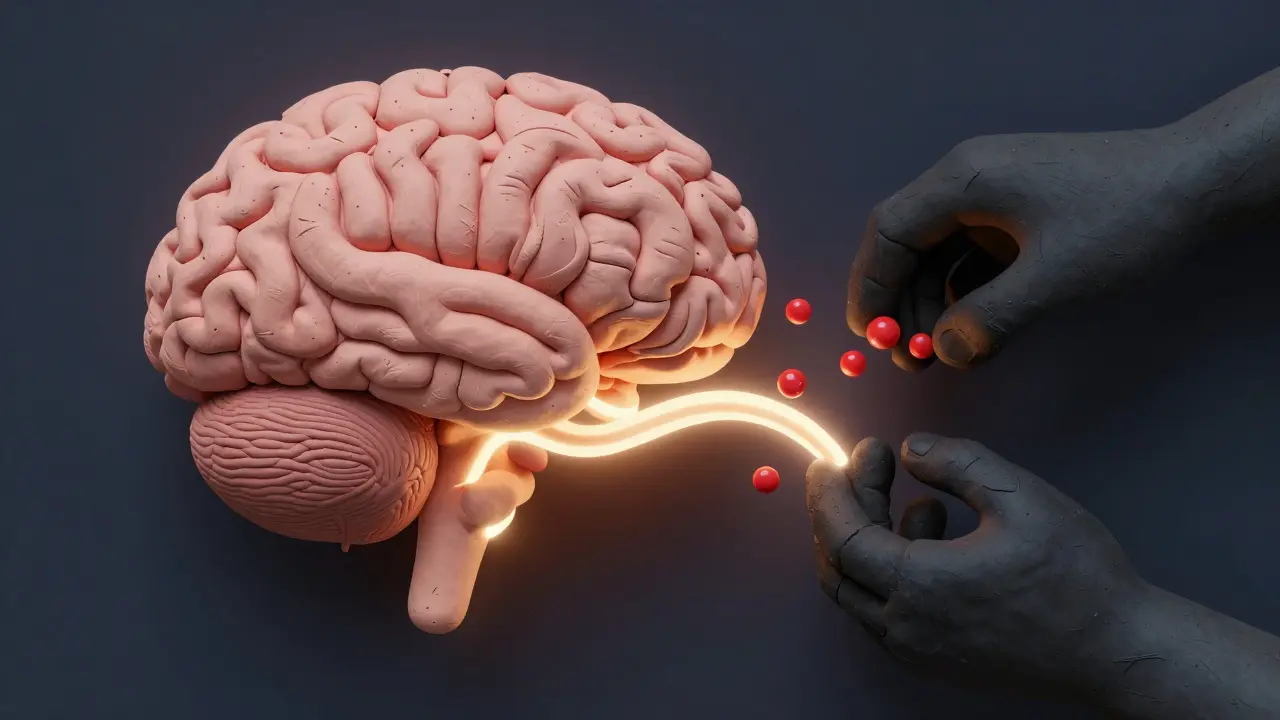
When you have Parkinson’s disease, nausea isn’t just uncomfortable-it can be a sign that your treatment is working. But here’s the catch: the very drugs meant to stop that nausea might make your tremors, stiffness, or freezing episodes worse. This isn’t a rare glitch. It’s a well-documented, dangerous clash between two types of medications that both act on dopamine-but in opposite ways.
Why Nausea Happens in Parkinson’s
Levodopa, the most common treatment for Parkinson’s, works by turning into dopamine in the brain. That’s what helps restore movement. But levodopa also affects the gut, and about 40% to 80% of people experience nausea when they start taking it. This isn’t a side effect you just have to live with. Left unmanaged, it can lead to missed doses, worsening symptoms, and even hospitalization.For years, doctors reached for antiemetics like metoclopramide (Reglan) or prochlorperazine (Stemetil) because they worked fast and were cheap. But these drugs block dopamine receptors-in the brain. And in Parkinson’s, your brain already has too little dopamine. Blocking what’s left? That’s like turning off the last light in a dark room.
The Dopamine Conflict: How Antiemetics Sabotage Parkinson’s Treatment
All dopamine-blocking antiemetics work by attaching to D2 receptors. In the stomach, this stops nausea. In the brain, it worsens Parkinson’s symptoms. The difference isn’t about strength-it’s about where the drug goes.Drugs like metoclopramide, haloperidol, and prochlorperazine cross the blood-brain barrier easily. That means they reach the basal ganglia, the part of the brain that controls movement. When they block dopamine receptors there, they trigger:
- Increased rigidity
- Slower movement (bradykinesia)
- Tremors that return or get worse
- Freezing episodes
- Even acute dystonia (painful muscle spasms)
Patients report dramatic drops in mobility after just one dose. One woman on the Parkinson’s NSW Forum said her tremors spiked after metoclopramide following dental surgery-and took three weeks to recover, even with higher levodopa doses.
Not All Antiemetics Are Created Equal
The good news? Not every antiemetic is dangerous. Some don’t touch the brain at all.Domperidone (Motilium) is the safest option for most Parkinson’s patients. It blocks dopamine in the gut but can’t cross the blood-brain barrier thanks to a natural pump called P-glycoprotein. Studies show less than 2% risk of worsening symptoms. The catch? It’s not available as an injection in the U.S., and the FDA restricts oral use due to rare heart risks-so you need a specialist to prescribe it.
Cyclizine (Vertin) works differently. It blocks histamine (H1) receptors, not dopamine. That means it doesn’t interfere with movement. The GGC Medicines Update (2023) rates its risk at just 5-10%. Many patients report it works well for nausea without triggering stiffness or freezing.
Ondansetron (Zofran) blocks serotonin (5-HT3) receptors. It’s safer than dopamine blockers, with a 15-20% risk of mild worsening. It’s often used for chemotherapy nausea, but it’s not always effective for levodopa-induced nausea.
Levomepromazine (Nozamine) is a middle-ground option-about 30-40% risk. Only used if everything else fails, and only after consultation with both a neurologist and palliative care specialist.
What Medications Should You Avoid?
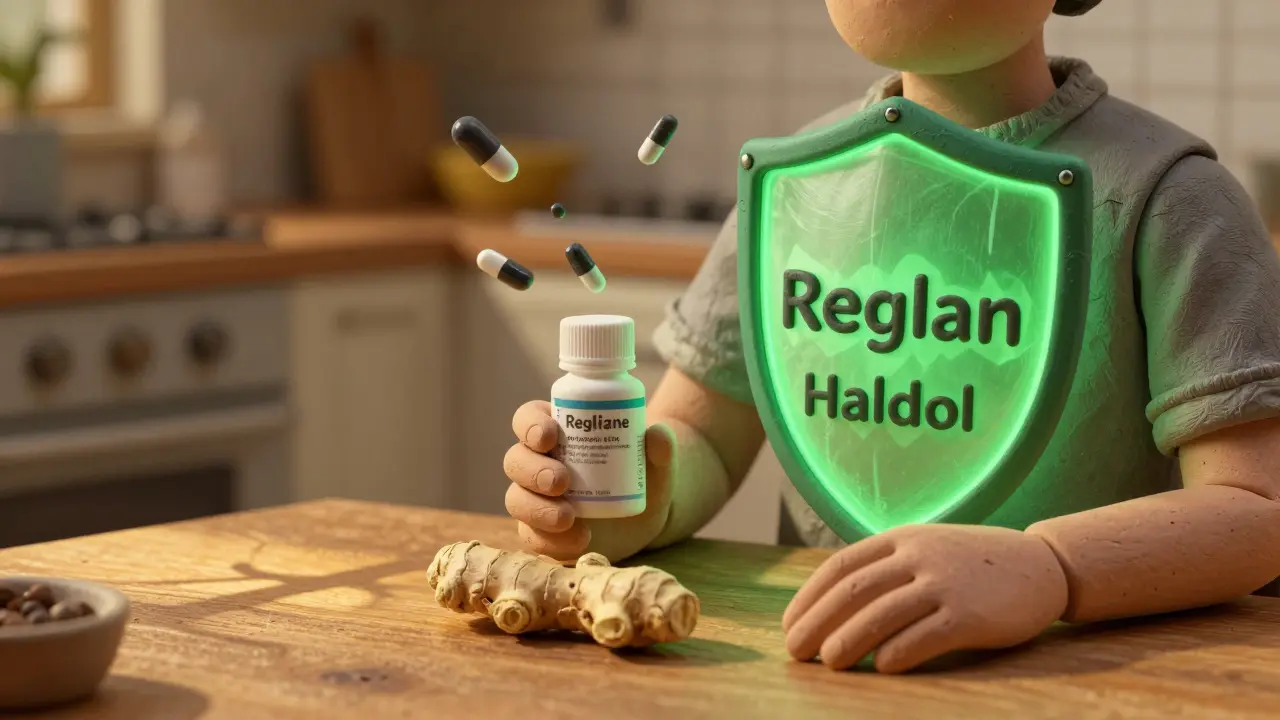
The American Parkinson Disease Association (APDA) has a clear list of drugs to avoid:- Metoclopramide (Reglan)
- Prochlorperazine (Stemetil)
- Chlorpromazine
- Haloperidol (Haldol)
- Promethazine (Phenergan)
- Droperidol
These all have high D2 receptor affinity-over 80% binding-and are linked to acute worsening of Parkinson’s. A 2022 study found that 68% of Parkinson’s patients who received these in hospitals saw their symptoms spike. Nearly a quarter needed extended hospital stays.
And here’s the scary part: emergency room doctors often don’t know this. A 2022 study in the Journal of Parkinson’s Disease found only 37% of ER physicians could correctly identify metoclopramide as dangerous for Parkinson’s patients. That means you’re more likely to get the wrong drug in a crisis.
What to Use Instead
The GGC Medicines Update (2023) and Parkinson’s Foundation recommend this step-by-step approach:- Start with non-drug options: Ginger (1 gram daily), small frequent meals, staying hydrated, and avoiding greasy or spicy foods.
- First-line drug: Cyclizine. It’s affordable, available over the counter in many places, and safe.
- Second-line: Domperidone. Requires prescription, but highly effective. Ask your neurologist to help navigate access.
- Third-line: Ondansetron. If the above don’t work, this is a reasonable next step.
- Only if all else fails: Levomepromazine. Use the lowest dose possible, under specialist supervision.
And never, ever use a dopamine-blocking antiemetic for more than 3 days. Even short-term use can trigger lasting motor issues.

Real Stories, Real Consequences
On Reddit, user “ParkinsonsWarrior87” shared: “My neurologist switched me from metoclopramide to cyclizine. The difference was night and day. No more freezing episodes I’d been having weekly.”Another patient on Parkinson’s UK’s forum described being given prochlorperazine in the ER after a fall. Within hours, she couldn’t walk. She spent five days in the hospital recovering. Her neurologist later said, “That’s the most common mistake we see.”
The Michael J. Fox Foundation’s 2022 survey found that 85% of patients who used domperidone had effective nausea control without motor worsening. That’s not luck-it’s science.
What’s New in 2026
The tide is turning. The Parkinson’s Foundation’s 2023 Quality Improvement Initiative trained over 1,200 doctors, cutting inappropriate prescriptions by 55% in participating hospitals. New drugs are on the horizon:- Aprepitant (Emend): A neurokinin-1 blocker. In a 2023 trial, it controlled nausea in 92% of Parkinson’s patients with zero motor side effects.
- New peripheral serotonin modulators: The Michael J. Fox Foundation is funding research into a drug that targets nausea in the gut without touching the brain. Early results are promising.
The American Geriatrics Society now lists metoclopramide as “potentially inappropriate” for Parkinson’s patients in its 2023 Beers Criteria. That’s a big deal-it means insurance companies and hospitals are being pushed to stop prescribing it.
What You Can Do Today
If you or someone you care for has Parkinson’s:- Keep a list of all medications-especially antiemetics-and show it to every doctor.
- Ask: “Is this a dopamine blocker?” If the answer is yes, ask for an alternative.
- Carry the APDA Medications to Avoid wallet card. Since 2018, it’s helped reduce inappropriate prescriptions by 40% among users.
- Never accept an antiemetic in the ER without checking with your neurologist first.
- If you’ve had a bad reaction to metoclopramide or prochlorperazine, document it. Share it with your care team.
This isn’t about avoiding nausea. It’s about protecting your mobility, your independence, and your quality of life. The right antiemetic can make a huge difference. The wrong one can set you back months.
Agnes Miller
February 17, 2026 AT 17:06just took cyclizine last week after my neuro told me to ditch metoclopramide. holy hell, the difference is insane. no more freezing in the kitchen. i can actually walk to the mailbox now. also, ginger tea helps if you’re too cheap for meds (no judgment).
ps: my pharmacist didn’t even know domperidone existed. we had to order it from canada. weird.
pps: please tell your dr this. seriously.
Philip Blankenship
February 18, 2026 AT 22:35man i’ve been through this whole nightmare. started on levodopa in 2020, got prescribed reglan for nausea like it was aspirin. within 48 hours i couldn’t stand up. spent 3 days in the er thinking i had a stroke. turns out it was just a dumb drug. my neurologist looked at me like i was an idiot for not knowing better. guess what? i didn’t know. nobody told me.
now i’m on domperidone. it’s expensive as hell and my insurance hates it, but at least i can tie my shoes again. the system is broken. they train doctors to treat symptoms, not understand the whole damn system.
also, why is this not on every prescription bottle? why do we have to google this like it’s a secret cult?
Carrie Schluckbier
February 19, 2026 AT 02:14they’re hiding this. i know it. the pharmaceutical companies are pushing dopamine blockers because they make more money. domperidone is cheap, safe, and works - but it’s banned in the u.s. for "heart risks"? please. the same companies that made billions off oxycontin are the ones lobbying the fda. they don’t want you to know about cyclizine because it’s otc. they want you on their $200/month branded nonsense.
they’re killing people. quietly. and no one’s talking about it. why? because it’s not a "cure." it’s a prevention. and prevention doesn’t make stock prices go up.
guy greenfeld
February 19, 2026 AT 14:18the real tragedy here isn’t the drugs - it’s the metaphysical collapse of modern medicine. we’ve reduced the human body to a series of receptors and pathways, as if consciousness is just dopamine + serotonin + gaba. but what about the soul? what about the spirit that moves a man to walk, even when his body betrays him?
we treat symptoms like they’re bugs in a machine. but the body isn’t a machine. it’s a cathedral. and we’re throwing rocks through stained glass because we don’t know how to pray anymore.
domperidone? cyclizine? they’re bandaids on a hemorrhage. the real cure is humility. and humility isn’t patented.
Geoff Forbes
February 19, 2026 AT 22:56oh wow. another post from someone who thinks "natural remedies" are science. ginger? really? you think a root is going to fix a neurochemical imbalance? please. cyclizine works because it blocks histamine, not because your grandma told you to chew on it. stop romanticizing herbal nonsense.
and domperidone? it’s not "safe." it’s got a black box warning. you think the fda is out to get you? no, they’re trying to keep you alive. you’re just too dumb to see it.
also, "parkinson’s warrior87"? that’s not a real person. that’s a reddit account made in 2021. this whole thing is a performative outrage circus.
Jonathan Ruth
February 21, 2026 AT 03:19you people are idiots. the apda list is outdated. the 2023 guidelines say domperidone is still risky in patients over 60 with cardiac history. you’re all quoting reddit like it’s the new journal of neurology. here’s the real data: a 2024 meta-analysis in neurology today shows 12% of domperidone users had qt prolongation. that’s not zero. that’s not "miracle drug."
and cyclizine? it’s not effective for levodopa-induced nausea in 63% of cases. you’re just lucky if it works. stop spreading misinformation like it’s gospel.
if you want real help, go to a movement disorder clinic. not a facebook group. not a reddit thread. not your cousin who "read an article."
Adam Short
February 22, 2026 AT 15:38in the uk we’ve known this since 2015. we don’t use metoclopramide on parkinson’s patients. we use domperidone. period. why? because we have a health system that actually cares about outcomes, not profits. here in the usa, you’re a dollar sign with a tremor. your life is worth less than a patent extension.
they banned domperidone in america not because it’s dangerous - because it’s too cheap. you can buy it for $12 a month. how are they supposed to make billions off that?
we need a revolution. not in medicine. in capitalism.
Tony Shuman
February 23, 2026 AT 02:38wait - so you’re telling me the fda banned a drug because of heart risks, but they’re okay with prescribing antipsychotics that do the exact same thing to parkinson’s patients? hypocrites.
and why is no one talking about the fact that 70% of er docs don’t even ask if you have parkinson’s before giving you anti-nausea meds? that’s not negligence. that’s systemic erasure.
they don’t care about old people. they care about liability. and if you die because they gave you reglan? well, it’s just one more statistic.
you think this is about medicine? it’s about who gets to live and who gets forgotten.
Digital Raju Yadav
February 23, 2026 AT 04:57india has been using cyclizine for parkinson’s nausea since 2010. no one here even knows what metoclopramide is. we have 1.4 billion people. we don’t have time for your american drug company drama. we use what works. cheap. simple. effective. you all overcomplicate everything. just take the damn pill.