
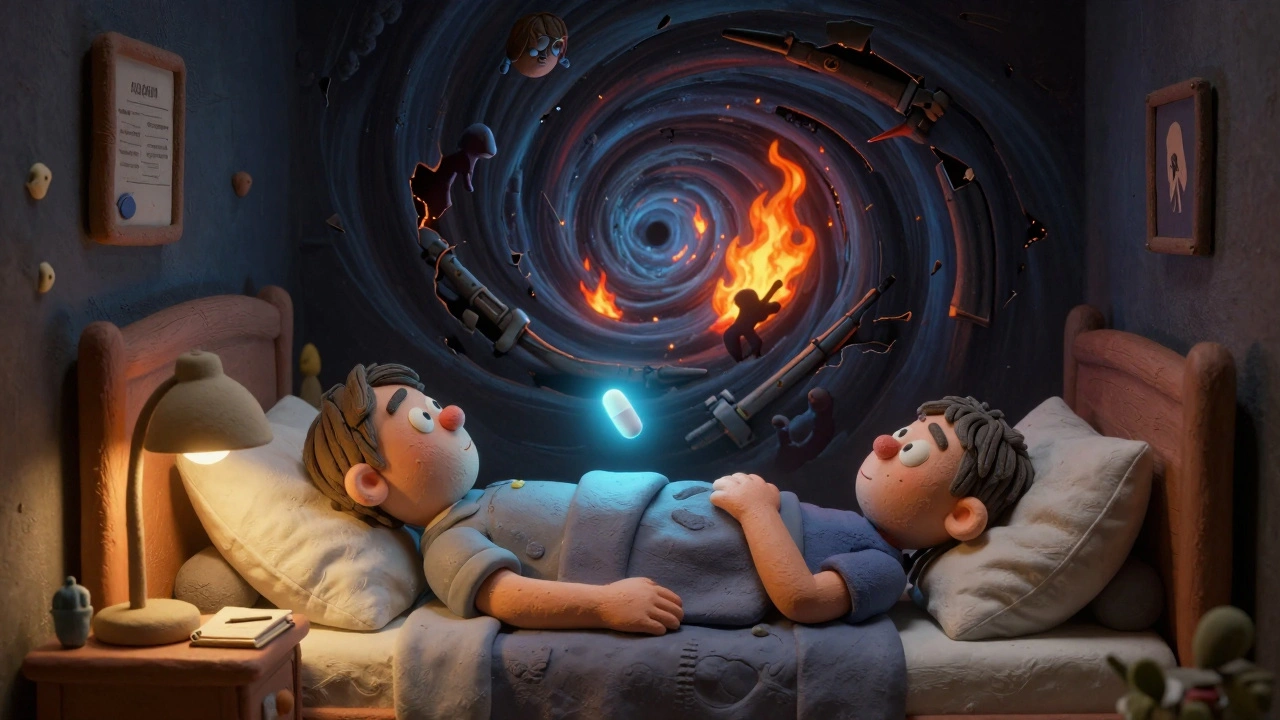
For many people living with PTSD, the worst part isn’t the memories-it’s what happens when they close their eyes. Nightmares don’t just disturb sleep; they shatter recovery. Studies show 71% to 90% of military veterans with PTSD and over half of civilian survivors suffer from frequent, terrifying nightmares. These aren’t just bad dreams. They’re relivings-raw, vivid, and often identical to the trauma itself. And they keep coming, night after night, leaving people exhausted, anxious, and stuck.
Why Sleep Matters More Than You Think
Sleep isn’t just rest. It’s when your brain processes emotions, sorts memories, and calms down the fear centers. When nightmares hijack that process, your brain gets stuck in a loop. The amygdala-the part that sounds the alarm-stays overactive. The prefrontal cortex-the part that says, “That was then, this is now”-gets quieter. That’s why treating sleep isn’t a side project in PTSD care. It’s central to healing.
Research from the University of Pittsburgh shows that when nightmares decrease, so does emotional reactivity. Brain scans reveal normalized activity in fear circuits after successful sleep therapy. Treating sleep isn’t about getting more hours. It’s about restoring balance.
Prazosin: The Blood Pressure Drug That Changed PTSD Care
Prazosin was never meant to treat trauma. Developed in 1976 by Pfizer as a blood pressure medication, it blocks alpha-1 receptors, which calm the body’s fight-or-flight response. In 2003, Dr. Murray Raskind at the VA noticed veterans on prazosin for hypertension were sleeping better. He tested it for nightmares-and it worked.
Today, it’s used off-label for PTSD nightmares across the U.S. and U.K. Typical doses range from 1 mg to 25 mg nightly, usually started at 1 mg and slowly increased. Most people respond between 3 mg and 15 mg, taken 60 to 90 minutes before bed. The goal? Reduce the intensity and frequency of nightmares by dampening the adrenaline surge that fuels them during REM sleep.
But it’s not magic. A 2022 meta-analysis found prazosin reduces nightmares with a moderate effect size-but barely touches other PTSD symptoms like hypervigilance or emotional numbness. It helps you sleep better, not necessarily feel better overall.
And there are trade-offs. Around 44% of users report side effects: dizziness (29%), nasal congestion (18%), and low blood pressure (15%). Some report rebound nightmares when they stop taking it. In a 2021 VA report, 28% of people who discontinued prazosin had worse nightmares than before.
The FDA hasn’t approved prazosin for PTSD nightmares. Why? Because large military trials, like the 2018 DoD study, failed to show consistent results. Critics argue those trials used too-low doses or included people without severe nightmares. Supporters say the drug works-but only if used right.
Sleep-Focused Therapies: No Pills, Just Practice
If medication feels too hit-or-miss, there’s another path: therapy that targets sleep directly. Two approaches stand out: Cognitive Behavioral Therapy for Insomnia (CBT-I) and Imagery Rehearsal Therapy (IRT).
CBT-I is the gold standard for insomnia, even outside PTSD. It’s not about sleeping pills. It’s about retraining your brain. A typical course lasts 6 to 8 weeks, with weekly 60-minute sessions. You learn to:
- Get out of bed if you’re awake for more than 20 minutes
- Limit time in bed to match actual sleep (sleep restriction)
- Challenge thoughts like “I’ll never sleep again”
- Build healthy habits-no screens before bed, consistent wake times
Studies show CBT-I reduces insomnia severity by over 60%. In PTSD patients, it also cuts overall symptoms. One 2022 VA study found combining CBT-I with prolonged exposure therapy boosted total sleep time by 78 minutes-nearly four times more than exposure alone. Patients reported feeling “in control again.”
But it’s hard. The first two weeks? Sleep gets worse before it gets better. Sleep restriction means less time in bed, so you’re tired. Many quit. But those who stick with it? 71% say their sleep quality improved. And 63% still felt the benefits six months later.
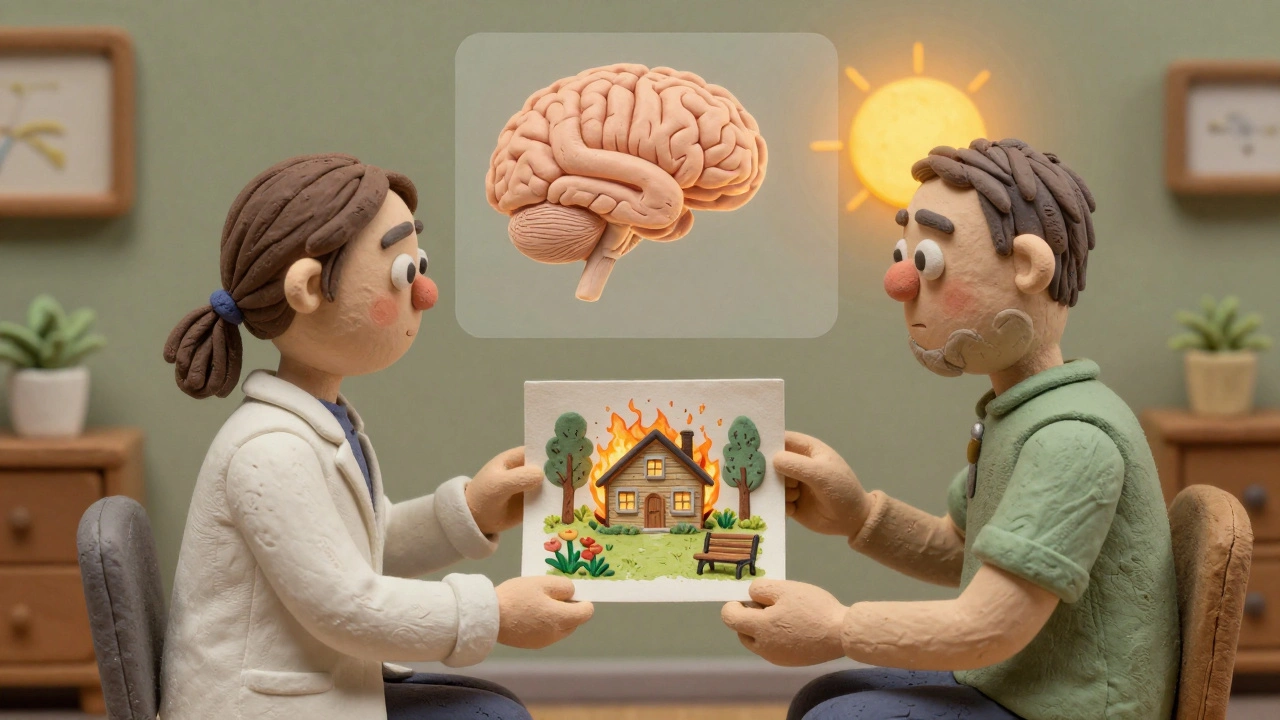
Imagery Rehearsal Therapy (IRT) is more targeted. You pick a recurring nightmare, write down the script, then rewrite it into something positive or neutral-like turning a burning house into a safe garden. You rehearse the new version for 10 to 20 minutes daily. After 3 to 5 sessions, nightmares drop by 67% to 90%.
One veteran described it like “rewriting the ending of a movie you can’t stop watching.” In a 2020 National Center for PTSD survey, 85% of users said IRT reduced nightmare distress. No pills. No side effects. Just mental practice.
Which Approach Works Best?
There’s no one-size-fits-all. But here’s what the data says:
| Treatment | Nightmare Reduction | PTSD Symptom Improvement | Side Effects | Accessibility |
|---|---|---|---|---|
| Prazosin | 50-70% | Minimal (under 10%) | Dizziness, low BP, rebound nightmares | High (prescription, widely available) |
| CBT-I | 50-65% | 40-50% | Initial sleep disruption | Low (specialist required, long waitlists) |
| IRT | 67-90% | 30-40% | None | Low-Medium (requires trained therapist) |
| CBT-I + PE | 70-80% | 60-70% | Emotional discomfort | Very Low (requires dual expertise) |
Prazosin wins for speed and ease. If you can’t access therapy or need quick relief, it’s a solid option. But it doesn’t fix the root cause.
CBT-I and IRT take longer. They require effort. But they change how your brain handles fear long-term. They don’t just mask symptoms-they rebuild your relationship with sleep.
What’s New in 2025?
The field is evolving. In 2020, the FDA approved NightWare-a digital therapeutic that uses Apple Watch to detect nightmare-related heart rate spikes. When it senses one, it delivers a gentle vibration to shift your brain out of REM without waking you. In a 2022 study, 58% of users saw a drop in nightmares.
The VA’s “Sleep SMART” initiative now offers CBT-I in 143 facilities, serving over 86,000 veterans yearly. Completion rates? 74%. That’s higher than most community clinics.
And the Department of Defense just allocated $28 million in 2024 to study combining CBT-I with virtual reality exposure. Imagine reliving a trauma in a safe, controlled setting-then immediately practicing better sleep afterward. Early results are promising.
Real Challenges: Why People Don’t Get Help
Even with good options, access is uneven. Rural veterans are 47% less likely to find a CBT-I specialist than those in cities. Insurance often limits therapy to six sessions-even though eight are proven more effective. And many patients avoid trauma-focused work because it feels too overwhelming.
Some clinicians report 47% of patients resist addressing trauma during sleep therapy. They just want the nightmares to stop. That’s understandable. But without touching the trauma, nightmares often return.
Then there’s the stigma. Some people think needing sleep meds or therapy means they’re “broken.” The truth? Nearly everyone with PTSD struggles with sleep. It’s not weakness. It’s biology.
What Should You Do?
If you’re dealing with PTSD nightmares:
- Track your nightmares for two weeks. Note frequency, content, and how you feel afterward.
- Try a sleep diary. Write down bedtime, wake time, and how rested you feel.
- Ask your doctor about prazosin-but only if you’re willing to monitor blood pressure and commit to a 4-6 week trial.
- Seek out CBT-I or IRT. Look for providers certified by the Society of Behavioral Sleep Medicine.
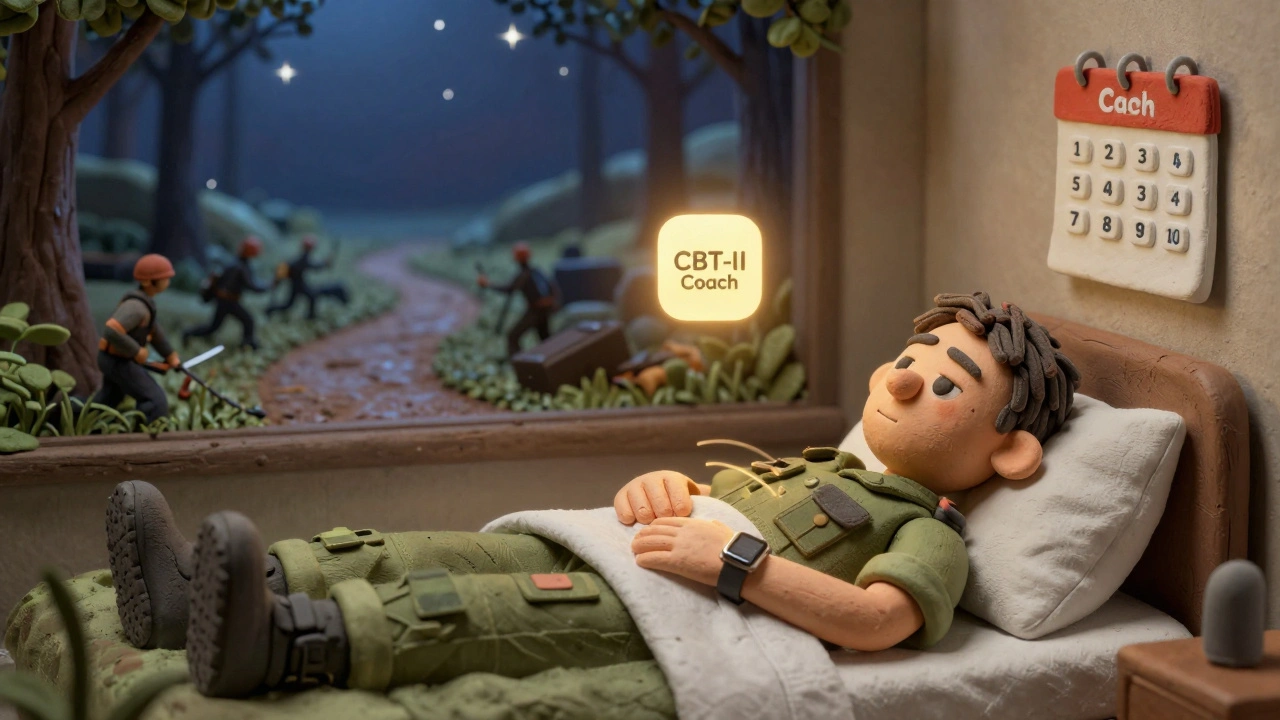
- Consider digital tools like CBT-I Coach or NightWare if therapy isn’t available.
Don’t wait for the nightmares to get worse. Don’t assume they’re just part of PTSD. They’re treatable. And fixing sleep might be the first step to healing everything else.
Does prazosin cure PTSD nightmares permanently?
No. Prazosin reduces nightmare frequency while you’re taking it, but it doesn’t change the underlying trauma memory. When stopped, nightmares often return-especially if trauma hasn’t been addressed. It’s a tool, not a cure.
Can I use prazosin and CBT-I together?
Yes, and many clinicians recommend it. Prazosin can help stabilize sleep enough to make therapy easier. Once sleep improves, you may be able to lower or stop the medication while keeping gains from therapy. Always work with your doctor to taper safely.
Is IRT effective for all types of nightmares?
IRT works best for recurring nightmares with clear content-like being chased, falling, or reliving trauma. It’s less effective for vague anxiety dreams or sleep terrors (which occur in non-REM sleep). If your nightmares are always the same, IRT has a high chance of helping.
Why hasn’t the FDA approved prazosin for PTSD nightmares?
Because large trials showed mixed results. Some found big benefits; others found no difference from placebo. Experts blame inconsistent dosing, short treatment times, and including patients without severe nightmares. The FDA wants consistent, repeatable proof-and that’s still being worked on.
How long does CBT-I take to work?
Most people see improvements within 2 to 4 weeks. But the real change happens after 6 to 8 weeks. The first week is often the hardest-you’ll feel more tired because you’re restricting time in bed. Stick with it. The gains last longer than any pill.
Are there free or low-cost options for CBT-I or IRT?
Yes. The VA offers free CBT-I to veterans. The CBT-I Coach app is free on iOS and Android. Some universities and nonprofits run low-cost sleep clinics. Online IRT programs are available too-look for those backed by peer-reviewed research, not just marketing.
Akash Sharma
December 4, 2025 AT 03:29I’ve been on prazosin for 14 months now, and honestly? It’s the only thing that’s let me sleep through the night without waking up drenched in sweat, heart pounding like I’m back in that convoy. I didn’t believe it would work at first-thought it was just another placebo-but after the third week, I started noticing I wasn’t jolting awake at 3 a.m. anymore. The dreams didn’t disappear, but they lost their teeth. They became more like bad movies I could watch without screaming. I still do IRT on the side, just to keep my brain from slipping back into old patterns. It’s not a cure, but it’s a lifeline. And yeah, I get dizzy sometimes, and my nose is always stuffed, but I’d take that over another night of reliving the explosion in my head. My VA therapist says the fact that I’m still on it after a year means my brain’s starting to rewire. That’s the real win.
Justin Hampton
December 5, 2025 AT 03:45Everyone’s acting like prazosin is some miracle drug but the DoD study showed no significant difference from placebo. You’re just trading one set of problems for another. Dizziness? Low BP? Rebound nightmares? That’s not treatment, that’s chemical band-aiding. And CBT-I? Good luck finding someone who actually knows how to do it outside a VA hospital. Most therapists treat it like a glorified sleep hygiene lecture. Meanwhile, the real issue-trauma-is still sitting there, untouched. You don’t fix a broken brain with a blood pressure pill and a bedtime story.
Pooja Surnar
December 5, 2025 AT 13:47OMG why is everyone so obsessed with pills?? Like you think your trauma is just a glitch you can hack with medicine?? IRT is FREE and you just have to use your brain?? I did it in 3 weeks and now I dream about baking cookies instead of dying in a ditch. People who take prazosin are just lazy and want a quick fix. Also low blood pressure?? Bro that’s not even a side effect that’s your body telling you you’re weak. Get off the drugs and face your demons. Also why are we even talking about this like it’s a medical issue? It’s a spiritual one. You need to pray more.
Sandridge Nelia
December 6, 2025 AT 15:47Hi! I’m a licensed sleep therapist and I just wanted to say how glad I am that this thread is so thoughtful. 😊 Prazosin can be a great bridge-especially if someone’s too overwhelmed to start therapy right away. I always tell my clients: it’s okay to use meds while you build your coping toolkit. And IRT? Honestly, it’s magic. One client rewrote her nightmare of being trapped in a burning car into her driving a convertible with her dog and her mom waving from the passenger seat. She cried the first time she imagined it. Now she falls asleep smiling. 🌸 CBT-I is harder, but the gains are lasting. If anyone needs help finding a certified provider, DM me-I’ve got a list of affordable options, including free VA apps and university clinics. You’re not alone.
Mark Gallagher
December 8, 2025 AT 02:07Let’s be clear-this whole PTSD nightmare industry is a scam run by bureaucrats and pharmaceutical shills. The VA pushes prazosin because it’s cheap and easy to prescribe. CBT-I? That requires trained personnel and time. Neither works for real soldiers. Real soldiers don’t need therapy-they need discipline. They need to get up at 4 a.m., run five miles, and drink coffee until the nightmares stop. This country is falling apart because we’ve turned weakness into a medical condition. You don’t cure trauma with apps and dreams. You cure it with grit. And if you can’t handle a bad dream? Maybe you shouldn’t have signed up.
Wendy Chiridza
December 8, 2025 AT 13:58I’ve been doing CBT-I for 6 months and I can’t believe how much better I feel. I used to think I needed to be in bed 8 hours to be rested. Turns out I was just lying there terrified. Now I only spend 5 hours in bed and I sleep like a rock. The first two weeks were brutal-I was exhausted and irritable and wanted to quit. But I stuck with it. My therapist said sleep restriction isn’t about reducing sleep-it’s about increasing sleep pressure. It’s like resetting a muscle. And yeah, I still take prazosin at night but only 5 mg now. I’m planning to taper off soon. The dreams are still there sometimes but they don’t feel real anymore. I feel like I’m finally getting my life back
Pamela Mae Ibabao
December 10, 2025 AT 11:16Okay but let’s talk about the elephant in the room-why is it always veterans who get all the attention? Civilian trauma survivors? The ones who survived domestic violence? Childhood abuse? They get zero resources. No NightWare. No VA programs. No free CBT-I Coach. And yet they’re the ones having the same nightmares, just without the uniform. The system is rigged. If you’re a soldier, you get pills and apps. If you’re a woman who got trapped in a basement for three years? Good luck finding a therapist who won’t charge you $200 an hour. We’re not talking about sleep here. We’re talking about who society decides is worth healing.
Joanne Rencher
December 11, 2025 AT 09:36So I tried IRT. Wrote down my nightmare, rewrote it as me floating in a pool with dolphins. Didn’t work. Still woke up screaming. So I just started taking prazosin. And guess what? It worked. No drama. No journaling. No ‘rewriting my trauma’. I just sleep. And I’m not ashamed of that. People who act like therapy is the only ‘real’ way are just making themselves feel superior. I’m not broken. I just need a pill to stop my brain from killing me every night. And if that’s not good enough for you? Cool. But don’t tell me how to heal.