
When Autoimmune Disease Steals Your Ability to Do Everyday Things
Imagine waking up and not being able to open a jar, button your shirt, or walk to the kitchen without needing to sit down. For millions with autoimmune diseases like rheumatoid arthritis, lupus, or Sjögren’s syndrome, this isn’t rare-it’s daily reality. Functional impairment isn’t just about pain. It’s about losing control over your own body’s simplest tasks. The inflammation that attacks your joints, muscles, and nerves doesn’t just hurt-it disables. And while medications slow the disease, they don’t fix the damage done to your ability to live normally.
That’s where rehabilitation and occupational therapy come in. Not as afterthoughts, but as essential, science-backed tools to reclaim independence. Studies show structured rehab can improve daily function by 35-42% in just a few months, measured by the Health Assessment Questionnaire Disability Index (HAQ-DI). The key? Timing. Starting therapy within the first year of symptoms makes the biggest difference.
How Physical Therapy and Occupational Therapy Work Together
Many people think rehab means just stretching or lifting weights. But in autoimmune conditions, physical therapy (PT) and occupational therapy (OT) play very different, equally important roles.
PT focuses on movement: strength, balance, endurance. It helps you walk, stand, climb stairs. Research from the Back to Motion database shows PT is 28% more effective than OT alone for lower-body function-like getting out of a chair or walking across a room. During flare-ups, PT uses gentle isometric exercises at just 20-30% of your max strength. As things calm down, it shifts to low-impact aerobic work-like cycling or walking-keeping your heart healthy without overloading inflamed joints.
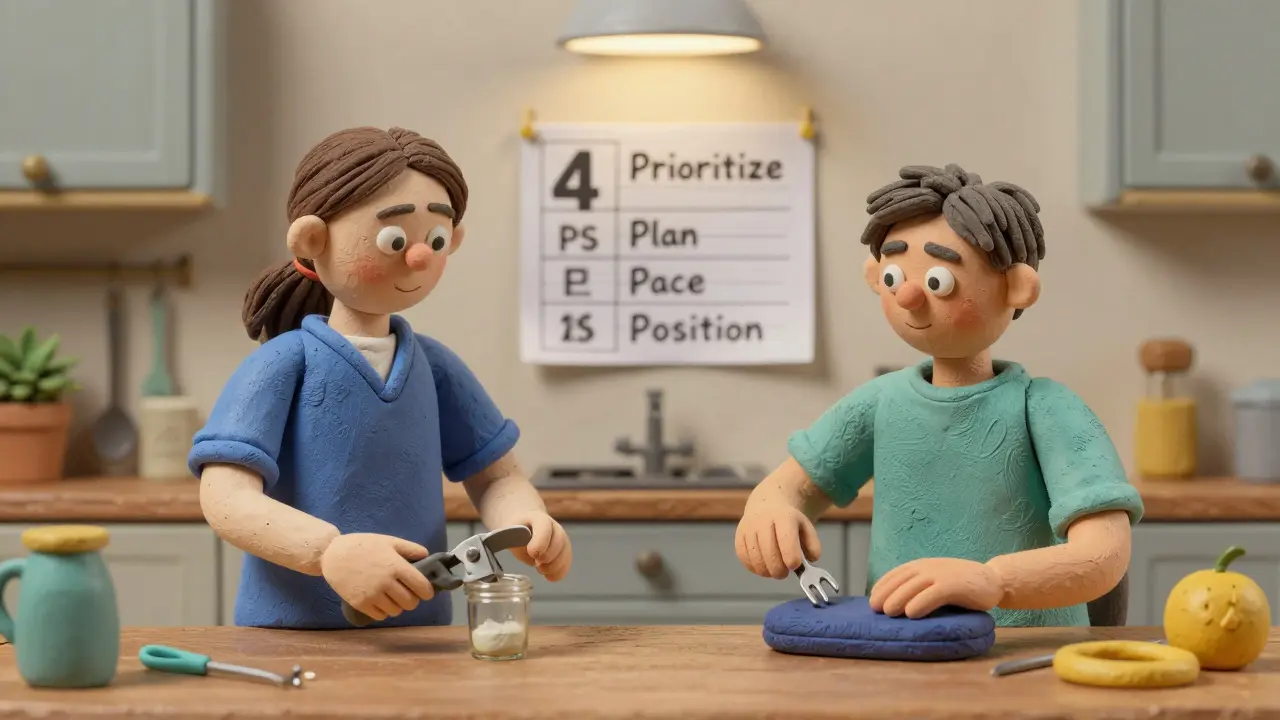
OT, on the other hand, focuses on doing. Getting dressed. Cooking. Typing. Holding a cup. OT uses the 4 Ps: Prioritize what matters most, Plan your day around energy limits, Pace yourself with frequent breaks, and Position your body to reduce strain. For example, instead of standing at the sink for 30 minutes washing dishes, you might do 15 minutes, rest 7, then finish. This isn’t laziness-it’s survival.
OT also introduces adaptive tools: jar openers, reachers, voice-controlled lights, and ergonomic keyboards. One study found voice-activated smart home systems boosted independence by 31% in people with hand impairment from autoimmune disease.
Hydrotherapy: Water as Medicine
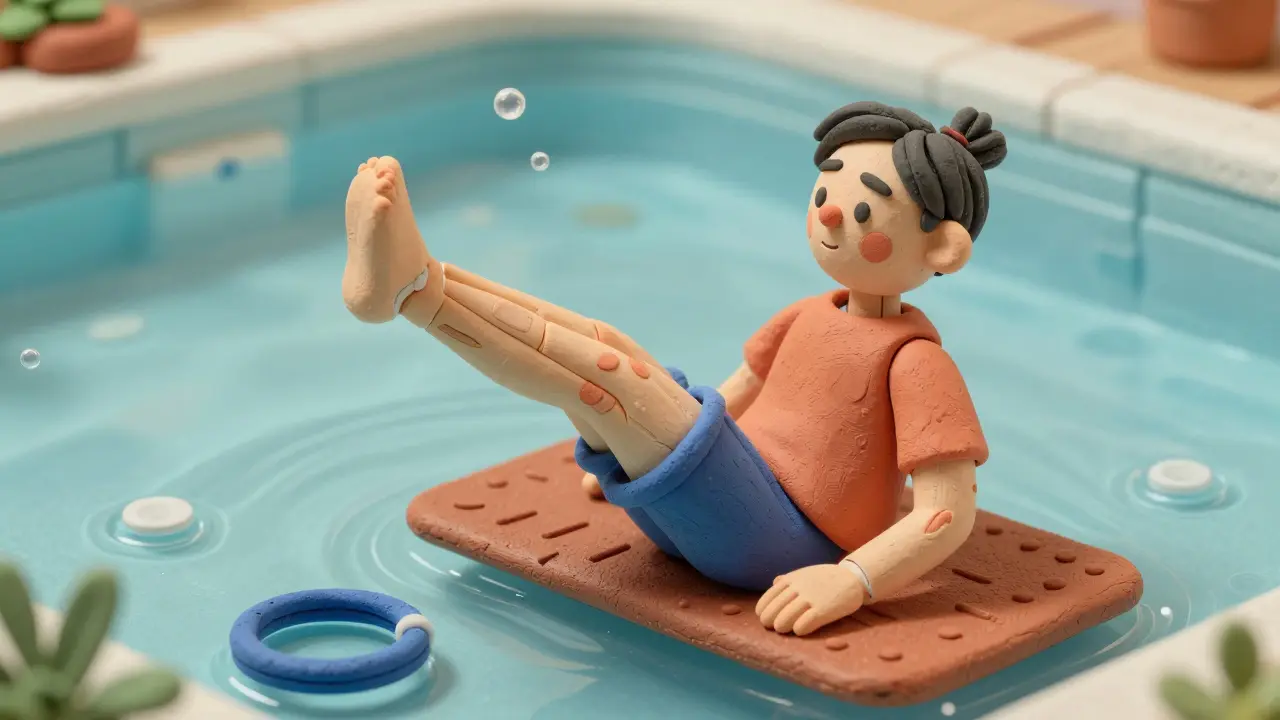
Water changes everything. Hydrotherapy-exercising in warm water-is one of the most effective tools for managing autoimmune flare-ups. The warmth soothes stiff joints. The water supports your weight, taking pressure off damaged knees, hips, and spine. And the resistance helps build strength without impact.
Studies show hydrotherapy reduces pain 22% more than land-based exercise during active disease phases. Visual Analog Scale scores drop from an average of 7.2 to 4.1, compared to 5.8 on land. That’s the difference between being barely functional and being able to cook dinner without needing help.
But here’s the catch: not every clinic has it. Nearly 70% of rural rehab centers in the U.S. don’t have underwater treadmills or warm-water pools. That’s why many people now use home-based hydrotherapy options-like portable hot tubs with resistance jets-or even warm showers with gentle movement routines.
Exercise Must Be Dosed Like Medicine
One of the biggest mistakes people make? Pushing through pain. It’s tempting. You have a good day, feel less stiff, and think, “I can finally do what I used to.” Then you crash-sometimes for days. That’s the boom-bust cycle, and it affects 63% of people with autoimmune conditions.
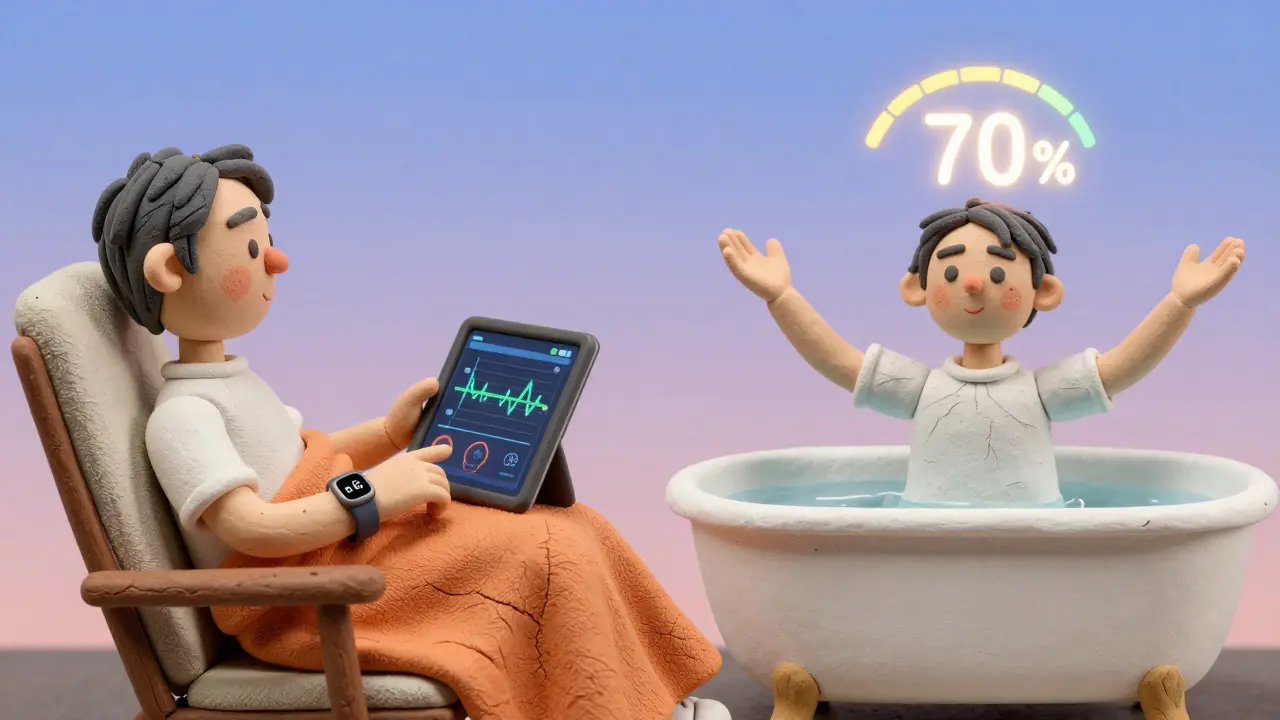
Experts like Dr. Jane Smith from Johns Hopkins say exercise must be dosed like medication: right amount, right time, right type. Too much? It triggers inflammation. Too little? You lose strength and stamina. The sweet spot? The 70% rule: never push past 70% of your perceived maximum effort. If you’re sweating, gasping, or shaking-you’ve gone too far.
Heart rate variability (HRV) monitoring is becoming a game-changer. Devices like Oura Ring or Fitbit track your body’s recovery signals. If your HRV is low, your nervous system is stressed. That’s your cue to rest, not train. Dr. Lisa Rodriguez from Mayo Clinic presented data at the 2022 ACR meeting showing HRV-guided workouts led to fewer flares and better long-term function.
What Doesn’t Work-and Why
Not all rehab is created equal. And some approaches can actually make things worse.
High-impact training like running, jumping, or CrossFit? 37% of patients try it-and 23% end up with injuries. The American Physical Therapy Association warns against exercise if you have active joint swelling in more than two joints, a fever over 100.4°F, or had a steroid injection in the last 72 hours.
Therapists who ignore central fatigue are another problem. In lupus and Sjögren’s, fatigue isn’t just from poor sleep or lack of effort-it’s neurological. Your brain and nerves are exhausted. Pushing through it doesn’t build endurance; it burns you out. A 2021 JAMA Internal Medicine paper found 19% of rehab programs miss this entirely, making symptoms worse.
And then there’s the insurance issue. Most plans cover only 12-15 therapy sessions a year. But studies show you need 24-30 to see lasting results. Many patients quit because they can’t afford more. That’s why home-based telehealth programs have exploded since 2020-68% of patients now use them, up from just 22% before the pandemic.
Measuring Progress: It’s Not Just Pain
Doctors measure disease activity with blood tests and joint counts. But how do you know if rehab is working? That’s where tools like the Canadian Occupational Performance Measure (COPM) come in. It’s not about pain-it’s about what you can actually do.
Patients rate their ability to perform daily tasks on a 10-point scale. A 2-point increase is considered clinically meaningful. That might mean going from needing help to button a shirt (score: 3) to doing it alone (score: 5). Or from avoiding stairs (score: 2) to climbing one flight without stopping (score: 4).
Therapists use this tool at the start, then every 6-8 weeks. It keeps treatment focused on your real goals-not just what the therapist thinks you should do.
What You Can Do Right Now
You don’t need to wait for a referral or insurance approval to start making changes.
- Start a daily activity diary. Note what you do, how long, how you felt before and after. Look for patterns-what drains you? What helps?
- Use the 4 Ps every day. Prioritize your top 3 tasks. Plan rest between them. Pace yourself. Position your body wisely-use pillows for support, sit instead of stand when you can.
- Try water-based movement. Even a warm bath with gentle arm circles or leg lifts can help. No pool? Try seated exercises in the tub.
- Set a 70% limit. If you feel like you’re giving 80%, stop. Rest. You’ll thank yourself tomorrow.
- Ask your doctor about HRV monitoring. Some clinics offer it for free as part of rehab programs.
And if your therapist pushes you too hard? Speak up. Say: “I need to adjust this. I’m not here to push through pain-I’m here to stay functional.” Good therapists will listen. Bad ones won’t. Find one who understands autoimmune disease isn’t something you can out-exercise.
The Future Is Personalized
Rehab is getting smarter. The NIH launched the Autoimmune Rehabilitation Registry in January 2023, tracking outcomes for over 5,000 patients across 47 clinics. New research shows adjusting exercise intensity based on weekly blood markers like IL-6 improves outcomes by 39%.
And apps are coming. The Lupus Foundation’s ‘PacePartner’ is in Phase 3 trials. It uses wearable sensors to predict flares 2-3 days in advance with 82% accuracy. Imagine getting a notification: “Your body is signaling a flare. Today, rest. Tomorrow, gentle stretching.”
But the biggest challenge? Workforce shortage. By 2026, the U.S. will be short 18,000 certified rehab therapists. Specialized training is rare-only a few hundred therapists nationwide have completed the 120-hour Autoimmune Specialty Certification from the Academy of Pelvic Health Physical Therapy.
That’s why education matters. Learn your disease. Learn your limits. Learn what works. And don’t wait for perfect care-start with what you can control today.
Can occupational therapy help me return to work if I have autoimmune disease?
Yes. OT is specifically designed to help people regain the ability to perform work-related tasks. Therapists assess your job demands-typing, lifting, standing-and create adaptive strategies like ergonomic workstations, timed breaks, voice-to-text software, or modified schedules. One patient reduced their HAQ-DI from 2.1 to 0.8 after 6 months of OT, allowing them to return to part-time work. Success depends on matching therapy to your specific job, not generic advice.
Why does my pain get worse after physical therapy sessions?
If your pain spikes after therapy and lasts more than 48 hours, the intensity was too high. Autoimmune flares are not like regular muscle soreness. Pushing through pain triggers inflammation and can cause a “crash” lasting days. A good therapist uses the 70% rule and adjusts based on your daily symptoms-not a fixed plan. If your therapist ignores this, find someone who specializes in autoimmune conditions.
Is hydrotherapy better than land-based exercise for autoimmune disease?
During active flares, yes. Hydrotherapy reduces joint stress and pain more effectively than land exercise. Studies show a 22% greater reduction in pain scores with water-based therapy. But during remission, land-based exercise builds strength and endurance better. The best approach is to use water therapy during flares and transition to land as symptoms improve. If you don’t have access to a pool, warm showers and seated water-like movements can still help.
How do I know if my therapist is qualified to treat autoimmune disease?
Ask if they have specialized training in autoimmune conditions. Look for therapists certified through the Academy of Pelvic Health Physical Therapy’s Autoimmune Specialty Certification (120-hour program). They should know the 4 Ps of energy conservation, understand central fatigue, and use tools like the COPM or HAQ-DI. Avoid therapists who push “no pain, no gain” or ignore your flare patterns. Good ones adjust treatment daily based on how you feel.
Can I do rehab at home without a therapist?
You can start, but you shouldn’t rely on it long-term. Home programs are great for maintenance and using the 4 Ps, pacing, and adaptive tools. But initial assessments-like determining your true exertion limits, identifying joint risks, or choosing the right equipment-need expert input. Telehealth PT/OT visits (now covered by many insurers) can bridge the gap. Use apps like ‘PacePartner’ (in trials) or activity diaries to track progress and stay safe.
Jane Wei
December 17, 2025 AT 11:02Just tried the 70% rule yesterday-stopped mid-squat because my knees were whispering, not screaming. Still got through my walk. Feels like a win.
Radhika M
December 18, 2025 AT 00:02From India, I use warm water in a bucket with a chair. Do leg lifts, arm circles. No pool, no problem. Small moves help big time.
Donna Packard
December 19, 2025 AT 03:05This post gave me hope. I thought I was just lazy. Turns out, I just needed to listen to my body-not fight it.
Sam Clark
December 19, 2025 AT 07:43The emphasis on individualized pacing and the 4 Ps is not merely practical-it is clinically grounded and ethically imperative. Many rehabilitation paradigms still operate under a one-size-fits-all model, which fundamentally misunderstands the neuroimmune dynamics of chronic autoimmune conditions.
Naomi Lopez
December 19, 2025 AT 14:47It’s fascinating how the HAQ-DI and COPM are the only metrics that actually matter-yet insurance companies still prioritize ESR and CRP. The disconnect between clinical reality and reimbursement policy is not just bureaucratic-it’s cruel.
And let’s be real: if your therapist hasn’t read the 2021 JAMA paper on central fatigue, they’re operating on 1998 guidelines. Please, for your own sake, don’t waste your energy on them.
Jessica Salgado
December 21, 2025 AT 09:21Wait-so you’re telling me I’m not broken because I can’t do CrossFit anymore? That I’m not weak because I need to sit down after brushing my teeth? I’ve spent YEARS feeling guilty about this. I’m crying. Thank you.
Patrick A. Ck. Trip
December 22, 2025 AT 21:42im not a doctor but i read a lot and i think the hr v thing is kinda overhyped. my fitbit says im stressed every day and i still do my walks. maybe just listen to your body? not your gadget?
Evelyn Vélez Mejía
December 23, 2025 AT 13:02There is a metaphysical dimension to functional impairment that transcends the biomechanical: it is the erosion of autonomy, the quiet death of self-efficacy. When the body betrays its own architecture, the soul must learn to navigate a world that no longer conforms to its original design. Occupational therapy, then, is not merely remediation-it is the reclamation of existential agency through the ritual of daily acts: opening a jar, pouring tea, buttoning a shirt. These are not trivialities; they are sacraments of personhood.
And yet, we live in an age that valorizes productivity over presence, output over endurance. The very culture that demands we ‘push through’ is the same one that pathologizes the need to rest. The tragedy is not the disease-it is the silence that surrounds it.
Raven C
December 24, 2025 AT 04:45Oh my god. I’ve been saying this for years. The fact that hydrotherapy isn’t covered universally is a national scandal. And why are we still using ‘pain as a gauge’? Pain is not a reliable indicator in autoimmune disease-it’s a trap. And therapists who don’t know the difference between central fatigue and laziness shouldn’t be licensed. Period.
Also, ‘PacePartner’? Please. That app is going to be a data mine for Big Pharma. Don’t trust tech companies with your biomarkers. They’ll sell your HRV to insurers and then deny you coverage.
Steven Lavoie
December 25, 2025 AT 18:25As someone who moved from Canada to the U.S., I’ve seen both systems. The Canadian approach to rehab is more holistic-even if slower. Here, it’s all about ‘maximum functional gain in minimum sessions.’ But autoimmune disease doesn’t follow a timeline. It follows your body’s rhythm. That’s why telehealth is the real revolution-not because it’s convenient, but because it’s sustainable.
Peter Ronai
December 26, 2025 AT 02:03Everyone’s acting like this is new info. The 70% rule? Been in physical therapy circles since 2015. The ‘4 Ps’? OTs have been using that since the 80s. And hydrotherapy? My grandma did warm baths with Epsom salts in 1972. Stop acting like you discovered fire.
Also, ‘Autoimmune Specialty Certification’? That’s a marketing ploy. Any decent PT knows how to adapt. You don’t need a fancy badge to be good.
Chris Van Horn
December 26, 2025 AT 14:45Ugh. Another ‘listen to your body’ post. You know what else listens to your body? Cancer. And it doesn’t get a medal for it. If you’re too weak to lift a dumbbell, maybe you shouldn’t have gotten sick in the first place. This is just coddling.
Also, ‘PacePartner’? Sounds like a socialist app. And why are we letting apps dictate our rehab? Next thing you know, we’ll have AI telling us when to breathe.
amanda s
December 26, 2025 AT 19:52ALL of this is just a liberal conspiracy to make people feel guilty for being productive. If you can’t work, you shouldn’t be working. And if you need a jar opener, you’re just lazy. We used to just push through pain back in the 70s. No one had ‘central fatigue’ then. We had discipline.
Also, hydrotherapy? That’s just a fancy way to say ‘take a hot bath.’ And HRV? That’s just a Fitbit scam. Get a real job, stop complaining, and move.