
Immunocompromised Medication Risk Checker
Medication Risk Assessment
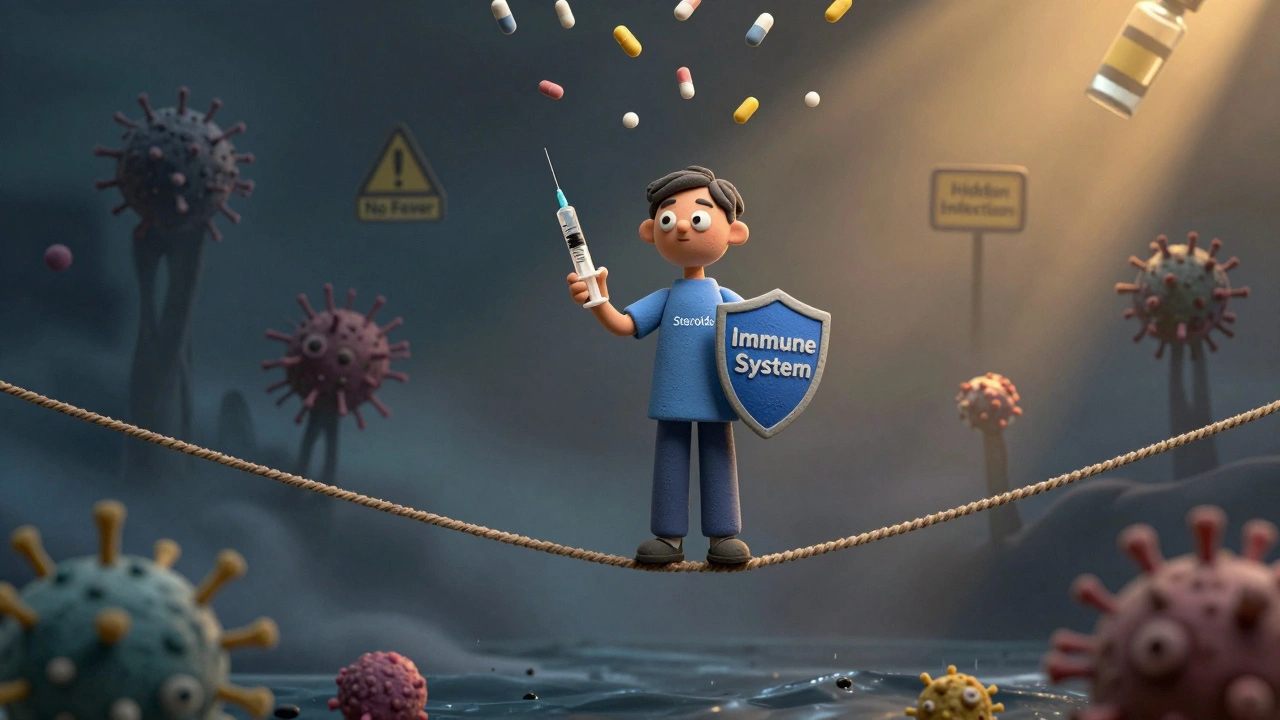
When your immune system is weakened-whether from an autoimmune disease, organ transplant, chemotherapy, or long-term steroid use-taking medication isn’t just about managing symptoms. It’s about walking a tightrope between staying healthy and avoiding life-threatening complications. For immunocompromised patients, even common drugs can trigger unexpected, severe reactions. The real danger isn’t always the disease itself. It’s what happens when your body can’t fight back the side effects, infections, or drug interactions that most people shrug off.
What Does It Mean to Be Immunocompromised?
Being immunocompromised means your immune system isn’t working the way it should. You might not get sick more often, but when you do, it hits harder. Infections last longer. Fever might not even show up. A simple cut can turn into a serious wound. And medications that help control your condition can also make you more vulnerable. This isn’t rare. Around 24 million people in the U.S. alone have an autoimmune disease that often requires immunosuppressive drugs. Add in transplant recipients, cancer patients on chemo, and those on long-term steroids, and you’re looking at millions of people whose bodies are constantly on edge. The problem? Many of these drugs don’t just calm down the overactive immune response-they quiet the whole system. That means your body loses its ability to spot and kill bacteria, viruses, fungi, and even dormant infections like tuberculosis or hepatitis.How Immunosuppressants Work-and Why They’re Risky
There are several classes of immunosuppressants, each with different risks. Understanding which one you’re on matters. Corticosteroids like prednisone are among the most commonly prescribed. They work by reducing inflammation and suppressing immune cell production. But here’s the catch: doses above 20mg per day (prednisone equivalent) and use longer than two weeks significantly raise infection risk. A 2012 study of over 4,000 patients showed steroid users had a 60% higher chance of developing infections than those not on steroids. Even worse, steroids can mask the usual signs of infection-no fever, no swelling, no redness. You might feel fine, but inside, an infection could be spreading unnoticed. Conventional DMARDs like methotrexate and leflunomide are used for rheumatoid arthritis, lupus, and other autoimmune conditions. Methotrexate helps about 70% of patients control their disease, but nearly half stop taking it within a year because of side effects: nausea, fatigue, mouth sores, hair thinning, and liver damage. Regular blood tests are non-negotiable. Monthly CBC and liver function tests catch problems early. Azathioprine reduces T and B cells, which are critical for fighting infections. Its most dangerous side effect? Leukopenia-low white blood cell count. That’s when bacterial infections and rare but deadly ones like Pneumocystis pneumonia or JC virus (which causes PML) can take hold. Hepatitis B and C can also flare up unexpectedly. Biologics like TNF inhibitors (Humira, Enbrel) and IL-6 blockers (Actemra) target specific parts of the immune system. They’re powerful-many patients say they’ve gone from wheelchair-bound to hiking again. But they carry the highest infection risk of any class. Studies show biologics are significantly more likely to cause serious infections than traditional DMARDs. Herpes zoster (shingles) reactivation is common. One Reddit user in an autoimmune group shared how they ended up in the hospital with pneumonia after starting a biologic. Their doctor hadn’t warned them about the risk. Calcineurin inhibitors like cyclosporine and tacrolimus are used after transplants. They prevent organ rejection but come with a hidden danger: viral reactivations. Epstein-Barr virus, cytomegalovirus, and polyomavirus can cause organ damage, neurological issues, or even cancer. These drugs are a balancing act-too little, and the body rejects the new organ; too much, and you’re fighting infections on top of it all.The Hidden Danger: Atypical Infections
Most people know what a cold or flu looks like. But for someone on immunosuppressants, infections don’t always follow the script. You might not have a fever. Your lungs might be filling with fluid, but you don’t feel short of breath. A skin rash might be the only sign of a deep fungal infection. A headache could be the start of meningitis caused by a fungus you picked up from soil. Dr. Francisco Aberra and Dr. David Lichtenstein found that steroids can blunt the body’s natural warning signals. That’s why immunocompromised patients often arrive at the ER in critical condition-because they didn’t realize they were sick until it was too late. Common opportunistic infections include:- Pneumocystis jirovecii pneumonia (PCP)
- Progressive multifocal leukoencephalopathy (PML) from JC virus
- Nocardia brain or lung infections
- Cytomegalovirus (CMV) retinitis or colitis
- Reactivated tuberculosis
Vaccines: Protection with Limits
Vaccines are your first line of defense-but they’re not foolproof. The CDC recommends getting all routine vaccines before starting immunosuppressants. Once you’re on them, live vaccines (like MMR, varicella, nasal flu spray) are off-limits. They could cause the disease they’re meant to prevent. Inactivated vaccines (flu shot, pneumonia, COVID-19, tetanus) are safe, but they often don’t work as well. Your immune system just doesn’t respond as strongly. That’s why immunocompromised patients are advised to get extra doses of the COVID-19 vaccine and booster shots every few months. And here’s something surprising: a 2021 Johns Hopkins study found that people on immunosuppressants didn’t have worse outcomes from COVID-19 than those without. Some even had milder cases. Why? Researchers think the drugs may have dampened the dangerous cytokine storm that kills some patients. But this doesn’t mean you can let your guard down. You still need to be cautious.What You Can Do to Stay Safe
There’s no magic bullet, but these steps can make a huge difference:- Wash your hands for at least 20 seconds-scrub between fingers, under nails, and up your wrists. Use hand sanitizer if soap isn’t available.
- Wear a mask in crowded places, especially during flu season or outbreaks.
- Avoid sick people-even if they just have a cold.
- Don’t delay care for cuts or scrapes. Clean them immediately and watch for redness, swelling, or warmth.
- Know your symptoms. A slight cough, low energy, or mild stomach upset could be the first sign of something serious. Don’t wait.
- Get tested for latent infections before starting treatment. Hepatitis B, TB, and chickenpox history matter.
- Ask about vaccines with your doctor. Are you up to date? Do you need extra doses?
Taya Rtichsheva
December 9, 2025 AT 07:21Mona Schmidt
December 10, 2025 AT 15:22Darcie Streeter-Oxland
December 10, 2025 AT 19:16Christian Landry
December 11, 2025 AT 21:24Sarah Gray
December 12, 2025 AT 14:43Suzanne Johnston
December 12, 2025 AT 19:58Graham Abbas
December 13, 2025 AT 10:05Steve Sullivan
December 13, 2025 AT 16:42Evelyn Pastrana
December 14, 2025 AT 15:38George Taylor
December 14, 2025 AT 18:24Guylaine Lapointe
December 15, 2025 AT 20:22Katie Harrison
December 17, 2025 AT 20:09