
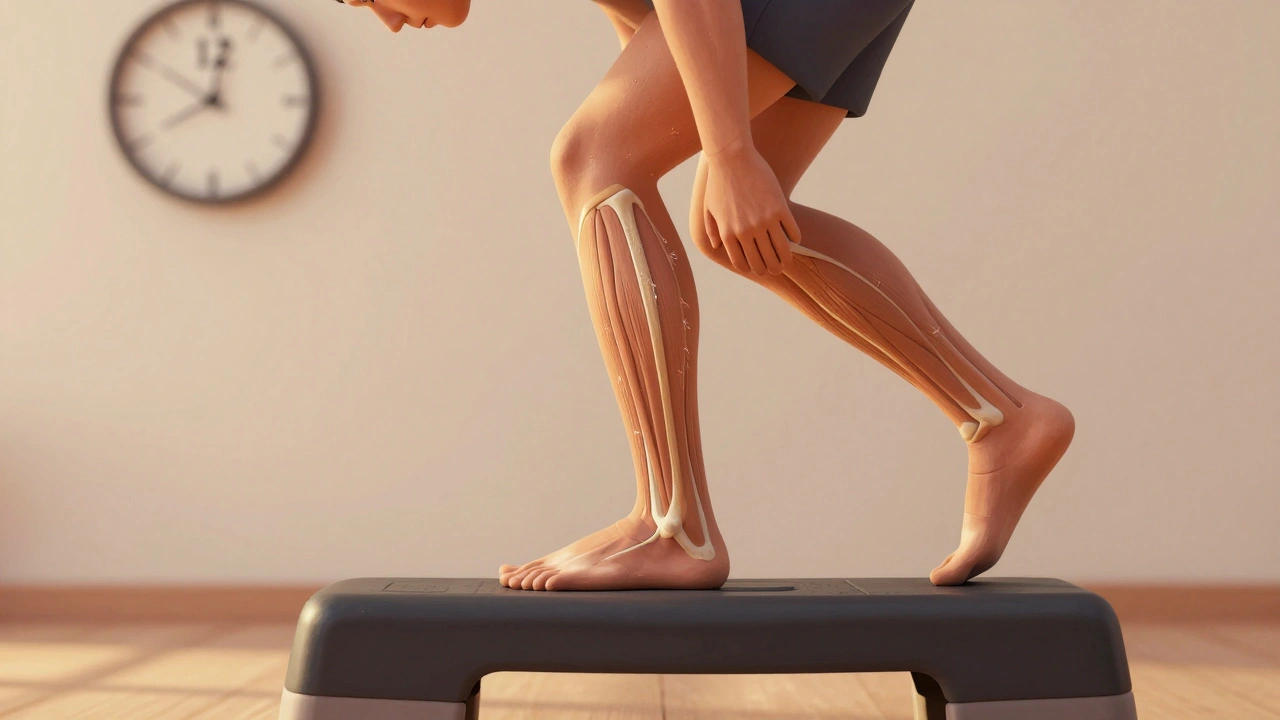
When your tendon hurts-not just a quick twinge, but a deep, persistent ache that flares up when you walk, run, or even stand-you’re not just dealing with inflammation. You’re dealing with tendinopathy. It’s not a sprain. It’s not a tear. It’s a breakdown. And the way most people try to fix it-rest, ice, steroids-is often the wrong path.
What Tendinopathy Actually Is
Tendinopathy isn’t just "tendonitis." That old term suggested swelling and irritation, like a cut getting infected. But research since the late 1990s shows it’s far more complex. The tendon’s collagen fibers, which normally run like tight cables, start to fray, thin out, and lose their structure. Cells inside the tendon go haywire. Pain isn’t from inflammation-it’s from the tendon trying, and failing, to repair itself. This isn’t just an athlete’s problem. It hits office workers with desk-bound shoulders, parents carrying kids, and retirees who’ve kept walking. The Achilles and patellar tendons are the most common trouble spots, but rotator cuff, elbow (tennis elbow), and even the hamstring tendon can get caught in this cycle. The key? You can’t heal this by avoiding movement. You have to load it-correctly.Eccentric Training: The Gold Standard
In 1998, Dr. Hakan Alfredson published a study that changed everything. He had patients with chronic Achilles pain do eccentric heel drops-standing on a step, lifting up on both feet, then lowering slowly on just the painful one. No rest. No painkillers. Just slow, controlled lowering, twice a day, for 12 weeks. The results? 60-70% of patients returned to normal activity. No surgery. No injections. Today, that same method is the foundation of treatment for most tendinopathies. But it’s not one-size-fits-all. For Achilles tendinopathy, the classic Alfredson protocol: 3 sets of 15 reps, twice daily. One set with the knee straight (targets the gastrocnemius), one with the knee bent (targets the soleus). Lower over 3-5 seconds. Up with both feet. Pain is expected-but not unbearable. For patellar tendinopathy (jumper’s knee), the go-to is the single-leg decline squat. You stand on a 25-degree ramp, lower slowly for 3-5 seconds, then push up with both legs. Do 3 sets of 15, daily. The decline board increases the load on the patellar tendon without slamming it. And here’s the catch: you need to do this for at least 12 weeks. No shortcuts. Ultrasound scans show tendon structure doesn’t improve until week 8. Most people quit by week 6 because they don’t see results yet.Heavy Slow Resistance: The Quiet Contender
In 2015, a study by Beyer and colleagues compared Alfredson’s eccentric protocol to heavy slow resistance (HSR) training for Achilles tendinopathy. HSR means lifting a weight-like a leg press or calf raise-at 70% of your one-rep max. Three sets of 15 reps. Three times a week. Slow up, slow down-3 seconds each. The surprise? HSR worked just as well as eccentric training. Both groups improved VISA-A scores by 60-65%. But here’s the kicker: 87% of people stuck with HSR. Only 72% stuck with eccentric. Why? HSR is less painful at first. The load is controlled. You’re not dropping your heel into a painful stretch. It’s easier to manage, especially for older patients or those with joint stiffness. For patellar tendinopathy, HSR looks like slow, controlled leg presses or squats with a barbell. Same rep scheme: 3x15, 3x/week. It’s not flashy, but it works.Isometrics: The Pain Relief Trick
If you’re in too much pain to even start eccentric training, isometrics are your lifeline. Isometric means holding a muscle contraction without movement. For Achilles: stand on a step, lift up, then hold the top position for 45 seconds. Repeat 5 times. For patellar: sit with a towel roll under your knee, press your knee down into the towel for 45 seconds. Do this 4-5 times a day. Rio et al. (2015) found this cuts pain by 50% within 45 minutes. That’s faster than any injection. It doesn’t fix the tendon, but it lets you train. Use isometrics before eccentric work to make the session bearable.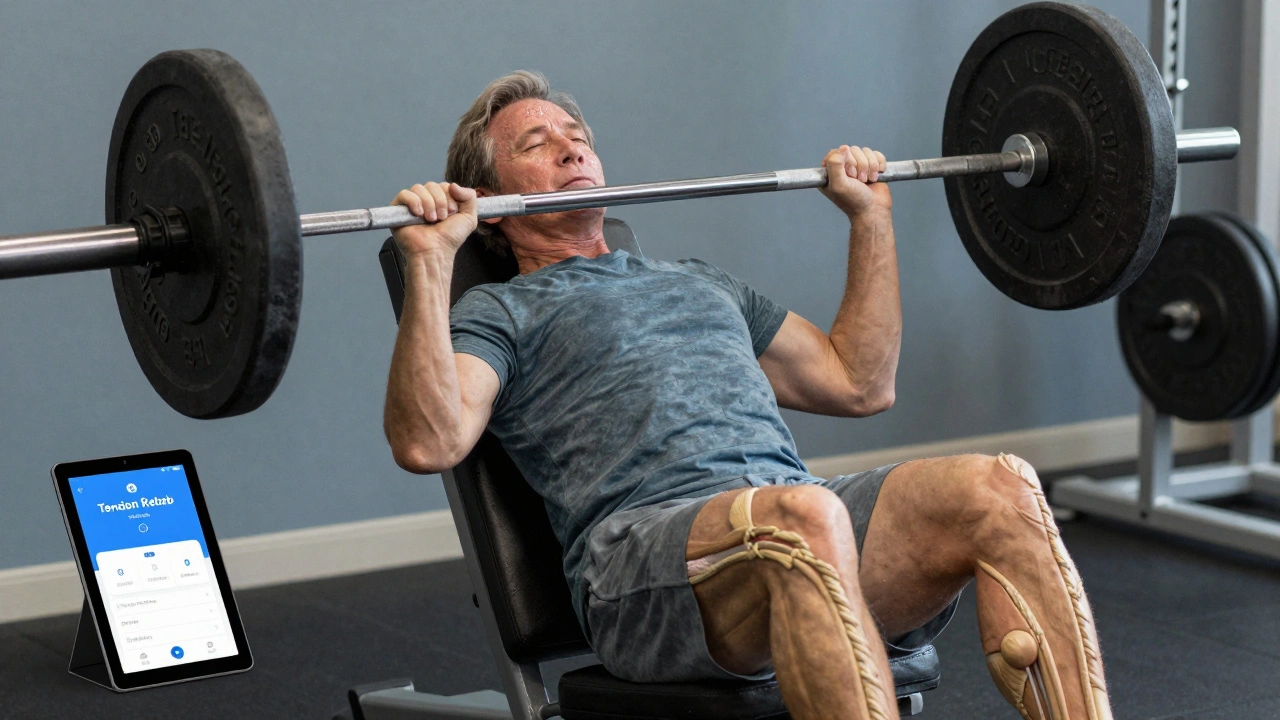
Injection Options: What Actually Helps?
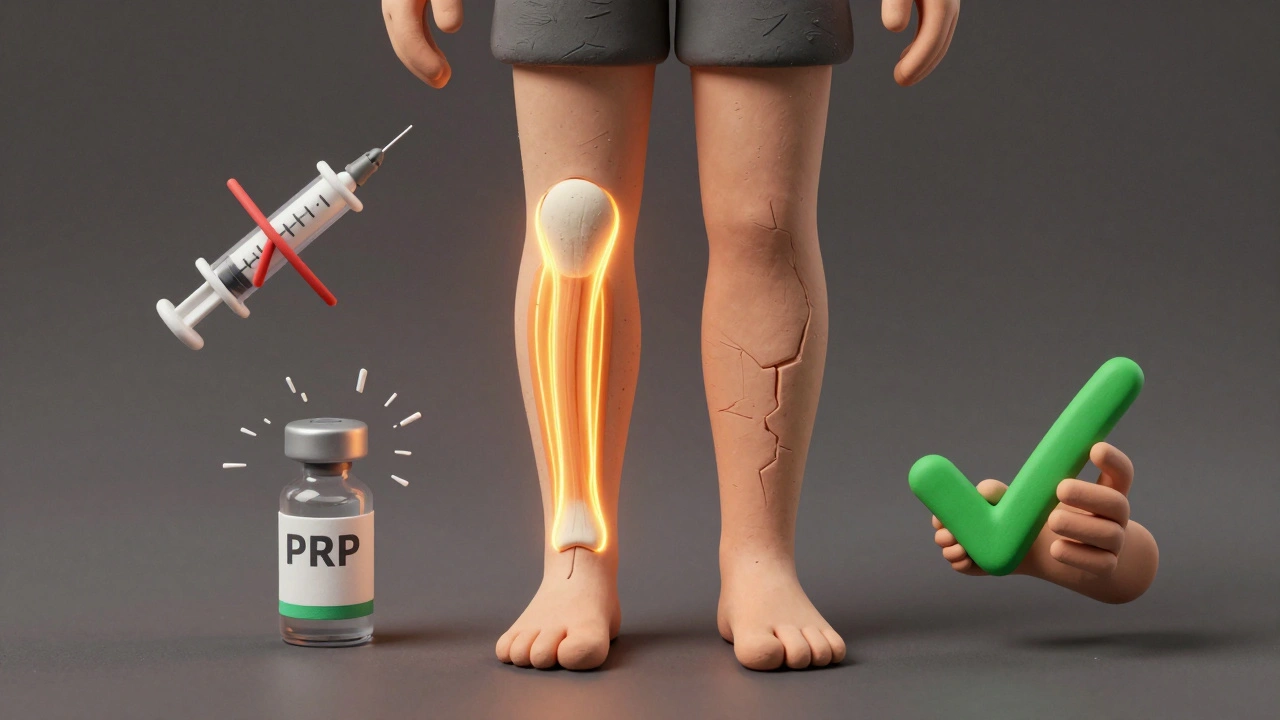
Corticosteroid injections? They’re tempting. A shot can knock down pain fast-30-50% relief in 2-4 weeks. But here’s the truth: a 2013 BMJ study found 65% of people who got steroid shots needed another treatment within 6 months. Only 35% of those who did eccentric training did. Steroids weaken the tendon over time. They’re a band-aid. Use them only if pain is so severe you can’t even start rehab-and even then, only once. Platelet-rich plasma (PRP)? It sounds high-tech. You draw your blood, spin it to concentrate platelets, then inject it into the tendon. The idea? Your body’s own healing signals will kick in. But a 2020 review in the American Journal of Sports Medicine found PRP only beat placebo by 15-20% at 6 months. That’s not meaningful. It’s expensive. Insurance rarely covers it. Don’t waste your money. Shockwave therapy? Some studies show modest benefit for chronic cases. But it’s not better than exercise. It’s just another option if you’ve tried everything else.Why Most People Fail
The biggest reason tendinopathy doesn’t improve? People don’t do the exercises right-or they don’t do them long enough. A 2021 study found self-managed patients made technique errors 40% more often than those who worked with a physical therapist. A bad decline squat? You’re stressing your knee, not your tendon. A heel drop that’s too fast? You’re not loading the tendon enough. Pain is also misunderstood. You’re not supposed to be pain-free. You’re supposed to have pain at a 2-5/10 level during exercise. If it goes above 7/10, or lingers for more than 24 hours, you’re overdoing it. Only 38% of people doing this on their own know that. And then there’s the time factor. You can’t expect results in 2 weeks. The tendon rebuilds slowly. You need consistency. Apps like Tendon Rehab (version 3.2, 2023) help. They track reps, give reminders, and show form videos. People using them had 85% adherence. Paper lists? Only 65%.What Works Best Together
The best outcomes come from combining approaches:- Start with isometrics to reduce pain
- Move to eccentric or HSR training, 3-5 days a week
- Use apps or a therapist to check form
- Manage your overall load-don’t go from zero to marathon in a week
- Wait 12 weeks before deciding if it’s working
What the Experts Say
Dr. Jill Cook, a leading researcher at Monash University, says eccentric training is still the foundation-but it must be tailored. A 50-year-old with insertional Achilles tendinopathy doesn’t respond the same way as a 25-year-old runner with midportion tendinopathy. Dr. Alfredson, the pioneer of eccentric training, admits not everyone responds. That’s why HSR and other approaches are now part of the toolkit. The real shift? From "treat the tendon" to "treat the person." Load management, psychology, sleep, nutrition-all matter. A 2023 review predicts the future of tendinopathy care will be "precision rehabilitation"-using biomarkers and movement analysis to match each patient with their ideal protocol.Real Results, Real Stories
A 42-year-old runner from Manchester posted on a tendon forum: "I did Alfredson’s heel drops for 14 weeks. Week 1-3? I cried. Week 8? I could walk without limping. Week 12? I ran 5K. Two years later? No pain. No injections. Just sweat and patience." Another: "I tried PRP. Cost me £600. Zero change. Then I did HSR with a physio. Three months later, I was back in the gym." The pattern? Those who succeed don’t chase quick fixes. They stick with the process.Final Takeaway
Tendinopathy isn’t a disease you cure. It’s a breakdown you rebuild. And the best tool you have? Your body’s response to controlled, consistent load. Skip the steroid shot. Skip the PRP. Skip the rest. Start slow. Do the exercise. Track your pain. Be patient. And if you’re stuck, find a physio who knows tendons-not just muscles. This isn’t about being tough. It’s about being smart. Your tendon isn’t broken. It just needs the right signal to heal.Can eccentric training make tendinopathy worse?
Yes, if done incorrectly. If you use poor form, go too fast, or push into sharp pain (>7/10), you can irritate the tendon further. The goal is controlled loading-not punishment. Start with lower reps, focus on slow lowering, and stop if pain spikes or lasts more than 24 hours. Working with a physio in the first 1-2 sessions reduces error rates by 40%.
How long until I see results from eccentric training?
Most people notice reduced pain around week 4-6, but structural changes in the tendon take 8-12 weeks. Ultrasound scans show improved collagen alignment after 12 weeks. If you haven’t seen progress by week 12, your protocol may need adjustment-not more of the same.
Is PRP worth it for tendinopathy?
No, not for most people. A 2020 review found PRP only improves outcomes by 15-20% over placebo after 6 months. It’s expensive, not covered by most insurance, and doesn’t outperform eccentric training. Save your money and focus on proven exercise protocols first.
Can I do eccentric training at home?
Yes, but only if you know the correct form. A 2021 study showed self-managed patients made technique errors 40% more often than those supervised by a physio. Use video guides from trusted sources like the International Tendinopathy Symposium. Apps like Tendon Rehab (version 3.2) provide real-time feedback and improve adherence by 20%.
What’s the difference between eccentric and concentric training?
Eccentric means lengthening the muscle under load-like slowly lowering your heel from a step. Concentric means shortening it-like pushing up. For tendinopathy, eccentric loading creates the right mechanical stress to stimulate tendon repair. Concentric training alone doesn’t provide enough stimulus. Studies show eccentric training improves VISA scores 12-20% more than concentric training for patellar tendinopathy.
Should I use a heel lift or orthotics for Achilles tendinopathy?
Heel lifts can reduce strain on the tendon in the short term, especially for insertional tendinopathy. But they’re not a cure. Long-term use can weaken calf muscles. Use them temporarily while you start eccentric training, then phase them out. Orthotics may help if you have flat feet or overpronation, but they don’t replace exercise.
Can I still run with tendinopathy?
Maybe-but not until your pain is under control. Running too soon can delay healing. Start with low-impact cardio like cycling or swimming while doing your rehab exercises. Once you can do 3 sets of 15 eccentric heel drops with minimal pain, you can slowly reintroduce running. Increase distance by no more than 10% per week.
Why does my tendon hurt more after exercise?
It’s normal for tendinopathy to feel worse the day after exercise, especially early on. That’s because the tendon is responding to new stress. But if pain lasts longer than 24 hours or spikes above 7/10, you’ve overdone it. Adjust your reps or load. Pain should be manageable during and fade within a day. Persistent pain means you need to scale back.
Desmond Khoo
December 7, 2025 AT 06:08Sadie Nastor
December 8, 2025 AT 21:14Kyle Flores
December 10, 2025 AT 01:15Olivia Hand
December 11, 2025 AT 01:25Louis Llaine
December 12, 2025 AT 09:38Jane Quitain
December 12, 2025 AT 22:53Sam Mathew Cheriyan
December 13, 2025 AT 13:31Ernie Blevins
December 15, 2025 AT 04:14Nancy Carlsen
December 16, 2025 AT 20:52Ted Rosenwasser
December 17, 2025 AT 16:31Helen Maples
December 17, 2025 AT 20:11Ashley Farmer
December 18, 2025 AT 14:25David Brooks
December 20, 2025 AT 11:04