
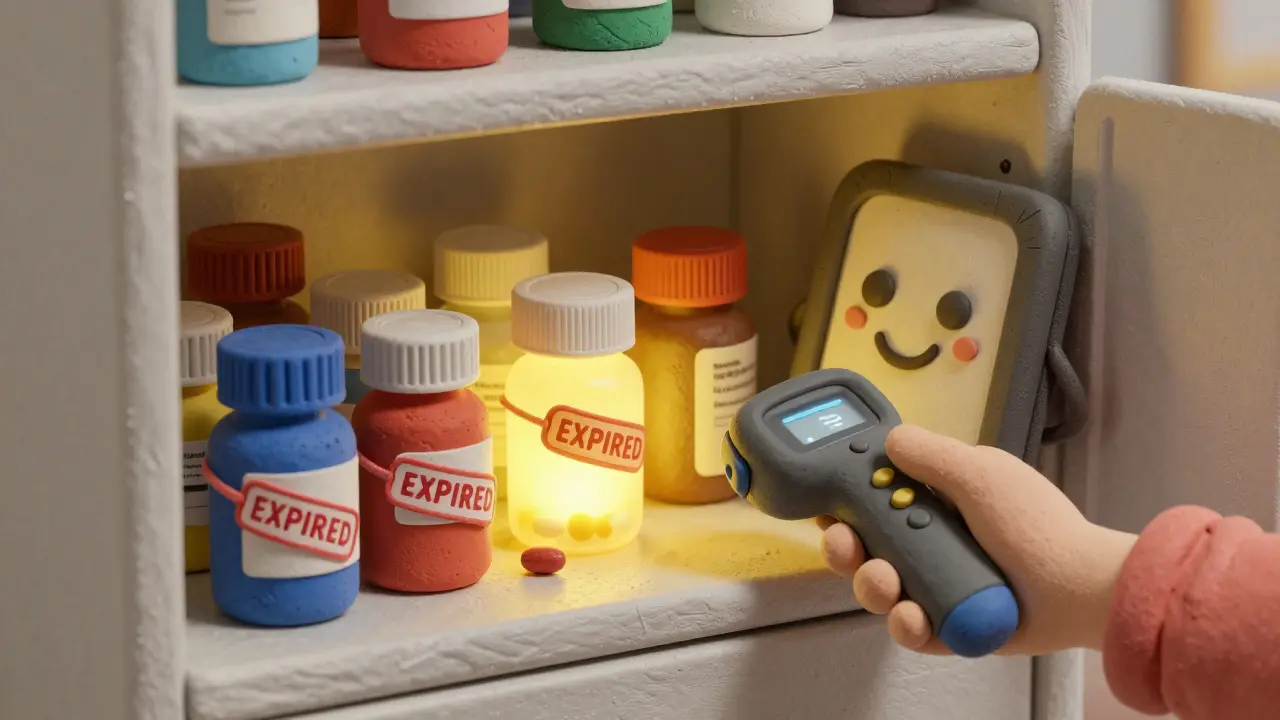
Every year, millions of pills, capsules, and liquid medications sit in medicine cabinets, hospital shelves, and EMS kits long after they’ve gone bad. Expired drugs don’t just lose potency-they can become unsafe. The FDA says expired medications may not work as intended, and in rare cases, they can break down into harmful substances. Yet, most people still rely on handwritten labels, memory, or random checks to know if their medicine is still good. It’s time to stop guessing. Technology now makes it possible to track every dose from the moment it’s manufactured until it’s taken-or thrown away.
Why Manual Tracking Fails
Picture this: a nurse walks into a hospital pharmacy to restock crash carts. There are 47 different medications, each with its own expiration date, lot number, and storage requirement. She checks each one by hand, scanning barcodes one at a time. It takes her two hours. By the time she’s done, three of those medications have already expired-she just didn’t know it yet. That’s the problem with manual systems. They’re slow, error-prone, and rely on human attention that fades after the 10th vial. In home settings, it’s worse. People forget. Kids grab old cough syrup. Elderly patients keep meds from years ago “just in case.” A 2023 study found that nearly 40% of households in the U.S. had at least one expired medication in their medicine cabinet. And when you’re dealing with insulin, epinephrine, or heart medications, even a few days past the expiration date can be dangerous.How RFID Tags Are Changing the Game
The most powerful tool now available is RFID-Radio Frequency Identification. Unlike barcodes, which need to be scanned one at a time, RFID tags can be read from a distance, all at once. Hospitals like Texas Children’s and UF Health Shands now use RFID tags on every medication in their high-value drug kits. Each tag holds the drug name, strength, lot number, and expiration date. When a cart or cabinet is placed near a reader, it scans all 50+ items in under 30 seconds. The system doesn’t just tell you what’s there-it tells you what’s about to expire. Most platforms, like KitCheck, send alerts when a medication is within two days of expiration. That’s not a reminder-it’s a safety lock. The system won’t allow that drug to be dispensed until it’s replaced. In one hospital, this cut expired medication waste by 18% in the first six months. Pharmacists saved over 15 hours a week that used to go into manual inventory checks. RFID works even in refrigerators and locked cabinets. It doesn’t matter if the box is upside down or buried under other supplies. The tag still talks to the reader. And because the system logs every movement, you can track exactly when a drug was taken, by whom, and when it needs replacing.Electronic Medication Administration Records (eMAR)
If RFID is for the warehouse, eMAR is for the bedside. Electronic Medication Administration Records are digital versions of the paper charts nurses used to fill out by hand. Now, when a nurse gives a patient their pill, they scan the barcode on the medication and their own ID badge. The system logs the time, the drug, the dose, and the patient-all in real time. But here’s the real win: eMAR platforms like eVero connect directly to the pharmacy’s inventory system. When a patient takes their last pill, the system knows. It automatically triggers a reorder. If that medication is nearing expiration in the stockroom, the system flags it before it ever reaches the patient. This is especially critical in long-term care and IDD (Intellectual and Developmental Disabilities) facilities, where patients rely on daily meds and staff turnover is high. eMAR doesn’t just prevent expired drugs from being given-it also prevents wrong doses, wrong patients, and missed doses. A 2024 review in the Journal of Patient Safety found that hospitals using eMAR reduced medication errors by 52% compared to those still using paper.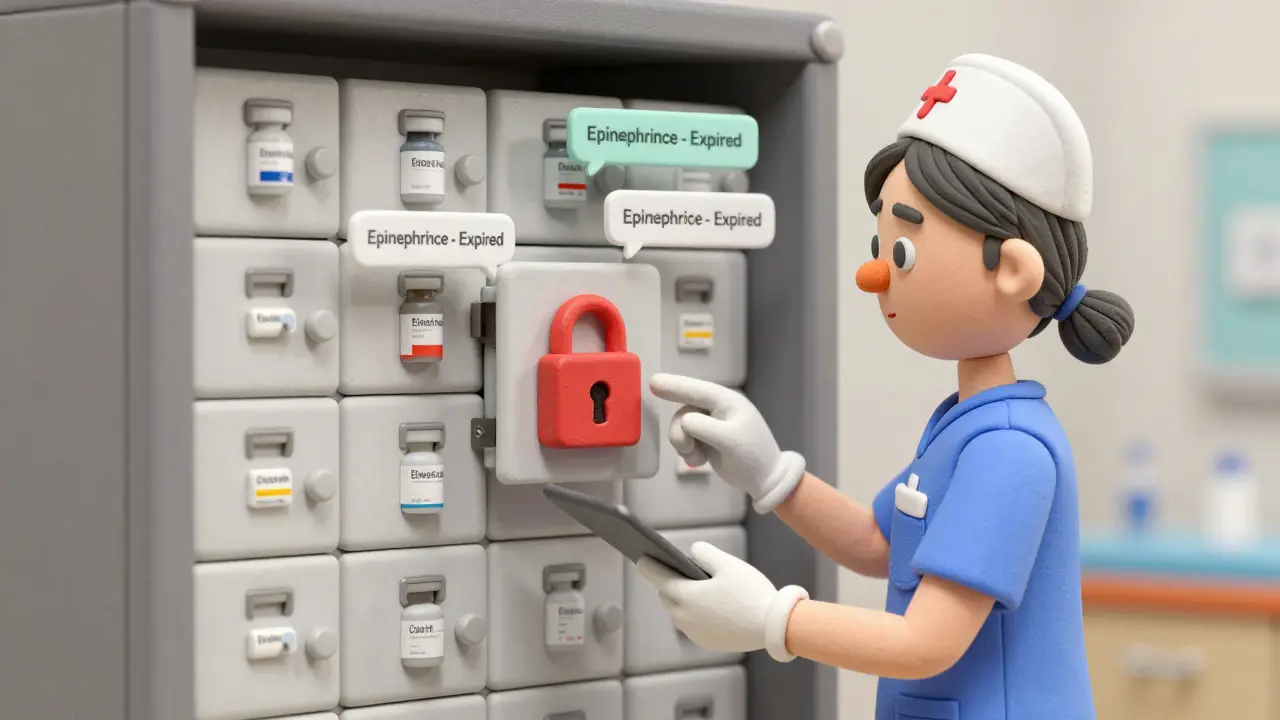
Automated Dispensing Cabinets (ADCs) and Smart Storage
You’ve probably seen them in hospitals-locked cabinets with drawers that open only when a nurse swipes their badge and enters a code. These are Automated Dispensing Cabinets, or ADCs. But modern ADCs are more than just smart locks. They’re full inventory systems. Each drawer inside an ADC can hold dozens of medications. Every time a drug is removed, the cabinet automatically logs the lot number and expiration date. It knows exactly how many are left. When stock drops below a set level, it alerts the pharmacy. If a drug is expired, the drawer won’t open. Period. TouchPoint Medical reports that hospitals using ADCs with built-in expiration tracking saw a 30% drop in expired medication incidents within the first year. The system also cuts down on theft and misuse-especially for controlled substances like opioids. Each withdrawal is tied to a specific nurse, patient, and time. No more guessing who took the last Vicodin.Mobile Apps for Emergency Services and Home Use
Not every organization can afford a full RFID setup. That’s where mobile apps come in. LogRx, for example, works on any iPhone or Android device. First responders, paramedics, and home health nurses use it to scan barcodes on medication bottles and log expiration dates in real time. The app sends push alerts when a drug is 30 days, 7 days, or 1 day from expiring. Portland Fire & Rescue started using LogRx in 2023. Before, they’d have to manually check every ambulance kit every month. Now, the app does it for them. They’ve cut administrative work by 65% and passed every DEA audit with zero violations. Even for families, there are simple apps like Medisafe and MyTherapy. They let you enter your prescriptions, set refill reminders, and track expiration dates. Some even sync with your pharmacy so you get alerts when a refill is ready-or when your old bottle is about to go bad.What It Costs and Who Uses It
The big systems-RFID, ADCs, full eMAR platforms-aren’t cheap. A mid-sized hospital might spend between $50,000 and $200,000 to install everything. But the return on investment is clear. A 2024 study in the Journal of Hospital Pharmacy found hospitals saved between $120,000 and $300,000 a year by reducing waste, cutting labor hours, and avoiding fines for expired controlled substances. Adoption is growing fast. In 2023, only about 25% of U.S. hospitals used automated expiration tracking. By 2027, Gartner predicts that number will jump to 45%. Large hospitals (500+ beds) are leading the way-78% already use some form of automated tracking. Small clinics and home care providers are catching up with mobile apps and cloud-based tools that cost less than $50 a month. Regulations are pushing the change too. The Drug Supply Chain Security Act (DSCSA) and DEA rules now require detailed tracking of controlled substances. No more handwritten logs. No more “we didn’t know.” Technology makes compliance automatic.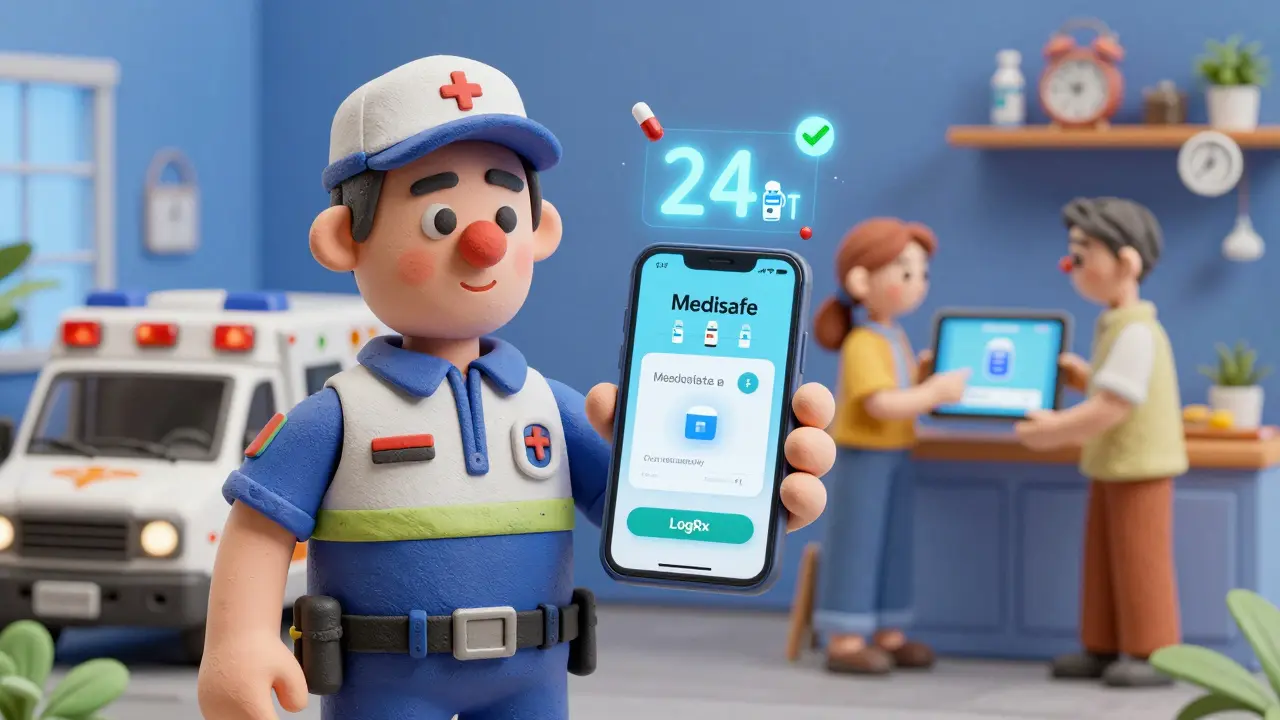
How to Get Started
If you’re a hospital administrator, start with a pilot. Pick one unit-maybe the emergency department or the ICU-and test RFID or ADCs there. Measure how much time staff save, how many expired drugs get caught, and how much waste drops. Then expand. If you’re a home user or caregiver, download a medication tracker app. Enter every prescription you take. Set alerts for refills and expirations. Don’t rely on the printed label-those can fade, get torn, or be wrong. Use the app as your official record. For pharmacies and long-term care facilities, look for eMAR systems that integrate with your existing pharmacy software. Avoid silos. If your medication tracker doesn’t talk to your ordering system, you’re just adding another step.What to Watch Out For
Technology helps-but it’s not magic. The biggest failure point isn’t the software. It’s the people. Staff resist change. Nurses who’ve used paper for 20 years don’t want to learn a new app. That’s why training matters. Don’t just hand out a manual. Run live demos. Let them test it on dummy meds. Give them time. Integration is another trap. If your RFID system doesn’t connect to your electronic health record, you’ll end up with two separate systems. That’s worse than one. Always ask: “Will this talk to my other tools?” And don’t skip the tagging. RFID only works if every medication has a tag. If you’re bringing in new stock, make sure the supplier tags it. If not, you’ll need to tag it yourself-and that’s a labor-intensive job. Plan for it.The Future Is Real-Time and Predictive
The next wave isn’t just about tracking expiration dates. It’s about predicting them. Companies like Intelliguard Health are testing AI tools that analyze usage patterns. If a hospital uses 12 vials of epinephrine every month, and the current stock is 30 vials with an expiration in 60 days, the system can predict: “You’ll use them all before they expire. No need to reorder.” Or: “You only use 3 vials a month. These will expire. Suggest donating the excess.” Blockchain is also being tested to track drugs from factory to patient. That means you’ll know not just when it expired-but where it’s been, who handled it, and whether it was stored at the right temperature. In five years, expired medication won’t be a problem you manage. It’ll be a problem you never see.Can I use my phone to track my own medication expiration dates?
Yes. Apps like Medisafe, MyTherapy, and even Apple Health let you enter your prescriptions and set alerts for when they expire. You can scan the barcode on the bottle or type it in manually. These apps sync with your pharmacy, so you’ll also get refill reminders. For most people, this is enough to avoid taking expired meds.
Are RFID systems only for big hospitals?
No. While large hospitals lead in adoption, smaller clinics and home care agencies are using simpler RFID solutions. Some vendors offer portable RFID scanners that cost under $1,000 and work with tablets. These are great for EMS teams, hospice providers, or pharmacies serving nursing homes. You don’t need a full infrastructure to benefit.
What happens if a medication expires in the cabinet?
In automated systems, expired meds are blocked from being dispensed. The drawer won’t open. The app won’t let you mark it as taken. In manual systems, expired meds often go unnoticed until someone finds them during a clean-out. That’s why technology is critical-it turns passive storage into active control.
Do all medications come with RFID tags already?
No. Most medications still come with barcodes only. RFID tags are added by the hospital or pharmacy during inventory setup. Some manufacturers are starting to pre-tag high-value or controlled drugs, but it’s not standard yet. If you’re implementing RFID, expect to spend time tagging existing stock.
Is it legal to use expired medication in an emergency?
The FDA says you should not use expired medication. However, in extreme emergencies-like a natural disaster or no access to replacement drugs-some experts say it may be better to use an expired epinephrine auto-injector than none at all. But this is a last-resort decision. Technology helps avoid this dilemma by ensuring you always have fresh meds on hand.
Paul Ong
January 2, 2026 AT 18:40Used to waste hours checking kits
Now the app flags expirations before we even leave the station
LIZETH DE PACHECO
January 4, 2026 AT 17:31MyTherapy app saved us so many times
She forgets everything but the phone pings her
And I get alerts if she hasn't taken it
Lee M
January 6, 2026 AT 02:24You're just shifting the labor from nurses to pharmacy techs
And charging patients more for it
Austin Mac-Anabraba
January 7, 2026 AT 14:26It's the pharmaceutical industry's deliberate obsolescence strategy
They profit from constant replacement
Expiration dates are a manufactured crisis to keep cash flowing
Liam George
January 8, 2026 AT 05:31It's about control
Every tag is a tracking device
They know when you take your meds
When you skip them
When you're alive or dead
It's the surveillance state in a pill bottle
Richard Thomas
January 8, 2026 AT 05:51Technology gives us precision but takes away the ritual
Medication isn't just chemistry
It's memory
It's care
It's the quiet moment when someone remembers to take their pills because their mother taught them to
Can an app replicate that?
Or does it just turn compassion into a notification?
Bryan Anderson
January 9, 2026 AT 15:50It's not perfect but it cut our expired med waste by nearly half
Staff were skeptical at first but now they won't go back
The biggest win? We stopped getting flagged during inspections
Stephen Gikuma
January 10, 2026 AT 09:31Instead of fixing the system we slap tech on it
RFID, apps, sensors
Meanwhile the real problem is people don't care anymore
They don't check their meds because they're too busy scrolling
Technology won't fix apathy
Ann Romine
January 10, 2026 AT 12:07Are these apps compatible with screen readers?
And what about elderly patients who don't use smartphones?
Is there a low-tech version for those who need it most?
Phoebe McKenzie
January 12, 2026 AT 11:17These systems are built by corporations who don't give a damn about your health
They want your data
They want your prescriptions
They want to know when you're sick and when you're not
And then they'll sell it to insurers
Don't be fooled by shiny apps
Bill Medley
January 12, 2026 AT 19:47Training.
Integration.
Consistency.
Tool is only as good as the user.
gerard najera
January 13, 2026 AT 12:49It's predicting usage.
AI will know your pattern.
It will know when you'll need a refill before you do.
That's real intelligence.
Andy Heinlein
January 14, 2026 AT 10:29Best thing ever
Used to forget for days
Now my phone buzzes and i take it
And it even tells me when my bottle is almost empty
Life changer
Matthew Hekmatniaz
January 15, 2026 AT 19:55Older patients don't need complex systems
But they do need someone to check
Technology helps the staff stay on top of it
But the real magic is when a nurse sits down and says 'Let's check your meds together'
That's when trust happens
Alex Warden
January 17, 2026 AT 10:23Just throw out anything past the date
Simple
Free
No apps
No RFID
No BS
Why are we making this harder than it needs to be?