
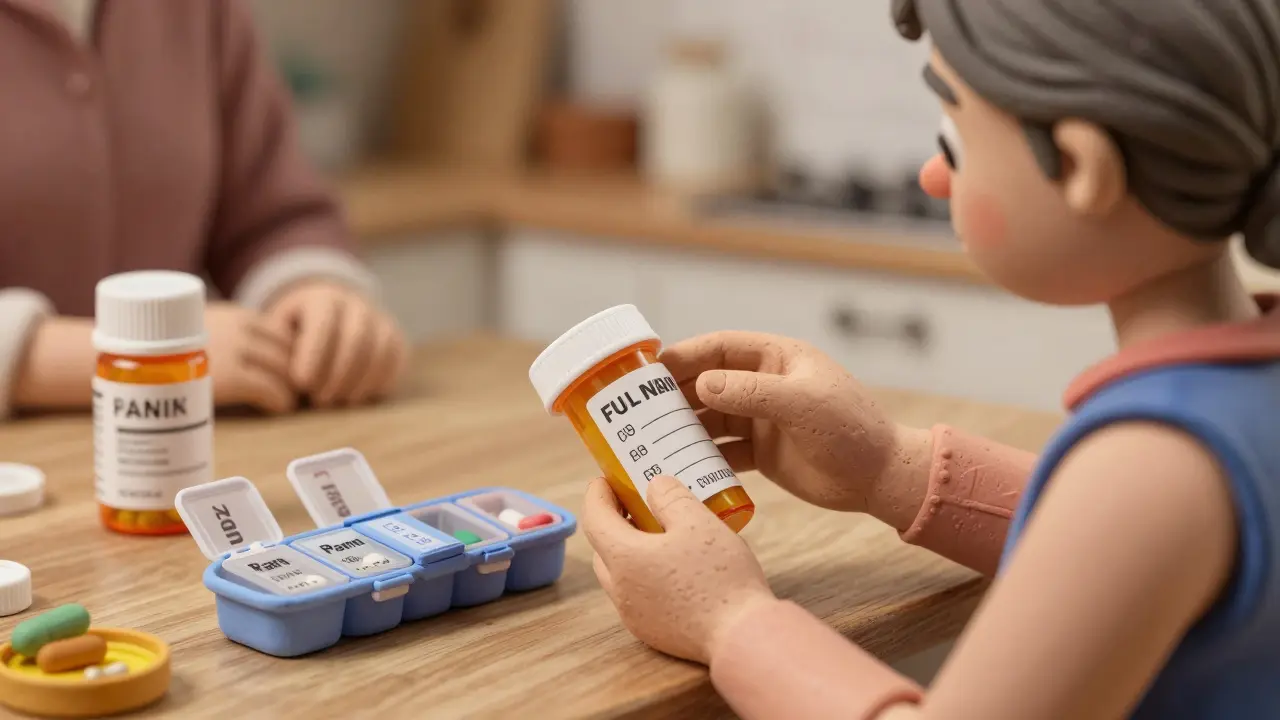
Every year, over 1.3 million people in the U.S. end up in the emergency room because of medication mistakes. Many of these aren’t caused by doctors or pharmacists-they happen at home, when people take the wrong pill, at the wrong time, or without knowing why they’re taking it. The good news? Most of these errors are preventable. You don’t need to be a nurse to keep yourself safe. You just need to follow five simple, proven rules that healthcare professionals use every day.
Rule 1: Know Who You Are-Before You Take Anything
It sounds obvious, but mixing up medications happens more than you think. A 65-year-old woman in Manchester took her neighbor’s blood pressure pill because the bottles looked similar. She ended up in the hospital with dangerously low blood pressure. This isn’t rare.How to avoid it:
- Always check your name on the prescription label. Not just your first name-your full name and date of birth.
- If you’re using a pill organizer, label each compartment with your name and the time of day.
- Never grab a bottle from someone else’s medicine cabinet-even if it’s your spouse or parent.
Hospitals use two identifiers-like name and DOB-to confirm identity before giving any drug. You can do the same at home. It takes five seconds, but it could save your life.
Rule 2: Double-Check the Name and Form of the Medicine
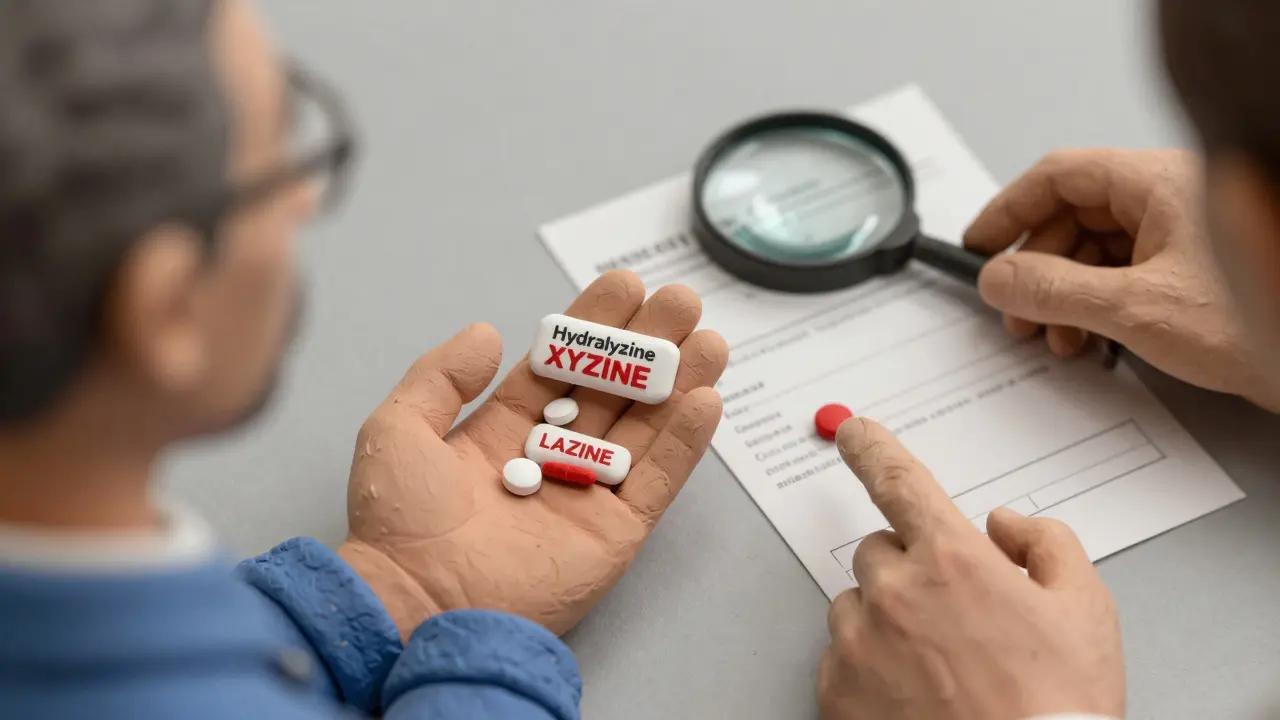
There are hundreds of drugs that sound or look alike. Hydroxyzine (for allergies) vs. Hydralazine (for high blood pressure). Clonazepam vs. Clonidine. One letter, one sound, completely different effects.The Institute for Safe Medication Practices says look-alike and sound-alike drugs cause about 25% of all medication errors. Even pharmacists can miss them.
How to avoid it:
- Compare the name on the bottle to the name on your prescription slip or doctor’s note.
- Check the shape, color, and markings on the pill. If it looks different from last time, ask the pharmacist why.
- Use Tall Man lettering in your mind: HydroXYZINE vs. HydraLAZINE. It helps your brain spot the difference.
Some pharmacies now use bolded or capitalized letters on labels to highlight key differences. If yours doesn’t, ask them to write it out clearly.
Rule 3: Get the Dose Right-Especially If You’re Over 65 or on Multiple Drugs
A 72-year-old man in Salford took his daily insulin shot because he thought he’d missed it. He didn’t realize he’d already taken it two hours earlier. He slipped into a coma and spent five days in the hospital.Dosing errors are the most common cause of serious harm. Kids and seniors are at highest risk. Your kidneys and liver don’t process drugs the same way they did when you were 30. That means the dose your doctor gave you five years ago might be too high now.
How to avoid it:
- Always ask: “Is this dose based on my weight or kidney function?” Especially if you’re on diabetes, blood thinners, or heart meds.
- Use a measuring cup or syringe for liquid medicines-not a kitchen spoon. A teaspoon can vary by 20%.
- For high-risk drugs like insulin, warfarin, or opioids, ask for a second person to double-check the dose.
Studies show that when patients use a dosing chart or app to track their amounts, errors drop by over 40%.
Rule 4: Take It the Way It’s Supposed to Be Taken
A woman in Bolton swallowed her blood pressure tablet, then realized too late it was meant to be placed under the tongue. The pill didn’t absorb properly. Her blood pressure spiked, and she had chest pain.There are at least six ways to take a medicine: by mouth, under the tongue, through the skin, by injection, by inhalation, or as a suppository. Each one works differently. Taking it wrong can make it useless-or dangerous.
How to avoid it:
- Read the label for phrases like “swallow whole,” “dissolve under tongue,” or “inject subcutaneously.”
- Never crush, chew, or open capsules unless your doctor or pharmacist says it’s okay.
- If you’re using an inhaler or nasal spray, ask for a demonstration. Many people use them wrong-even after years of use.
One in six medication errors involves the wrong route. That’s more than 200,000 cases a year in the U.S. alone.
Rule 5: Take It at the Right Time-And Know Why It Matters
You’re supposed to take your statin at night. But you take it in the morning because you forget at night. That might seem harmless. But statins work best when your liver is making cholesterol overnight.Some drugs need to be taken with food. Others must be taken on an empty stomach. Some need to be spaced exactly 12 hours apart. Others can be taken anytime.
How to avoid it:
- Set phone alarms for every medication you take more than once a day.
- Use a pill organizer with morning, afternoon, evening, and bedtime slots.
- Ask your pharmacist: “Is this time-critical? What happens if I’m 2 hours late?”
One study found that people who missed doses of blood pressure or heart meds were 40% more likely to be hospitalized. Timing isn’t just about convenience-it’s about effectiveness.
What About the Other Things They Don’t Tell You?
The five rules above cover the basics. But real safety goes deeper.- Keep a list of every drug, supplement, and herb you take-including doses and why you take them. Bring it to every appointment.
- Ask about interactions. Even over-the-counter painkillers can mess with blood thinners or kidney function.
- Check expiration dates. Old pills can lose strength or become toxic.
- Don’t skip doses just because you feel fine. High blood pressure and diabetes don’t always cause symptoms.
- Know your side effects. If you feel dizzy, nauseous, or confused after starting a new drug, call your doctor. Don’t wait.
Patients who ask questions and keep records reduce their risk of harm by nearly half. That’s not magic. It’s just being proactive.
What If You’re Taking Five or More Medications?
That’s called polypharmacy. It affects 41% of adults over 65. The more pills you take, the higher the chance of a mistake.Here’s what to do:
- Ask your doctor every six months: “Can I stop any of these?”
- Bring all your meds-bottles, boxes, supplements-to your next appointment. This is called a “brown bag review.”
- Use a pharmacist for a medication review. They’re trained to spot overlaps, duplicates, and risks.
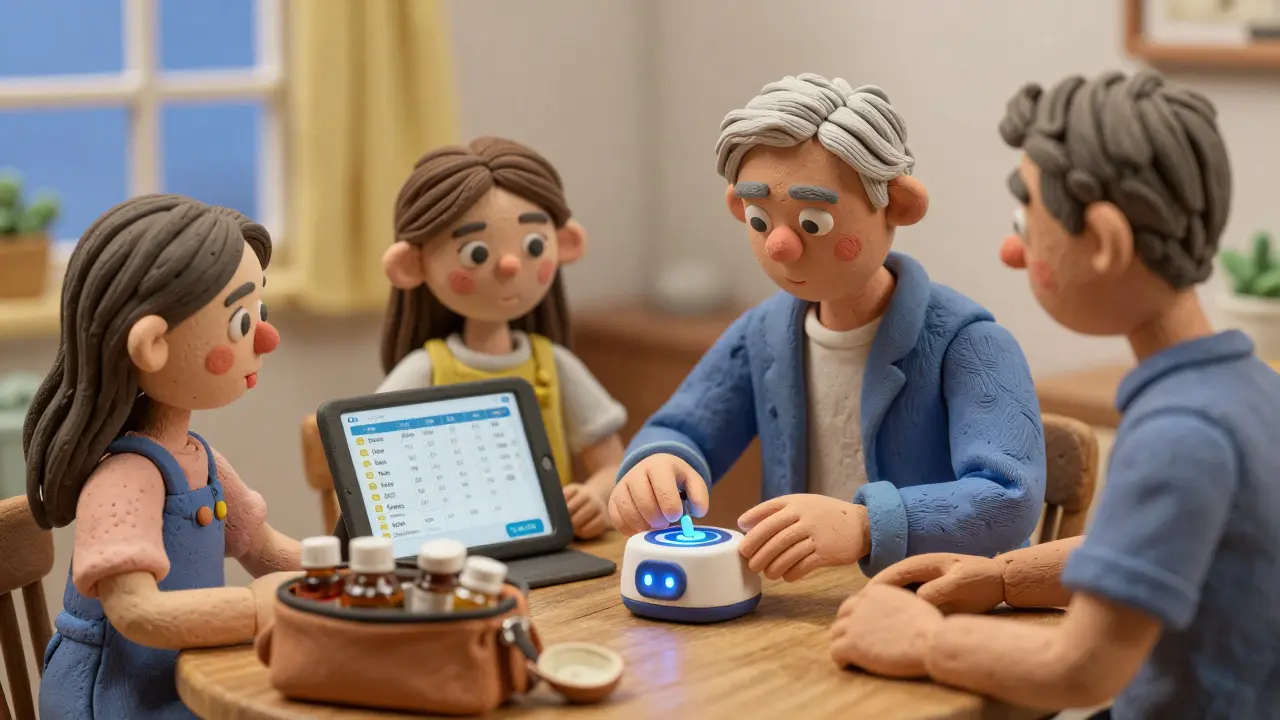
- Consider a digital pill dispenser with alarms and remote monitoring. Some even notify your family if you miss a dose.
One NHS pilot in Greater Manchester found that seniors who got regular pharmacist reviews cut their ER visits by 32% in one year.
Final Thought: Safety Is a Habit, Not a One-Time Check
Medication safety isn’t about being perfect. It’s about being consistent. One slip-up won’t kill you. But doing it wrong every day? That’s how people end up in the hospital.Start small. Pick one rule this week-maybe checking your name on the label-and make it automatic. Next week, add another. In a month, you’ll be doing it without thinking.
And if you ever feel unsure? Ask. Always ask. Your pharmacist, nurse, or doctor would rather answer a hundred questions than see you in the ER because you took the wrong pill.
What should I do if I miss a dose of my medication?
Don’t double up unless your doctor or pharmacist says it’s okay. For most drugs, if you’re less than 2 hours late, take it right away. If it’s more than that, skip it and go back to your regular schedule. For high-risk meds like blood thinners or insulin, call your provider immediately. Never guess.
Can I take my medication with alcohol?
It depends. Alcohol can make some drugs too strong-or too weak. It can increase drowsiness with painkillers, raise blood pressure with antidepressants, or damage your liver when mixed with acetaminophen. Always check the label or ask your pharmacist. When in doubt, skip the drink.
Why do some pills look different even if they’re the same drug?
Generic drugs can look different because they’re made by different companies. The active ingredient is the same, but the color, shape, or markings change. Always check the name and dose on the label-not the appearance. If you’re confused, call your pharmacy. Never assume two pills are the same just because they treat the same condition.
Is it safe to use old prescriptions if I still have symptoms?
No. Medications expire. They can also be wrong for your current condition. A pill that helped your back pain last year might be the wrong dose now-or even dangerous if your kidney function has changed. Always get a new prescription. Don’t reuse old meds unless your doctor specifically says it’s okay.
How can I tell if a medication is causing side effects?
Watch for new symptoms that started after you began the drug: dizziness, nausea, rash, confusion, swelling, or unusual fatigue. Don’t ignore them. Write them down and bring them to your next appointment. Some side effects are mild and go away. Others need a change in dose or drug. Your body tells you when something’s off-listen to it.
Should I use a pill organizer?
Yes-if you take four or more medications daily. Pill organizers reduce missed doses by up to 50%. Choose one with clear labels and separate compartments for morning, afternoon, evening, and night. Fill it weekly, and keep it in a visible spot. Don’t rely on memory. Even the most organized people forget.
Next Steps to Stay Safe
- Today: Write down every medication you take-including vitamins and supplements.
- This week: Set a phone alarm for your next dose.
- This month: Schedule a brown bag review with your pharmacist.
- Every 6 months: Ask your doctor, “Can I stop any of these?”
You don’t need to be a medical expert to stay safe. You just need to be careful, curious, and consistent. Your health is worth those five seconds.
Betty Bomber
January 26, 2026 AT 20:22I used to mix up my mom's blood pressure pills with mine because the bottles looked identical. One time I took hers and nearly passed out. Now I label everything with masking tape and a Sharpie. Five seconds, life saved.
Also, I keep my meds in the bathroom cabinet-big mistake. Too easy to grab in the dark. Now they’re in the fridge with a sticky note that says "DO NOT EAT" in giant letters.
Mohammed Rizvi
January 28, 2026 AT 08:28Rule 1: Know who you are. Sounds like something a robot would say. But honestly? This is the most important thing you’ll read all year. I once gave my dad his heart pill because he forgot his name. He was 82. I was 24. We both laughed. Until he collapsed.
Now I make him say his full name before he swallows anything. Even if he’s half-asleep. Even if he curses me. Worth it.
Allie Lehto
January 29, 2026 AT 19:34OMG I’m so glad someone finally said this. I’ve been screaming into the void for years that people don’t check expiration dates. My aunt took a 12-year-old antibiotic because "it looked the same" and ended up with C. diff and a $40k hospital bill. Like, we live in 2025. Why are we still playing Russian roulette with our meds?
Also, why do pharmacies still print tiny labels? Is this a test of our aging eyesight? I need a magnifying glass and a flashlight just to read "take once daily". It’s cruel.
And don’t even get me started on people who crush pills like they’re making cocaine. 🙄
Also also-why is no one talking about how dangerous herbal supplements are? Just because it’s "natural" doesn’t mean it won’t kill you. Turmeric with warfarin? Yeah, that’s a fun combo.
Dan Nichols
January 31, 2026 AT 17:08Rule 2 is bullshit. You think people are actually reading labels? Most of them don’t even know what the drug is for. They just take what’s in the bottle because the doctor said so. The real problem isn’t look-alike drugs-it’s the entire system. Doctors prescribe like they’re playing bingo. Pharmacists are overworked. Patients are clueless. This is a systemic failure wrapped in a five-point checklist.
And why is no one talking about the fact that 70% of meds are prescribed without proper renal or hepatic assessment? Especially for seniors. That’s not negligence. That’s malpractice.
Also, Tall Man lettering? Cute. But if your pharmacy can’t print a clear label, why should I care about capitalization?
Renia Pyles
February 1, 2026 AT 19:56So you’re telling me I’m supposed to set alarms for every pill? Like I’m some kind of robot? What about people who actually live their lives? I have a job, a kid, and a dog that pees on the couch. I don’t have time to play nurse.
And why do I have to ask my pharmacist if I can take this with alcohol? Shouldn’t the label say that? Why is it MY job to be a medical detective? This feels like gaslighting. They make the drugs, they should tell us how not to die.
Also, I took my blood pressure med at night for 3 years. Then I switched to morning because I kept forgetting. I didn’t die. So maybe this "timing is everything" thing is just fearmongering.
Rakesh Kakkad
February 3, 2026 AT 11:06As a pharmacist with 22 years of experience in Mumbai, I can confirm that the majority of medication errors occur due to cultural and linguistic barriers. In India, patients often rely on shopkeepers to interpret prescriptions. Many do not speak English. Labels are printed in regional languages, but the active ingredients are not always clearly translated.
Additionally, polypharmacy is rampant among elderly patients who visit multiple doctors without sharing records. A single patient may be on 12 different medications, none of which are coordinated.
My recommendation: Every household with elderly members should maintain a printed, laminated medication card in the local language, updated monthly, and reviewed by a pharmacist every 90 days. This is not optional. It is essential.
And yes, I have seen people take insulin with tea. They do not understand the word "fasting". This is not a joke. This is daily reality.
Nicholas Miter
February 4, 2026 AT 23:33I’ve been on five meds for six years. I started using a pill organizer last year and honestly? It changed my life. No more panic at 8am wondering if I took my blood thinner.
Also, I set a voice reminder on my phone: "Hey Siri, did you take your pills?" And I say "yes" out loud. Sounds dumb. Works great.
One thing no one talks about: the emotional weight of taking meds every day. It’s a reminder you’re not as young as you used to be. That’s hard. So if you’re helping someone manage their meds? Don’t just help them remember. Help them feel okay about needing help.
And yeah, I still forget sometimes. That’s why I keep a notebook in my wallet. Scribbles, doodles, half-written notes. It’s messy. But it’s mine.
Small steps. No shame.
Suresh Kumar Govindan
February 6, 2026 AT 13:19The five rules are trivial. The real issue is pharmaceutical lobbying. Drug companies design pill shapes and colors to maximize brand recognition, not patient safety. They profit from confusion. They profit from dependency. They profit from ER visits.
Why do statins work better at night? Because the patent expires in 2027. The timing was engineered to extend exclusivity. Not biology.
Also, pill organizers are a Band-Aid. The system is broken. You’re not supposed to need reminders. You’re supposed to be healthy.
And no, I don’t trust pharmacists. They’re paid by the same corporations that make the drugs. Ask yourself: Who benefits when you’re confused?