
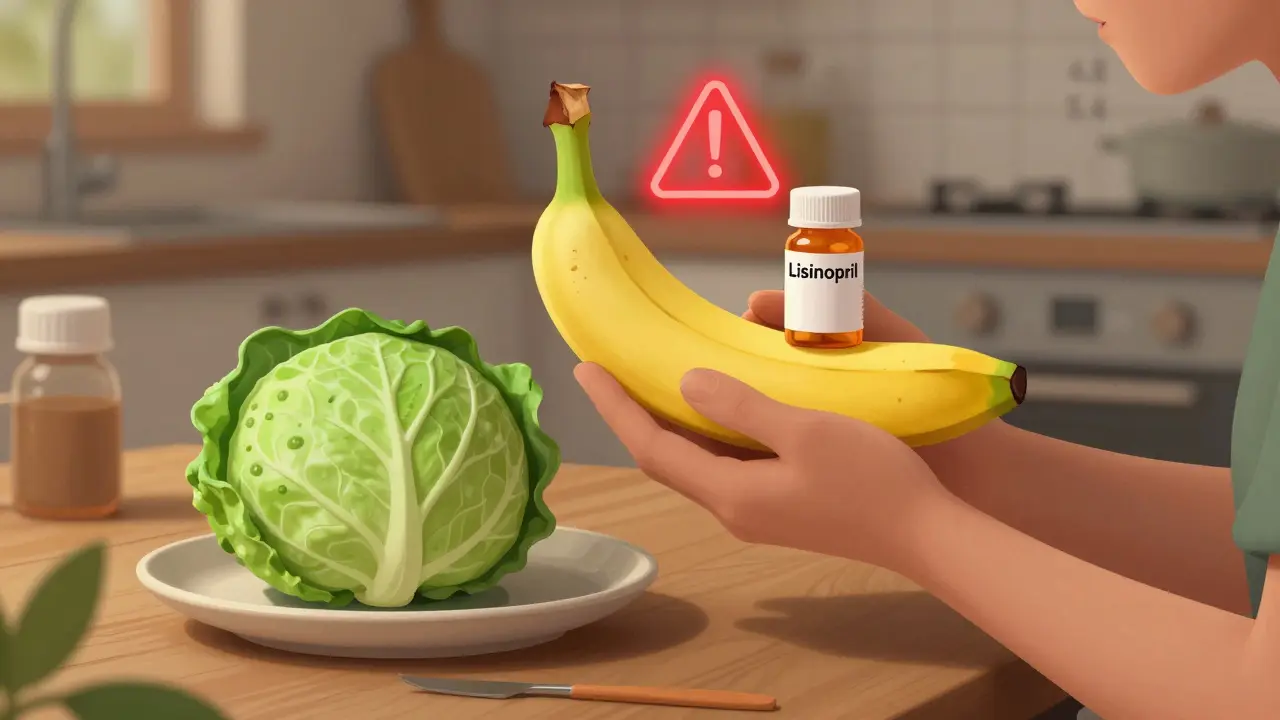
When you're managing high blood pressure, what you eat can be just as important as the pills you take. But here's the catch: some of the healthiest foods on the planet can clash dangerously with common blood pressure medications. If you're taking an ACE inhibitor, ARB, or potassium-sparing diuretic, eating too many potassium-rich foods might seem like a good idea-until your body starts showing warning signs like muscle weakness, irregular heartbeat, or sudden fatigue. This isn't hypothetical. Thousands of people end up in the ER every year because they didn’t realize how their diet and meds were working together-sometimes against them.
Why Potassium Matters for Blood Pressure
Potassium isn’t just another mineral. It’s a natural blood pressure lifter. When you get enough potassium, your body naturally flushes out extra sodium, which is one of the biggest drivers of high blood pressure. It also helps relax your blood vessel walls, lowering pressure inside them. Studies show that people who eat around 3,500-5,000 mg of potassium daily can drop their systolic blood pressure by over 5 mm Hg-sometimes more. That’s about as effective as some medications, without the side effects.
But here’s the problem: most Americans get less than half that amount. The average intake is only about 2,400 mg per day. That’s not just low-it’s dangerously low, especially if you’re already on blood pressure meds. The American Heart Association says this gap contributes to nearly 15% of hypertension cases. The fix? Eat more potassium-rich foods. But only if your body can handle it.
Which Blood Pressure Medications Are Risky with Potassium?
Not all blood pressure drugs play nice with potassium. The big three to watch out for are:
- ACE inhibitors (like lisinopril, enalapril)
- ARBs (like losartan, valsartan)
- Potassium-sparing diuretics (like spironolactone, eplerenone)
These medications work by blocking systems in your body that normally get rid of potassium. So if you’re on one of these and you start eating a lot of bananas, spinach, or sweet potatoes, your potassium levels can creep up-fast. The danger? When serum potassium climbs above 5.0 mmol/L, you’re in hyperkalemia territory. Above 6.0 mmol/L? That’s a medical emergency. It can trigger dangerous heart rhythms, even cardiac arrest.
And it’s not rare. About 40% of people with high blood pressure are prescribed one of these drugs. And according to the 2021 European Heart Journal, 11.3% of elderly patients on ACE inhibitors develop high potassium when eating a typical potassium-rich diet. That’s more than 1 in 10 people.
Top High-Potassium Foods to Watch Out For
Not all foods are created equal when it comes to potassium. Some are loaded. Here’s what’s on the list:
- 1 medium banana = 422 mg
- 1 medium sweet potato = 542 mg
- 1 cup cooked spinach = 839 mg
- 1 avocado = 975 mg
- 1 cup coconut water = 600 mg
- 3 oz salmon = 534 mg
- 1 cup white beans = 829 mg
- 1 cup tomato sauce = 909 mg
These are all great choices-if you’re not on meds that hold onto potassium. But if you are, even one or two of these a day can push your levels too high. A Reddit user named u/HypertensionWarrior shared that eating 3 bananas daily while on spironolactone spiked his potassium to 5.4 mmol/L. After switching to blueberries and apples, it dropped to a safe 4.8. That’s the kind of real-life change that matters.
Why Food Is Safer Than Supplements
You might think, "If potassium lowers blood pressure, why not just take a supplement?" The answer is simple: supplements are risky. A 2017 study in Kidney International found that patients with chronic kidney disease who took 40 mmol of potassium chloride daily (about 1,560 mg) had an 11% chance of developing dangerous hyperkalemia. That’s because supplements deliver a concentrated dose all at once, overwhelming your body’s ability to regulate it.
Dietary potassium, on the other hand, comes with fiber, water, and other nutrients that slow absorption. That’s why the 2016 American Journal of Clinical Nutrition study showed that even people on ACE inhibitors could safely eat more potassium-rich foods without their levels spiking-because their bodies handled it naturally. The same doesn’t hold true for pills.
What About Salt Substitutes?
Many people switch to potassium-based salt substitutes thinking they’re making a healthier choice. But here’s the twist: these substitutes often contain 250-700 mg of potassium per 1/4 teaspoon. That’s a lot if you’re already eating potassium-rich foods and taking an ACE inhibitor.
A 2020 meta-analysis in Hypertension found that people on these meds saw their serum potassium rise by 0.3-0.5 mmol/L just from using potassium salt. That might not sound like much, but if your level was already near the top of normal (say, 4.8), that tiny bump could push you over the edge into danger.
Who’s at Highest Risk?
It’s not just about what you eat-it’s about who you are. People with these conditions are at higher risk:
- Those with kidney disease (eGFR under 60 mL/min/1.73m²)
- Older adults (over 65)
- People with diabetes
- Black Americans (who, on average, consume less potassium and have higher rates of hypertension)
The CDC found that 22% of Black Americans have low potassium intake compared to 14% nationally. That’s not just a dietary gap-it’s a health disparity. And when combined with RAAS inhibitors, it increases the risk of complications. That’s why public health campaigns like the AHA’s "Power Up" initiative are now targeting these communities with tailored education.
What Should You Do?
Don’t panic. Don’t stop eating healthy foods. But do take action:
- Know your meds. If you’re on an ACE inhibitor, ARB, or potassium-sparing diuretic, assume your potassium levels are being affected.
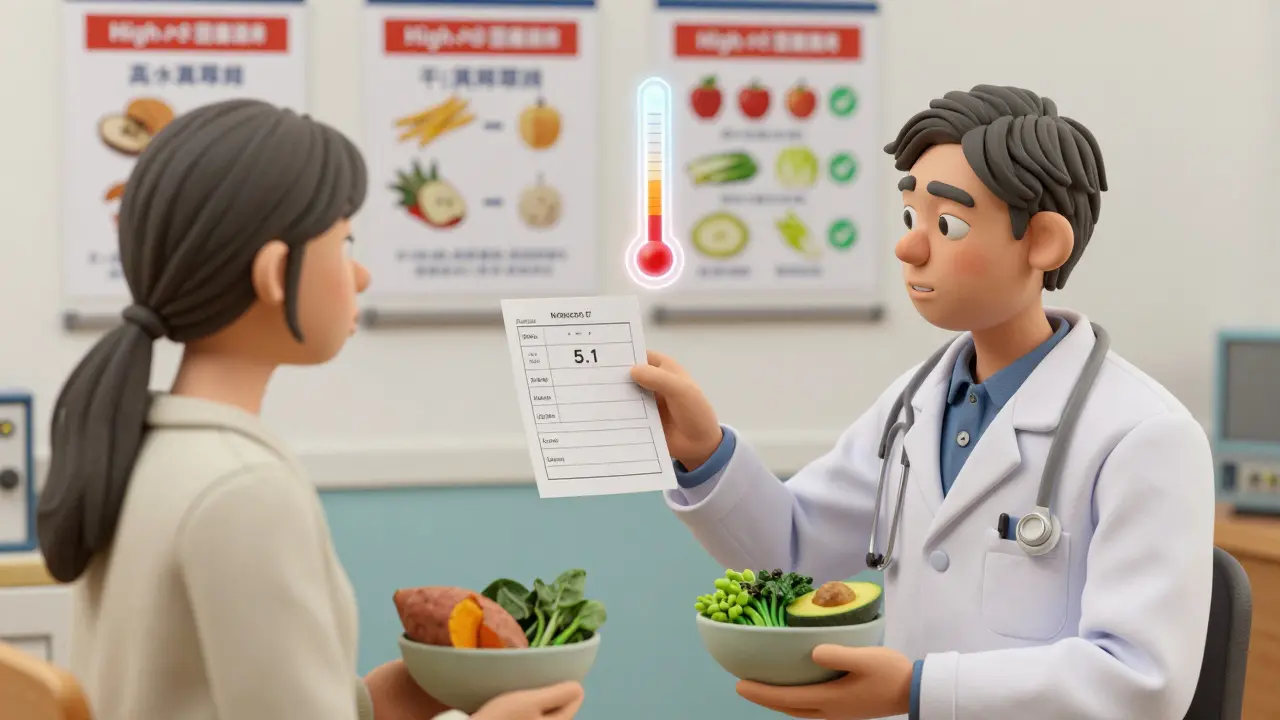
- Get tested. Ask your doctor for a simple blood test to check your serum potassium. Normal range is 3.5-5.0 mmol/L. Anything above 5.0 needs attention.
- Track your intake. Use an app like the National Kidney Foundation’s "Potassium Counts" (used by over 285,000 people) to log your meals. It shows exactly how much potassium you’re getting.
- Adjust your diet. If your levels are high, swap high-potassium foods for lower ones. Instead of bananas, try apples or berries. Swap spinach for cabbage or lettuce. Replace sweet potatoes with white potatoes (peeled). You can still eat well-just smarter.
- Time your meals. Some doctors recommend taking your blood pressure meds at least 2 hours before or after a high-potassium meal. This gives your body time to process things separately.
Real Stories, Real Results
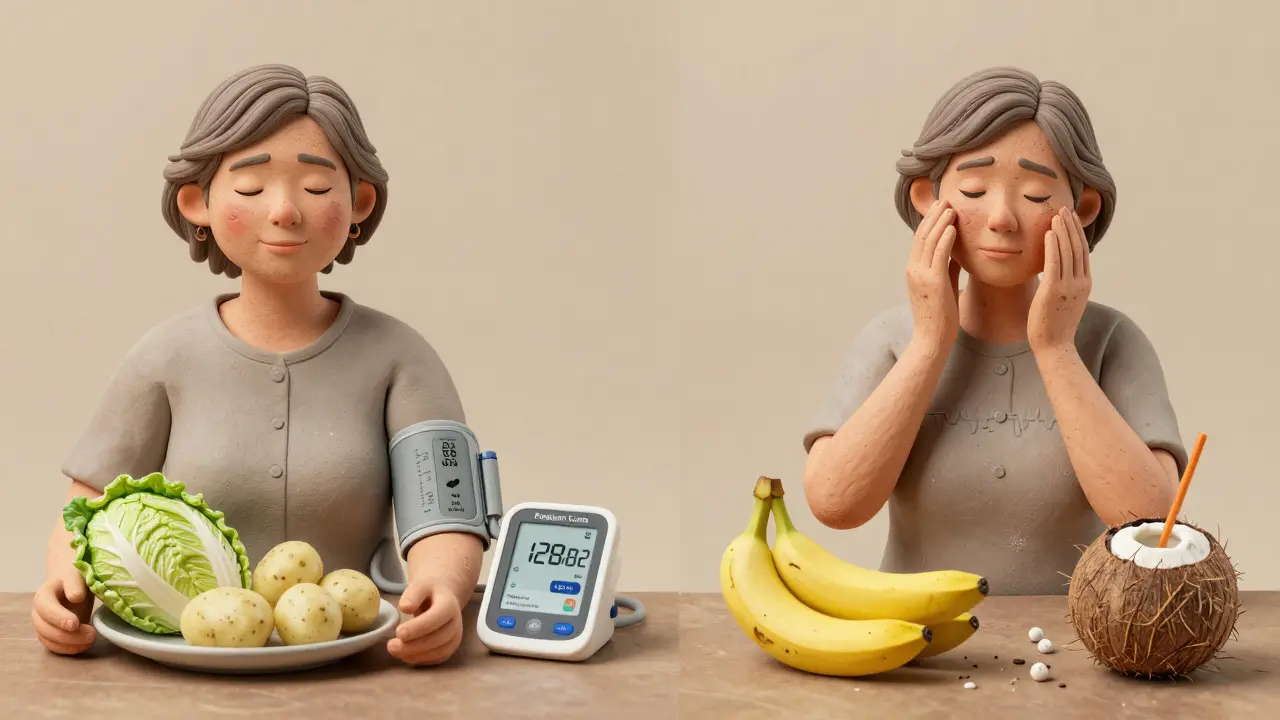
A 2022 analysis from PatientsLikeMe tracked 1,200 hypertensive patients who made dietary changes under medical supervision. Of those, 63% saw a systolic drop of 5 mm Hg or more within 8 weeks. One patient, a 72-year-old woman on lisinopril, cut her potassium intake after her level hit 5.1. Within six weeks, her BP dropped from 152/94 to 128/82-and her potassium stabilized at 4.3.
On the flip side, a MyHealthTeams survey found that 19% of patients experienced symptoms like muscle cramps and heart fluttering after increasing their potassium intake without consulting their doctor. Seven percent needed emergency care. These aren’t edge cases-they’re preventable.
What’s New in 2026?
The science keeps moving. In 2023, the FDA approved a new drug called patiromer (Veltassa), which binds excess potassium in the gut. It’s being used for people who need to stay on RAAS inhibitors but can’t cut back on potassium-rich foods. Clinical trials showed it kept potassium levels in the safe zone 89% of the time.
And in 2024, a major trial called POTASSIU-2 will release results from over 5,000 patients. It’s testing whether personalized potassium targets-based on your kidney function and medication-can prevent complications better than a one-size-fits-all approach.
Even wearable tech is jumping in. Omron’s HeartGuide smartwatch, launching in Q2 2024, will soon offer non-invasive potassium trend tracking. It won’t replace blood tests, but it could give early warnings.
Final Thoughts
Potassium is powerful. It can lower your blood pressure, reduce your stroke risk, and improve your heart health. But when it teams up with certain medications, it can turn from ally to threat. The key isn’t to avoid potassium-it’s to understand your body’s limits.
If you’re on blood pressure meds, don’t guess. Get tested. Talk to your doctor. Use an app. Adjust your plate. Small changes can keep you out of the hospital and on track to better health.
Can I still eat bananas if I’m on blood pressure medication?
It depends. If you’re on an ACE inhibitor, ARB, or potassium-sparing diuretic, eating one banana a day is usually fine-but only if your potassium levels are normal. If your last blood test showed potassium above 4.5 mmol/L, even one banana daily could push you into danger. Talk to your doctor. Get tested. Then decide.
How do I know if I have high potassium?
High potassium often has no symptoms at first. When it does, you might feel muscle weakness, tingling in your hands or feet, nausea, or an irregular heartbeat. But by then, it’s often too late. The only reliable way to know is a simple blood test. If you’re on a RAAS inhibitor, ask your doctor to check your potassium every 3-6 months-even if you feel fine.
Is it safe to use salt substitutes with my blood pressure meds?
Not without caution. Potassium-based salt substitutes can raise your serum potassium by 0.3-0.5 mmol/L on average if you’re on ACE inhibitors or ARBs. That’s enough to push borderline levels into danger. If you’re using one, get your potassium tested. If it’s above 4.8, stop using it and talk to your doctor about alternatives.
Do I need to stop eating healthy foods like spinach and sweet potatoes?
No. But you might need to eat less of them. These foods are packed with nutrients. Instead of cutting them out, swap some for lower-potassium options. Try cabbage instead of spinach, white potatoes instead of sweet potatoes, or apples instead of bananas. You can still eat a nutrient-dense diet-it just needs to be balanced with your meds.
What should I do if I feel weak or have heart palpitations after changing my diet?
Stop eating high-potassium foods immediately. Call your doctor or go to urgent care. These symptoms could signal hyperkalemia, which can lead to life-threatening heart rhythms. Don’t wait. Get a blood test as soon as possible. Keep a list of what you ate in the last 24 hours to help your provider.
Mike Hammer
February 14, 2026 AT 19:01Daniel Dover
February 15, 2026 AT 23:15Sarah Barrett
February 17, 2026 AT 01:06Charlotte Dacre
February 18, 2026 AT 18:49Betty Kirby
February 20, 2026 AT 10:13Josiah Demara
February 20, 2026 AT 18:02Kaye Alcaraz
February 20, 2026 AT 19:04Erica Banatao Darilag
February 21, 2026 AT 21:16Mandeep Singh
February 22, 2026 AT 03:05Joe Grushkin
February 22, 2026 AT 10:22Michael Page
February 22, 2026 AT 20:02Esha Pathak
February 24, 2026 AT 03:54