
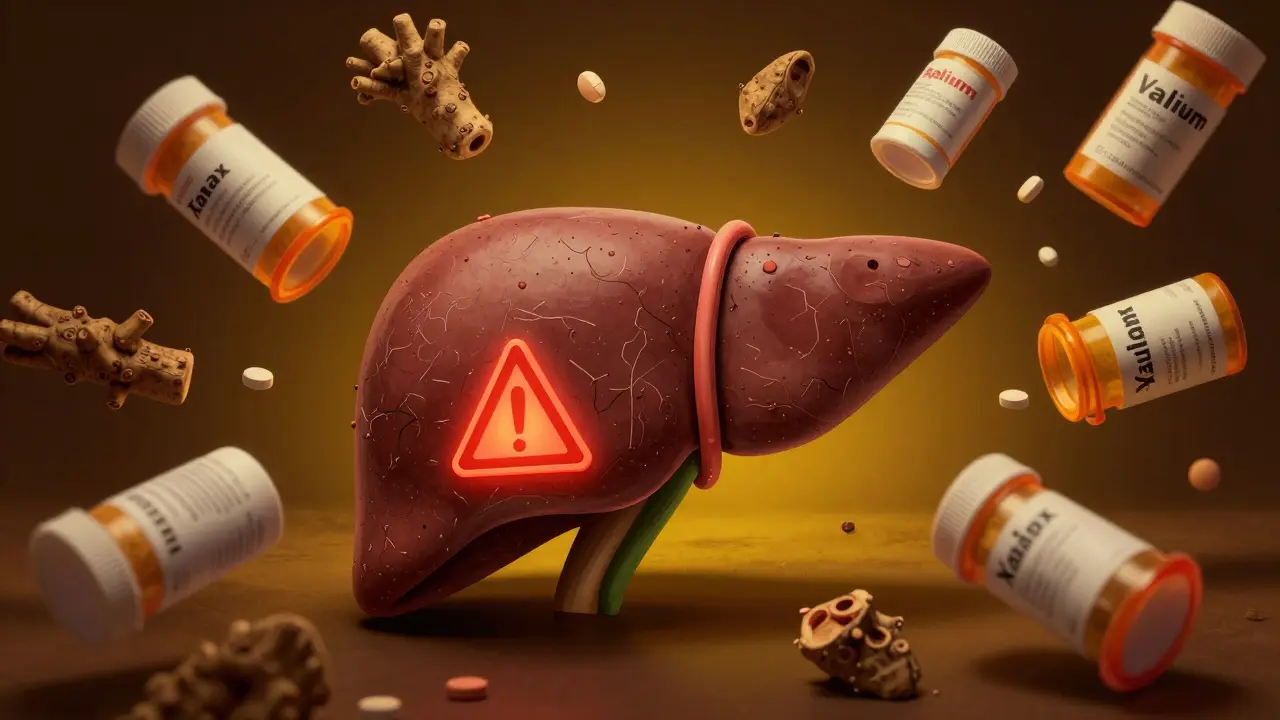
If you’re taking medication for anxiety, sleep, or muscle relaxation, and you’re also using kava as a natural remedy, you’re playing with fire-literally. Kava, a root-based herbal supplement from the Pacific Islands, is often marketed as a safe, natural way to calm nerves. But when it meets sedative medications like Xanax, Valium, or even sleeping pills, the combination can lead to dangerous drowsiness, confusion, or worse-severe liver damage that requires a transplant.
What Is Kava, Really?
Kava (Piper methysticum) is not tea. It’s not a mild herbal relaxant like chamomile. It’s a potent psychoactive substance. Its active compounds, called kavalactones, cross the blood-brain barrier in under 15 minutes. People report feeling relaxed, slightly numb, and mentally foggy within 30 minutes of taking it. That’s why it’s been used ceremonially in places like Fiji and Vanuatu for centuries.
But here’s the catch: traditional Pacific Island preparations use only water-extracted kava root. That’s different from what you buy online. Most commercial supplements-capsules, tinctures, powders-are made with alcohol or acetone to pull out more kavalactones. These extracts can pack up to 300 mg per dose, far higher than the 150-250 mg found in traditional drinks. And that’s where the danger starts.
Why Kava Hits Your Liver Hard
The liver breaks down everything you take-medications, alcohol, supplements. Kava interferes with the enzymes that do this job, especially CYP2D6, CYP2C9, and CYP3A4. These enzymes are also responsible for processing common sedatives like benzodiazepines (alprazolam, lorazepam), sleep aids (zolpidem), and even some antidepressants.
When kava blocks these enzymes, your body can’t clear the sedative drugs properly. That means higher levels of the medication build up in your blood. The result? You feel more sedated than expected. You might fall asleep while driving. You might not wake up. Or worse-you might develop liver inflammation.
Over 25 international cases have been linked to kava-induced liver injury, with some patients needing transplants. The FDA warned about this in 2002. Since then, countries like the UK, Canada, and Switzerland banned kava as a medicinal product. The U.S. still sells it as a supplement, but with a warning label that most people ignore.
How Kava and Sedatives Team Up to Overload Your System
Let’s say you take 0.5 mg of lorazepam daily for anxiety. You feel okay, but not great. So you start taking a 150 mg kava capsule because you read it’s “natural.” Within weeks, you notice you’re exhausted all the time. Your eyes feel yellow. You get nauseous after eating. You go to the doctor. Your ALT liver enzyme level is 2,840 U/L (normal is under 40). That’s not just elevated-it’s a red alert.
This isn’t hypothetical. Sacramento County documented exactly this scenario in 2023. Two patients, both on prescription sedatives, developed acute liver failure after combining them with kava. One needed hospitalization for dangerous bleeding (INR of 4.2). The other nearly died.
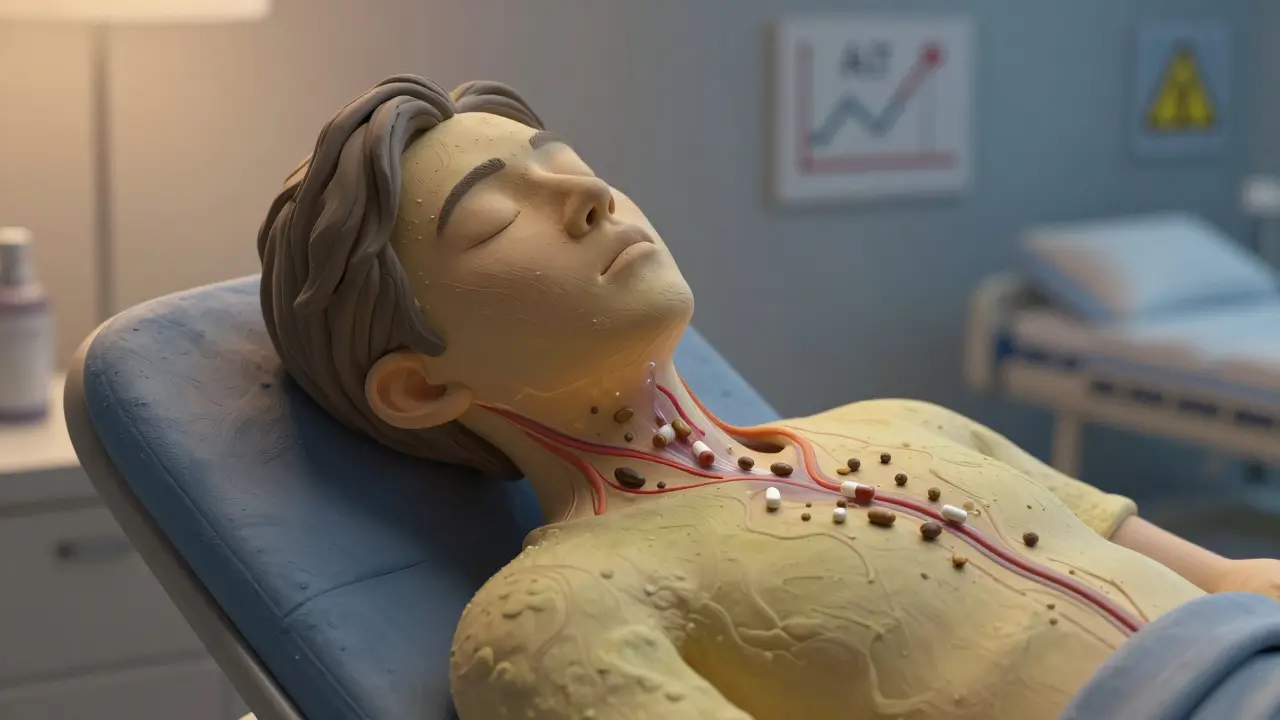
Even if you don’t have symptoms right away, the damage can sneak up. Fatigue, nausea, dark urine, and jaundice often appear 1-4 months after starting kava. By then, the liver injury may already be advanced.
Who’s Most at Risk?
Not everyone who takes kava gets sick. But some people are far more vulnerable:
- People on sedatives: Benzodiazepines, barbiturates, sleep meds, antipsychotics, and even some opioids.
- People with existing liver issues: Fatty liver, hepatitis, or even past alcohol use increases risk dramatically.
- Long-term users: Taking kava daily for more than 3 months raises the odds of liver damage.
- People using alcohol-extracted supplements: These contain higher, unpredictable doses of kavalactones.
- Women over 40: Studies suggest women may be more susceptible to kava-induced liver injury.
And here’s the kicker: only 22% of patients tell their doctors they’re using kava-even when they’re in the hospital with liver failure. Doctors don’t always ask. But they should.
What About “Safe” Kava? Noble Varieties and Traditional Prep
Some sellers claim that “noble kava” from traditional Pacific sources is safe. There’s some truth to that. The World Health Organization found that traditional water-based kava drinks had only 0.8 adverse events per 100,000 servings. Commercial extracts? 7.3 per 100,000. That’s nearly 10 times higher.
Why? Because water extracts fewer of the harmful compounds. Alcohol and acetone pull out more kavalactones-and also more of the toxic byproducts that damage the liver. If you’re going to use kava, stick to water-based preparations from reputable sources that specify “noble kava” and avoid anything labeled “instant,” “extract,” or “concentrated.”
But even then, if you’re on any sedative medication, the risk isn’t worth it. The European Food Safety Authority says it plainly: “No safe level of kava consumption can be established for individuals taking concomitant medications metabolized by CYP2D6, CYP2C9, or CYP3A4.”
What Should You Do?
If you’re taking sedative medications and using kava, here’s what to do now:
- Stop kava immediately. Don’t wait for symptoms. The damage can be silent until it’s too late.
- Talk to your doctor. Tell them you’ve been using kava-even if you think it’s harmless. Bring the bottle or label.
- Get a liver test. Ask for ALT, AST, and bilirubin. If your ALT is more than 3 times the upper limit of normal, stop all kava and follow up with a hepatologist.
- Find alternatives. If you need help with anxiety or sleep, ask your doctor about FDA-approved, well-studied options. Things like cognitive behavioral therapy (CBT), SSRIs, or low-dose melatonin are safer and better understood.
If you’re a healthcare provider, screen every patient for herbal supplement use. Don’t assume they’ll tell you. Ask directly: “Are you taking anything herbal for stress, sleep, or anxiety?”
The Bigger Picture: Why This Keeps Happening
Kava is sold as a supplement, not a drug. That means it doesn’t have to prove safety before it hits shelves. There’s no standardization. One bottle might have 100 mg of kavalactones. The next, from the same brand, might have 280 mg. No one checks.
Meanwhile, the global kava market hit $117 million in 2022. Most of those sales happen online, with no pharmacist to warn you. Naturopaths still recommend it. Social media influencers praise it. But the science says: don’t mix it with sedatives.
States like California and New York are starting to push for warning labels. The FDA is considering stricter rules. But for now, the burden is on you.
If you’re using kava for anxiety or sleep, you’re trading short-term relief for long-term risk. And when you add sedative meds into the mix, that risk multiplies.
There’s no such thing as a “safe” kava and sedative combo. Not according to the FDA. Not according to the WHO. Not according to the doctors treating patients who’ve ended up in liver failure.
Your body doesn’t know the difference between a pill and a plant. It just knows what it has to process. And when kava and sedatives show up together, it can’t keep up.
What to Use Instead
If you’re looking for natural ways to manage anxiety or sleep without risking your liver:
- Valerian root: Minimal drug interactions. Safe with most sedatives.
- Lavender oil (oral or aromatherapy): Shown in clinical trials to reduce anxiety with no liver risk.
- Magnesium glycinate: Helps with relaxation and sleep, especially if you’re deficient.
- Cognitive behavioral therapy (CBT): Proven, long-term solution for anxiety-no pills, no risk.
- Melatonin (0.5-3 mg): For sleep, not anxiety. Much safer than kava.
None of these carry the same level of risk as kava. And none have been linked to liver failure.
Can I take kava with my anxiety medication?
No. Combining kava with anxiety medications like Xanax, Ativan, or buspirone significantly increases the risk of severe sedation, respiratory depression, and liver damage. Even small amounts of kava can interfere with how your body breaks down these drugs, leading to dangerous buildup. There is no safe dosage combination.
How long does it take for kava to damage the liver?
Liver damage from kava can develop anywhere from a few weeks to several months after starting use. Symptoms like fatigue, nausea, dark urine, and yellowing skin often appear 1-4 months after beginning kava. By then, the injury may already be advanced. There’s no warning sign before it starts.
Is organic or “noble” kava safer?
Traditional water-extracted noble kava has fewer reported side effects than alcohol-based extracts. But even noble kava can interfere with liver enzymes and sedative medications. The risk isn’t eliminated-it’s just lower. If you’re on any medication that affects the liver or central nervous system, avoid kava entirely.
What should I do if I’ve been taking kava and feel tired or nauseous?
Stop taking kava immediately. See your doctor and ask for a liver panel (ALT, AST, bilirubin). These tests can detect early liver injury before symptoms get worse. Most mild cases improve within 60 days of stopping kava, but severe damage can be permanent or require a transplant.
Are there any supplements that are safe to take with sedatives?
Yes. Valerian root, magnesium glycinate, and lavender oil have minimal interactions with sedative medications and no known risk of liver toxicity. Melatonin is also safe for sleep. Always check with your pharmacist or doctor before starting any new supplement, even if it’s labeled “natural.”
Final Thought
Kava isn’t the villain. It’s a plant with real effects. But it’s not harmless. And when you mix it with medications your doctor prescribed, you’re not being smart-you’re gambling with your liver. The data doesn’t lie. The warnings aren’t outdated. The cases are real. Don’t wait for symptoms to start. If you’re on sedatives, skip kava. Your future self will thank you.
Paul Huppert
December 31, 2025 AT 12:51Man, I had no idea kava could do this. I’ve been taking it with my nightly melatonin like it’s harmless tea. Gonna stop right now.
Marilyn Ferrera
December 31, 2025 AT 18:02Great breakdown. The enzyme interference point is critical-most people don’t realize herbal doesn’t mean inert. CYP450 is the silent gatekeeper, and kava’s just barging in with a sledgehammer.
Brandon Boyd
January 2, 2026 AT 14:07Just stopped my kava capsules after reading this. I’ve been on lorazepam for anxiety for 2 years and thought I was being smart going ‘natural.’ Turns out I was just setting myself up for a liver emergency. Thanks for the wake-up call. Also-valerian root is now my new BFF.
Harriet Hollingsworth
January 4, 2026 AT 05:06People think ‘natural’ means ‘safe’-like if it grows in the ground, it can’t hurt you. That’s why we have a whole generation of adults thinking turmeric cures cancer and kava is just ‘chill tea.’ Wake up. Your liver isn’t a meme.
Urvi Patel
January 5, 2026 AT 05:51Westerners always overreact to everything. In Fiji we drink kava daily and no one ends up in the hospital. You think your body is special because you take Xanax? This is just fearmongering by Big Pharma
Joy Nickles
January 6, 2026 AT 01:28Okay so like… I’ve been taking kava for 5 months?? And I’ve been on Lexapro for 3 years?? And I’ve had this weird fatigue and my pee is kinda dark?? I’m gonna go to the ER?? Like right now??
Brady K.
January 7, 2026 AT 09:22Let’s be real: the FDA’s ‘warning label’ is a joke. It’s like putting a sticker on a loaded gun that says ‘Don’t shoot yourself.’ The supplement industry is a regulatory wasteland. They sell concentrated kava extracts like they’re vitamins, and then act surprised when people end up on transplant lists. It’s capitalism, folks. Profit over liver.
Kayla Kliphardt
January 8, 2026 AT 20:16I’ve been using water-extracted noble kava for anxiety since my dad died. It helped me sleep better than anything else. I’m not on sedatives, but I’m scared now. Should I stop anyway? I don’t want to lose my liver, but I don’t know what else will help.
anggit marga
January 9, 2026 AT 13:01You guys are so obsessed with Western medicine. Kava is sacred in my culture. You take your pills and then you complain when your body breaks? Maybe you should stop being so weak and learn to live with anxiety like real people do