

Ramadan Medication Timing Planner
Configure Your Schedule
Recommended Plan
Enter your meal times and select your medication frequency to see a recommended schedule.
Imagine waking up before dawn for a pre-fast meal, then going without food or water until sunset. For billions of people observing religious fasting, specifically during Ramadan, this is daily life. But what happens to the blood pressure pills, insulin, or thyroid medication you take every day? Skipping doses can be dangerous, but taking them during fasting hours might violate spiritual rules. This conflict creates a high-stakes puzzle for patients and doctors alike.
You don't have to choose between your health and your faith. With the right planning, you can maintain therapeutic efficacy while respecting religious obligations. The key lies in understanding how medication timing adjustments work during these specific windows. Let's break down exactly how to manage your prescriptions safely.
Understanding the Fasting Window and Medical Risks
Ramadan is the ninth month of the Islamic lunar calendar where Muslims fast from dawn (Fajr) to sunset (Maghrib). This period lasts 29 to 30 days. Because the Islamic calendar is lunar, Ramadan shifts about 11 days earlier each year on the Gregorian calendar. This means fasting duration varies wildly depending on where you live and when the month falls. In summer months, particularly in northern latitudes like Canada or the US, fasting can extend up to 17 hours a day. In winter, it might be closer to 10 hours.
The primary risk isn't just dehydration; it's the disruption of drug levels in your bloodstream. Most medications are designed to be taken at regular intervals-every 8 hours, every 12 hours, or once a day. Stretching that interval to 16 or 17 hours can cause drug levels to drop too low (losing effectiveness) or spike too high (causing toxicity). According to data from the Pew Research Center, approximately 1.8 billion Muslims worldwide observe Ramadan, making this a massive public health consideration.
It is crucial to note that not everyone should fast. People with severe chronic conditions, pregnant women, and those on complex medication regimens often receive exemptions. However, for those who do fast, preparation starts weeks in advance.
Adjusting Daily Medication Schedules
The golden rule of medication timing during fasting is shifting doses to the non-fasting window: between Iftar (sunset meal) and Suhoor (pre-dawn meal). How you shift depends entirely on how many times a day you need to take your medicine.
| Dosage Frequency | Recommended Timing Strategy | Key Considerations |
|---|---|---|
| Once Daily (1x) | Take at Iftar (sunset) or Suhoor (pre-dawn). | Antibiotics often require food; check if they must be taken with the evening meal. |
| Twice Daily (2x) | One dose at Suhoor, one dose at Iftar. | Ensures roughly 12-hour spacing. Ideal for most blood pressure and cholesterol meds. |
| Three+ Times Daily (3x+) | Consult doctor to switch to extended-release formulation. | Splitting into three doses within a 6-8 hour window is difficult and risky. Switching drugs is often necessary. |
For once-daily medications, the choice between morning and evening depends on the drug's half-life and side effects. If a medication makes you drowsy, taking it at Iftar might help you sleep better, avoiding daytime fatigue. If it causes stomach upset, taking it with the Suhoor meal ensures there is food in your system to buffer the irritation.
For twice-daily medications, the split is straightforward: one pill before you go to bed (Suhoor) and one immediately after breaking your fast (Iftar). This maintains a relatively consistent gap between doses. However, you must follow label instructions carefully. Some antibiotics, for instance, lose effectiveness if not taken with food, so they would strictly belong at mealtime.
Special Cases: Thyroid, Blood Pressure, and Diabetes
Certain conditions require more nuanced management than simple schedule shifts. Let's look at the big three: thyroid issues, hypertension, and diabetes.
Levothyroxine is a synthetic thyroid hormone used to treat hypothyroidism. It has strict absorption requirements: it must be taken on an empty stomach, ideally 30-60 minutes before food. Traditionally, this means first thing in the morning. During Ramadan, studies cited in medical literature suggest that taking levothyroxine at night, right before Iftar, can maintain stable thyroid function tests. Some protocols even suggest a temporary dosage increase of 25-50 µg at the start of Ramadan to prevent TSH fluctuations, though this must be monitored by a doctor.
For hypertension (high blood pressure), the goal is steady control. Dehydration during long fasting hours can actually lower blood pressure naturally, increasing the risk of hypotension (dangerously low BP). Therefore, doctors often advise against titrating (adjusting) doses during Ramadan. Instead, keep the dose stable but monitor symptoms like dizziness or fainting closely. Methimazole is often preferred over propylthiouracil for hyperthyroidism because methimazole allows for twice-daily dosing, whereas propylthiouracil requires doses every 4-6 hours, which is incompatible with fasting.
Diabetes management during fasting is critical due to the risk of hypoglycemia (low blood sugar). Research indicates that nearly 24% of diabetic patients experience hypoglycemia during Ramadan despite adjustments. Insulin regimens often need significant restructuring. Long-acting insulin might be shifted to bedtime, while short-acting insulin is timed precisely with Iftar and Suhoor. Never adjust insulin doses on your own; the margin for error is slim, and severe hypoglycemia can lead to seizures or unconsciousness.

Non-Oral Medications and Religious Interpretations
A common question is whether non-pill medications break the fast. The answer depends heavily on religious interpretation, but medically, these routes bypass the digestive tract and often don't affect systemic drug levels in the same way oral meds do.
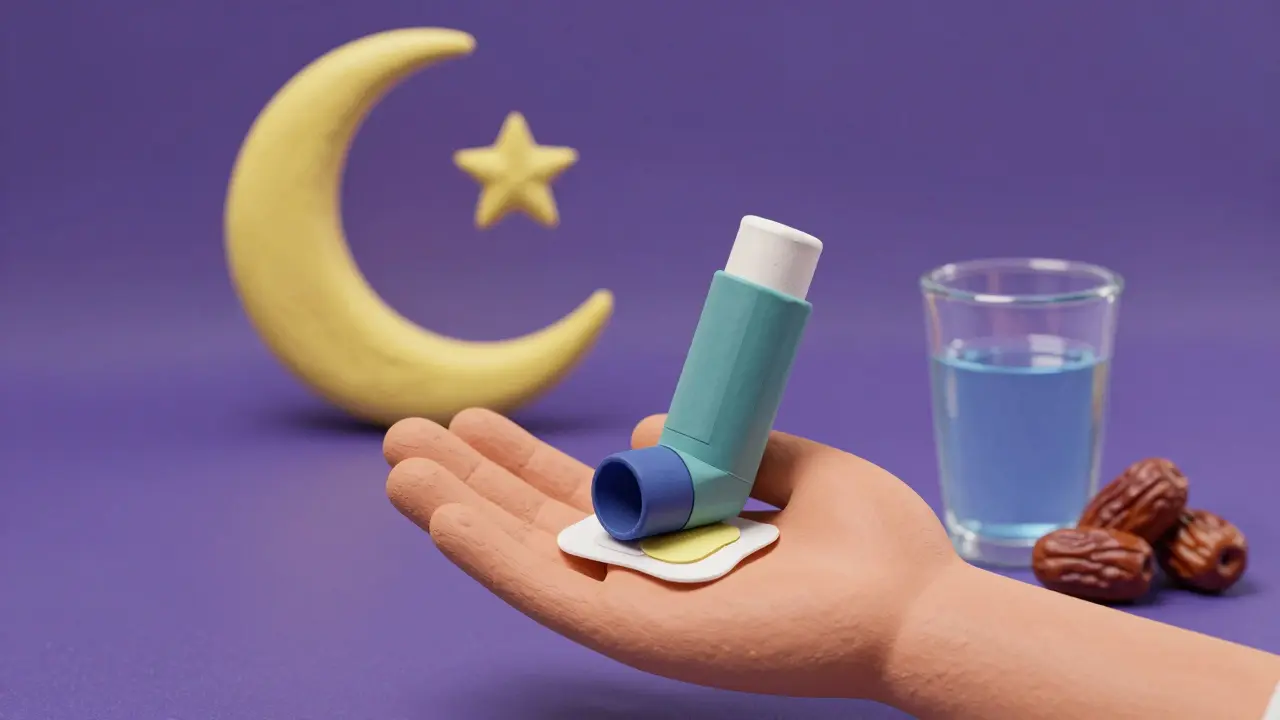
- Inhalers: Generally permitted. They deliver medication directly to the lungs. Use sparingly and rinse your mouth afterward to avoid swallowing residue.
- Injections: Subcutaneous or intramuscular injections (like insulin or vaccines) are widely accepted as not breaking the fast because they do not enter through the mouth.
- Eye and Ear Drops: Usually allowed. While a tiny amount may drain into the throat, it is considered negligible by most scholars.
- Nasal Sprays: Permitted by many interpretations, provided you do not swallow the liquid intentionally.
- Skin Creams and Patches: Fully permitted. Transdermal patches (like nicotine or pain relief patches) provide steady drug release and are excellent alternatives for those wanting to avoid oral intake entirely.
If you are on a medication that requires frequent dosing, ask your pharmacist if a transdermal patch or injection alternative exists. This can simplify your routine significantly.
Hydration and Drug Interactions
Water is the universal solvent for medication. Without adequate hydration, kidneys struggle to filter waste products, including drug metabolites. During the non-fasting window, you must prioritize hydration. Aim to drink water consistently between Iftar and Suhoor, rather than chugging liters at once, which can lead to discomfort and rapid excretion.
Be wary of foods consumed at Iftar that might interact with your meds. Grapefruit juice, for example, interferes with the metabolism of many statins and blood pressure medications. If you usually take your pill with breakfast, and you now take it with Iftar, ensure your evening meal doesn't contain interacting foods. Similarly, alcohol is prohibited during Ramadan, which removes one major interaction risk, but high-sugar dates and heavy fried foods common at Iftar can impact blood sugar and lipid levels, indirectly affecting how well your medications work.
When to Break the Fast Immediately
No religious obligation outweighs immediate physical danger. You must break your fast if you experience:
- Severe dizziness or confusion (signs of hypoglycemia or hypotension).
- Chest pain or irregular heartbeat.
- Signs of severe dehydration (dark urine, extreme thirst, dry mouth).
- Uncontrolled bleeding or severe pain.
Most religious authorities agree that preserving life takes precedence. If you break your fast for medical reasons, consult your healthcare provider immediately to adjust your treatment plan. Do not wait until the next day.
Action Plan: Pre-Fast Consultation
Do not wait until the last minute. Schedule a consultation with your doctor or pharmacist 4-6 weeks before Ramadan begins. Bring a complete list of all your medications, including over-the-counter drugs and supplements. Ask these specific questions:
- Can my current medication schedule be shifted to Iftar and Suhoor?
- Is there an extended-release version of my medication that allows for less frequent dosing?
- Are there non-oral alternatives (patches, injections) available?
- What specific symptoms should trigger me to break my fast?
- Do I need additional monitoring (blood tests, glucose checks) during this period?
By planning ahead, you remove the guesswork. You protect your health, honor your faith, and avoid the stress of managing unexpected side effects during a spiritually significant time.
Can I take my blood pressure medication during Ramadan?
Yes, but you likely need to adjust the timing. Most blood pressure medications are taken once or twice daily. Your doctor will probably advise taking one dose at Suhoor (pre-dawn) and one at Iftar (sunset). Do not stop taking them abruptly, as this can cause dangerous spikes in blood pressure. Monitor for dizziness, which may indicate your blood pressure has dropped too low due to dehydration.
Does using an inhaler break the fast?
Most Islamic scholars agree that using a rescue inhaler does not break the fast because the medication goes directly to the lungs and only a negligible amount enters the stomach. However, you should use it only when necessary and rinse your mouth afterward to ensure no residue is swallowed.
How should I manage insulin during fasting?
Insulin management requires careful medical supervision. Typically, long-acting insulin is taken at bedtime (Suhoor), and short-acting insulin is taken with meals (Iftar and Suhoor). Dosages often need reduction to prevent hypoglycemia during the day. Never adjust insulin doses yourself; work with your endocrinologist to create a personalized Ramadan plan.
What if my medication needs to be taken three times a day?
Taking medication three times a day is difficult during fasting because the non-fasting window is often too short to space doses effectively. Ask your doctor if you can switch to an extended-release formulation that is taken once or twice daily. If no alternative exists, you may need to discuss exemption from fasting or specific religious accommodations.
When should I see a doctor before starting Ramadan?
You should see your doctor 4-6 weeks before Ramadan begins. This gives enough time to adjust medications, order any necessary baseline blood tests, and develop a safety plan. Last-minute changes can be risky and ineffective.
Ganesh Honikol
June 10, 2026 AT 19:53I must say that this is a truly commendable effort to bridge the gap between spiritual devotion and physiological necessity, for it is indeed a delicate balance that requires meticulous attention to detail and a profound understanding of both pharmacokinetics and religious jurisprudence, which often leads to complex scenarios where the individual must navigate the treacherous waters of potential hypoglycemia or dehydration while maintaining the sanctity of their fast, and I would highly recommend that anyone considering such a regimen consults with a qualified healthcare professional who can provide personalized advice tailored to their specific medical history and current medication profile, thereby ensuring that they do not inadvertently harm themselves in the pursuit of spiritual fulfillment, as the consequences of improper medication management can be severe and potentially life-threatening, so please do take this matter seriously and plan accordingly well in advance of the holy month.
Aditya Singh
June 11, 2026 AT 01:39This is a fantastic resource for our global Ummah! The synergy between bio-medical science and Islamic fiqh is crucial here. We see significant metabolic shifts during Ramadan, and optimizing the therapeutic index of drugs like levothyroxine or insulin requires precise temporal alignment with the suhoor and iftar windows. It’s about holistic health integration!
Brett Webster
June 12, 2026 AT 09:31Great points here. As a pharmacist, I see this every year. The key is communication. If you are on a TID (three times daily) med, don't just try to squeeze them into the night window. Ask for an XR formulation. Also, remember that hydration isn't just about drinking water; electrolytes matter too, especially if you're sweating during taraweeh prayers. Don't ignore the dizziness.
Sherry Wheeler
June 12, 2026 AT 20:56It is absolutely breathtaking how we can harmonize the physical vessel with the spiritual soul! This guide is a beacon of hope for those who fear they must choose one over the other. Life is a dance, and sometimes the steps change, but the music remains the same. Embrace the preparation, trust your body, and honor your faith with intention. You are stronger than you know! ✨
shreya sinha
June 13, 2026 AT 03:40It is deeply concerning that society continues to prioritize individualistic interpretations of religious observance over established medical protocols, which are designed to preserve human life and prevent unnecessary suffering, and it is imperative that individuals recognize that true piety does not require self-harm through the neglect of prescribed medications, as the ethical obligation to maintain one's health is paramount and ignoring this duty reflects a profound misunderstanding of moral responsibility, thus leading to avoidable complications that burden both the individual and the broader healthcare system, and therefore one must approach this subject with the utmost seriousness and deference to scientific authority rather than personal convenience or misguided zealotry.
Lee Coates
June 13, 2026 AT 13:13In America, we just take our pills when the doctor says. No fancy scheduling needed. But hey, if you want to complicate things with ancient rituals, go ahead. Just don't clog up the ER when you pass out from low blood sugar. 🇺🇸💊
Miranda River
June 13, 2026 AT 14:11u guys r so obsessed with rules lol. like if u feel bad, stop fasting? thats the whole point. why make it so hard? also grapes juice is bad? who knew. thanks for the info i guess. whatever. peace out.
Callie Skipper
June 15, 2026 AT 07:08i mean its good info i guess. i dont fast but my cousin does and she always looks tired. maybe this helps her figure out why she feels like crap in the afternoon. anyway cool table at least.
AnneKatherine Stiekes
June 15, 2026 AT 08:33love how everyone has strong opinions here. lets just agree that health comes first and faith is personal. no need to fight. just talk to your doc and be kind to each other. simple as that.
Emily Barnhill
June 16, 2026 AT 05:54Listen up! If you are diabetic and you skip your insulin because you think it 'breaks the fast' spiritually, you are risking your LIFE. Do not listen to the haters above. Your health is your trust. Go to the doctor NOW. Get your plan sorted. Stop being lazy and take responsibility for your body. It is that simple.