
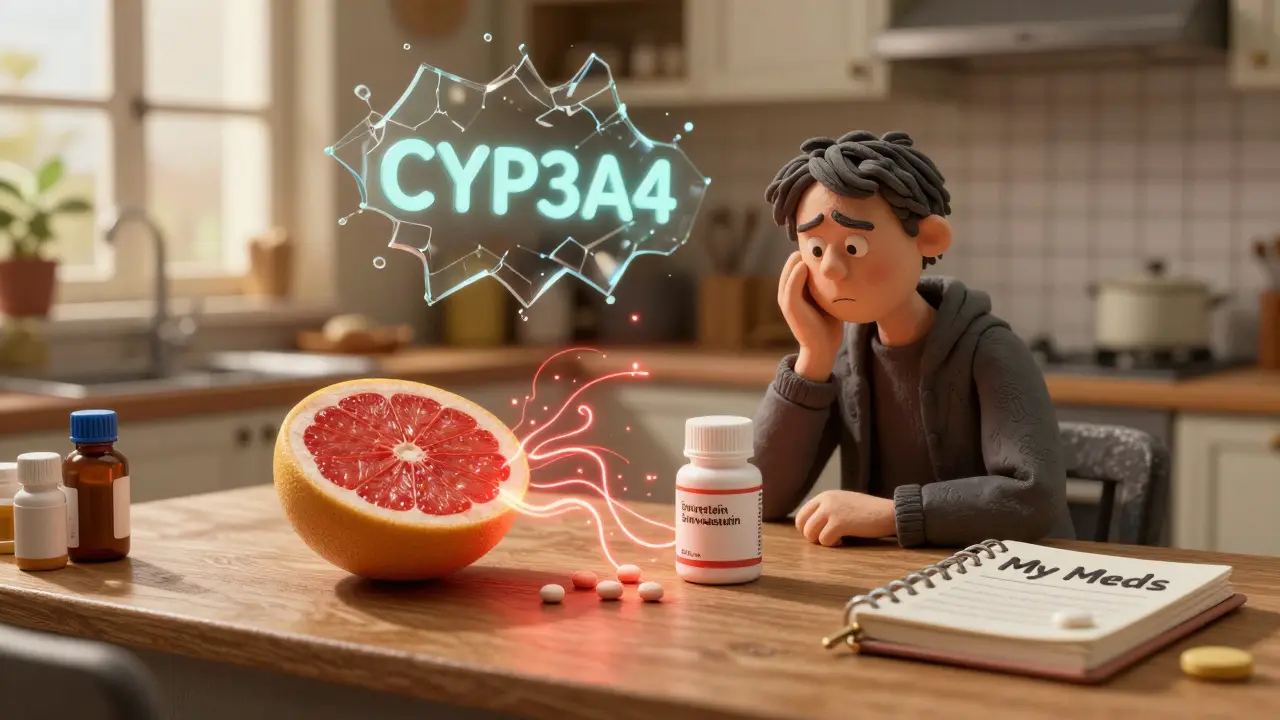
Every year, thousands of people end up in the hospital not because their illness got worse, but because something they ate, drank, or took as a supplement messed with their medication. It’s not rare. It’s not exotic. It’s happening right now to someone you know - maybe even you. Drug interactions are one of the most overlooked dangers in everyday health, and they don’t always come with warning labels.
How Drug Interactions Actually Work
A drug interaction isn’t just about two pills clashing. It’s about how your body processes medicine, and what else gets in the way. There are two main ways this happens: pharmacodynamic and pharmacokinetic interactions.Pharmacodynamic interactions happen when two substances affect the same part of your body - sometimes in opposite ways. For example, if you’re taking a blood pressure pill like guanabenz and also use yohimbine bark (a supplement some people take for energy), the two fight each other. One lowers blood pressure; the other tries to raise it. The result? Your blood pressure goes haywire.
Pharmacokinetic interactions are sneakier. They change how your body absorbs, breaks down, or gets rid of a drug. Most of the time, this happens in the liver, where enzymes - especially the CYP3A4 system - break down medications. If something blocks or speeds up these enzymes, your drug either doesn’t work at all or builds up to toxic levels.
Grapefruit: The Silent Killer in Your Breakfast
Grapefruit isn’t just sour. It’s dangerous with certain meds. The furanocoumarins in grapefruit shut down CYP3A4 enzymes in your gut. That means drugs like simvastatin (a cholesterol pill) get absorbed way faster than they should. One study found that eating just half a grapefruit can raise simvastatin levels by 15 times. That spike raises your risk of rhabdomyolysis - a condition where muscle tissue breaks down and can cause kidney failure.It doesn’t stop with grapefruit. Seville oranges, pomelos, and even some grapefruit juices have the same effect. And here’s the catch: it doesn’t matter if you drink it an hour before or after your pill. The enzyme damage lasts for days. One serving can affect your meds for up to 72 hours.
Supplements You Didn’t Know Were Dangerous
Most people think supplements are safe because they’re “natural.” That’s a myth. St. John’s wort is one of the worst offenders. It’s sold as a mood booster, but it’s also a powerful enzyme inducer. It can slash the effectiveness of:- Birth control pills - increasing pregnancy risk by 50-70%
- Antidepressants like SSRIs - triggering serotonin syndrome (symptoms: high fever, rigid muscles, confusion)
- Immunosuppressants like cyclosporine - leading to organ rejection in transplant patients
- HIV medications - causing viral resistance and treatment failure
A 2000 study showed cyclosporine levels dropped 50-70% in just two weeks of St. John’s wort use. That’s not a side effect. That’s a medical emergency.
Other risky supplements:
- Ginkgo biloba: Thins the blood. When mixed with warfarin or aspirin, it raises bleeding risk by 1.7 times.
- Garlic supplements: Over 30 documented cases of dangerous bleeding when taken with blood thinners.
- Red yeast rice: Contains natural statins. Taking it with prescription statins can triple your risk of muscle damage.
- Coenzyme Q10: May reduce statin effectiveness - not because it’s harmful, but because it competes with the drug’s action.
Food That Neutralizes Your Medicine
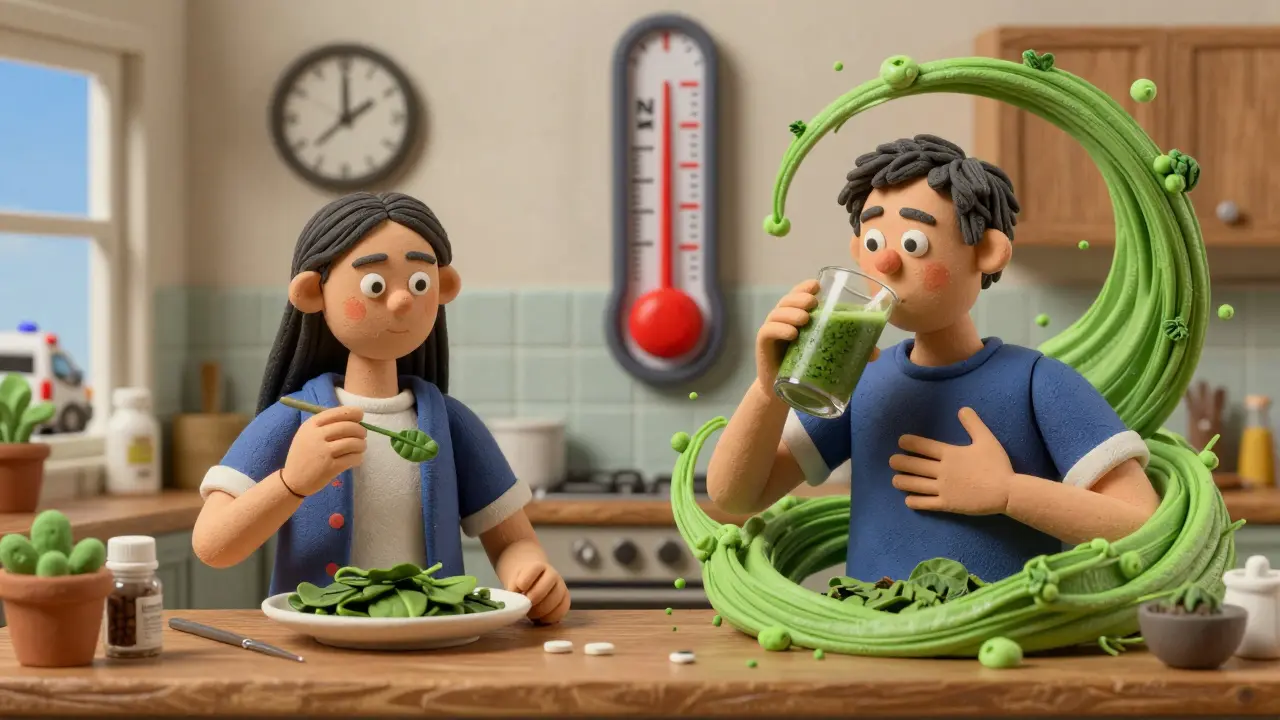
You might think eating healthy is always good. But with warfarin (a blood thinner), it’s the opposite. Vitamin K - found in spinach, kale, broccoli, and Brussels sprouts - directly opposes warfarin’s effect. One cup of cooked spinach has 830 micrograms of vitamin K. That’s more than eight times the daily recommended amount. A 2018 study showed that eating this much in one day can reduce warfarin’s effectiveness by 30-40% in just 24 hours.The fix? Don’t quit greens. Just keep your intake steady. If you normally eat one serving a day, keep doing that. Don’t suddenly switch to three servings. Consistency beats elimination.
Green tea? High in vitamin K. Cranberry juice? Linked to over 28 cases of uncontrolled bleeding in people on warfarin. Even a single glass can spike INR levels past 8.0 - when the safe range is 2.0 to 3.0. That’s a bleeding risk.
Why You’re Not Telling Your Doctor
Here’s the real problem: 70% of people don’t tell their doctor about the supplements they take. Why? They think it’s not important. They assume supplements are “safe.” Or they forget. But doctors don’t ask about supplements unless you bring them up.It’s not just about pills. It’s about protein powders, energy drinks, herbal teas, and even CBD oils. A 2022 study found that 23% of serious supplement-related hospital admissions were due to interactions - and most of those patients never mentioned the supplement to their provider.
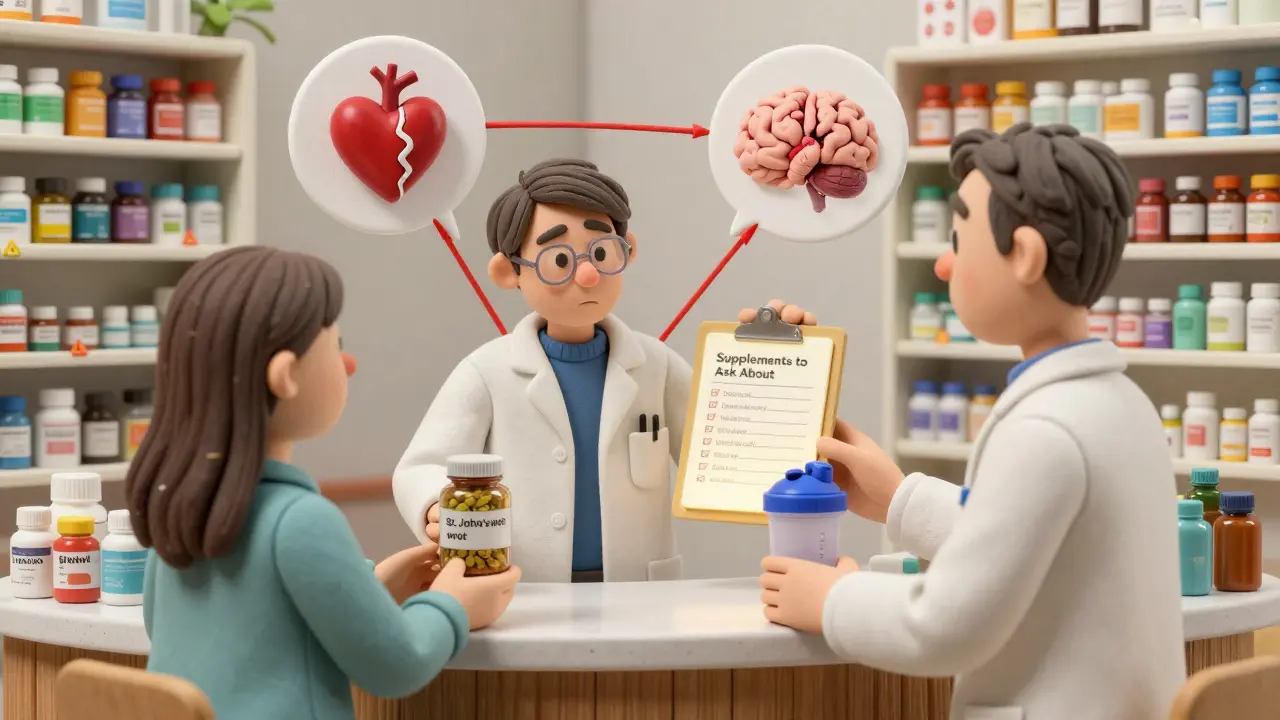
Pharmacists are often the first to catch these mistakes. A 2022 analysis showed that pharmacist-led medication reviews reduced adverse events by 22%. That’s because they ask the right questions: “What are you taking daily? Even if it’s not a pill?”
What You Can Do Right Now
You don’t need to be a scientist to avoid dangerous interactions. Here’s what works:- Make a complete list: Write down every prescription, OTC pill, vitamin, herb, and supplement you take - even the ones you only use once a week.
- Update it at every visit: Don’t wait for your annual checkup. Bring it to every appointment, even if you’re there for a cold.
- Ask your pharmacist: Pharmacists have tools that check 3,500+ drugs and supplements. Ask them: “Does this interact with anything I’m taking?”
- Use free tools: The FDA’s MedlinePlus Drug Interaction Checker is free and reliable. Type in your meds and supplements - it’ll flag risks.
- Don’t change your diet suddenly: If you’re on warfarin, keep your vitamin K intake steady. Don’t go from no greens to a kale smoothie every morning.
The Bigger Picture
The system is failing us. Only 29% of supplement labels include interaction warnings. Prescription drugs? 100% do. That’s a gap in safety.The FDA is starting to act. In 2023, they released draft guidelines requiring new drugs to be tested for interactions with common supplements. Research funding for these studies jumped to $15.7 million in 2022. AI tools are now scanning millions of medical notes to predict new interactions - one pilot tool hit 87% accuracy.
But the real change happens at the kitchen table. When you tell your doctor you’re taking turmeric for your knees, or ashwagandha for stress, you’re not being extra. You’re saving your life.
What to Do If You Think You’re Having an Interaction
If you notice sudden changes - unexplained bruising, muscle pain, confusion, dizziness, or irregular heartbeat - don’t wait. Call your doctor. Or go to urgent care. Don’t stop your medication on your own. But don’t ignore it either.One study found that patients who learned about their interaction risks and acted on them reduced their hospital visits by nearly half. Knowledge isn’t power - it’s protection.
Can I still eat grapefruit if I take a statin?
No, not if you’re taking simvastatin, lovastatin, or atorvastatin. Grapefruit can increase their levels by up to 15 times, raising your risk of severe muscle damage. Switch to orange juice or water instead. If you’re on rosuvastatin or pravastatin, grapefruit is generally safe - but always check with your pharmacist.
Are herbal supplements safer than prescription drugs?
No. Just because something is labeled "natural" doesn’t mean it’s safe. St. John’s wort, ginkgo, and garlic supplements have caused life-threatening interactions with blood thinners, antidepressants, and transplant medications. The FDA doesn’t test supplements for safety or interactions before they’re sold. That’s your responsibility.
Can I take vitamin K if I’m on warfarin?
Yes - but keep your intake consistent. Don’t eat spinach every day one week and then skip it the next. Aim for 90 mcg per day for women, 120 mcg for men. Your doctor will adjust your warfarin dose based on your usual diet. Sudden changes in vitamin K can cause clots or bleeding.
Do all supplements interact with medications?
No, but many do. The riskiest ones affect blood thinning, blood pressure, liver enzymes, or serotonin levels. If you’re on any prescription drug - especially for heart, mental health, diabetes, or immune conditions - assume the supplement could interact until you check.
Should I stop my supplement before surgery?
Yes - and tell your surgeon about everything. Supplements like ginkgo, garlic, fish oil, and vitamin E can increase bleeding risk during surgery. Most doctors recommend stopping them 1-2 weeks before any procedure. Don’t assume they’ll ask - bring it up yourself.
Brad Ralph
February 13, 2026 AT 21:48Worst breakfast combo since peanut butter and jelly on a toaster oven.
christian jon
February 14, 2026 AT 07:11ST. JOHN’S WORT?!?! IT’S NOT A ‘NATURAL REMEDY’-IT’S A LIVER-DESTROYING, SEROTONIN-CHASING, BIRTH CONTROL-NEUTRALIZING, TRANSPLANT-KILLING MONSTER!!
AND DON’T EVEN GET ME STARTED ON GINKGO-IT’S LIKE GIVING YOUR BLOOD A PARTY AND TELLING IT TO ‘JUST BE CAREFUL’!!
THE FDA IS ASLEEP AT THE WHEEL, AND WE’RE ALL JUST WALKING AROUND WITH PHARMACEUTICAL LANDMINES IN OUR PANTRIES!!
MY COUSIN HAD A STROKE BECAUSE SHE THOUGHT ‘HERBAL’ MEANT ‘SAFE’-SHE’S NOW ON LIFE SUPPORT AND STILL WON’T STOP TAKING HER ‘MAGIC MUSHROOM TEA’!!
WE NEED A NATIONAL WARNING SYSTEM-LIKE A RED ALERT FOR SUPPLEMENTS!!
THIS ISN’T JUST MEDICAL NEGLIGENCE-IT’S A CULTURAL DISASTER!!
WHY ISN’T THIS ON THE EVENING NEWS?!
WHY AREN’T PHARMACIES REQUIRED TO PRINT WARNING STICKERS ON EVERY BOTTLE?!
WE’RE LIVING IN A DYSTOPIA WHERE PEOPLE TRUST A TURMERIC CAPSULE MORE THAN A DOCTOR!!
Suzette Smith
February 15, 2026 AT 12:52Autumn Frankart
February 15, 2026 AT 20:21Big Pharma owns the FDA. They don’t want you to know supplements can be dangerous because if they were regulated, they’d lose billions.
And grapefruit? It’s not just the fruit. It’s the juice companies. They’re in cahoots with the drug manufacturers. Why? Because when you get rhabdomyolysis, you need expensive hospital care. That’s profit.
They’ve been suppressing studies since the ‘90s. I’ve seen the redacted documents. I have connections.
And don’t get me started on vitamin K-your doctor is adjusting your warfarin because they’re being paid by the lab that makes the test strips.
This isn’t about health. It’s about control.
Skilken Awe
February 15, 2026 AT 21:12CYP3A4 inhibition isn’t some ‘accident’-it’s a pharmacokinetic cascade that’s been mapped since 1998.
St. John’s wort induces P-glycoprotein AND CYP3A4, which means you’re not just reducing drug efficacy-you’re creating subtherapeutic plasma concentrations that drive resistance.
And you think telling your ‘pharmacist’ helps? Most don’t even have access to Lexicomp or Micromedex.
Real solution? Genotype your CYP enzymes. Stop guessing. Start personalizing.
Or keep taking your ‘natural’ nonsense and wonder why you’re in ICU.
andres az
February 16, 2026 AT 05:22Yeah, some interactions exist. So what?
People have been eating grapefruit with meds for decades. If it were that dangerous, we’d be seeing mass hospitalizations. We’re not.
And ‘natural’ doesn’t mean ‘safe’? Tell that to every human who’s ever eaten food.
Also, why is the FDA only ‘starting to act’ now? Because they’re slow. Not because it’s new.
Stop scaring people. Just give them the facts and let them decide.
Steve DESTIVELLE
February 16, 2026 AT 18:37When one consumes grapefruit, one does not merely ingest a fruit, but a molecular key that jams the lock of CYP3A4, a guardian of pharmacological order.
And yet, we live in an age where the soul of science is drowned by the noise of consumerism, where ‘natural’ is a marketing label, not a biological truth.
Supplements are not the enemy-they are mirrors, reflecting our ignorance, our desire for control without discipline.
Perhaps the real interaction is not between drug and herb, but between human hubris and the silent wisdom of biochemistry.
Let us not fear the supplement, but the belief that we know enough to bypass nature’s design.
And if one must eat spinach with warfarin, let it be with the reverence of a monk at prayer-not as a gamble, but as a covenant.
Knowledge is not power. It is humility.
Stephon Devereux
February 18, 2026 AT 15:12Not just pills. Not just vitamins. Tea. Protein powder. CBD. Even that ‘energy shot’ you grab after work.
I’m a pharmacist. I’ve seen too many people come in after their INR spikes to 9.0 because they started drinking cranberry juice ‘for UTIs.’
Or the guy who took St. John’s wort for ‘anxiety’ and got thrown into the psych ward for serotonin syndrome-never told his psychiatrist because he thought it was ‘just herbs.’
Here’s the truth: You don’t need to be a scientist. You just need to be honest.
Write it down. Bring it to every appointment. Ask your pharmacist. Use the FDA checker.
It takes 5 minutes. Could save your life.
And if you’re on statins? Grapefruit is a hard no. Period. Switch to orange juice. It’s fine. Seriously. Just do it.