
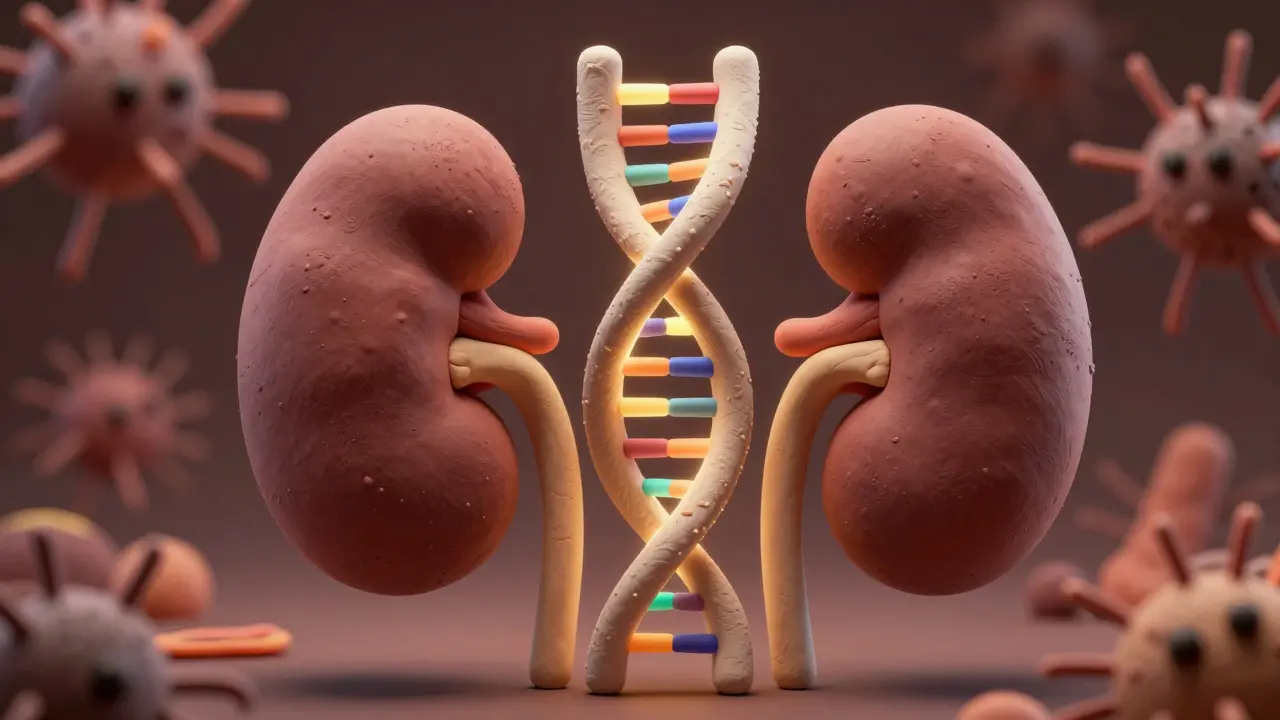
Imagine carrying a genetic trait that once saved your ancestors from a deadly parasite but now puts you at higher risk for kidney failure. This is the reality for many people with recent African ancestry due to variants in the APOL1 gene, a key player in innate immunity that evolved to protect against African sleeping sickness but can cause cellular toxicity in kidneys when present in two copies. For decades, medical professionals noticed a stark disparity: African Americans were three to four times more likely to develop end-stage kidney disease (ESKD) than European Americans. While social factors like access to care played a role, science finally found a major biological culprit. The APOL1 gene explains approximately 70% of this excess risk. Understanding this connection isn't just about biology; it's about empowering patients and providers with precise knowledge to prevent disease before it starts.
What Is the APOL1 Gene and Why Does It Matter?
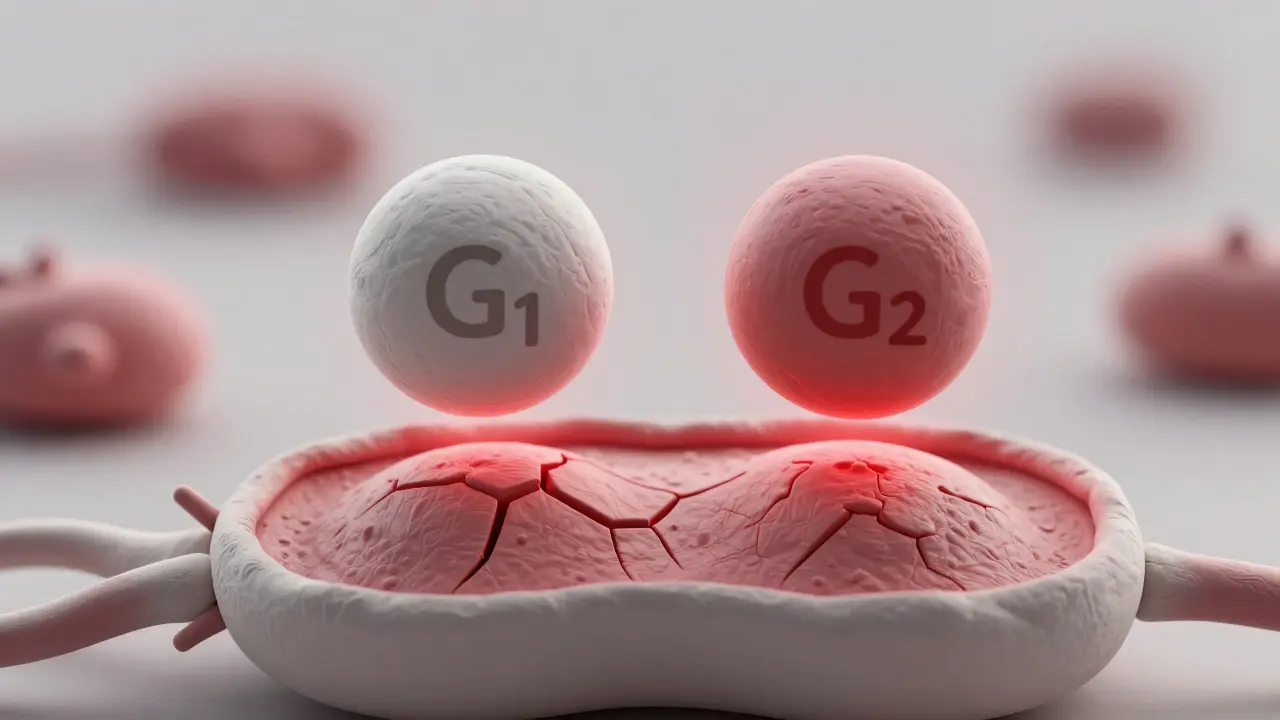
The APOL1 gene encodes a protein called Apolipoprotein L1. In its normal form, this protein helps fight infections by forming pores in the membranes of certain parasites. About 3,000 to 10,000 years ago, two specific mutations-known as G1 and G2-emerged in sub-Saharan Africa. These variants provided a massive survival advantage against Trypanosoma brucei rhodesiense, the parasite responsible for African sleeping sickness. Because those who carried these genes survived while others did not, the variants spread rapidly through natural selection. Today, they are common in populations with West African ancestry, including African Americans, Afro-Caribbeans, and people from countries like Ghana and Nigeria.
However, evolution often comes with trade-offs. The same mechanism that destroys parasites also damages human kidney cells, specifically the podocytes which filter blood. When a person inherits two risk alleles-one from each parent-their kidneys face chronic stress. This doesn't mean everyone with these genes will get sick, but it significantly raises the stakes. The risk follows a recessive pattern, meaning you need two copies of the variant (G1/G1, G2/G2, or one of each) to be considered high-risk. If you have only one copy, you are a carrier but generally do not face increased kidney disease risk yourself.
Who Is Affected and What Are the Risks?
It is crucial to understand that APOL1 risk is tied to genetic ancestry, not race as a social construct. The variants are virtually absent in European, Asian, and Indigenous American populations. However, about 30% of people in West Africa carry at least one risk allele, and roughly 13% of self-identified African Americans in the USA carry the high-risk genotype (two alleles). Among African Americans who already have non-diabetic kidney disease, that number jumps to nearly 50%. This highlights how heavily genetics contribute to the disparity in kidney health outcomes.
The diseases most strongly linked to APOL1 include:
- Focal Segmental Glomerulosclerosis (FSGS): A leading cause of kidney failure where parts of the kidney's filtering units become scarred.
- HIV-associated nephropathy (HIVAN): A rapid-progressing kidney disease seen in some individuals with HIV.
- Arterionephrosclerosis: Hardening of the small arteries in the kidney, often worsened by high blood pressure.
Despite the high risk, penetrance is incomplete. Studies show that 70% of individuals with high-risk APOL1 genotypes maintain normal kidney function throughout their lives. This means something else usually triggers the damage-a "second hit." These triggers can include viral infections like HIV, uncontrolled hypertension, obesity, or exposure to environmental toxins. Without these additional stressors, the kidneys often cope well even with the genetic burden.
Should You Get Tested? Pros and Cons
Genetic testing for APOL1 variants has been available since 2016 through laboratories like Invitae and Fulgent Genetics. Costs typically range from $250 to $450 without insurance. But should you take the test? The decision depends on your personal health goals and family history.
| Scenario | Benefit of Testing | Risk/Challenge |
|---|---|---|
| Living Kidney Donor | Prevents donor from developing ESKD later; ensures recipient gets a healthy organ. | May disqualify an otherwise eligible donor; requires counseling. |
| Family History of Kidney Failure | Enables early monitoring (blood pressure, urine tests); motivates lifestyle changes. | Anxiety about future health; uncertainty if no symptoms exist yet. |
| General Screening | Peace of mind if negative; awareness if positive. | False sense of security if negative; misinterpretation of risk as certainty. |
The National Institutes of Health (NIH) recommends testing for living kidney donors of African ancestry. For others, the American Society of Nephrology suggests considering it if there is a strong family history of kidney disease. One major challenge is interpretation. Many patients initially believe a positive result means they *will* get kidney disease. In reality, it means they have a higher probability and need better protection. A 2023 study noted that 35% of patients misunderstood their risk as inevitable rather than probabilistic.

Protecting Your Kidneys: Actionable Steps
If you know you have high-risk APOL1 genotypes, or if you simply want to safeguard your renal health, specific actions can make a huge difference. The goal is to avoid those "second hits" that trigger damage in genetically susceptible kidneys.
- Monitor Blood Pressure Rigorously: High blood pressure is a primary driver of kidney damage. Aim for a target below 130/80 mmHg. Regular home monitoring can help catch spikes early.
- Check Urine Albumin Annually: Protein in the urine (albuminuria) is an early warning sign of kidney stress. An annual urine albumin-to-creatinine ratio test can detect issues long before blood tests show decline.
- Avoid Nephrotoxic Substances: Limit use of non-steroidal anti-inflammatory drugs (NSAIDs) like ibuprofen, especially chronically. Be cautious with certain herbal supplements and contrast dyes used in imaging scans.
- Manage Viral Infections: If you have HIV, maintaining strict viral suppression with antiretroviral therapy is critical, as HIVAN is strongly linked to APOL1 risk.
- Maintain Healthy Weight and Diet: Obesity increases glomerular pressure. A diet low in sodium and processed meats reduces strain on the kidneys.
Dr. Martin Pollak of Harvard Medical School calls APOL1 "one of the strongest genetic risk factors ever discovered for a common disease." But he also emphasizes that knowing your status allows for proactive care. Early intervention stories, like that of Emani, who preserved her kidney function for over five years through lifestyle changes after testing positive, prove that genetics is not destiny.
Future Treatments and Research Directions
The landscape of APOL1 research is moving fast. Pharmaceutical companies are developing drugs that block the toxic effects of APOL1 in kidney cells without compromising its immune function. Vertex Pharmaceuticals, for example, announced positive Phase 2 results for VX-147, an APOL1 inhibitor, showing a 37% reduction in proteinuria compared to placebo. If successful, these therapies could reduce racial disparities in kidney failure by up to 35% by 2035.
Additionally, the NIH launched the APOL1 Observational Study (AOS) in 2023, tracking 5,000 individuals with high-risk genotypes over ten years. This data will help refine prediction tools and screening guidelines. Meanwhile, efforts are underway to improve equitable access to testing, particularly in low- and middle-income countries where only 12% currently have access to APOL1 genetic services.
As we move toward precision medicine, understanding APOL1 shifts the conversation from vague racial disparities to specific, actionable genetic insights. It empowers individuals to take control of their health and pushes healthcare systems to provide more tailored, effective care.
Is APOL1 genetic testing covered by insurance?
Coverage varies widely. Some insurers cover it for living kidney donors or those with a family history of kidney failure, but many consider it experimental or optional for general screening. Costs range from $250 to $450 out-of-pocket. Check with your provider and laboratory directly for current policies.
Can I pass APOL1 risk variants to my children?
Yes. Since APOL1 follows a recessive inheritance pattern, if you have two risk alleles, you will pass one to each child. They will be carriers. If your partner also carries a risk allele, your child has a 25% chance of inheriting two copies and being high-risk. Genetic counseling can help clarify these probabilities.
Does having APOL1 variants mean I will definitely get kidney disease?
No. Only about 15-20% of people with high-risk APOL1 genotypes develop kidney disease in their lifetime. The majority (80-85%) maintain normal kidney function. Disease usually requires additional triggers like high blood pressure, infection, or other environmental factors.
How does APOL1 differ from other genetic kidney diseases?
Unlike autosomal dominant polycystic kidney disease (ADPKD), which has near 100% penetrance, APOL1 has low penetrance. Also, APOL1 risk is specific to African ancestry, whereas ADPKD affects all ethnicities equally. APOL1 variants arose recently due to natural selection against parasites, making them a unique evolutionary trade-off.
What lifestyle changes are most important for APOL1 carriers?
The most critical steps are controlling blood pressure (<130/80 mmHg), avoiding NSAIDs, managing weight, and getting annual urine tests for protein. These measures reduce the "second hits" that typically trigger kidney damage in genetically susceptible individuals.
alexander barrera
June 18, 2026 AT 01:08You people are just making excuses for poor lifestyle choices 😡🇺🇸
Stop blaming genetics and start eating better.
This is just another way to get free handouts from the government 🤬
Dale Simpson
June 18, 2026 AT 02:47Dude chill out man 😅
Its not about blame its about knowing your body.
We all have different risks right?
Just trying to help folks stay healthy ya know? 🙌
Charlotte Stuart
June 18, 2026 AT 19:35The article fails to adequately address the socioeconomic determinants that exacerbate these biological predispositions.
It is reductive to focus solely on the APOL1 variant without acknowledging systemic healthcare disparities.
Furthermore, the suggestion that testing is merely an option ignores the ethical imperative of equitable access to genomic medicine.
One must consider the broader implications of medicalizing racial identity in clinical settings.
Hema Khimasia
June 20, 2026 AT 05:05The evolutionary trade-off presented here exemplifies the concept of heterozygote advantage in population genetics.
While the G1 and G2 variants confer protection against Trypanosoma brucei rhodesiense, their homozygous expression leads to podocyte injury via membrane pore formation.
This dichotomy highlights the complex interplay between innate immunity and renal pathophysiology.
It is imperative to distinguish between correlation and causation when assessing penetrance rates in diverse cohorts.
The 'second hit' hypothesis suggests a multifactorial etiology requiring comprehensive phenotypic analysis beyond mere genotyping.
krystal Live
June 21, 2026 AT 03:21OMG this is so important!! 💖
Everyone needs to know this stuff!
Please share with your friends and family!
Let's keep our kidneys safe together!! ✨🔥
Tucker Brown
June 22, 2026 AT 11:15I don't trust these big pharma companies pushing genetic tests.
They just want your data and your money.
Who knows what they will do with your DNA later?
Keep your information private people.
Alyssa Smith
June 22, 2026 AT 12:12This is such a beautiful example of how science can bridge cultural gaps.
Understanding our heritage helps us protect our future.
I hope more communities embrace this knowledge with open hearts.
Let's support each other in health journeys! 🌍❤️
Frank Polster
June 24, 2026 AT 05:05Oh great, another genetic lottery ticket.
So if I lose the kidney raffle, it's not my fault, it's my ancestors fighting parasites.
How convenient. 🙄
ankit agarwal
June 26, 2026 AT 00:14The pharmacological intervention targeting APOL1 toxicity represents a paradigm shift in nephrology.
Vertex's VX-147 demonstrates significant reduction in proteinuria, indicating potential efficacy in mitigating podocyte stress.
This targeted approach aligns with precision medicine principles by addressing specific molecular pathways.
However, long-term safety profiles regarding immune function modulation remain critical areas of investigation.
The integration of genomic screening into routine care protocols necessitates robust bioethical frameworks to ensure informed consent and equitable distribution of therapeutic benefits.
Stephanie Cree
June 27, 2026 AT 01:20!!!You MUST get tested!!! 🚫🧬
It is morally wrong to ignore this risk!!!
Your family deserves to know the truth!!!
Don't be selfish with your health data!!! 😠