
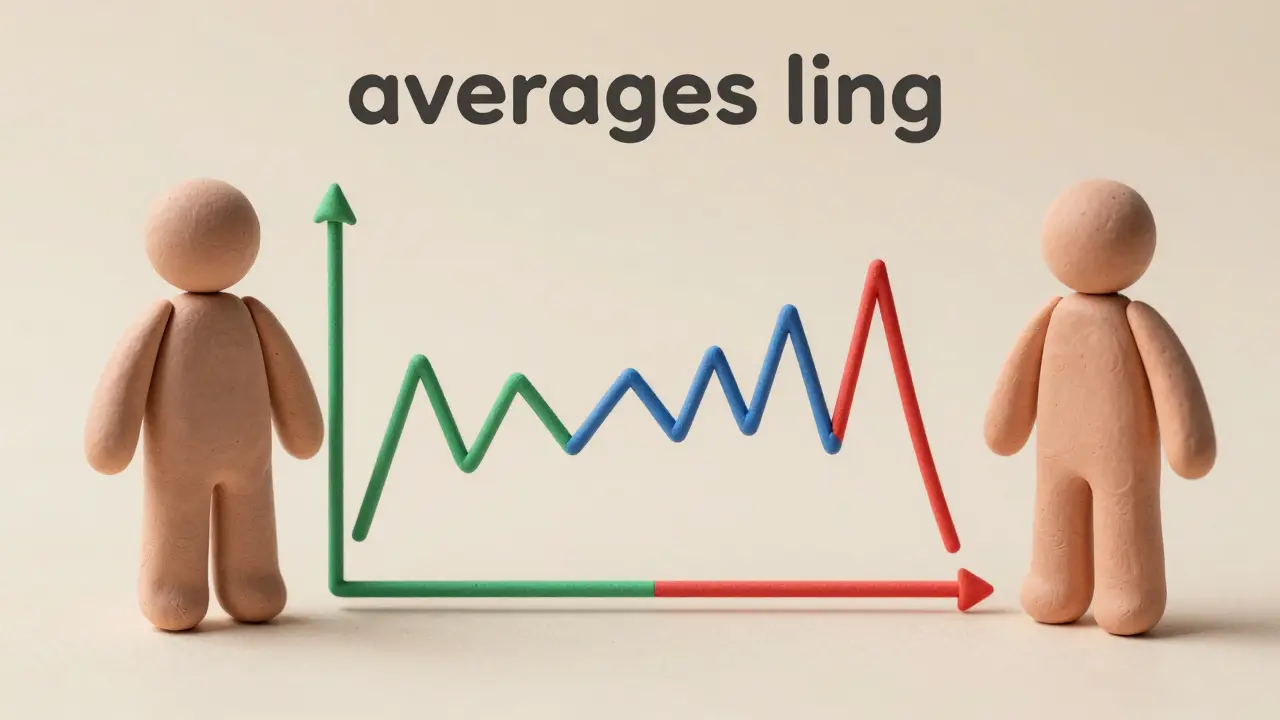
For decades, we’ve been told that a single number defines how well you manage your diabetes. That number is your HbA1c, a blood test measuring average blood sugar levels over the past three months. If it’s under 7%, you’re “doing great.” But here’s the problem: averages lie. You can have a perfect HbA1c while spending half your day dangerously low and the other half dangerously high. The highs cancel out the lows, giving you a false sense of security.
This is where Time in Range (TIR) changes everything. TIR doesn’t care about averages. It cares about reality. It measures exactly how many minutes each day your blood glucose stays within a safe target zone. With the rise of Continuous Glucose Monitoring (CGM), patients now have access to thousands of data points instead of one blurry snapshot. This shift isn't just technical; it's clinical. In 2025, the American Diabetes Association officially elevated TIR from a "nice-to-have" metric to a vital component of daily management, even for people with type 2 diabetes who don't use insulin.
What Exactly Is Time in Range?
Time in Range is simple in concept but powerful in execution. It represents the percentage of time your blood glucose stays between 70 and 180 mg/dL (3.9-10.0 mmol/L). For most nonpregnant adults with type 1 or type 2 diabetes, the clinical goal is to spend at least 70% of the day in this range. That translates to roughly 16.8 hours out of 24.
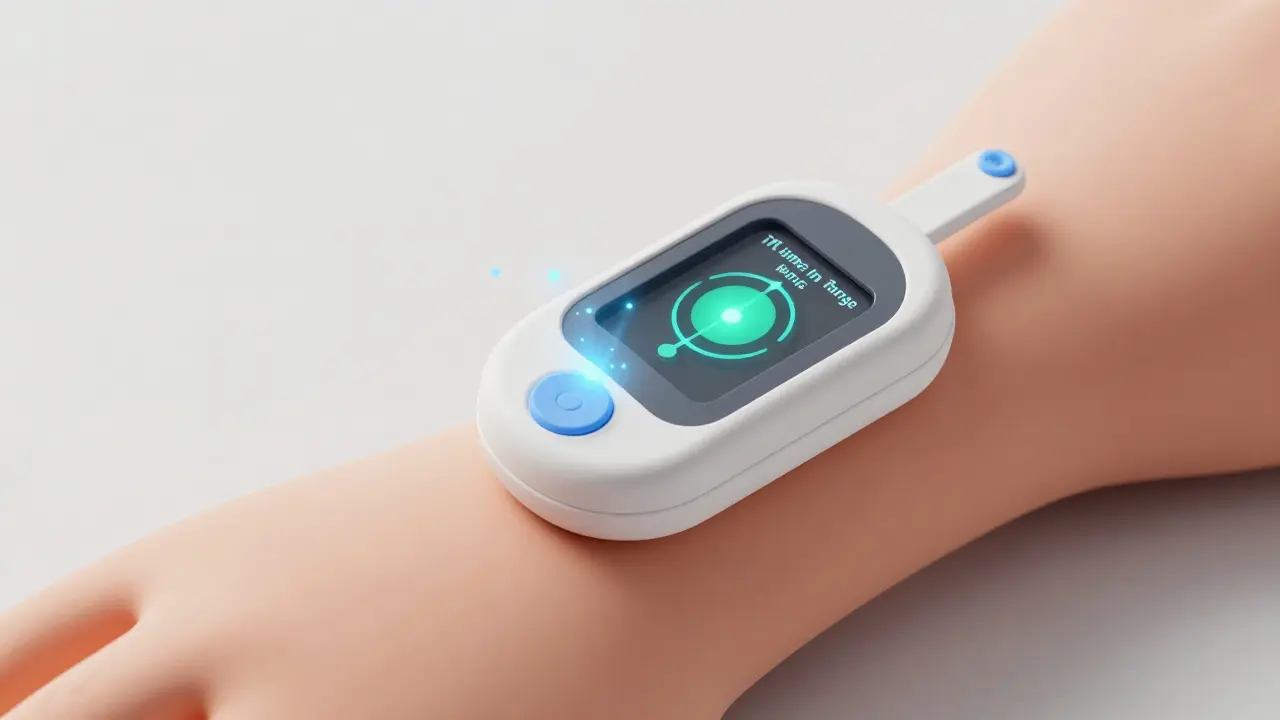
To get this number, you need a CGM device. These small sensors stick to your skin and measure glucose in the interstitial fluid every 1 to 5 minutes. Over a standard 14-day wear period, a single sensor can generate up to 20,000 data points. Without TIR, that data is overwhelming noise. With TIR, it becomes a clear report card.
| Metric | Definition | Clinical Target |
|---|---|---|
| Time in Range (TIR) | Percentage of time spent between 70-180 mg/dL | >70% |
| Time Below Range (TBR) | Percentage of time spent below 70 mg/dL (hypoglycemia) | <4% |
| Severe Hypoglycemia | Percentage of time spent below 54 mg/dL | <1% |
| Time Above Range (TAR) | Percentage of time spent above 180 mg/dL (hyperglycemia) | <25% |
Notice that TIR isn't the only metric that matters. The International Consensus on CGM Metrics, published in 2019, established these targets to ensure safety. If you are spending 70% of your time in range but 30% of your time in severe hypoglycemia, your TIR looks good, but your health is at risk. This is why experts look at the whole picture, not just one bar graph.
Why HbA1c Falls Short
Think of HbA1c like reading the summary at the end of a book chapter. It tells you the main plot points, but it misses the dialogue, the tension, and the details. TIR, on the other hand, is reading the entire chapter word for word.
Two people can have an identical HbA1c of 7.0%. Person A has stable blood sugar all day, hovering gently around 120 mg/dL. Person B swings wildly from 40 mg/dL after exercise to 300 mg/dL after lunch. Their averages match, but their risks do not. Person B faces a much higher risk of cardiovascular issues, nerve damage, and sudden accidents due to hypoglycemia. HbA1c cannot see these swings. TIR exposes them immediately.
Research by Dr. Elizabeth Selvin in 2021 confirmed that TIR provides prognostic value beyond HbA1c. It predicts complications more accurately because it captures the frequency and amplitude of glucose excursions. High variability itself causes oxidative stress in the body, which damages blood vessels over time. By focusing solely on the average, we ignore this hidden damage.
The 2025 Shift: CGM for Everyone?
Historically, CGMs were reserved for people with type 1 diabetes or those with type 2 diabetes using intensive insulin therapy. That changed dramatically with the release of the 2025 ADA Standards of Care. Section 7.16 now explicitly states that CGM should be considered for adults with type 2 diabetes treated with glucose-lowering medications *other than insulin*.
This is a massive expansion. Millions of Americans who take metformin, GLP-1 agonists, or SGLT2 inhibitors suddenly have a stronger clinical case for using a CGM. The logic is straightforward: if you want to improve your outcomes, you need to know what your body is doing in real-time. Guesswork based on finger pricks twice a day is no longer the gold standard.
Market data supports this shift. The global CGM market, valued at $4.8 billion in 2022, is projected to hit $18.6 billion by 2030. Adoption among Medicare beneficiaries with type 2 diabetes jumped from 15% in 2019 to 42% in 2023. Insurance coverage is slowly catching up, though barriers remain. Many patients still face prior authorization hurdles, but the clinical evidence is undeniable.
How to Use TIR Data to Change Behavior
Having the data is useless if you don’t act on it. The beauty of TIR is its ability to reveal personal patterns. Here is how you can start using your CGM reports to make better decisions:
- Identify Food Triggers: You might think oatmeal is a "safe" breakfast. Your CGM might show a spike to 220 mg/dL two hours later. TIR data lets you see exactly which foods cause hyperglycemia for *your* body, allowing you to swap ingredients or adjust portion sizes.
- Optimize Exercise Timing: Notice a dip into hypoglycemia every time you walk after dinner? Move your walk to before the meal or add a small snack. TIR helps you find the sweet spot for activity without crashing.
- Adjust Medication: If your Time Below Range exceeds 4%, your medication dose might be too high. Share this specific metric with your doctor. Instead of saying "I feel shaky," you can say, "My TBR was 6% last week." This precise language leads to faster, safer adjustments.
Patient success stories often highlight this clarity. One patient discovered that their "healthy" green smoothie caused massive spikes due to the fruit content, something their quarterly HbA1c never revealed. Once they adjusted the recipe, their TIR improved by 15% in just two weeks.

Challenges and Realities of CGM Use
It’s not all easy wins. Wearing a sensor for 14 days requires commitment. Some users experience skin irritation or discomfort at the application site. Others find the initial influx of data overwhelming-a phenomenon known as "data anxiety." Seeing every tiny spike can make you feel like you’re failing, even when you’re doing well overall.
To combat this, focus on trends, not individual points. One high reading after a birthday cake doesn’t mean your management plan is broken. Look at the weekly TIR trend. Is it going up or down? Also, remember that CGMs measure interstitial fluid, not blood. There is a lag time of 5-15 minutes during rapid glucose changes. If your CGM shows a rapid drop, check with a fingerstick to confirm before treating hypoglycemia.
Cost remains a significant barrier. While prices have dropped, a month of CGM supplies can still cost hundreds of dollars out-of-pocket. However, the long-term savings from preventing hospitalizations and complications often outweigh the upfront cost. Advocacy groups are pushing for broader insurance mandates, and the 2025 ADA guidelines provide strong leverage for patients negotiating coverage with their providers.
Future Directions: AI and Tighter Ranges
As technology advances, so does our definition of "range." Researchers are now looking at "Time in Tight Range" (70-140 mg/dL), which mimics the glucose levels of people without diabetes. While this is currently more relevant for research settings, it hints at a future where tighter control is achievable and expected.
Artificial intelligence is also entering the mix. New apps are beginning to analyze TIR data to offer personalized recommendations. Imagine an app that says, "Based on your last three nights, eating carbs after 8 PM drops your TIR by 10%. Try moving dinner earlier." This level of insight transforms CGM from a monitoring tool into a coaching tool.
The trajectory is clear. TIR is becoming the new baseline for diabetes care. It empowers patients with knowledge, gives doctors actionable data, and ultimately leads to better quality of life. If you haven’t discussed CGM with your provider yet, now is the time. The era of guessing is over.
What is a good Time in Range (TIR) percentage?
For most nonpregnant adults with type 1 or type 2 diabetes, the recommended target is at least 70% of the day spent within the range of 70-180 mg/dL. This corresponds to approximately 17 hours out of 24. Individual targets may vary based on age, duration of diabetes, and other health conditions, so always consult your healthcare provider for personalized goals.
Can I use Time in Range if I don't use insulin?
Yes. The 2025 ADA Standards of Care recommend considering Continuous Glucose Monitoring (CGM) for adults with type 2 diabetes who are taking glucose-lowering medications other than insulin. TIR provides valuable insights into how food, exercise, and medication affect your blood sugar, regardless of whether you inject insulin.
How does Time in Range differ from HbA1c?
HbA1c measures your average blood sugar over the past three months, hiding daily fluctuations. Time in Range (TIR) measures the percentage of time your blood sugar stays within a specific target zone (usually 70-180 mg/dL) throughout the day. TIR reveals dangerous highs and lows that HbA1c might mask, providing a more detailed picture of your glycemic control.
What is Time Below Range (TBR)?
Time Below Range (TBR) is the percentage of time your blood glucose falls below 70 mg/dL, indicating hypoglycemia. The clinical target is to keep TBR below 4% of the day, with less than 1% spent in severe hypoglycemia (below 54 mg/dL). High TBR increases the risk of accidents, cognitive impairment, and cardiovascular events.
Do insurance plans cover CGM for Type 2 Diabetes?
Coverage varies by insurer and plan. Historically, coverage was limited to insulin users. However, with the 2025 ADA guidelines expanding recommendations, more insurers are covering CGM for type 2 diabetes patients on non-insulin medications. Medicare has also expanded eligibility. Check with your specific provider and ask your doctor to submit a letter of medical necessity citing the latest ADA standards.
Menu