
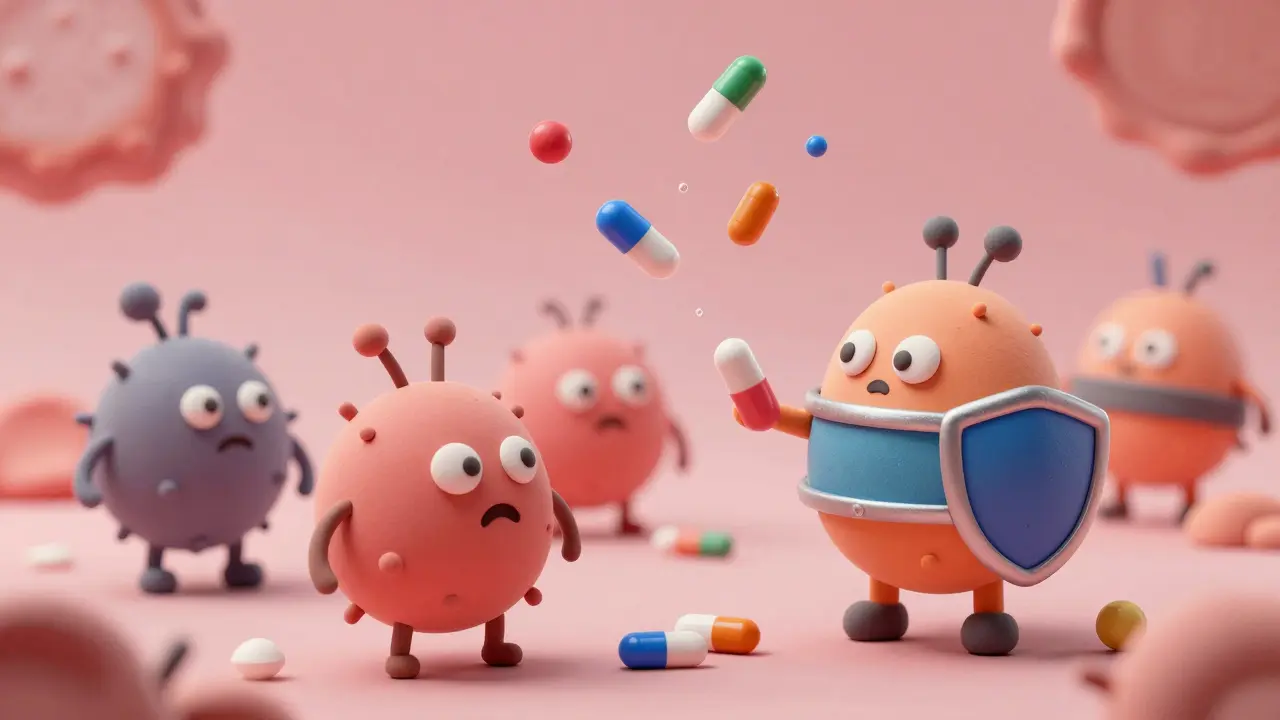
Imagine a world where a simple scratch from a rose thorn or a routine tonsillectomy could be a death sentence. It sounds like a plot from a dystopian novel, but we are drifting toward that reality. Since Alexander Fleming discovered penicillin in 1928, we've treated antibiotics as miracle cures. However, the very tools we use to kill bacteria are teaching those bacteria how to survive. This is the core of antibiotic resistance is a phenomenon where bacteria evolve mechanisms to withstand the antimicrobial compounds designed to eliminate them.
The stakes are incredibly high. According to the World Health Organization, antimicrobial resistance (AMR) is one of the top ten global public health threats. We aren't just talking about a few "superbugs" in hospitals; we're talking about a global crisis causing roughly 1.27 million deaths every year. The problem is that bacteria are master adapters. They don't just "get used to" a drug; they fundamentally rewrite their own genetic code to survive.
How Bacteria Outsmart Our Medicine
Bacteria don't have a brain, but they have a brilliant set of survival strategies. When we expose them to antibiotics, those that survive are the ones with a genetic "edge." These survivors then multiply, passing those winning traits to the next generation. Research shows this happens through several distinct biological tricks.
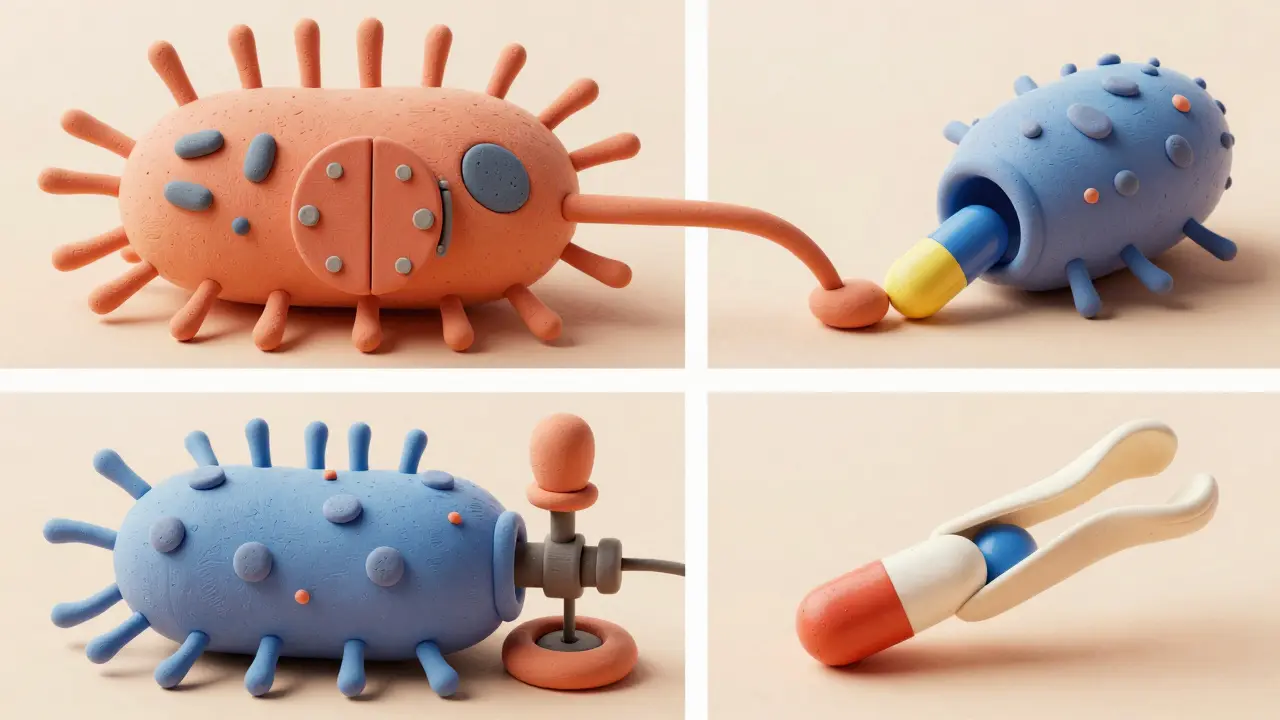
Some bacteria simply lock their doors, using reduced permeability to stop the drug from entering the cell. Others act like a boat with a leak, using antibiotic efflux pumps to actively pump the medicine back out as fast as it comes in. Some go a step further and change the "lock" so the "key" (the antibiotic) no longer fits, a process known as target modification. Others produce enzymes that physically chew up and inactivate the drug before it can do any damage.
Recent studies, including work published in 2024 in Microbiology Spectrum, show that this process is dynamic. Bacteria often start with temporary changes, like DNA methylation, which act as a quick fix. Over time, these temporary shields are replaced by permanent genetic mutations. For example, resistance to amoxicillin often involves mutations in the ampC genes, while cefepime resistance is linked to pbp mutations. This isn't a one-time event; it's an evolutionary arms race where the bacteria are currently winning.
| Mechanism | How it Works | Real-World Example |
|---|---|---|
| Efflux Pumps | Pumping the drug out of the cell | Common in Gram-negative species |
| Target Modification | Changing the drug's binding site | Mutations in gyrA or parC genes |
| Enzymatic Inactivation | Destroying the antibiotic molecule | Beta-lactamase producing bacteria |
| Reduced Permeability | Blocking the drug from entering | Changes in cell wall porins |
The Danger of the "Just in Case" Prescription
We often think of resistance as a lab problem, but it's actually driven by how we use medicine in the real world. In the United States, the CDC reports that up to 30% of outpatient antibiotic prescriptions-about 47 million a year-are completely unnecessary. This usually happens when someone insists on an antibiotic for a cold or the flu, both of which are caused by viruses. Antibiotics kill bacteria; they do absolutely nothing for viruses.
When you take an antibiotic you don't need, you aren't just risking side effects like stomach upset. You are essentially "training" the harmless bacteria in your gut to resist those drugs. These bacteria can then pass their resistance genes to harmful pathogens through a process called horizontal gene transfer. This means your unnecessary Z-Pak for a viral sore throat could potentially help a dangerous infection become untreatable in someone else.
It's not just about the pharmacy. The One Health approach recognizes that human health is tied to animal and environmental health. The massive use of antibiotics in livestock to promote growth creates a breeding ground for resistant strains that eventually jump to humans through food or water. Even some non-antibiotic pharmaceuticals have been found to accidentally help bacteria swap resistance genes more easily.
Practical Steps for Appropriate Use
Stopping the rise of superbugs requires a shift in how we view these drugs. We need to move from a "more is better" mindset to one of antimicrobial stewardship. This basically means using the right drug, at the right dose, for the right amount of time.
If you are prescribed an antibiotic, follow these rules to protect yourself and others:
- Finish the entire course: Even if you feel better after two days, keep taking the meds. Stopping early leaves the weakest bacteria dead but the strongest ones alive, giving them a chance to mutate and return as a resistant infection.
- Never share meds: Taking a leftover pill from a friend is dangerous. You might be taking the wrong class of drug for your specific infection, which only fuels resistance.
- Ask "Is this necessary?": If your doctor prescribes an antibiotic for a respiratory infection, ask if a viral test is needed first.
- Focus on prevention: The best way to stop needing antibiotics is to not get sick. Regular handwashing and staying up-to-date on vaccinations reduce the overall need for antimicrobial drugs.
The Future of Fighting Superbugs
We are in a race against time. The WHO's 2024 Antibacterial Pipeline Report showed a worrying trend: out of 67 antibiotics in clinical development, only a handful are truly innovative compounds that can beat existing resistance. We can't just keep making slightly different versions of the same old drugs.
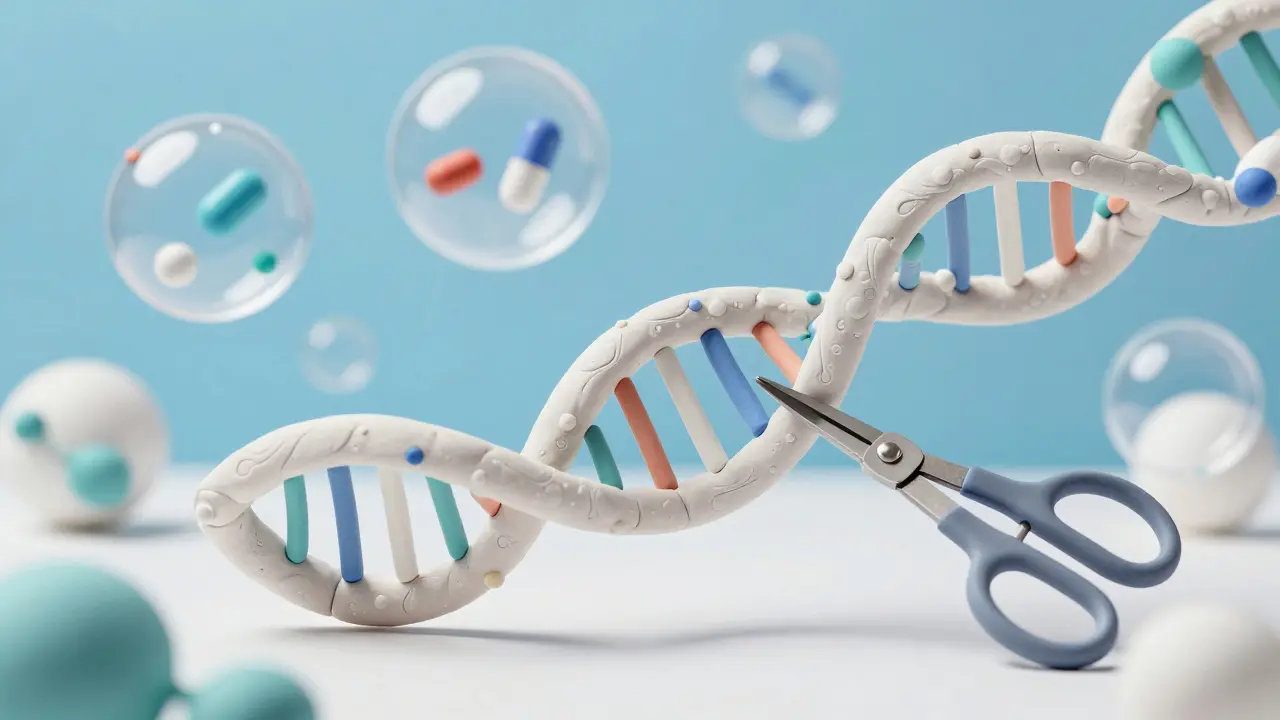
However, there is hope in high-tech science. Researchers are exploring CRISPR/Cas9 gene editing to specifically target and "cut out" resistance genes from bacteria. Others are using advanced bioinformatics to predict how bacteria will mutate, allowing us to stay one step ahead of the evolution. There's also a push toward targeting the metabolic pathways bacteria use to stabilize their resistance, effectively making them "forget" how to fight the drugs.
The economic cost of failing here is staggering. The World Bank suggests that if we don't get a handle on AMR, it could push 24 million people into extreme poverty by 2050 due to healthcare costs and lost productivity. It's not just a medical issue; it's a global economic threat.
Can I develop a resistance to antibiotics?
It is a common misconception that your body becomes resistant. In reality, the bacteria become resistant. The antibiotic doesn't change your biology; it changes the population of bacteria in your body, leaving only the mutated, resistant ones behind.
Why do I have to finish my antibiotics if I feel better?
When you start an antibiotic, the most sensitive bacteria die first. The ones remaining are the tougher, more resistant ones. If you stop early, those tougher bacteria survive and multiply, often leading to a relapse that is much harder to treat because the "easy" drugs no longer work.
Do antibiotics work on viruses like the common cold?
No. Antibiotics only target bacterial structures (like cell walls). Viruses have completely different structures and replication methods, meaning antibiotics have zero effect on them. Taking them for a cold only exposes your healthy bacteria to unnecessary selective pressure.
What is a "Superbug"?
A "superbug" is a colloquial term for bacteria that have developed resistance to multiple types of antibiotics. This makes them incredibly difficult to treat, often requiring "last-resort" drugs that may have more severe side effects.
Is antibiotic resistance inevitable?
To some extent, yes, because evolution is a natural process. However, the speed at which it is happening is not inevitable. Through proper stewardship, better hygiene, and the development of new drug classes, we can significantly slow down the process and save countless lives.
Next Steps for Patients and Caregivers
If you are currently managing an infection, your first step should be a clear conversation with your provider. Ask for the specific name of the drug and why it was chosen over a narrower-spectrum option. If you are a parent, resist the urge to request antibiotics for every fever; instead, ask about supportive care and the timeline for when a bacterial infection would actually be suspected.
For those in healthcare settings, the goal is to implement strict stewardship programs. Evidence shows these programs can reduce inappropriate use by 20-30% within 18 months. By auditing prescriptions and prioritizing diagnostic testing over "guessing" with broad-spectrum drugs, we can protect the efficacy of our current medicine for the next generation.
Menu