
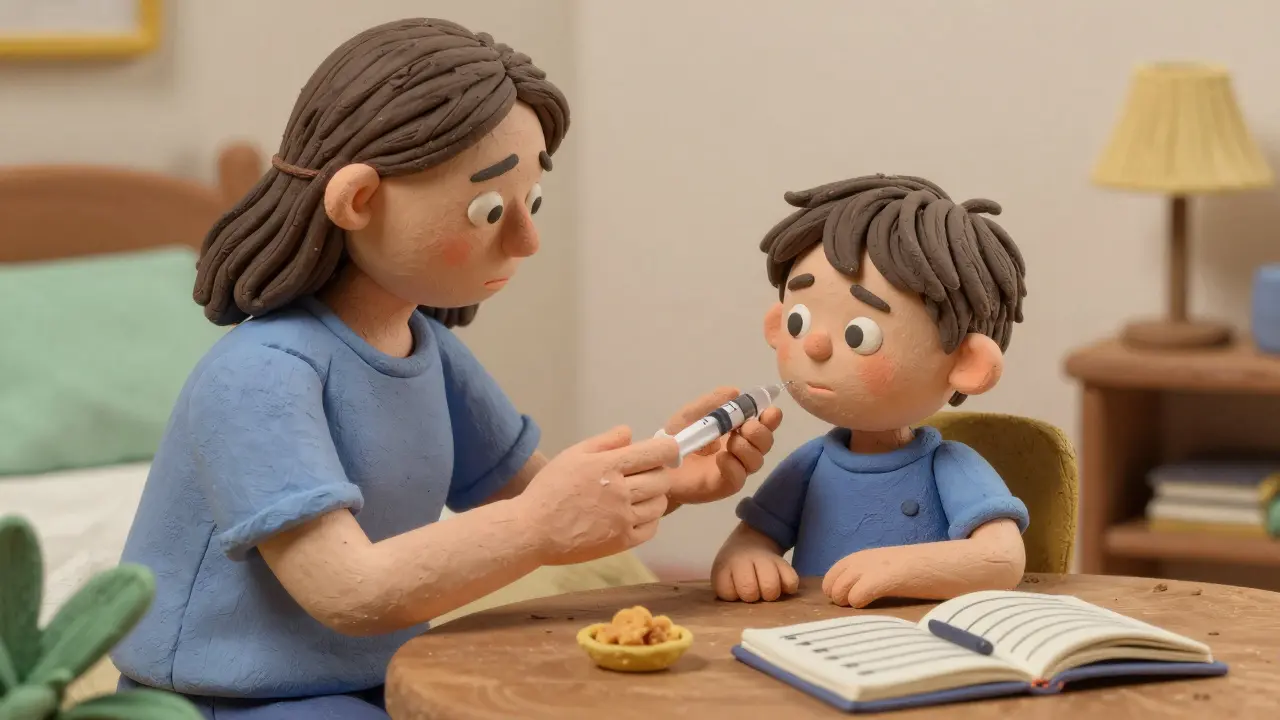
When your child starts a new medication, you’re not just giving them a pill or liquid-you’re stepping into a new routine with hidden risks. Even if the doctor says it’s safe, side effects can show up out of nowhere. A little nausea. A rash. Trouble sleeping. Or worse. And when it happens at 2 a.m., you don’t have a clinic open. You need to know what to do, right now, at home.
Know the Most Common Side Effects
Not every reaction means danger. Most pediatric medication side effects are mild and temporary. But you need to recognize them fast. According to Children’s Hospital of Philadelphia’s 2022 data, the top three side effects in kids are:- Upset stomach or nausea (42% of cases)
- Diarrhea (28%)
- Drowsiness or unusual sleepiness (19%)
Less common but still frequent: rashes (23%), hyperactivity (12%), and vomiting (10%). Some kids react strangely to common meds. For example, diphenhydramine (Benadryl) makes most adults sleepy-but in about 15% of children, it causes hyperactivity. They might run around nonstop, cry uncontrollably, or seem "wired." That’s not bad parenting. It’s a known drug reaction.
Keep a simple log: write down when the medicine was given, what the child ate or drank before, and what happened afterward. This helps your doctor spot patterns. Was the vomiting always after breakfast doses? Did the rash show up after switching brands? Details matter.
When to Call the Doctor or 911
Mild side effects can wait until morning. Severe ones can’t. The American Academy of Pediatrics says call your pediatrician immediately if your child has:- More than three episodes of vomiting in 24 hours
- Fever over 102°F (38.9°C) that doesn’t come down with acetaminophen
- Difficulty breathing-more than 40 breaths per minute for infants, or 30+ for older kids
- Swelling of the face, lips, or tongue
- Hives covering more than 10% of the body
If you see any of these, don’t wait. Call 911 or go to the ER. These are signs of a serious allergic reaction or toxic response. Epinephrine may be needed. Don’t rely on antihistamines alone.
For less urgent but still concerning issues-like persistent diarrhea for more than two days, or a rash that spreads or blisters-call your pediatrician’s office. Many now offer same-day telehealth visits for medication concerns. Between 2020 and 2023, telehealth use for these issues jumped from 12% to 47% of pediatric visits. That’s because it’s fast, safe, and avoids unnecessary ER trips.
How to Handle Gastrointestinal Side Effects
Nausea, vomiting, and diarrhea are the most common complaints. The key is preventing dehydration, not stopping the medicine unless told to.For vomiting:
- Wait 30 to 60 minutes after the last episode.
- Start with tiny sips: 5-10 mL (about one teaspoon) of oral rehydration solution every 5 minutes.
- If the child keeps it down for an hour, slowly increase to 15-30 mL every 10 minutes.
- Once they’re tolerating fluids, offer bland foods: bananas, rice, applesauce, toast (the BRAT diet).
Don’t give juice, soda, or milk right away. Sugar and fat can make diarrhea worse. Avoid anti-diarrhea meds like Imodium-those aren’t approved for kids under 6.
For upset stomach:
- Give meds with a small snack, even if the label says "on an empty stomach." Food can reduce irritation.
- Use an oral syringe to give liquid meds slowly, not a spoon. A teaspoon isn’t always 5 mL-many household spoons hold 10 mL or more.
- Keep the child upright for 15-20 minutes after dosing. Lying down increases reflux.
Storage and Safety: Stop Accidents Before They Happen
Most pediatric medication errors happen at home. The CDC says 60,000 kids end up in the ER every year from medication mistakes. Over 70% involve kids under 5. And most of those are preventable.Follow these rules:
- Keep all meds in their original child-resistant containers. Never transfer them to pill organizers, water bottles, or candy jars. A 2022 study found this increases poisoning risk by 41%.
- Store meds at least 5 feet high-out of reach and sight. Lock cabinets if you can. This cuts accidental ingestions by 65%.
- Use a dedicated, labeled medicine drawer. Don’t mix prescriptions with vitamins or OTC meds.
- Check storage temps. About 73% of liquid pediatric meds need refrigeration. The rest should be kept at room temperature (68-77°F). Heat and moisture ruin medicine.
- Always use the dosing tool that came with the medicine. A 1 mL oral syringe with 0.1 mL markings is the gold standard. Never use kitchen spoons.
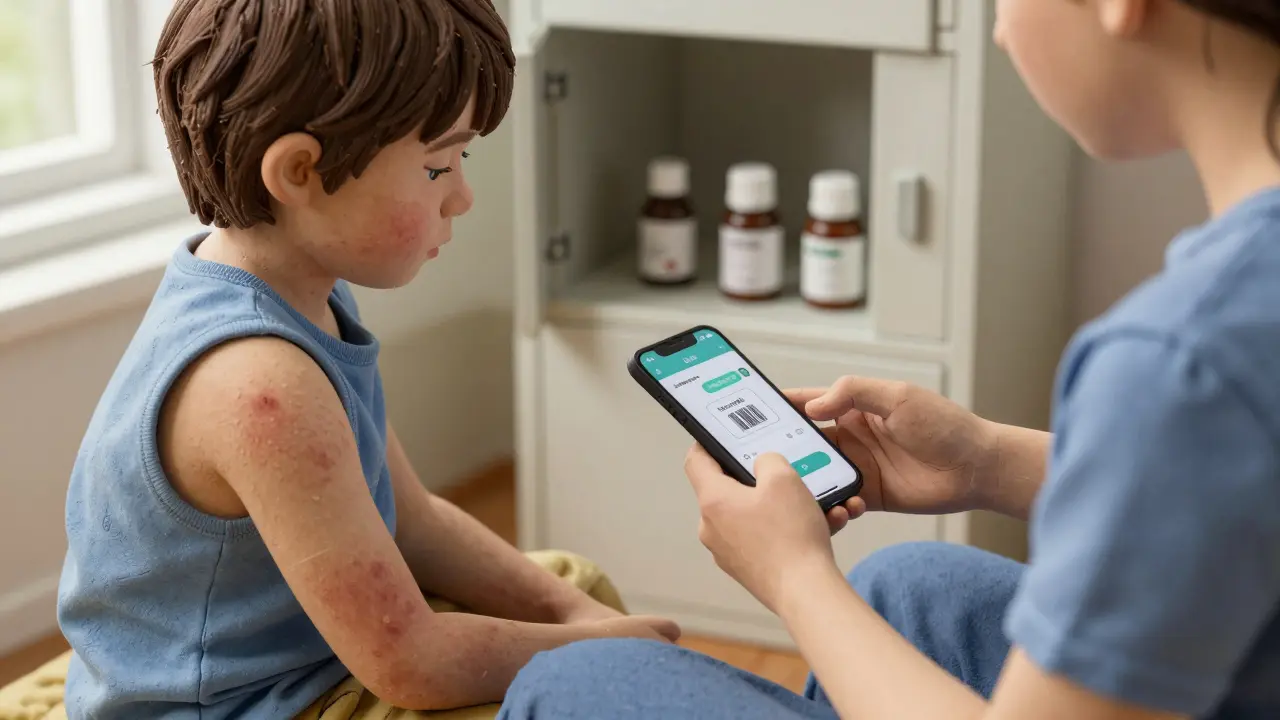
And here’s a trick many parents don’t know: Take a photo of the medication label before giving it. A 2023 study showed this reduces wrong-medication errors by 44%. It’s like a safety net. If you’re unsure, compare the photo to what’s in your hand.
Antibiotics and the "Stop Early" Trap
One of the biggest mistakes parents make? Stopping antibiotics when the child "feels better." That’s dangerous.Children’s Healthcare of Atlanta found that 29% of bacterial infections return because families quit antibiotics early. That’s because the first few days kill the weakest germs. The strong ones survive-and multiply. Next time, they’re harder to kill.
Always finish the full course-even if your child seems fine after day 3 or 4. If side effects are too bad, call the doctor. They might switch to a different antibiotic, but don’t just quit.
Also, don’t assume "take with food" means "take with a big meal." For many meds, a small snack like a cracker or a sip of milk is enough. A full meal can delay absorption or make nausea worse. Ask your pharmacist what "with food" really means for that specific drug.
New Tools Making Home Care Easier
Technology is helping parents manage meds better. In 2023, apps like MedTrak Pediatric launched. They use barcode scanning to verify the right drug, dose, and time. In trials with 1,200 families, they cut dosing errors by 68%.Some pharmacies now offer printed, picture-based dosing charts-especially helpful for families with low health literacy. The FDA is pushing for these to become standard by 2027. Until then, ask your pharmacist if they have one.
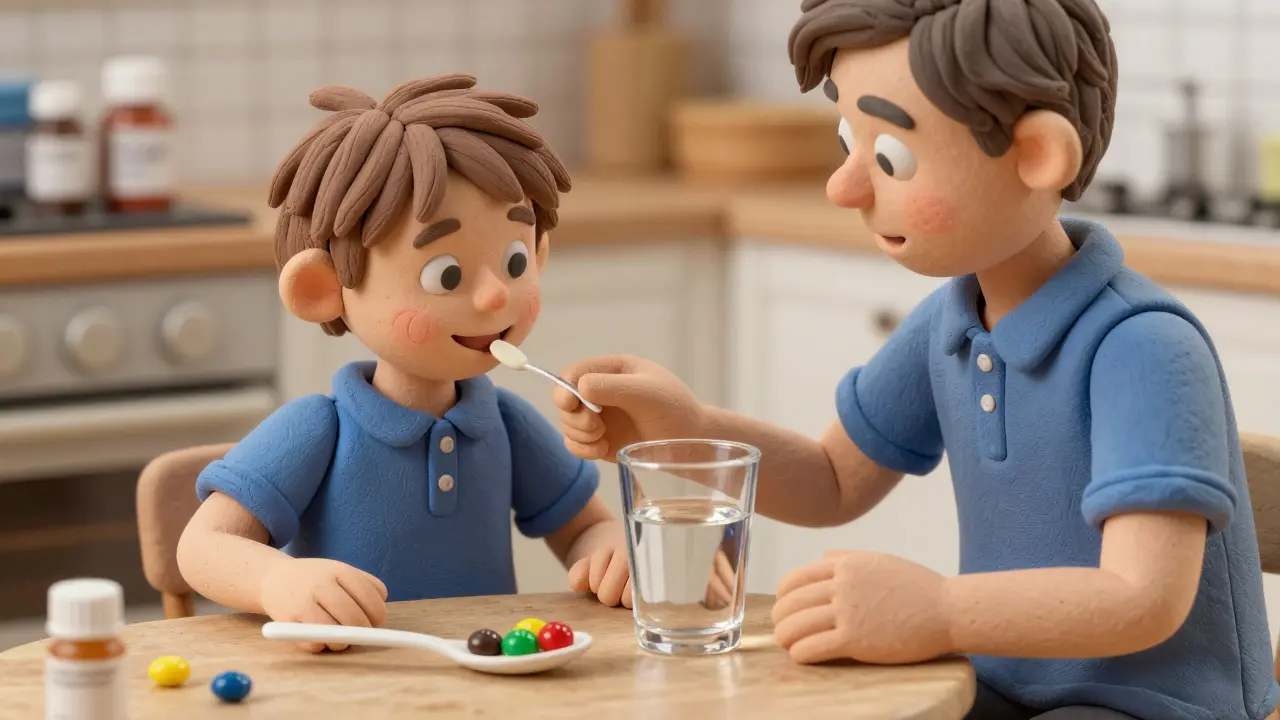
For kids who hate pills, try the candy method. Nationwide Children’s Hospital recommends practicing with small candies: start with Nerds, then Mini M&Ms, then regular M&Ms over two weeks. About 89% of kids aged 8-12 learn to swallow pills this way. No choking. No tears.
What to Do If You’re Not Sure
If you’re confused, overwhelmed, or just need a second opinion-call Poison Control. It’s free, 24/7, and staffed by nurses and pharmacists trained in pediatric cases. Dial 1-800-222-1222.They can tell you:
- Is this rash dangerous?
- Did I give too much?
- Should I wait or go to the ER?
Don’t wait for symptoms to get worse. Don’t Google it. Don’t ask Facebook groups. Call Poison Control. They’ve seen it all-and they won’t judge you.
And remember: side effects don’t mean the medicine is wrong. They mean you’re paying attention. That’s the most important thing. You’re not just giving medicine-you’re protecting your child. And that’s what matters.
What should I do if my child vomits right after taking medicine?
Wait 30-60 minutes, then try giving half the original dose again. If they vomit a second time, don’t give more. Call your pediatrician or Poison Control. Giving extra doses can lead to overdose. Some meds are absorbed quickly, so vomiting doesn’t always mean the full dose was lost.
Can I give my child over-the-counter medicine to treat side effects?
Only if your doctor says so. Giving extra meds like Pepto-Bismol, Imodium, or antacids without guidance can mask symptoms or cause dangerous interactions. For example, combining acetaminophen with a cold medicine that also contains it can lead to liver damage. Always check with your pediatrician first.
Why does my child get hyperactive after taking Benadryl?
Diphenhydramine, the active ingredient in Benadryl, affects children’s brains differently than adults’. In about 15% of kids, it causes a paradoxical reaction-leading to agitation, restlessness, or even hallucinations. This isn’t bad behavior. It’s a known side effect. Stop giving it and talk to your doctor about alternatives like cetirizine (Zyrtec), which rarely causes this reaction.
How do I know if I’m giving the right dose?
Always use weight, not age, to determine dose for kids under 12. Most pediatric meds are dosed in mg/kg. Check the label and confirm with your pharmacist. Many parents think a "teaspoon" is 5 mL-but a regular kitchen spoon holds 10-15 mL. Use only the syringe or cup that came with the medicine. If you’re unsure, call your pharmacy. They’ll verify it for free.
Is it safe to crush pills or mix medicine with food?
Only if the label or pharmacist says yes. Some pills are time-release or enteric-coated-crushing them can make the medicine too strong or cause stomach upset. Liquid forms are often preferred for kids. If your child refuses the taste, ask if a flavoring option is available. Never mix medicine into a full bottle of milk or juice-you can’t guarantee they’ll drink it all.
What if my child accidentally swallows too much medicine?
Call Poison Control immediately at 1-800-222-1222-even if your child seems fine. Don’t wait for symptoms. Don’t try to make them throw up. Keep the medicine container handy so you can tell them the exact name, strength, and amount swallowed. They’ll guide you on whether to go to the ER or wait at home.
Sheryl Dhlamini
January 28, 2026 AT 16:00Just wanted to say-this post saved my sanity last month when my 4-year-old threw up right after her antibiotic. I followed the 30-minute wait, tiny sips of Pedialyte, and by morning she was back to drawing dinosaurs. No ER. No panic. Just calm, step-by-step stuff. Thank you.
Doug Gray
January 30, 2026 AT 13:53Interesting framework, but let’s be real-most of this is just common sense wrapped in CDC jargon. 🤷♂️ The real issue? Parents don’t read labels. And no, ‘use the syringe’ isn’t a revelation-it’s basic hygiene. Also, why is everyone still using ‘BRAT diet’? It’s been debunked since 2018. We’re talking pediatric pharmacology here, not 1995 parenting blogs.
Kristie Horst
February 1, 2026 AT 13:27Oh, Doug. Of course you’d reduce a meticulously researched guide to ‘CDC jargon.’ How quaint. Let’s not forget that ‘common sense’ doesn’t prevent 60,000 ER visits a year. Maybe instead of mocking, you could try… applying it? The BRAT diet reference? It’s included as a historical baseline, not a recommendation. And yes, the syringe? Still necessary because your ‘kitchen spoon’ is a hazard. Sarcasm doesn’t make you smarter. Precision does.
Robin Keith
February 2, 2026 AT 09:52Look, I get it-you’re trying to empower parents, but let’s not pretend this isn’t just another performative piece of parenting content designed to make you feel like a hero for not giving your kid juice after vomiting. We’re talking about children here, not lab rats in a pharmaceutical clinical trial. The emotional labor of managing medication side effects? It’s invisible. It’s exhausting. It’s the silent scream at 3 a.m. when you’re holding a bowl, wiping sweat off a feverish forehead, and Googling ‘is this normal?’ while your partner sleeps. And yes, I’ve used the photo trick. And yes, I’ve called Poison Control. And no, they didn’t judge me. They asked if my child was breathing. That’s all. That’s everything. This isn’t about dosage charts. It’s about surviving the myth that parenting is about control. It’s about surrendering to uncertainty-and still showing up. And that? That’s the real medicine.
Laia Freeman
February 3, 2026 AT 22:45OMG YES!! I just gave my 6yo amoxicillin and she looked at me like I was asking her to eat a live worm. Then I tried the candy method-Nerds first, then mini M&Ms, then regular ones over 2 weeks… SHE SWALLOWED A PILLLLLLL!!! No tears!! No trauma!! I cried. Like, actual tears. This post is a godsend. Also, I use a phone pic of the label. I’m obsessed now. 🙌
Andy Steenberge
February 4, 2026 AT 05:32One thing missing from this guide: the psychological toll on caregivers. The hyper-vigilance. The guilt when you think you gave the wrong dose. The shame when you panic. The fear that you’re failing because your child is still sick. This isn’t just about dosage accuracy-it’s about trust. Trust in the system. Trust in yourself. Trust that you’re not alone. That’s why the Poison Control number should be saved in every phone, printed on the fridge, and whispered to new parents like a sacred mantra. Because sometimes, the most powerful tool isn’t the syringe-it’s knowing someone’s on the other end of the line who’s seen it all and still says, ‘You’re doing fine.’
paul walker
February 6, 2026 AT 04:33Just a heads up-my kid got a rash after amoxicillin and I waited till morning to call. Turns out it was just a viral rash, not an allergy. But I didn't know that. So yeah, if in doubt, call. Better safe than sorry. Thanks for the post.
LOUIS YOUANES
February 6, 2026 AT 05:32Wow. So much information. Honestly, I’m just glad I didn’t have to read this. My kid takes meds like a champ. I guess some of us just get lucky. Or maybe we’re just better parents. Either way, I’m not stressing over syringes or photos of labels. Some people need checklists. I just trust my gut.