
When you pick up a generic pill at the pharmacy, you expect it to work just like the brand-name version. But behind that simple promise lies a complex, often broken system. Generic drug quality isn’t just about price-it’s about whether the medicine inside the capsule actually does what it’s supposed to. And too often, it doesn’t.
What Goes Wrong in Generic Drug Factories?
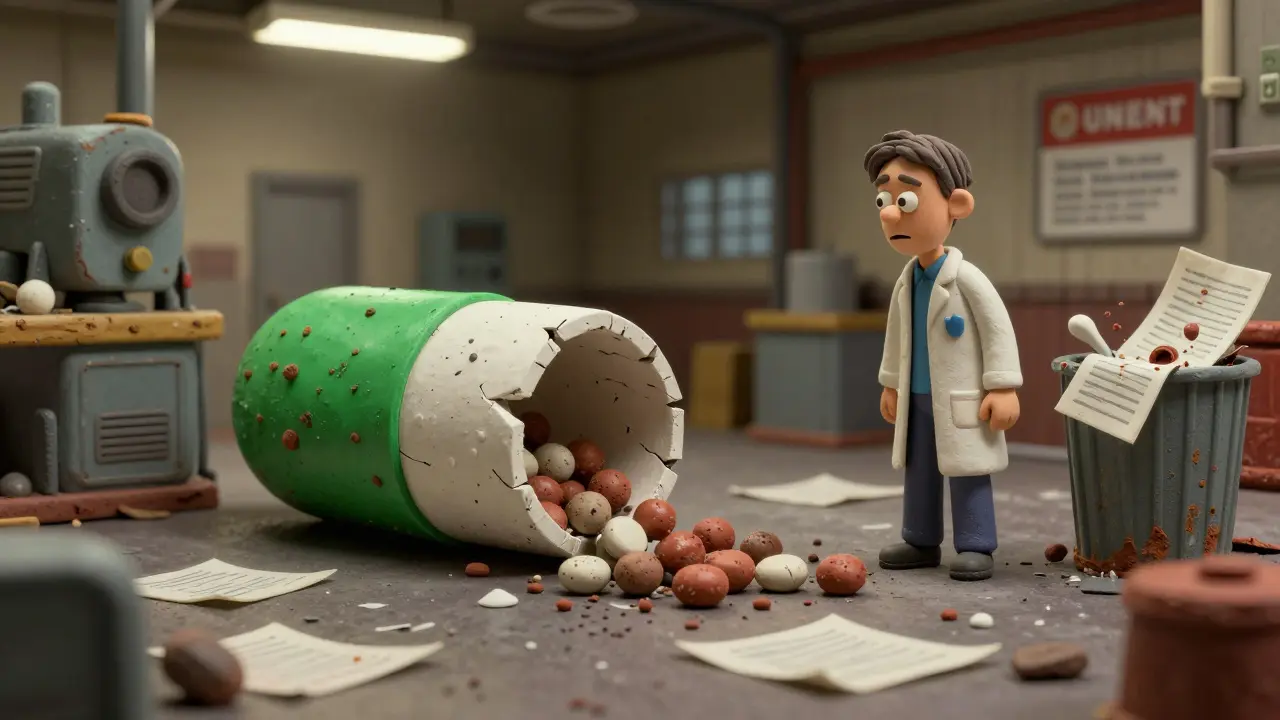
The core issue isn’t that generic manufacturers are trying to cheat. It’s that many don’t have the systems in place to make consistent, safe medicine. The FDA requires all drug makers to follow Current Good Manufacturing Practices (cGMP), but compliance isn’t guaranteed-especially overseas. Common problems show up in inspection reports: dirty equipment, untrained staff, missing data, and fake records. In one 2022 FDA inspection at an Indian plant, an employee was caught throwing quality control documents into a trash can full of acid. That’s not an anomaly-it’s a symptom. Critical Quality Attributes (CQAs) like dissolution rate, purity, and potency must be tightly controlled. But many facilities skip stability testing, use unvalidated methods, or source raw materials from unapproved suppliers. A 2022 FDA report found that 18.7% of Form 483 observations (inspection warnings) were due to flawed analytical methods. That means labs couldn’t even measure whether the drug worked correctly.The Global Supply Chain Is a Blind Spot
About 80% of the active ingredients in U.S. drugs come from abroad-mostly China and India. But the FDA inspects fewer than 13% of those foreign facilities each year. Meanwhile, domestic plants get unannounced visits. Foreign ones? They get scheduled visits, sometimes months in advance. That gives factories time to clean up, hide problems, or even falsify records. The numbers don’t lie: U.S. facilities get 4.2% fewer inspection violations per visit than foreign ones. Chinese facilities get 28.6% more violations than U.S. plants. Indian ones get 19.3% more. And yet, the FDA still relies on self-reported data from these companies. Only 0.02% of imported drug shipments are lab-tested. This gap isn’t theoretical. A 2023 study from Ohio State University found that generic drugs made in India were linked to 23.7% more severe adverse events than those made in the U.S.The Valsartan Recall That Changed Everything
In 2018, the FDA found cancer-causing impurities-N-nitrosodimethylamine (NDMA)-in a common blood pressure drug called valsartan. The contamination came from a single Chinese manufacturer, Zhejiang Huahai Pharmaceutical. But the fallout spread fast: 22 countries recalled the drug, and 28 voluntary recalls followed over the next 16 months. Patients who’d been taking the drug for years suddenly had to switch. Some reported their blood pressure spiked. Others said the generic version just didn’t work. On Drugs.com, the Zhejiang-made valsartan got a 3.2-star rating. The U.S.-made version? 4.1 stars. Real people noticed the difference. This wasn’t an isolated case. Nitrosamine impurities have since been found in other drugs-metformin, ranitidine, and even some heartburn meds. The FDA now requires manufacturers to test for these impurities, but many still don’t have the tools or training to do it right.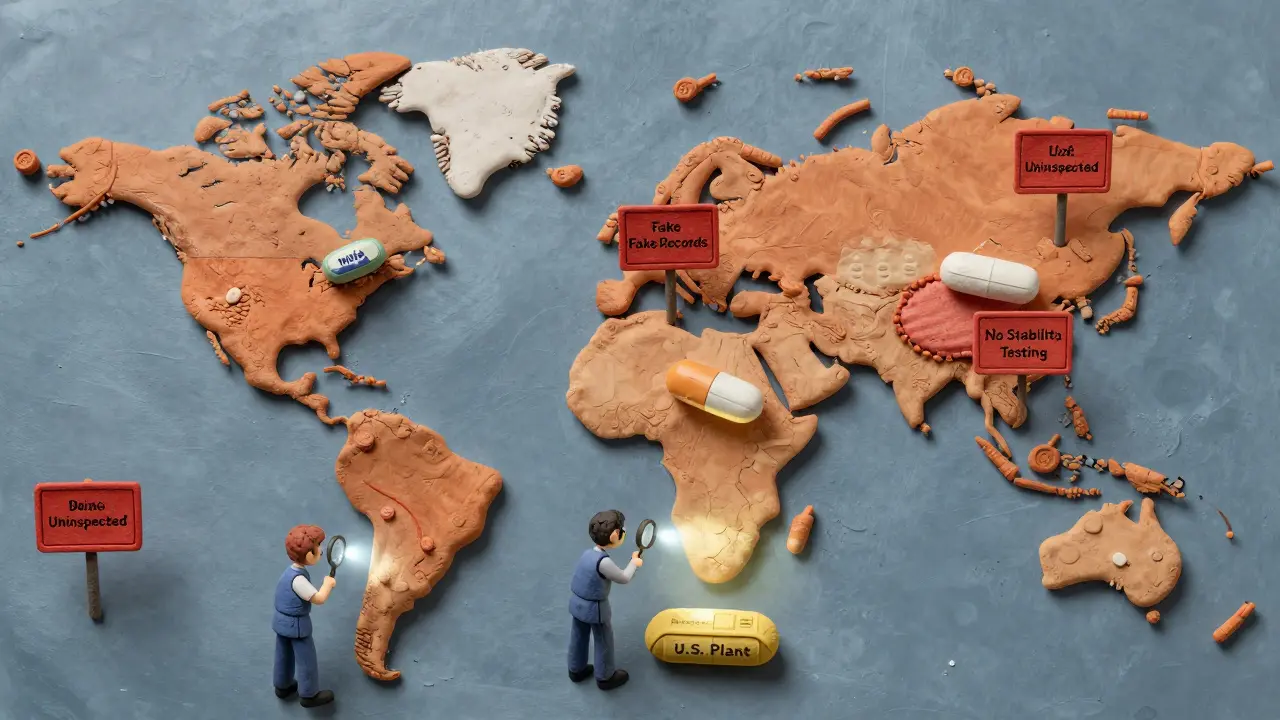
Narrow Therapeutic Index Drugs Are the Biggest Risk
Not all generics are created equal. Drugs with a Narrow Therapeutic Index (NTI)-like warfarin, levothyroxine, and tacrolimus-have very little room for error. A tiny change in dose can cause toxicity or treatment failure. Harvard’s Dr. Aaron Kesselheim found that 15.2% of generic drugs on the FDA’s Watch List showed therapeutic inequivalence. Tacrolimus capsules from one Indian maker varied by 28.4% in blood concentration compared to the brand version. That’s not a minor fluctuation-it’s dangerous. In 2022, NTI drugs accounted for 37% of all Complete Response Letters (CRLs) from the FDA. These are denials of approval because the drug can’t prove it’s safe and effective. The FDA now requires 100% more stability data and 75% more bioequivalence studies for these complex generics.Why Quality Control Keeps Failing
It’s not just about money-it’s about culture. Many generic manufacturers operate on razor-thin margins. Between 2018 and 2022, average generic drug prices dropped 18.3% annually. To stay profitable, companies cut corners: reducing staff, skipping training, slashing quality control budgets by 22.7%. Data integrity is a nightmare. The FDA found that 78.3% of data issues involved poor password protection, missing audit trails, or fake electronic records. One company deleted test results after they failed. Another reused old data for new batches. These aren’t mistakes-they’re deliberate. Staff training is another weak link. In 31.2% of FDA observations, employees didn’t know how to operate equipment or follow procedures. CAPA (Corrective and Preventive Action) systems, meant to fix recurring problems, were inadequate in 19.6% of cases.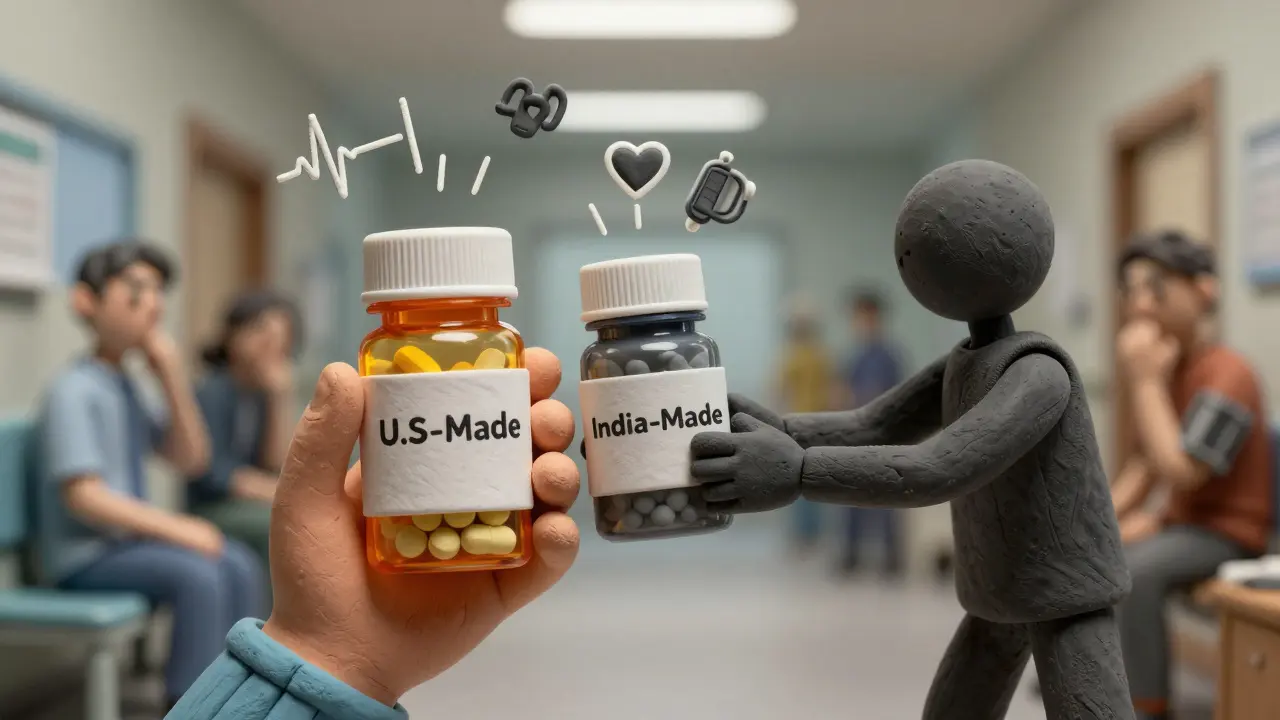
Mark Able
December 17, 2025 AT 17:57Bro I took a generic blood pressure med last year and my head felt like a balloon about to pop. Switched back to brand-name and boom-normal again. No joke, my doctor didn’t even blink when I asked for the expensive one. If your life depends on it, don’t gamble with pills made in a factory where someone’s tossing docs into acid.
James Stearns
December 17, 2025 AT 22:43It is an incontrovertible fact that the regulatory framework governing pharmaceutical manufacturing in the United States has been systematically undermined by geopolitical dependencies and a prioritization of fiscal efficiency over public health integrity. The FDA's reliance upon self-reported data from foreign entities constitutes a fundamental breach of the precautionary principle, and the statistical disparities in inspectional outcomes are not merely indicative-they are damning.
Nina Stacey
December 18, 2025 AT 04:12im so glad someone finally talked about this because my mom has been on levothyroxine for 15 years and last year she switched to a generic and started getting crazy dizzy and her heart would race for no reason we went back to the brand and she was fine again i just wish more people knew this stuff
Kinnaird Lynsey
December 20, 2025 AT 03:50Interesting how the same people who scream about ‘big pharma’ profits are totally fine with buying generics made in places where quality control is a suggestion. The irony is thick enough to spread on toast.
Andrew Kelly
December 21, 2025 AT 22:08Let’s be real-the FDA is a puppet of the pharmaceutical industry. They don’t inspect foreign plants because they don’t want to know what’s going on. This whole ‘generic equals safe’ myth is just corporate propaganda to keep the masses docile and cheap. Wake up people.
Moses Odumbe
December 23, 2025 AT 02:57bro this is wild 🤯 i just found out my metformin was made in China and now i’m scared to take it… also why does the FDA even exist if they test 0.02% of shipments?? 😭
Vicki Belcher
December 24, 2025 AT 14:59❤️ thank you for writing this. I’ve been a nurse for 20 years and I’ve seen patients crash because their generic tacrolimus wasn’t right. It’s not about being anti-generic-it’s about being pro-safety. If your life depends on it, ask for the brand. It’s worth it.
anthony funes gomez
December 25, 2025 AT 11:33Consider the epistemological rupture inherent in the pharmacovigilance paradigm: when bioequivalence is reduced to a statistical threshold, and quality is measured by compliance metrics rather than clinical outcomes, we have effectively deconstructed therapeutic trust into a commodified abstraction. The CQAs are not merely parameters-they are ontological anchors in a fragile pharmacological ecosystem.
William Liu
December 27, 2025 AT 03:13My dad was on warfarin for 10 years. Switched to a generic. INR went wild. Took him 3 months to stabilize. I’m not risking it again. I pay extra. It’s not a luxury-it’s insurance.
Glen Arreglo
December 27, 2025 AT 04:05People need to stop blaming India and China. This isn’t about geography-it’s about capitalism. The system rewards the cheapest, not the safest. If you want quality, you need to pay for it. The FDA can’t fix a market that rewards cutting corners. We need real reform-not more inspections.
shivam seo
December 29, 2025 AT 01:44USA is weak. We outsource everything then act shocked when it breaks. Australia doesn’t import 80% of its meds. We make our own. Why can’t you? You got the tech. You got the land. You just don’t want to pay for it.
Mike Rengifo
December 29, 2025 AT 19:13My pharmacist told me the generic I got was from a plant that got shut down last year. I just kept taking it. Guess what? Still works. Maybe the system’s broken, but not every pill’s poison.
Ashley Bliss
December 30, 2025 AT 15:40They don’t want you to know this. The real scandal? The FDA approves generics based on data submitted by the same companies that profit from them. It’s like letting the fox design the henhouse and then patting itself on the back for ‘safety standards.’ This isn’t negligence-it’s complicity.