
After a kidney transplant, your body doesn’t know the new organ is supposed to be there. It sees it as an invader and tries to attack it. That’s where tacrolimus, mycophenolate, and steroids come in. Together, they form the most common immunosuppression plan used in kidney transplants today. This three-drug combo isn’t perfect, but it’s the best tool doctors have to keep your new kidney working for as long as possible.
Why This Three-Drug Combo Works
Since the mid-1990s, doctors have relied on this triple therapy to stop acute rejection - the kind of immune attack that can happen in the first few weeks or months after transplant. Before tacrolimus and mycophenolate became standard, many patients lost their grafts because older drugs like cyclosporine weren’t strong enough. Studies show that adding mycophenolate to tacrolimus and steroids cut rejection rates nearly in half. One major study found that only 8.2% of patients on the triple combo had biopsy-proven rejection, compared to 21% on just tacrolimus and steroids. That’s a 61% drop. It’s not magic, but it’s a big win.How Each Drug Works
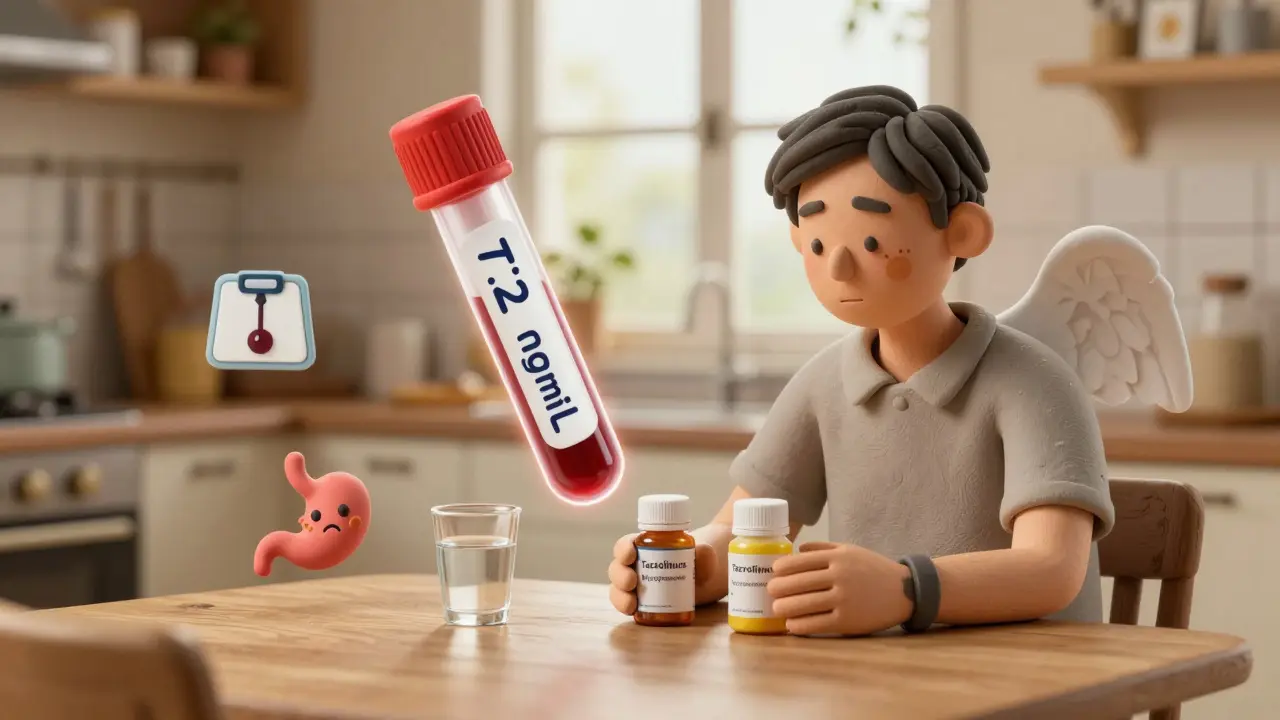
Tacrolimus is a calcineurin inhibitor. It blocks the signal that tells your immune cells to attack. You take it twice a day, usually in the morning and evening. Doctors monitor your blood levels closely because the difference between too little and too much is small. Too low? Your body might reject the kidney. Too high? You risk kidney damage, tremors, or even diabetes. Most patients start with a target range of 5-10 ng/mL in the first year. Newer methods now look at the total drug exposure over time (AUC), not just the trough level, to fine-tune dosing.
Mycophenolate (often called MMF or by the brand name CellCept) stops immune cells from multiplying. You take it as two pills a day - usually 1 gram each time. But here’s the catch: about 1 in 4 people can’t handle it. Diarrhea, nausea, and vomiting are common. Some lose so many white blood cells they get leukopenia, which raises infection risk. If side effects are too bad, doctors often cut the dose to 500 mg twice a day or stop it entirely. Still, patients who stick with it tend to have better long-term outcomes. Recent data suggests mycophenolate levels might even predict how well your kidney survives years down the line.
Steroids - usually prednisone or methylprednisolone - are powerful anti-inflammatories. You get a big 1,000 mg IV dose right in the operating room. Then, doctors quickly taper it down. By week 3-4, you’re on 15 mg a day. By 2-3 months, it’s down to 5-10 mg. The goal is to use the lowest dose possible. Steroids help prevent early rejection, but they come with a heavy cost: weight gain, acne, mood swings, bone thinning, and high blood sugar. About 1 in 5 transplant patients develop new-onset diabetes after transplant because of steroids. That’s why many centers now try to get patients off them as soon as safely possible.
What You Might Experience
Most people tolerate this regimen okay at first. But side effects pile up. You might feel tired, get frequent stomach upset, or notice your gums bleeding more easily. Some patients gain 15-20 pounds in the first year. Others get acne or facial hair they didn’t have before. These aren’t just cosmetic - they affect your mental health and quality of life. That’s why so many patients ask: Can I skip the steroids?
The answer? Sometimes. A major 2005 study showed that patients who skipped steroids entirely - using tacrolimus, mycophenolate, and an induction drug called daclizumab - had the same rejection rates as those on the full triple therapy. About 89% stayed steroid-free after six months. Today, steroid-free protocols are common, especially for low-risk patients. But they’re not for everyone. If you’re older, have a deceased donor kidney, or had previous rejection, your doctor might keep you on a low dose longer.
When Things Go Wrong
Even with perfect dosing, things can still go sideways. Tacrolimus interacts with common meds like omeprazole (Prilosec) and some antibiotics. These can drop your tacrolimus levels, putting you at risk for rejection. On the flip side, grapefruit juice and certain antifungals can spike your levels - dangerous if you’re not watching. That’s why you need regular blood tests, every few weeks at first, then monthly or bimonthly.
Infections are another big worry. Your immune system is turned down, so colds can turn into pneumonia. CMV (cytomegalovirus) is a common virus that can flare up after transplant. Your team will screen for it and may give you antiviral pills for the first few months. Skin cancers and lymphoma risk also go up slightly with long-term immunosuppression. That’s why annual skin checks and staying up to date on vaccines (without live vaccines) are non-negotiable.
Why This Still Matters Today
Even with all the new drugs and research, this three-drug combo still dominates. About 90% of U.S. transplant centers use it as their starting point. It’s cheap, well-studied, and effective. But here’s the hard truth: despite this regimen, about 1 in 4 adults lose their kidney graft within five years. That’s not because the drugs failed - it’s because long-term damage, called chronic allograft injury, creeps in slowly. We still don’t fully understand how to stop it.
That’s why the future is moving toward personalization. Some hospitals now test your genes to see how you metabolize tacrolimus. Others use blood biomarkers to tell if your immune system is quietly attacking the kidney - before a biopsy shows it. The goal is to give you just enough drug to protect the kidney, but not so much that you get sick from the medicine itself.
What’s Next?
By 2030, experts predict we’ll see a 15-20% drop in the use of standard triple therapy. Why? Because newer drugs like belatacept (which doesn’t damage kidneys like tacrolimus) and targeted therapies are showing promise. But for now, if you’ve had a kidney transplant, you’re likely on this combo. Your job isn’t to understand every detail - it’s to take your pills on time, show up for labs, and speak up when something feels off. A missed dose, a skipped blood test, or ignoring diarrhea could cost you your kidney.
There’s no perfect solution. But this three-drug plan - flawed as it is - has given hundreds of thousands of people years, even decades, with a functioning kidney. It’s not just medicine. It’s a lifeline.
Can I stop taking steroids after a kidney transplant?
Yes, many patients can, especially if they’re low-risk and respond well to other immunosuppressants. Doctors often aim to taper steroids down to 5-10 mg daily by 2-3 months, and some stop them completely after 6 months. Steroid-free regimens using induction drugs like daclizumab have shown similar rejection rates to traditional triple therapy. But if you had a deceased donor kidney, prior rejection, or high immune risk, your doctor may keep you on a low dose longer to protect the transplant.
Why do I need blood tests so often after my transplant?
Because the drugs you take - especially tacrolimus - have a very narrow safety window. Too little and your body may reject the kidney. Too much and you risk kidney damage, nerve problems, or diabetes. Blood tests check your drug levels, kidney function, white blood cell count, and signs of infection. Early on, you might need tests every week. After 6 months, they usually space out to every 1-3 months. Skipping tests is one of the most common reasons patients lose their grafts.
What happens if I miss a dose of tacrolimus or mycophenolate?
Missing one dose isn’t an emergency, but it’s risky. Tacrolimus levels drop fast - within hours. Even one missed dose can trigger a rejection episode, especially in the first year. If you forget, take it as soon as you remember, unless it’s close to your next dose. Never double up. Mycophenolate is less time-sensitive, but skipping doses can still reduce its effectiveness. Always call your transplant team if you miss more than one dose or if you’re vomiting or have diarrhea - your body may not be absorbing the drugs.
Why do I keep getting diarrhea on mycophenolate?
Mycophenolate irritates the gut lining in about 25-30% of patients. Diarrhea, nausea, and cramps are the most common reasons people stop taking it. If it’s mild, your doctor might lower the dose to 500 mg twice a day. If it’s severe or persistent, they may switch you to mycophenolate sodium (Myfortic), which is easier on the stomach. Rarely, you may need to switch to another drug like azathioprine. Don’t ignore it - chronic diarrhea can lead to dehydration and poor drug absorption, which puts your kidney at risk.
Will I always need to take these drugs?
Yes, for the life of your transplant. Unlike other chronic conditions, you can’t cure transplant rejection - you can only suppress it. Even if your kidney is working perfectly after 10 years, stopping these drugs will cause your immune system to attack it. Some patients eventually get off steroids or switch to milder drugs, but tacrolimus and mycophenolate (or similar agents) are almost always needed long-term. Research is exploring tolerance-inducing therapies, but those are still experimental. For now, lifelong medication is the price of a functioning kidney.
Cassie Widders
January 10, 2026 AT 12:06Just took my mycophenolate this morning. Still got that stomach churn but at least my kidney’s still ticking. Worth it.
Windie Wilson
January 11, 2026 AT 11:10So let me get this straight - we’re poisoning ourselves with steroids so a stranger’s kidney can live inside us? Sounds like a sci-fi horror movie. 🤡
Alex Fortwengler
January 12, 2026 AT 06:35They’re lying about tacrolimus. The FDA knows it causes brain fog but keeps pushing it because Big Pharma owns the transplant centers. I’ve seen the documents.
Daniel Pate
January 13, 2026 AT 01:56It’s fascinating how we’ve engineered a chemical truce between the body and a foreign organ. But the irony is we’re trading one set of dysfunctions - rejection - for another - drug toxicity. Is this medicine or a prolonged compromise?
Amanda Eichstaedt
January 14, 2026 AT 08:02I’ve been on this combo for 8 years. My skin looks like a bad acne commercial, I’m always tired, and I can’t eat grapefruit without sweating. But I can walk my dog every morning. That’s the deal. No regrets.
Abner San Diego
January 14, 2026 AT 11:49Why do we still use steroids? It’s 2025. We’ve got better options. This is like using a dial-up modem when fiber’s available. Lazy medicine.
Eileen Reilly
January 14, 2026 AT 14:20mycophenolate made me puke for 3 weeks straight. doc said "just push through" like i was training for a marathon. i quit. now i’m on azathioprine. no more diarrhea. no more drama. 🤷♀️
Cecelia Alta
January 15, 2026 AT 18:14Let’s be real - this whole system is a trap. You get a kidney, you become a pill-popping zombie for life. They don’t tell you about the depression, the isolation, the way your friends slowly ghost you because you’re too tired to hang out. It’s not a miracle. It’s a sentence.
Konika Choudhury
January 15, 2026 AT 20:17In India we don’t have this luxury. We use cheaper drugs and pray. Americans think they own medicine because they have fancy blood tests. We survive with less and still smile. That’s strength.
Darryl Perry
January 15, 2026 AT 23:57Missed a tacrolimus dose last week. My levels dropped 30%. That’s not negligence - that’s systemic failure. Transplant centers need to implement automated reminders and mandatory education. This isn’t optional.
Ben Kono
January 16, 2026 AT 13:50My wife’s on this combo and she’s gained 40 pounds. She cries every night. I tell her it’s worth it but I’m not sure anymore. Why can’t we just find a better way?
Monica Puglia
January 17, 2026 AT 20:43❤️🩹 You’re not alone. I’ve been there. The weight gain, the mood swings - it’s brutal. But you’re still here. That’s the win. And hey, if you ever want to vent, DM me. I’ve got snacks and zero judgment.
Jose Mecanico
January 19, 2026 AT 01:40My doc tried to take me off steroids after 6 months. I panicked. Thought I’d lose the kidney. Turns out I’m fine. Still take 5mg. Feels safer. Everyone’s different.
steve ker
January 20, 2026 AT 07:12Transplant medicine is a scam. They profit from lifelong dependency. Real solution? Gene editing. But they won’t tell you that because it’s not profitable.
jordan shiyangeni
January 20, 2026 AT 16:11It is morally indefensible that we subject patients to this regimen for decades, knowing full well the metabolic, dermatological, and psychological toll - and yet we celebrate it as a triumph of modern medicine. We have normalized suffering as a prerequisite for survival. This is not progress. This is capitulation.