
Why You Can’t Just Toss Expired EpiPens, Inhalers, or Patches
Throwing an expired EpiPen in the trash might seem harmless-but it’s not. These devices aren’t ordinary trash. EpiPens have sharp needles. Inhalers are pressurized cans that can explode if crushed or burned. Medicated patches still contain powerful drugs even after they’re used. If a kid finds one in the trash, or a sanitation worker gets stuck by a needle, it’s a real emergency. The FDA says 12% of accidental poisonings in kids come from improperly thrown-away meds. That’s not a small risk. It’s a preventable one.
How to Dispose of an Expired EpiPen
EpiPens are classified as medical sharps because of the hidden needle. You can’t just drop them in the recycling bin or toss them in the regular trash-even if they’re empty. Here’s what to do:
- Keep the EpiPen in its original case until you’re ready to dispose of it.
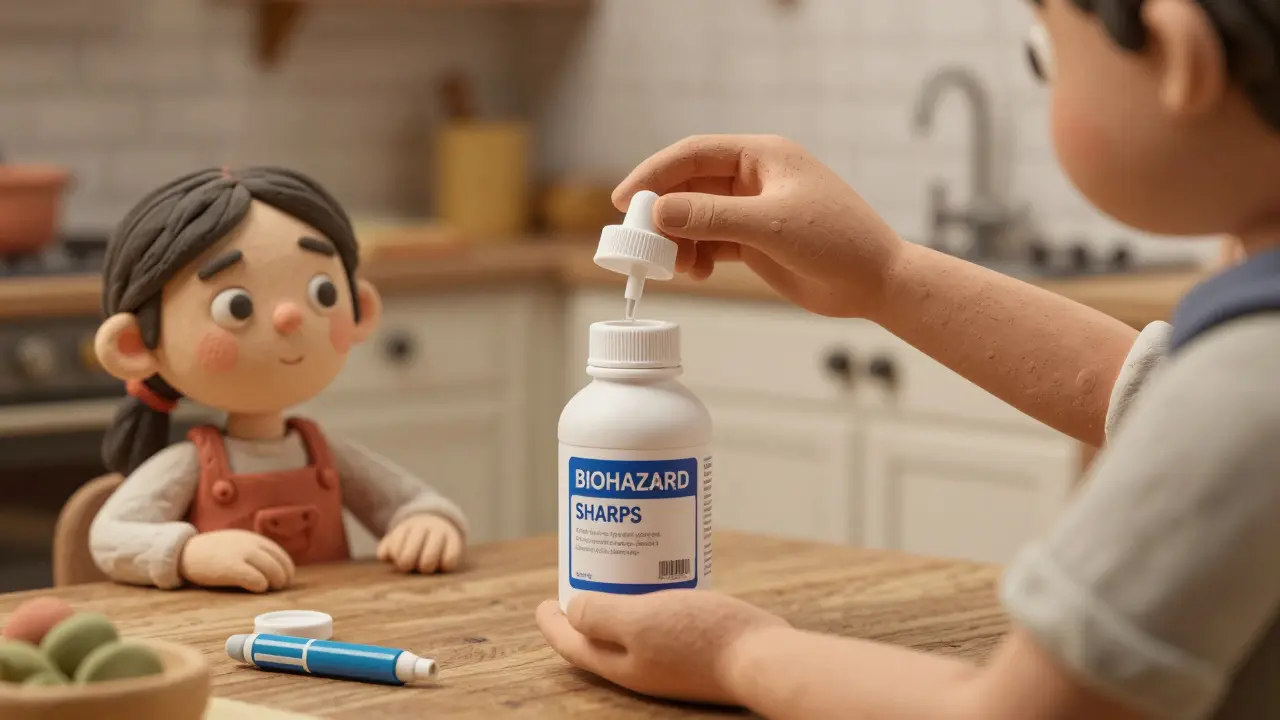
- Place it in a rigid, puncture-proof container-a plastic laundry detergent bottle works. Make sure the lid screws on tight.
- Label the container clearly: BIOHAZARD, SHARPS, and DO NOT RECYCLE.
- Take it to a drop-off location: your doctor’s office, hospital, or a pharmacy with a sharps take-back program.
Some pharmacies, like CVS and Walgreens, offer these services-but not all do. Call ahead. If your local pharmacy won’t take it, check the DEA’s National Take Back Day locator. They list over 14,000 drop-off sites nationwide, including police stations and fire departments.
Important: Never try to remove the needle or dismantle the device. The lithium battery inside an Auvi-Q or similar device is dangerous if punctured. Leave it to the professionals.
What to Do with Expired Inhalers
Inhalers are trickier than pills. They contain propellants like hydrofluoroalkanes (HFAs), which are greenhouse gases. If you throw them in the trash or put them in recycling, they can leak and harm the environment. If they’re crushed or burned, they can explode.
Here’s the right way:
- Check the label. Some inhalers say “Do not puncture or incinerate.” That’s your first clue.
- Call your local waste management department. Some cities, like New York City, have special aerosol collection sites.
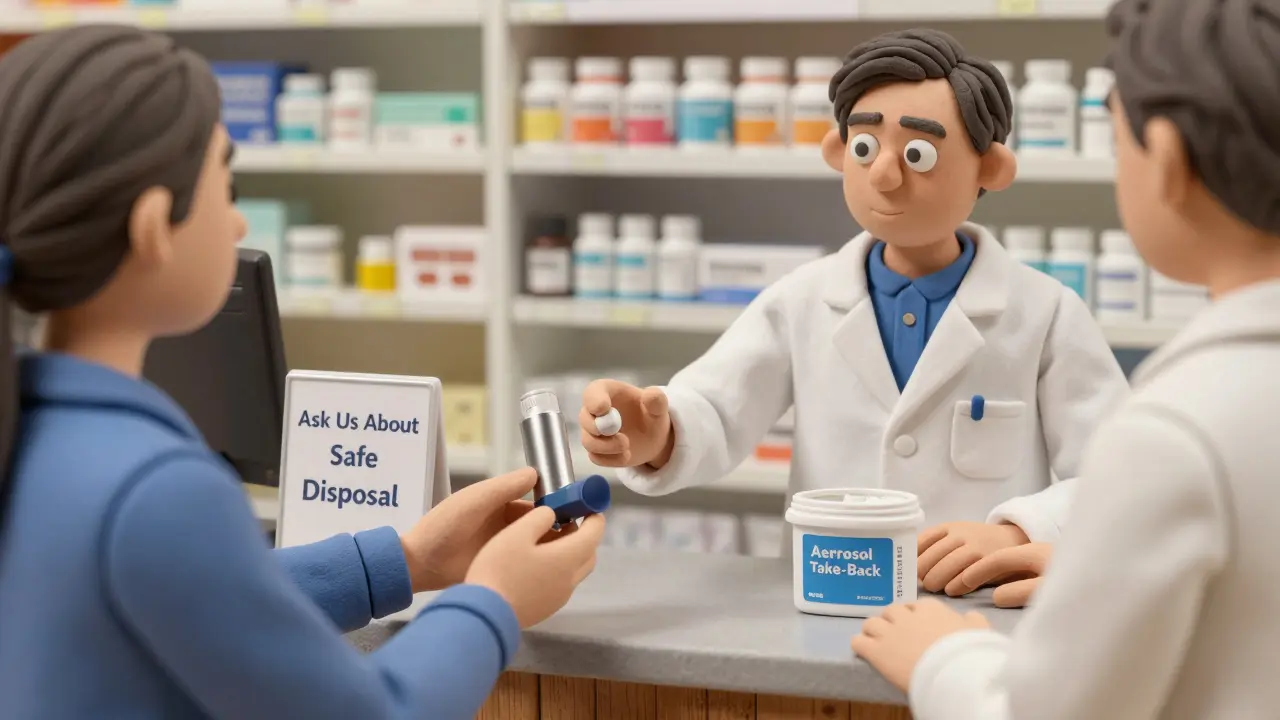
- Ask your pharmacy. Walgreens accepts inhalers at about half of its locations. CVS does too, but only in certain states.
- If no drop-off is available, remove the metal canister from the plastic mouthpiece. Rinse the plastic part and recycle it if your local program accepts #5 plastic. The metal canister? Tape the nozzle shut, put it in a sealed plastic bag, and throw it in the trash. It’s not ideal-but it’s safer than puncturing it.
Pro tip: Don’t wait until it’s expired. When your inhaler runs out, ask your pharmacist if they can take the empty one. Many will.
Disposing of Medicated Patches (Like Fentanyl or Nicotine)
Patches are sticky, potent, and dangerous if left exposed. Even after use, they still hold up to 80% of their original dose. A child or pet licking a discarded patch could die.
The FDA has a specific list of patches that should be flushed immediately-fentanyl patches are on it. Why? Because they’re so strong, and accidental exposure is deadly. If your patch is on that list, flush it down the toilet right away.
If it’s not on the flush list (like most nicotine patches), fold it in half with the sticky sides together. That traps the medicine inside. Then:
- Put it in a sealed plastic bag with something unappetizing-used coffee grounds, cat litter, or dirt.
- Toss the bag in the trash.
Don’t rely on DisposeRx® packets for patches. They’re designed for pills and liquids, not adhesive patches. The gel won’t bind to the sticky surface, and the drug can still leak.
Use a Drug Take-Back Program-It’s the Best Option
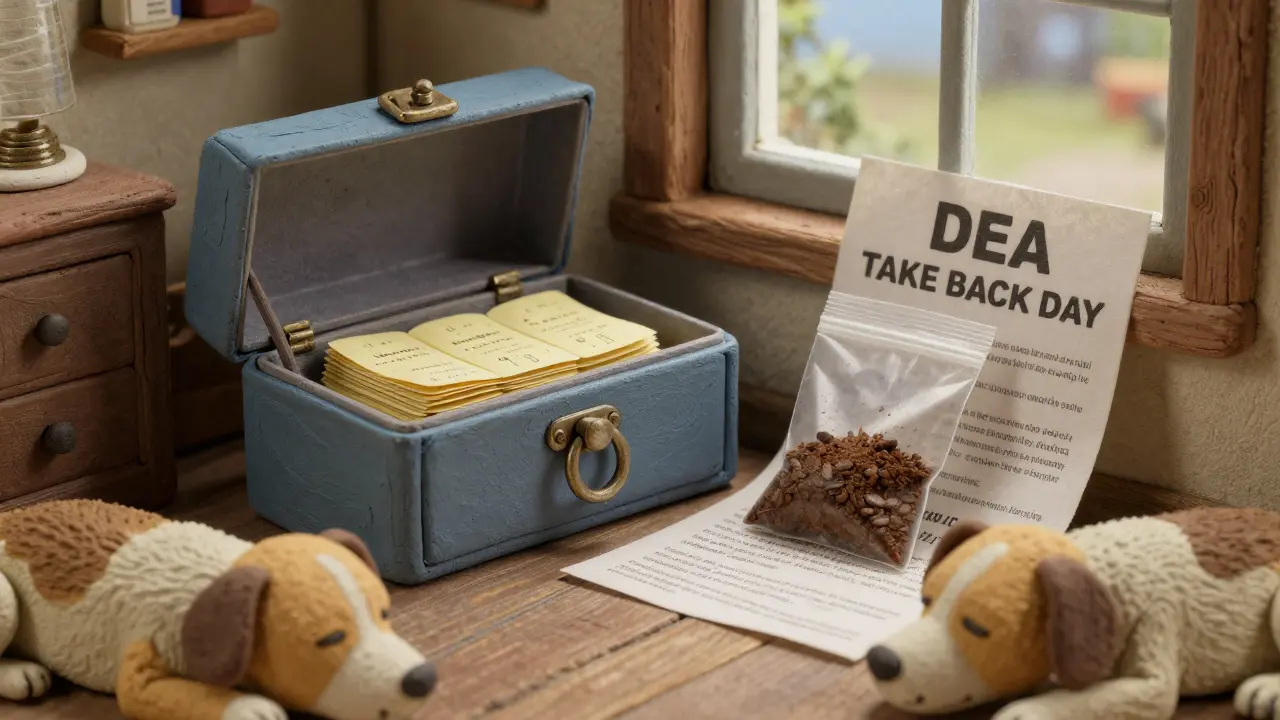
Every April and October, the DEA runs National Prescription Drug Take Back Day. Over 5,800 locations across the U.S. collect medications-no questions asked. You can drop off EpiPens, inhalers, patches, pills-you name it. It’s free, safe, and environmentally responsible.
But you don’t have to wait for those two days. Many hospitals, pharmacies, and police stations have permanent drop boxes. Use the DEA’s online tool to find one near you. Enter your zip code, and it shows you the closest spot-even if you’re in a small town.
People in rural areas have a harder time finding these spots. A 2022 study found only 37% of rural counties have permanent disposal locations. If you’re in one of them, keep your expired meds in a locked box at home until you can get to a take-back site. Don’t leave them out where kids or pets can reach them.
What Not to Do
Here are common mistakes-and why they’re dangerous:
- Don’t flush everything. Only flush the FDA’s official flush list. Most patches and pills shouldn’t go down the drain.
- Don’t recycle inhalers or EpiPens. They’re not recyclable through curbside programs. The metal and plastic parts are contaminated with drugs.
- Don’t throw them loose in the trash. Even an empty EpiPen can still have a needle. A sanitation worker could get stuck.
- Don’t assume your pharmacy will take it. Many only take pills. Always call first.
How to Stay Prepared
Set a monthly reminder to check your medicine cabinet. Look at expiration dates on EpiPens, inhalers, and patches. If one’s expired, don’t wait. Start the disposal process right away.
Keep a small sharps container at home. They cost $5-$15 at pharmacies. Label it clearly. When it’s half-full, take it to a drop-off site. Don’t wait until it’s full.
Ask your doctor or pharmacist for disposal instructions when they give you a new prescription. Most don’t offer them unless you ask. You have the right to know how to safely get rid of it.
What’s Changing in 2026
California passed a law in 2024 that requires drug makers to pay for disposal programs. That means more drop-off bins at pharmacies, more mail-back kits, and better labeling on packaging. By 2026, you’ll start seeing QR codes on EpiPen boxes that link directly to local disposal options.
The EPA is also tightening rules on pharmaceutical waste in waterways. In 2021, they found traces of drugs in 80% of tested rivers and streams. That’s why proper disposal isn’t just about safety-it’s about protecting the environment too.
Final Thought: It’s Not Just About You
When you dispose of an expired EpiPen properly, you’re not just protecting yourself. You’re protecting the kid down the street who might find it in the trash. You’re protecting the mail carrier who handles your recycling. You’re protecting the fish in the river downstream. These devices are life-saving when used right. They’re deadly when thrown away wrong. Take the extra five minutes. Do it right.
Emma #########
January 17, 2026 AT 22:16Andrew Short
January 19, 2026 AT 01:17christian Espinola
January 20, 2026 AT 22:52Chuck Dickson
January 21, 2026 AT 20:46Robert Cassidy
January 22, 2026 AT 05:19Dayanara Villafuerte
January 22, 2026 AT 19:32Andrew Qu
January 24, 2026 AT 18:36kenneth pillet
January 25, 2026 AT 07:22Jodi Harding
January 25, 2026 AT 19:17Danny Gray
January 26, 2026 AT 05:28Kristin Dailey
January 27, 2026 AT 13:01Stacey Marsengill
January 27, 2026 AT 14:30