
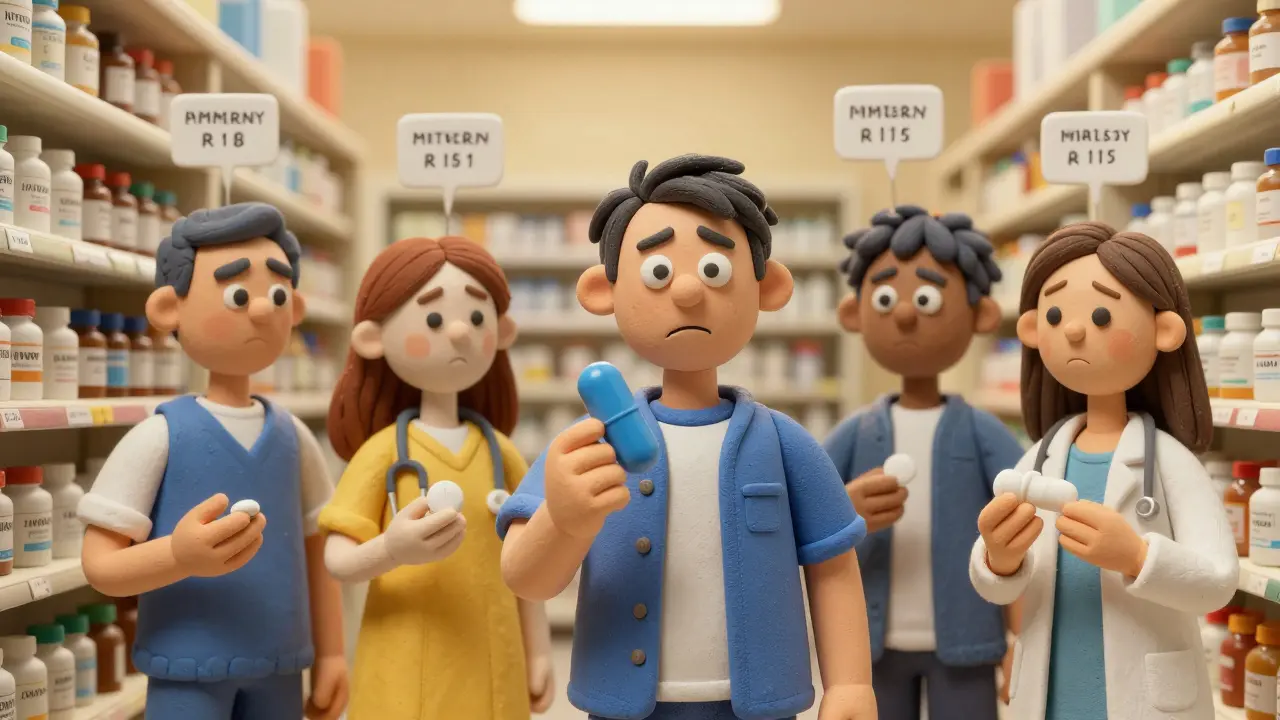
It’s 2025, and nearly 9 out of 10 prescriptions in the U.S. are filled with generic drugs. Yet, even with generics being up to 80% cheaper, millions of people still ask for the brand-name version - sometimes even insisting on it. Why? If the active ingredient is the same, the FDA says they work the same, and the cost difference is massive - why do patients keep choosing the more expensive option?
It’s Not About Science - It’s About Feelings
The science is clear: generic drugs must meet the same strict standards as brand-name drugs. The FDA requires them to have the same active ingredient, strength, dosage form, and route of administration. They must also prove they’re absorbed into the body at the same rate and to the same extent. In short, they’re bioequivalent. So if the science says they’re identical, why do so many people swear their brand-name pill works better? The answer lies in psychology, not pharmacology. People don’t just take pills - they form relationships with them. A brand name becomes a symbol of reliability. When someone has been taking the same blue capsule for years to manage their blood pressure, switching to a white oval tablet with a different logo can feel like a risk - even if it’s not. That’s not irrational; it’s human. A 2023 survey found that 62% of Gen Z patients believe brand-name drugs are safer. Fifty-seven percent think they’re more effective. And 54% say they just feel more comfortable with something they recognize. These aren’t facts - they’re feelings. And feelings drive behavior more than data ever will.Doctors Don’t Always Push Back
You might assume doctors are the ones steering patients toward generics. But the reality is more complicated. While 92% of physicians say therapeutic equivalency matters when choosing between brand and generic, over 70% still prescribe brand-name drugs for patients with chronic conditions - especially in mental health, epilepsy, and heart disease. Why? Because they’ve seen it happen. A patient comes in saying, “The generic made me dizzy,” or “I couldn’t sleep since I switched.” Sometimes, those reports are based on real changes in how the body responds to inactive ingredients - fillers, dyes, or coatings that differ between brands and generics. While these don’t affect the drug’s main action, they can trigger allergies, upset stomachs, or even subtle shifts in absorption for sensitive individuals. In Japan, 57% of doctors prefer prescribing brand-name drugs, partly because their regulatory system for generics is stricter and less trusted. In Spain and Italy, over 45% of physicians say they’d choose the brand if cost weren’t an issue. These aren’t outliers - they’re reflections of real-world experience.Generations See It Differently
Age plays a huge role. Gen Z is the most likely group to prefer brand-name drugs - 35% of them say they’ll pay more for the name they know, even if it’s 79% more expensive. That’s not just brand loyalty. It’s a new kind of trust: one built on social media, influencer stories, and the belief that “if it’s expensive, it must be better.” Millennials and Gen X are more pragmatic. They’ve seen prices rise, insurance copays climb, and the system shift toward cost-cutting. Many have switched to generics without issue - and saved thousands. One Reddit user wrote: “I’ve used generics for 10 years. Saved $4,200. No problems.” But for older adults, especially those on fixed incomes, brand loyalty isn’t about preference - it’s about fear. They’ve lived through times when drug quality was less regulated. They remember when generics were unreliable. That memory sticks. Even if the system has improved, the instinct remains: “Stick with what you know.”
When the Difference Is Real - And When It’s Not
There are cases where switching from brand to generic causes real problems. Psychiatric medications - like antidepressants or antipsychotics - are the most common. Patients report mood swings, sleep changes, or increased anxiety after switching. A 2023 study found that 41% of people who switched from brand to generic said they noticed a difference in effectiveness. The FDA says these reports are mostly psychological. But here’s the catch: if a patient believes the change caused their symptoms, their body may react accordingly. Placebo effects work both ways. If you think the generic won’t work, your brain might make you feel worse - even if the drug is chemically identical. That’s why some doctors avoid switching patients on stable regimens. It’s not about distrust in generics - it’s about avoiding disruption. Stability matters more than savings when someone’s mental health is on the line. For other drugs, like statins or antibiotics, generic substitution is nearly universal. Why? Because the consequences of a small variation are low. No one’s going to have a panic attack if their cholesterol pill looks different.The Cost of Sticking With Brand Names
Here’s the hard truth: brand loyalty is expensive. In the U.S., generics make up 90% of prescriptions by volume - but only 22% of total drug spending. That means brand-name drugs, which are a minority of prescriptions, are responsible for 78% of the money spent on medications. For individuals, that adds up. A $200 monthly brand-name pill becomes a $40 generic. Over a year, that’s $1,920 saved. For families on tight budgets, that’s groceries, heating bills, or rent. Employers and insurers are pushing back. Nearly 70% of large companies now use tiered copay systems: $5 for generics, $50 for brands. Some require prior authorization before covering a brand-name drug. That’s not punishment - it’s incentive. And it’s working. In clinics that offer pharmacist-led education, generic acceptance rates jump by 32%.
What Can You Do?
If you’re taking a brand-name drug and wondering whether you could switch:- Ask your pharmacist - they can tell you if your drug has an A-rated generic (meaning it’s FDA-approved as equivalent).
- Ask your doctor - not to change your prescription, but to explain why you’re on the brand. Is it because of your condition? Your history? Or just habit?
- Try a trial - if you’re stable and your condition isn’t sensitive, ask for a short-term switch. Monitor how you feel for two weeks.
- Don’t assume - if you’ve had a bad experience with a generic before, it might have been a different manufacturer. Generics can vary between companies, even for the same drug.
It’s Not About Being Right - It’s About Being Heard
The truth is, brand loyalty isn’t going away. And it shouldn’t have to. Patients aren’t irrational. They’re responding to real fears, past experiences, and emotional connections to their treatment. The goal isn’t to shame people for choosing brands. It’s to make sure they’re making informed choices. If someone wants the brand because it gives them peace of mind - and they can afford it - that’s their right. But if they’re paying more because they think it’s better - and they don’t know the facts - that’s where education matters. A pharmacist spending 7 minutes explaining bioequivalence can change a patient’s mind. A doctor saying, “I’ve seen this work for hundreds of people,” can ease anxiety. In the end, medicine isn’t just chemistry. It’s trust. And trust doesn’t come from a label - it comes from understanding.Are generic medications really as effective as brand-name drugs?
Yes. The FDA requires generic drugs to contain the same active ingredient, strength, dosage form, and route of administration as the brand-name version. They must also prove they’re absorbed into the body at the same rate and extent - a standard called bioequivalence. Thousands of studies confirm that generics work just as well for the vast majority of patients.
Why do some people feel worse after switching to a generic?
The active ingredient is the same, but inactive ingredients - like fillers, dyes, or coatings - can differ. For most people, this makes no difference. But for some, especially those with sensitivities or conditions like epilepsy or depression, even small changes in how the drug is absorbed can cause noticeable effects. This doesn’t mean the generic is inferior - it means individual bodies react differently. If you notice a change, talk to your doctor before switching back.
Do doctors prefer brand-name drugs over generics?
Many do - especially for chronic or sensitive conditions like mental health, epilepsy, or heart disease. Around 70% of physicians still prescribe brand-name drugs for these cases, not because they doubt generics, but because they’ve seen patients do better on the same medication they’ve used for years. Switching can introduce uncertainty, and stability often matters more than cost.
Is brand loyalty stronger in certain countries?
Yes. In Japan, 57% of physicians prefer brand-name drugs due to stricter generic approval standards. In Spain, 13% of patients refuse generics entirely, even when recommended by their doctor. Cultural trust in pharmaceutical systems, past experiences with drug quality, and how healthcare is funded all influence how much brand loyalty exists in each country.
Can I switch from a brand-name drug to a generic safely?
For most medications, yes - and it’s often recommended. But for drugs where small changes in blood levels matter - like seizure medications, thyroid pills, or antidepressants - it’s best to consult your doctor first. If you’ve been stable on a brand-name drug for years, your doctor may advise staying on it. Never switch without talking to your healthcare provider.
Why are brand-name drugs so much more expensive?
Brand-name drugs cost more because the company spent years and millions developing them, running clinical trials, and marketing them. Once the patent expires, other companies can make the same drug without those costs. Generics don’t need to repeat expensive trials - they just prove they work the same way. That’s why they’re cheaper - not because they’re lower quality.
Joanna Ebizie
December 15, 2025 AT 16:11Wow. So we’re just supposed to trust that a white pill with no logo is gonna do the same thing as the blue one that’s been saving my life for 12 years? I don’t think so. My anxiety didn’t get better because the FDA said so - it got better because I took the same damn pill every day and it worked. Don’t tell me I’m irrational when my body knows better.
And don’t even get me started on the ‘just ask your pharmacist’ advice. Like they’re gonna explain bioequivalence while I’m waiting for my insulin.
They’re cutting corners. I’m not buying it.
Elizabeth Bauman
December 16, 2025 AT 13:45EVERYTHING about this is a Big Pharma psyop. You think the FDA is independent? HA. They’re owned by the same corporations that make the brand names. Generics are filled with talc from China, dyes from factories that don’t even wash their hands, and fillers that cause inflammation. I’ve seen the documents. They’re not bioequivalent - they’re bio-unsafe.
And why do you think Gen Z prefers brands? Because they’re not brainwashed yet. They know the system is rigged. The government wants you on generics so they can track your blood levels, control your mood, and keep you docile. Wake up.
Stick with the blue pill. It’s your last line of defense.
Dylan Smith
December 17, 2025 AT 18:57I switched my blood pressure med to generic three years ago and nothing changed. I’ve been on the same one since. I’m not saying it’s the same for everyone but for me it worked fine. I saved like $150 a month. That’s a whole grocery trip. I don’t get why people make this into a drama. If it ain’t broke don’t fix it but if it works and costs less why not try it
Also I’ve had two different generics for the same drug and one gave me a weird taste in my mouth. Turned out it was the coating. Not the drug. Just weird.
Just sayin
Mike Smith
December 19, 2025 AT 01:29Thank you for this thoughtful, evidence-based exploration of a deeply human issue. The intersection of pharmacology and psychology is rarely discussed with the nuance it deserves.
Patients are not irrational for valuing consistency - they are rational for prioritizing stability in their health. The emotional weight of a daily ritual, the comfort of familiarity, the trust built over time - these are not trivial factors. They are integral to therapeutic outcomes.
And while cost savings are critical, they must never come at the expense of patient autonomy or psychological safety. A well-informed choice, made in partnership with a clinician, is always superior to a mandated switch.
Let’s advocate for education, not enforcement.
Ron Williams
December 19, 2025 AT 02:35My grandma takes her heart med and refuses to switch. Says the blue one is ‘the one that got her through the flu in ’08.’ I asked her if it’s the pill or the ritual. She just smiled and said ‘You think I care about your science? I care about waking up.’
That’s the whole thing right there.
People aren’t dumb. They’re just listening to different signals than we are. The pill isn’t medicine - it’s a promise. And promises matter.
Dave Alponvyr
December 19, 2025 AT 07:03So let me get this straight. You’re telling me people are paying $200 a month for a pill that’s basically the same as a $40 one… and you’re surprised? I’ve got a cousin who buys name-brand toilet paper because ‘it doesn’t fall apart.’ Same energy.
Next you’ll tell me people prefer name-brand aspirin because the logo makes it hurt less.
Cassandra Collins
December 21, 2025 AT 05:41you know what’s really scary? the fillers in generics are made by the same companies that make the brand names. they just slap a different label on it. the blue pill? that’s the same factory as the white one. they just charge you more for the pretty packaging
and the FDA? they get funding from big pharma. they don’t want you to know the truth. they want you to think you’re saving money but you’re just being tricked into taking the same thing with a different color
they’re watching you. they know when you switch. they track it. they use it for data
don’t be fooled
Billy Poling
December 22, 2025 AT 08:09It is of paramount importance to recognize that the phenomenon under examination is not merely a function of individual psychological bias, but rather a systemic consequence of decades of pharmaceutical marketing, regulatory capture, and the commodification of health outcomes. The cognitive dissonance experienced by patients who perceive a difference between branded and generic medications is not pathological - it is epistemological. The patient’s lived experience, though non-quantifiable, holds epistemic weight that cannot be dismissed by statistical aggregates. Furthermore, the structural incentives embedded within the U.S. healthcare system - wherein cost-containment is prioritized over patient-centered continuity - exacerbate this dissonance by forcing transitions that disrupt therapeutic rapport. The notion that education alone can resolve this issue is not only naïve but ethically negligent. What is required is not a lecture on bioequivalence, but a fundamental reimagining of the doctor-patient relationship as one grounded in trust, not transaction.
sue spark
December 23, 2025 AT 11:21I’ve been on the same antidepressant for 8 years. Brand name. I was terrified to switch. I didn’t think I could handle another bad week. But I did. I switched to generic last year. Took it for two weeks. No change. No panic. No sleepless nights.
I’m not saying it’s the same for everyone. But maybe… maybe it could be for you too?
I’m glad I tried.
James Rayner
December 24, 2025 AT 17:20It’s funny… we’ll spend hours debating whether a $200 pill is ‘better’ than a $40 one… but we won’t question why the same company charges $200 for a pill that costs $2 to make.
It’s not about the pill. It’s about the story we tell ourselves.
And the story we tell ourselves… is the one that sells.
But the real question isn’t whether generics work.
It’s why we let corporations make us afraid of our own healing.
Kitty Price
December 25, 2025 AT 00:57My mom switched to generic thyroid med and started crying every night for a week. She didn’t know why. We went back to the brand. She felt like herself again.
It’s not in the science. It’s in the silence between the heartbeats.
Some things you can’t test in a lab.
❤️
Aditya Kumar
December 25, 2025 AT 01:06eh idk man. generics work fine i guess. why are people so stressed about this. just take the cheap one. life’s too short to care about pill colors.
Colleen Bigelow
December 26, 2025 AT 01:45Oh honey. You think this is about pills? No. This is about the American dream being sold back to you in a blister pack. They want you to believe you’re choosing safety - but you’re just paying for a logo. Meanwhile, the real criminals are the CEOs flying to the Bahamas while your kid can’t afford insulin.
They don’t care if you live or die. They care if you buy the blue one.
Wake up. The system is rigged. And the pills? They’re just the bait.
Tiffany Machelski
December 27, 2025 AT 13:18i switched to generic for my cholestrol pill and it worked great but i had this weird burp after i took it for a week. i thought it was the pill but it was just my coffee. i’m so dumb. but i still love my blue pill. it’s like my little buddy. 🤷♀️
SHAMSHEER SHAIKH
December 28, 2025 AT 19:13Dear friends, this discourse is not merely about pharmaceutical equivalence - it is a profound reflection of the human condition in the age of industrialized medicine. In India, we have witnessed generations who, despite economic hardship, cling to branded medications not out of ignorance, but out of reverence - for the memory of a parent who survived because of that very pill. The FDA may certify bioequivalence, but it cannot certify the sacred trust between a patient and their medicine. To reduce this to cost-benefit analysis is to misunderstand the soul of healing. Let us honor both science and sentiment - for both are necessary. The pill may be identical - but the person taking it? Never.