
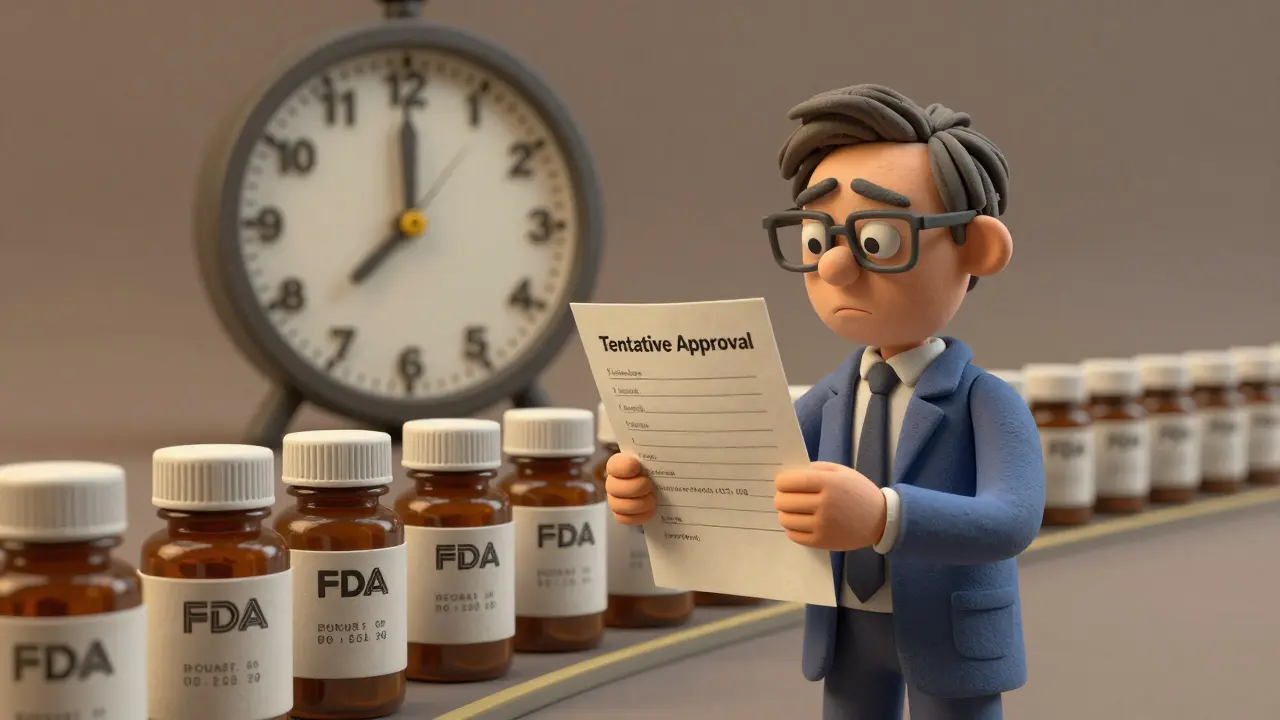
When a generic drug company gets a letter from the FDA saying their application is tentatively approved, it’s not a celebration - it’s the start of a long, careful wait. This isn’t final approval. They can’t sell the drug yet. But they’ve cleared every scientific hurdle. All that’s left is for a patent to expire or a court to strike it down. In the U.S. generic drug market, this waiting game is the norm, not the exception.
What Tentative Approval Really Means
Tentative approval is a regulatory loophole built into the Hatch-Waxman Act of 1984. It lets the FDA finish reviewing a generic drug application - checking its ingredients, manufacturing, and bioequivalence - even if a brand-name drug still holds patent protection. The FDA doesn’t say no. They say, “We’re ready, but we can’t approve you yet.” This isn’t a delay tactic. It’s a queue system. The FDA gives tentative approval to about 1,000 applications a year. That means if you’re the first company to file a challenge to a patent, you get your spot in line. When the patent finally expires, you don’t have to reapply. You just send a quick notice. The FDA then converts your tentative approval into final approval - sometimes within days. But here’s the catch: you can’t sell the drug. Not until the legal barrier is gone. If you try, you’re breaking the law. And if you miss the timing on your paperwork, you lose your place in line.The Patent Litigation Trap
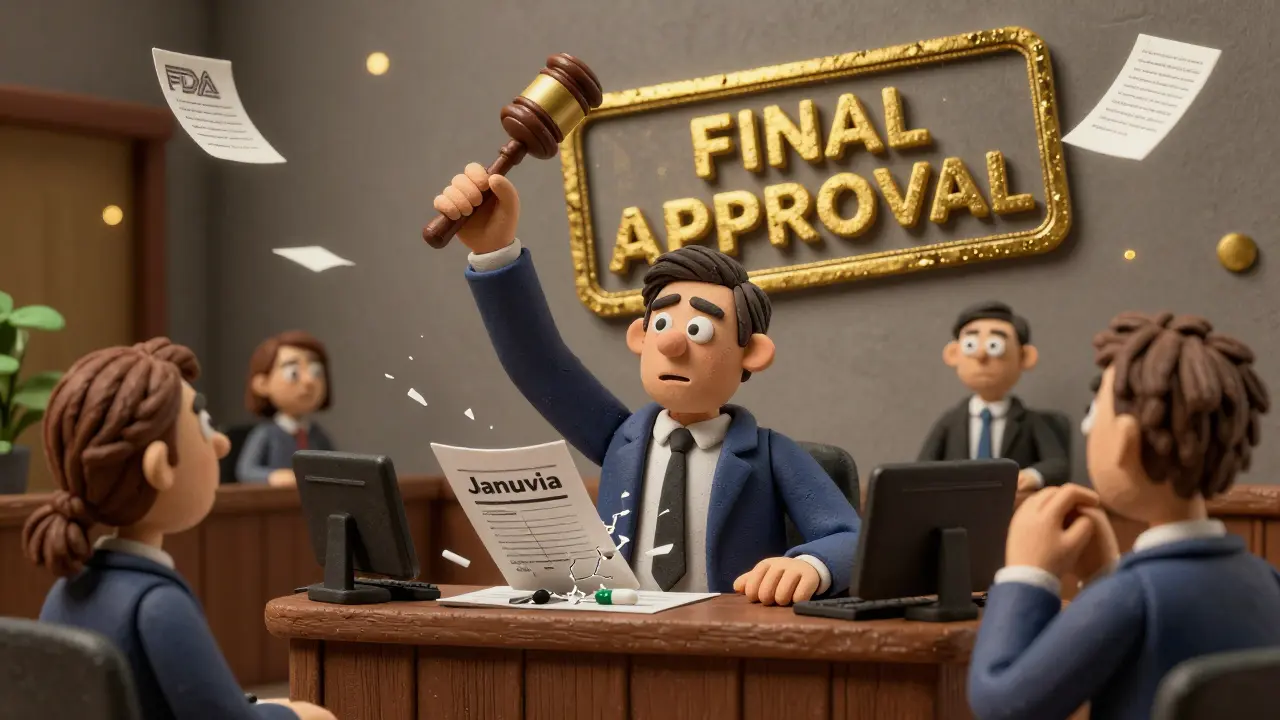
Most companies that get tentative approval do it because they filed a Paragraph IV certification. That’s a legal notice saying, “We believe your patent is invalid or won’t be infringed.” This triggers a lawsuit. The brand-name company has 45 days to respond. If they do, the FDA can’t give final approval for up to 30 months - unless the court rules in the generic company’s favor sooner. This is where things get messy. Some lawsuits drag on for years. Others settle. Sometimes, the brand pays the generic company to delay entry - a “pay-for-delay” deal. The FTC calls these anti-competitive. The generic company gets paid, but patients wait longer for cheaper drugs. Teva’s experience with a generic version of Januvia shows how precise timing matters. They submitted their final approval request exactly 90 days before the patent expired. No delays. They launched on day one. Another company, Mylan, missed a pediatric exclusivity extension on EpiPen. Even though they had tentative approval for 18 months, they waited six extra months because they didn’t account for the added protection.What Happens During the Wait?
Many think tentative approval means they can relax. They can’t. The FDA requires active management. If you change your manufacturing site, your formula, or even your labeling, you have to submit an amendment. And the rules are strict:- Minor changes? Submit at least three months before the patent expires.
- Major changes? Submit ten months ahead - if your application has been tentatively approved for three years or more.
Why This System Exists
The Hatch-Waxman Act was designed to balance two things: giving brand-name companies enough time to profit from their innovation, and letting generics enter quickly once that protection ends. Tentative approval is the middle ground. It rewards companies that invest in early development and legal challenges. The first company to file a successful Paragraph IV certification gets 180 days of exclusivity. During that time, no other generic can enter. That’s a huge incentive. The market share for those first-filers? Between 65% and 80%. That’s why companies spend millions on lawyers and regulatory teams. Lupin Limited nailed this in 2018. They got tentative approval for their generic version of Cialis. When the patent expired, they submitted their final approval request on time. Within 24 hours, the FDA approved it. They captured 42% of the market in the first month.The Hidden Risks
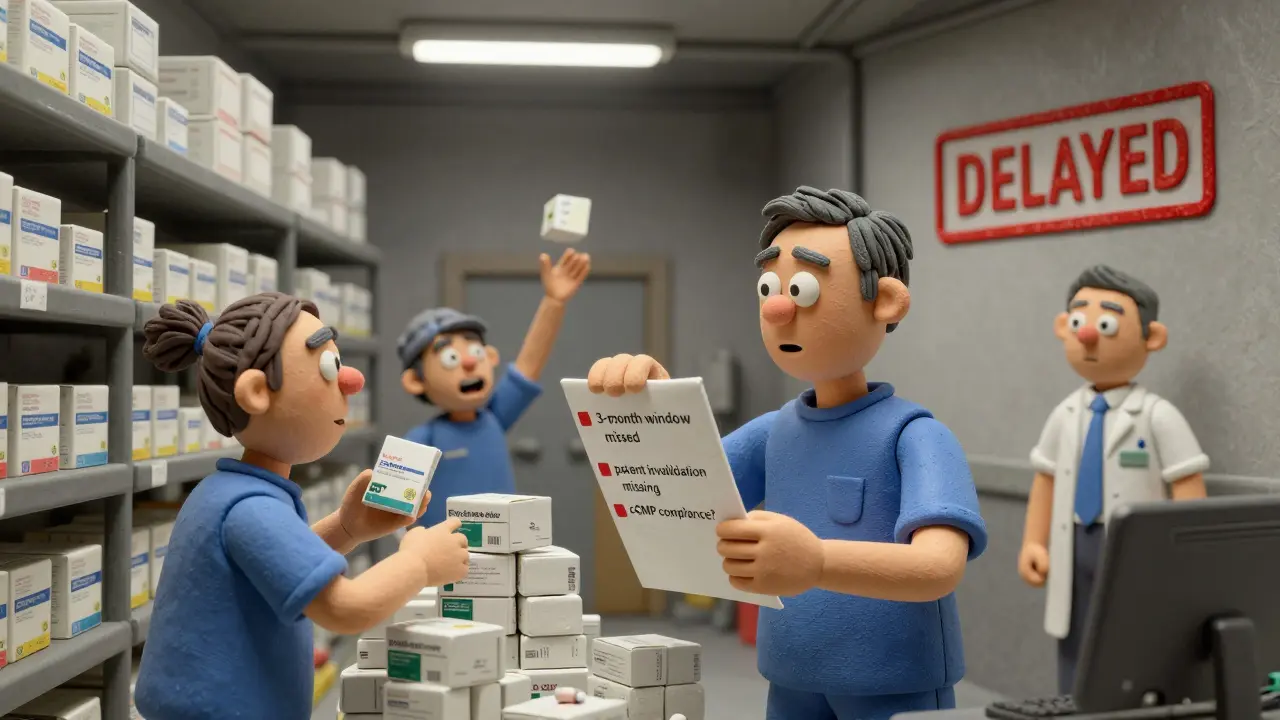
Tentative approval isn’t a guarantee. About 15% of these applications face delays in final approval because of paperwork errors, according to Evaluate Pharma. Common mistakes:- Missing the three-month window for minor amendments
- Not tracking all patent expirations - including pediatric exclusivity
- Failing to prove a patent was invalidated in court
- Ignoring cGMP compliance at manufacturing sites
What’s Changing?
The FDA is trying to speed things up. As of May 2023, they cut the review time for final approval requests from 60-90 days to just 30 days for minor amendments. That’s a big win for companies ready to launch. But new challenges are coming. Biologics and complex generics are making patent portfolios more tangled. Some lawmakers are pushing bills like the “Protecting Drug Patents Act,” which could extend patent terms even further. If passed, it would delay more tentative approvals. Still, industry analysts agree: this system isn’t going away. Barclays estimates a 95% chance that tentative approval remains a key part of the generic drug pathway through 2030. The FDA itself calls it “essential” to keeping drug prices down.How to Get It Right
If you’re a generic drug maker, here’s what works:- File your ANDA early - even if patents are still active.
- Use a patent tracker that includes exclusivity periods, court dates, and FDA deadlines.
- Assign one person to manage your tentative approval status - not a junior staffer.
- Submit amendments well before deadlines. Don’t wait until the last month.
- Keep your manufacturing site fully compliant. FDA inspections don’t stop during tentative approval.
Can a generic drug be sold after tentative approval?
No. Tentative approval means the FDA has reviewed and accepted the application, but the drug cannot be marketed until all patent or exclusivity barriers are resolved. Selling the drug before final approval is illegal and can result in enforcement action by the FDA.
How long does tentative approval last?
Tentative approval doesn’t expire. It remains active until the FDA grants final approval or the application is withdrawn. However, if the applicant fails to submit required amendments or maintain compliance with manufacturing standards, the FDA can revoke the tentative status.
What is a Paragraph IV certification?
A Paragraph IV certification is a legal statement filed with an ANDA that challenges the validity or enforceability of a patent protecting the brand-name drug. This triggers a 45-day window for the brand company to sue. If they do, it can trigger a 30-month stay on final approval - unless the court rules in favor of the generic company sooner.
Do all generic drugs go through tentative approval?
No. Only those facing unexpired patents or exclusivity periods need tentative approval. If a brand-name drug’s patents have all expired and no exclusivity remains, the generic application can receive direct final approval without going through tentative status.
Why do some companies delay market entry even after winning a patent lawsuit?
Some generic companies enter into settlement agreements with brand-name manufacturers that include delayed market entry dates. These “pay-for-delay” deals are legal but controversial. The generic company receives payment or other benefits in exchange for not launching immediately after winning the case - delaying competition and keeping prices higher for longer.
Sherman Lee
February 3, 2026 AT 06:13Lorena Druetta
February 4, 2026 AT 07:58Zachary French
February 5, 2026 AT 06:15Daz Leonheart
February 5, 2026 AT 16:55Coy Huffman
February 5, 2026 AT 17:39Keith Harris
February 6, 2026 AT 12:46Kunal Kaushik
February 8, 2026 AT 04:35Mandy Vodak-Marotta
February 8, 2026 AT 06:34Nathan King
February 8, 2026 AT 08:39Harriot Rockey
February 8, 2026 AT 11:39Samuel Bradway
February 8, 2026 AT 20:58Caleb Sutton
February 9, 2026 AT 17:45pradnya paramita
February 11, 2026 AT 09:53Prajwal Manjunath Shanthappa
February 12, 2026 AT 16:46Katherine Urbahn
February 12, 2026 AT 23:11