
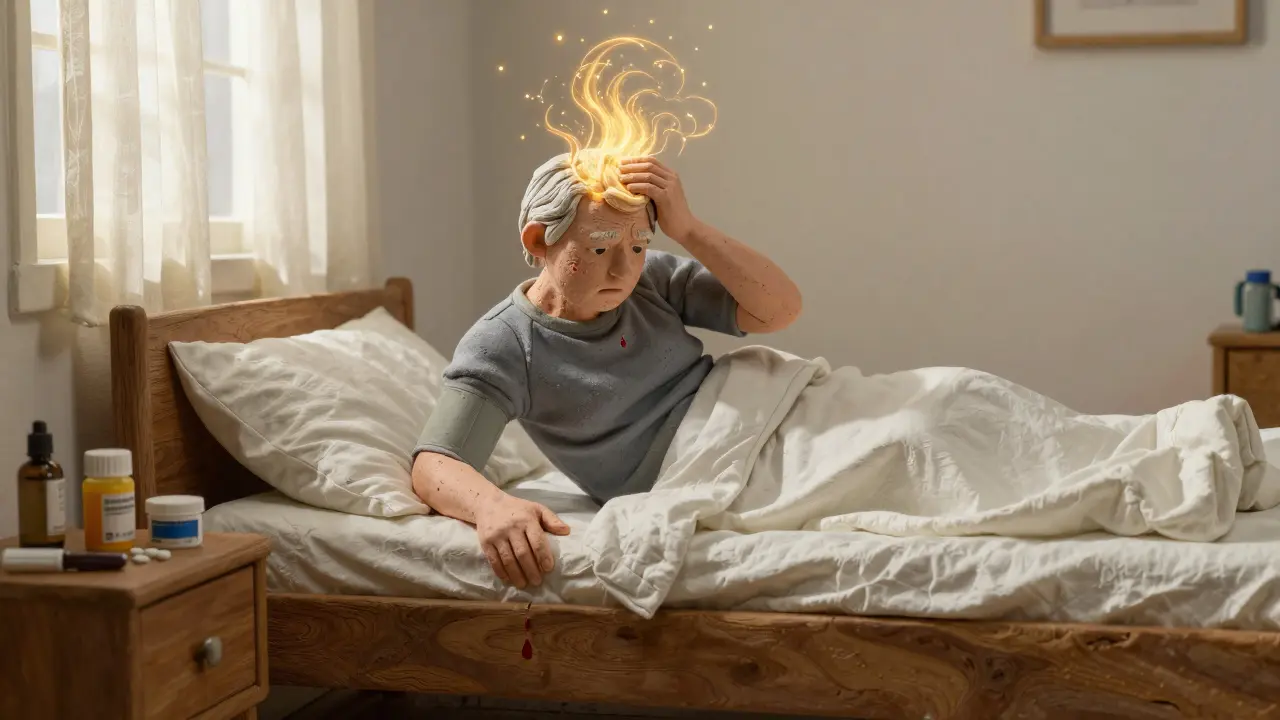
Standing up too fast and suddenly feeling lightheaded, blurry, or like you might pass out? If you're on medication, this isn't just being clumsy-it could be orthostatic hypotension, a common and often overlooked side effect. It happens when your blood pressure drops too fast after standing, and your brain doesn't get enough blood right away. The result? Dizziness, weakness, or even falls. This isn't rare. Up to 30% of older adults taking certain medications experience it, and for many, it's entirely preventable.
What Exactly Is Orthostatic Hypotension?
Orthostatic hypotension (also called postural hypotension) is a drop in blood pressure of at least 20 mm Hg in systolic pressure or 10 mm Hg in diastolic pressure within three minutes of standing up. It's not just a feeling-it's a measurable, clinical event. Your body normally compensates for standing by tightening blood vessels and increasing heart rate to keep blood flowing to the brain. But certain medications mess with that system. When that balance breaks, you get dizzy, foggy, or faint.
It's not always obvious. About 40% of people with this condition don't even notice symptoms until they fall. But when symptoms do show up, they usually hit within seconds of standing: dizziness, tunnel vision, nausea, or a feeling like your head is empty. Some describe it as "my legs turned to jelly" or "like the floor pulled away from me."
Which Medications Cause This?
Not all drugs cause this-but some are notorious. The biggest culprits fall into a few key classes:
- Antihypertensives: Blood pressure meds like diuretics (hydrochlorothiazide), ACE inhibitors (lisinopril), and beta-blockers are designed to lower BP. But if they lower it too much when you stand, you're at risk. Diuretics alone increase risk by nearly 2-fold.
- Alpha-blockers: Used for prostate issues (like tamsulosin) or high blood pressure, these relax blood vessels. They're one of the top offenders-up to 2.8 times more likely to cause OH than other drugs.
- Tricyclic antidepressants: Medications like amitriptyline or nortriptyline can block nerve signals that help regulate blood pressure. Risk jumps 3.2 times compared to non-users.
- Antipsychotics: Especially older ones like chlorpromazine and clozapine. Even newer ones like quetiapine can trigger it in 20-40% of users. One Reddit user shared: "After starting quetiapine, I fainted twice in three weeks. My BP dropped from 128/82 to 92/61 in two minutes."
- Opioids: Morphine, oxycodone, and hydrocodone can depress the nervous system and dilate blood vessels. Risk doubles when combined with alcohol or benzodiazepines.
- Levodopa: Used for Parkinson’s, it causes OH in 30-50% of patients. The body’s ability to adjust blood pressure gets overwhelmed.
And it gets worse with polypharmacy. Taking four or more medications increases your risk by 5.7 times. Older adults aren’t just more sensitive-they’re more likely to be on multiple drugs that all chip away at their blood pressure control.
Why Do Some People Get It and Others Don’t?
Age is the biggest factor. People over 70 are 3.2 times more likely to develop medication-induced orthostatic hypotension than younger adults. Why? Because the baroreflex-the body’s natural BP regulator-slows down with age. Blood vessels stiffen. Heart rate doesn’t respond as quickly. And kidneys hold onto less fluid.
Other risk factors include:
- Dehydration (from not drinking enough, diuretics, or hot weather)
- Diabetes (damages nerves that control blood vessels)
- Long-term bed rest
- Alcohol use
- Neurological conditions like Parkinson’s or multiple system atrophy
But here’s the key: if you’re on one of these meds and you’re over 65, you’re in a high-risk group. That doesn’t mean you have to stop taking your meds-but you need to know the signs and take steps to prevent problems.
How Is It Diagnosed?
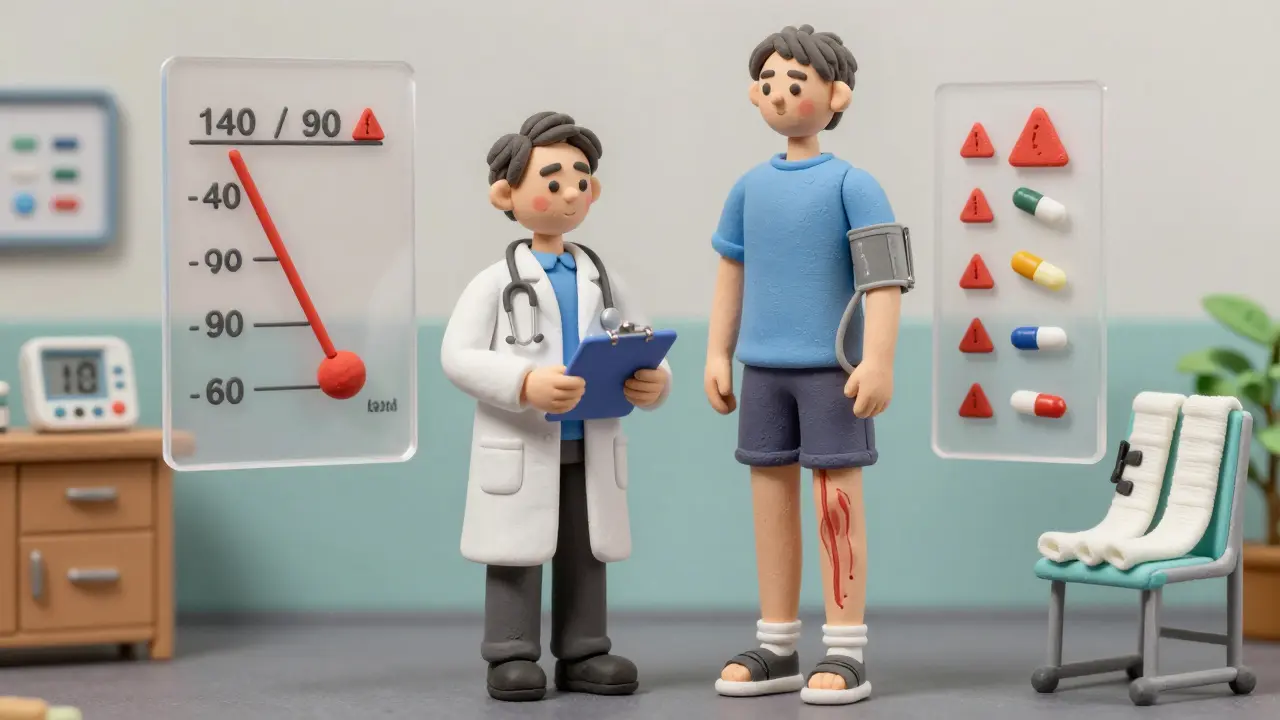
It’s not a guess. Doctors check it with a simple test:
- Rest in a lying position for at least five minutes.
- Measure blood pressure and heart rate.
- Stand up slowly.
- Measure again at 1, 2, and 3 minutes after standing.
If systolic BP drops 20 mm Hg or more, or diastolic drops 10 mm Hg or more, and you have symptoms like dizziness or blurred vision-you’ve got orthostatic hypotension. Some people have the drop without symptoms, but if you’re falling or feeling faint, the numbers matter.
Many cases go undiagnosed because symptoms are blamed on "getting older" or "just being dizzy." A Mayo Clinic study found 55% of patients had symptoms for over two months before anyone connected them to their meds.
What Happens If It’s Not Addressed?
This isn’t just about discomfort. Orthostatic hypotension increases your risk of:
- Falls: 15-30% higher chance, especially in older adults
- Fractures: Hip fractures from falls lead to long-term disability
- Cognitive decline: Reduced blood flow to the brain over time may contribute to memory issues
- Mortality: Studies show a 24-32% higher risk of death over 10 years
Medicare spends $31 billion a year on fall-related injuries-and 30-40% of those are tied to medication-induced low BP. It’s a silent, costly problem.
What Can You Do About It?
The good news? Medication-induced orthostatic hypotension is often reversible. Here’s what works:
1. Review Your Medications
Your doctor should review every pill you take-not just the ones for your main condition. Sometimes, switching to a safer alternative helps. For example:
- Switch from tricyclic antidepressants to SSRIs (like sertraline) if depression is the issue
- Use ziprasidone instead of clozapine for psychosis (lower OH risk)
- Replace hydrochlorothiazide with a potassium-sparing diuretic if possible
One patient on six meds had recurrent falls. After stopping hydrochlorothiazide, symptoms vanished in 72 hours.
2. Slow Down Your Movements
Don’t jump out of bed. Follow this sequence:
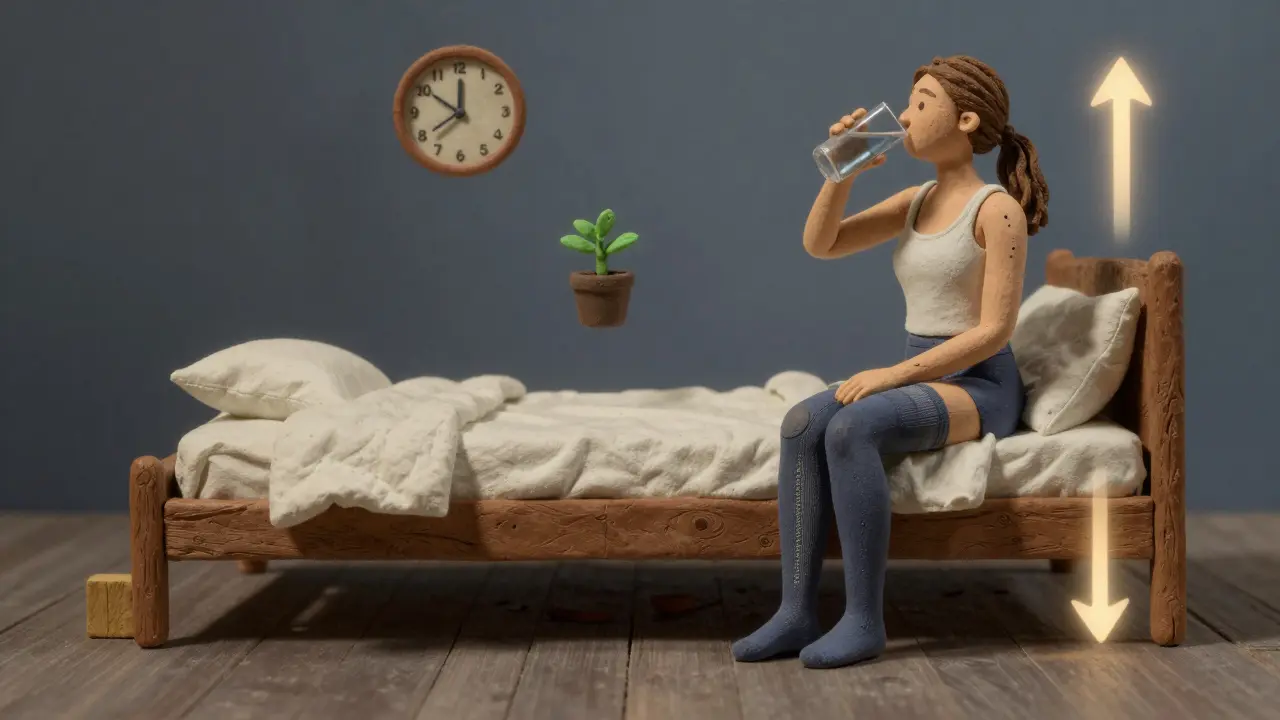
- When waking up, sit on the edge of the bed for 30 seconds.
- Then, put your feet on the floor and sit upright for another 30 seconds.
- Then, stand up slowly.
That extra minute gives your body time to adjust. Many people avoid falls just by changing how they move.
3. Stay Hydrated
Drink 2-2.5 liters of water daily (unless your doctor says otherwise). Dehydration makes OH worse. Avoid large meals-they divert blood to your gut and lower BP further. Small, frequent meals help.
4. Wear Compression Stockings
Medical-grade compression stockings (15-20 mm Hg pressure) help squeeze blood back up from your legs. They’re cheap, non-drug, and effective. Studies show they reduce dizziness in 60% of users.
5. Elevate the Head of Your Bed
Try raising the head of your bed 6-10 inches. It helps reduce nighttime fluid shifts that lead to morning OH. Just use blocks under the bed legs-no need for expensive gadgets.
When Should You See a Doctor?
If you’re on any of the high-risk meds listed above and experience dizziness, blurred vision, or near-fainting after standing-don’t wait. Talk to your doctor. Bring a list of all your medications (including supplements and OTC drugs). Ask:
- "Could any of these be causing my dizziness?"
- "Is there a safer alternative?"
- "Should we check my blood pressure when standing?"
Many cases are resolved with simple changes. Stanford Healthcare found that 65-80% of patients improved significantly within weeks of adjusting their meds.
What About Treatment?
If lifestyle changes aren’t enough, doctors may prescribe:
- Midodrine: A medication that tightens blood vessels. Usually 10 mg three times a day. Works in 65% of cases.
- Droxidopa: Helps the body make more norepinephrine to raise BP. Approved for neurogenic OH but sometimes used off-label.
These aren’t first-line. They’re for when the dizziness is severe and other steps failed. The goal is always to fix the root cause-your meds-not just mask the symptom.
Looking Ahead
Drug companies are starting to design medications with OH in mind. Seven pharmaceutical firms are testing new drugs that target specific receptors to maintain blood pressure without triggering drops. In the future, genetic testing might help predict who’s at risk before they even start a new med.
For now, awareness is the best defense. If you’re on medication and feel dizzy when standing, it’s not normal. It’s a signal. And it’s one you can act on.
Johny Prayogi
March 21, 2026 AT 20:23Natali Shevchenko
March 22, 2026 AT 20:05Bryan Woody
March 24, 2026 AT 18:43matthew runcie
March 26, 2026 AT 10:02trudale hampton
March 28, 2026 AT 05:14Paul Cuccurullo
March 28, 2026 AT 13:11Thomas Jensen
March 28, 2026 AT 18:18Nicole James
March 29, 2026 AT 18:16Shaun Wakashige
March 30, 2026 AT 14:11Chris Dwyer
March 31, 2026 AT 10:59