
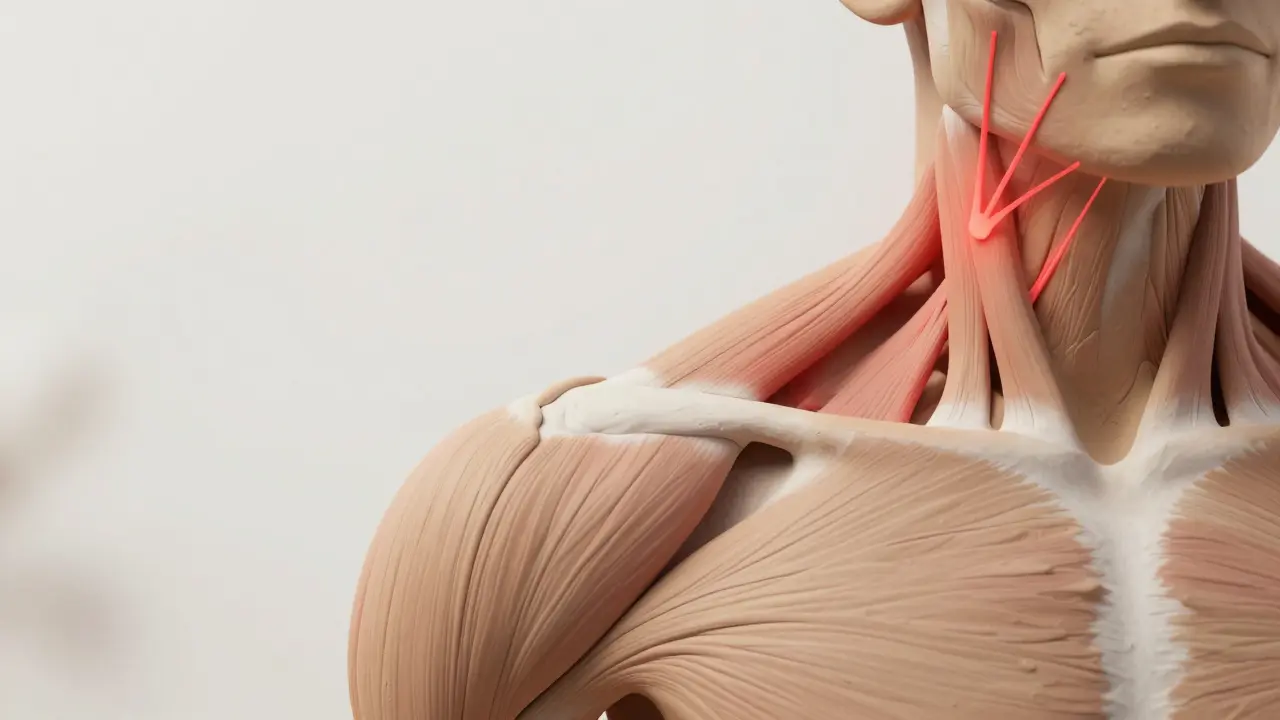
Does your shoulder ache in a way that feels like it’s coming from deep inside the bone, even though you haven’t lifted anything heavy? Or maybe you have a headache that starts at the base of your skull and wraps around to your eyes. If this sounds familiar, you might not be dealing with a simple strain or a pinched nerve. You could be experiencing myofascial pain syndrome, a condition defined by hyperirritable spots in skeletal muscle known as trigger points that cause localized and referred pain.
This isn’t just "tension." It is a specific physiological state where small bundles of muscle fibers contract so tightly they don’t let go. These knots, medically called myofascial trigger points (TrPs), cut off their own blood supply, creating a cycle of pain and spasm that can last for months or years if left untreated. Understanding what these points are and how to release them is the first step toward getting your life back.
What Are Myofascial Trigger Points?
To understand why this hurts, we have to look at the microscopic level. A trigger point is not just a tight muscle; it is a biochemical disaster zone within a single motor endplate zone-the spot where a nerve meets a muscle fiber. According to research by Dr. Janet Travell and Dr. David Simons, who pioneered this field in the 1980s, these spots contain up to 100 times more acetylcholine than normal tissue. Acetylcholine is the chemical signal that tells muscles to contract. When there is too much of it, the muscle stays contracted permanently.
This constant contraction squeezes the tiny blood vessels feeding that area. Without fresh oxygen-rich blood, the tissue becomes acidic (dropping to a pH of roughly 4.3 compared to the normal 7.0). This acidity releases sensitizing chemicals like substance P and bradykinin, which scream "pain" to your brain. The result is a palpable nodule, usually 2-10 mm wide, sitting inside a taut band of muscle.
There are two types of trigger points you need to know about:
- Active Trigger Points: These hurt all the time, even when you aren’t touching them. They cause spontaneous pain and often refer pain to other areas. For example, an active trigger point in your upper trapezius (the top of your shoulder) might cause a headache behind your eye.
- Latent Trigger Points: These only hurt when you press on them directly. They don’t cause referred pain, but they still restrict your range of motion and weaken the muscle. Think of them as sleeping troublemakers waiting for stress or injury to wake them up.
MPS vs. Fibromyalgia: Knowing the Difference
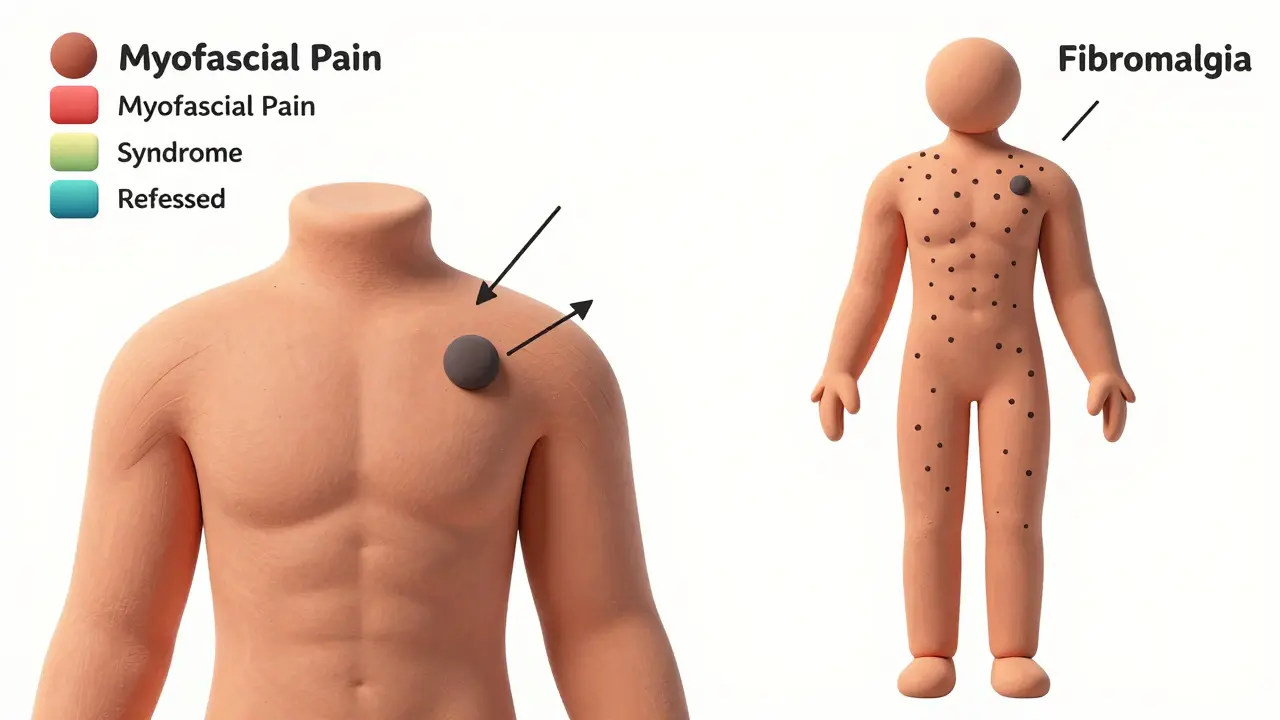
A common confusion exists between myofascial pain syndrome and fibromyalgia. While both involve chronic pain, they are distinct conditions. Fibromyalgia involves widespread, symmetrical pain across the entire body, often accompanied by fatigue and sleep issues. It is diagnosed based on "tender points," which are sensitive spots but do not produce referred pain patterns.
In contrast, MPS is regional. It affects specific muscles or groups of muscles. The key differentiator is the referred pain pattern. If you press on a spot in your gluteal muscle and feel pain shoot down your leg, that is likely a trigger point mimicking sciatica. If you press on a tender point in fibromyalgia, the pain stays right where you pressed. Misdiagnosis is common-up to 57% of early-stage MPS cases are initially misidentified as structural spine issues or nerve damage. Getting the diagnosis right changes everything about your treatment plan.
Why Do Trigger Points Form?
You didn’t just wake up with these knots. Trigger points develop due to a combination of acute overload and chronic stress. Here are the most common culprits:
- Acute Trauma: A sudden injury, like a whiplash accident or lifting something too heavy, can immediately create trigger points. Studies show that 50-70% of people with whiplash develop subsequent MPS.
- Postural Stress: This is the silent killer. Sitting at a computer with your head forward increases the load on your neck muscles by 3 to 5 times. Over time, the upper trapezius and levator scapulae muscles burn out and form knots.
- Structural Imbalances: If one leg is longer than the other by more than 1 cm, your pelvis tilts. This forces your lower back and hip muscles to work overtime to keep you upright, leading to chronic trigger points.
- Systemic Deficiencies: Low vitamin D levels (below 20 ng/mL) are linked to a 60% higher incidence of MPS. Hypothyroidism is also present in 15-25% of chronic MPS cases, suggesting that hormonal health plays a role in muscle recovery.
Effective Trigger Point Release Techniques
The goal of treatment is to break the pain-spasm-pain cycle. There is no single "best" method, but several techniques have strong clinical backing. Often, a combination approach works best.
Ischemic Compression
This is the gold standard for self-care and manual therapy. The technique involves applying sustained pressure directly to the trigger point. The pressure cuts off blood flow briefly, and when released, a rush of oxygenated blood helps flush out the metabolic waste products causing the pain. You hold the pressure for 30-90 seconds until you feel the muscle soften or the pain decrease. Research shows this method has a 60-75% short-term efficacy rate.
Dry Needling
Dry needling involves inserting thin filiform needles into the trigger point. Unlike acupuncture, which is based on traditional Chinese medicine meridians, dry needling targets the neuromuscular junction directly. The needle elicits a "local twitch response"-a quick jerk of the muscle fiber-which resets the sarcomere length and breaks the contraction. Meta-analyses indicate that dry needling provides significant pain relief for 4-12 weeks in 65-80% of patients. It is particularly effective for deep muscles that are hard to reach with hands.
| Technique | Mechanism | Efficacy Rate | Duration of Relief | Best For |
|---|---|---|---|---|
| Ischemic Compression | Sustained pressure to restore blood flow | 60-75% | Short-term (days) | Accessible surface muscles, home care |
| Dry Needling | Needle insertion to elicit twitch response | 65-80% | Medium-term (4-12 weeks) | Deep muscles, resistant trigger points |
| Trigger Point Injections | Lidocaine injection to block pain signals | 70-85% | Medium-term (2-8 weeks) | Severe acute pain, immediate relief needed |
| IASTM | Instrument-assisted soft tissue mobilization | 55-70% | Variable | Fascial adhesions, scar tissue |
Trigger Point Injections
If manual therapy doesn’t work, doctors may recommend injections using lidocaine (without epinephrine). The anesthetic blocks the pain signals and allows the muscle to relax. While this provides immediate relief for 70-85% of patients, the effects are temporary unless combined with stretching and posture correction. A Cochrane Review noted that while injections help, they are not significantly better than dry needling in the long run.
Emerging Technologies
Newer methods are gaining traction. Instrument-Assisted Soft Tissue Mobilization (IASTM) uses specialized tools to scrape the skin over the muscle, breaking up fascial restrictions. Low-Level Laser Therapy (LLLT) uses specific wavelengths of light (808-905 nm) to reduce inflammation and promote cellular healing, showing 40-60% pain reduction in systematic reviews.

Home Management: What You Can Do Daily
Treatment sessions are only half the battle. If you return to the same slouched posture after leaving the clinic, the trigger points will come back. Recurrence rates are high-40-60% of patients see symptoms return within six months without maintenance. Here is how to manage MPS at home:
- Self-Compression: Use a tennis ball or lacrosse ball against a wall. Find the tender spot, lean into it, and hold for 30-60 seconds. Do this for 15-20 minutes daily.
- Heat Therapy: Apply heat (40-45°C) for 15 minutes before stretching. Heat increases blood flow and makes the muscle more pliable, reducing the risk of re-injury during movement.
- Stretching: Perform static stretches for the affected muscles. Aim for 3 sets of 10 repetitions, twice daily. For example, if your upper traps are tight, gently pull your ear away from your shoulder while keeping your shoulders down.
- Posture Correction: Set reminders to check your posture every hour. Keep your ears aligned over your shoulders and your hips centered in your chair.
When to See a Specialist
You should seek professional help if:
- Your pain persists for more than two weeks despite home care.
- You experience numbness, tingling, or weakness in your limbs (this could indicate nerve compression).
- The pain interferes with your sleep or daily activities.
- You suspect an underlying condition like hypothyroidism or vitamin D deficiency.
Look for a physical therapist or physician trained in myofascial pain management. Ask about their experience with trigger point identification and whether they use dry needling or manual therapy. Avoid providers who rely solely on passive treatments like massage without addressing posture and strength.
How long does it take to get rid of trigger points?
The timeline varies depending on the chronicity of the condition. Acute trigger points may resolve in a few days to weeks with proper treatment. Chronic trigger points, those present for months or years, can take several weeks to months of consistent therapy, including dry needling, stretching, and posture correction. Maintenance is key to preventing recurrence.
Can trigger points cause headaches?
Yes, absolutely. Trigger points in the suboccipital muscles (at the base of the skull), upper trapezius, and temporalis (jaw muscle) are common causes of tension headaches and migraines. Releasing these points often provides significant relief from head pain.
Is dry needling painful?
You may feel a sharp pinch when the needle enters the skin, followed by a dull ache or a cramping sensation as the needle hits the trigger point. This "twitch response" is actually a good sign, indicating the muscle is resetting. Most patients find the relief worth the brief discomfort.
What is the difference between a knot and a trigger point?
In medical terms, they are the same thing. "Knot" is the layperson's term for a myofascial trigger point. Both refer to hyperirritable spots in a taut band of muscle that cause pain. However, some people use "knot" to describe general muscle tightness, whereas a true trigger point has specific diagnostic criteria, including referred pain.
Can exercise make myofascial pain worse?
It depends on the type of exercise. High-intensity workouts or exercises that aggravate the affected muscle can worsen trigger points temporarily. However, gentle stretching, low-impact cardio, and strengthening exercises for opposing muscle groups are crucial for long-term recovery. Always warm up properly and listen to your body.
ANGELA CHINENYE
June 1, 2026 AT 14:36As a physical therapist, I appreciate the nuance here regarding the biochemical environment of the trigger point. The pH drop to 4.3 is not just a statistic; it represents a significant metabolic crisis for those muscle fibers. Many patients come to me believing that massage alone will cure them, but without addressing the underlying ischemia and the acetylcholine leak at the motor endplate, we are merely treating symptoms. Dry needling remains my preferred intervention for deep-seated points because it mechanically disrupts the sarcomere contraction in a way manual pressure often cannot reach effectively.
Henri-Paul Soulodre
June 2, 2026 AT 02:09This article is dangerously misleading! It reduces a complex human suffering to mere mechanics and chemistry as if we are broken machines waiting for a tune-up. You speak of 'biochemical disaster zones' with such cold detachment, ignoring the profound emotional and spiritual toll chronic pain takes on a person's soul. To suggest that a tennis ball against a wall is sufficient care is an insult to anyone who has lived with this agony for years. We deserve empathy, not just a list of efficacy rates and injection protocols!
Daniel Tremblay
June 4, 2026 AT 01:40Spare us the melodrama Henri-Paul. The author didn't write a novel about your feelings, they wrote a medical overview. If you want poetry, go read Shakespeare. If you want to fix your shoulder, read the section on ischemic compression. It is actually quite effective when done correctly, which most people fail to do because they lack the discipline to hold the pressure long enough. Stop whining and start stretching.
Roderick Gooden
June 5, 2026 AT 08:45I have been dealing with what I thought was sciatica for three years now, running from specialist to specialist getting told it was my lumbar spine, only to find out last month it was actually a gluteal trigger point referring down my leg. The part about misdiagnosis being common up to 57% really hit home because I felt so dismissed by every doctor until one finally looked at my movement patterns instead of just my MRI scans. The distinction between active and latent points is crucial because I had latent ones in my piriformis that were restricting my hip rotation without causing constant pain, yet they were contributing significantly to my overall discomfort and weakness during exercise sessions.
Aishwarya Thankachan
June 6, 2026 AT 15:31Hey guys! 🙌 Just wanted to add some value here regarding the systemic deficiencies mentioned. Low Vitamin D is huge! ☀️ I always tell my clients to get their levels checked because hypovitaminosis D can exacerbate myofascial pain syndrome significantly. Also, don't forget about magnesium glycinate for muscle relaxation 🧘♀️. It helps with the neuromuscular junction stability too! #HealthTips #WellnessJourney
Lenny Cruz
June 7, 2026 AT 17:20The obsession with dry needling is somewhat amusing given that many practitioners performing it have minimal anatomical training compared to traditional acupuncturists. While the mechanism described-the local twitch response-is physiologically sound, the claim that it is superior to manual therapy lacks robust longitudinal data in many contexts. Furthermore, the suggestion that posture correction is a simple matter of 'setting reminders' ignores the proprioceptive deficits inherent in chronic MPS cases. One does not simply 'remember' to sit correctly when the nervous system is wired for protection and guarding.
Cathy N
June 9, 2026 AT 15:54i totally relate to the headache thing. mine starts right at the base of my skull like the post says and wraps around to my eyes. i tried the tennis ball trick and it hurt like hell but then felt amazing afterwards. i think the heat therapy tip is super important too because my muscles are so tight they feel like stone before i even start stretching. thanks for sharing this info it helped me understand why my chiropractor keeps talking about trigger points.
Jerry Mathews
June 10, 2026 AT 05:34Great breakdown of the differences between MPS and fibromyalgia. It’s easy to confuse them since both involve widespread discomfort, but knowing that MPS is regional and linked to specific referred pain patterns really changes how you approach treatment. I’ve found that combining gentle yoga stretches with consistent self-compression using a lacrosse ball has made a huge difference in my recovery journey. Keep moving gently and listen to your body!