

For decades, losing weight meant counting calories in a notebook or joining a gym with no real medical oversight. That era is over. Today, medical weight management is a comprehensive, evidence-based clinical approach that treats obesity as a chronic disease requiring ongoing care, medication, and monitoring rather than just a lifestyle choice. If you have struggled with your weight for years, this shift changes everything. It means your doctor isn’t just telling you to "eat less and move more." They are prescribing specific treatments, monitoring your blood work, and adjusting a plan based on how your body responds-much like they would for high blood pressure or diabetes.
The landscape changed dramatically in mid-2025 when the American College of Cardiology (ACC) released new expert consensus statements. These guidelines confirmed what many specialists already knew: obesity is a complex biological condition, not a moral failing. With 92% of U.S. medical schools now offering obesity medicine education, we are seeing a surge in specialized clinics that offer far more than generic diet advice. This guide breaks down exactly how these clinics work, which medications are actually effective, and how you should monitor your progress to keep the weight off safely.
Understanding the Chronic Disease Model
To understand why medical weight management works better than commercial programs, you first need to accept one uncomfortable truth: willpower alone rarely beats biology. The American Medical Association recognized obesity as a disease in 2013, but it took until 2025 for major cardiology and diabetes organizations to fully integrate weight loss into standard chronic care protocols.
Think of it this way. You wouldn’t expect someone to cure type 2 diabetes by just "trying harder" without insulin or medication. Yet, for years, that was the standard advice for obesity. The new medical model treats excess weight as a physiological issue involving hormones, genetics, and metabolism. Dr. Chiadi Ndumele, Chair of the ACC Expert Consensus Committee, put it simply in June 2025: "Obesity should be treated with the same diligence as hypertension or diabetes, with ongoing monitoring and treatment adjustments."
This shift matters because it changes the goal. In a typical diet program, the goal is often hitting a number on the scale. In medical weight management, the goal is improving cardiometabolic health. Studies show that losing just 5% of your initial body weight significantly improves conditions like type 2 diabetes and hypertension. Losing more than 10% can even lead to the remission of type 2 diabetes, according to the American Diabetes Association’s 2025 Standards of Care.
How Medical Weight Management Clinics Operate
If you decide to seek help, where do you go? Medical weight management clinics are structured differently from gyms or online coaching services. They operate within a healthcare framework, meaning your treatment is documented in your electronic health record and coordinated with other specialists if needed.
A typical entry point involves a strict screening process. Most reputable clinics require a Body Mass Index (BMI) of 30 kg/m² or higher to qualify as obese. However, if you have obesity-related comorbidities-such as sleep apnea, joint pain, or pre-diabetes-you may qualify at a BMI of 27 kg/m². This threshold ensures that resources are directed toward patients who face genuine health risks.
Once accepted, the process usually follows a structured pathway. For example, West Virginia University Health System’s program requires patients to complete a mandatory orientation session before their first appointment. This isn’t just paperwork; it’s an assessment of your readiness to engage in long-term care. You’ll receive patient handbooks covering dietitian guidance and movement protocols, setting clear expectations from day one.
The multidisciplinary team is the clinic’s biggest advantage. Instead of dealing with a single provider, you typically get access to:
- Physicians: To manage prescriptions and monitor overall health.
- Dietitians: To create personalized meal plans using the nutrition care process.
- Behavioral Coaches: To address emotional eating and habit formation.
Patient feedback supports this structure. An analysis of over 1,200 reviews on Healthgrades in late 2025 showed that 87% of patients specifically praised the combination of physician oversight with dietitian support. The non-judgmental environment provided by these teams helps reduce the shame often associated with weight loss journeys.

Medications: Semaglutide, Tirzepatide, and Beyond
The most significant change in medical weight management since 2020 has been the approval of powerful new medications. These drugs don’t just suppress appetite; they target the hormonal signals that regulate hunger and satiety.
| Medication Name | Brand Name(s) | Mechanism of Action | Average Weight Loss (72 Weeks) | Key Considerations |
|---|---|---|---|---|
| Semaglutide | Wegovy® | GLP-1 Receptor Agonist | ~14.9% | Weekly injection; widely available but expensive without insurance. |
| Tirzepatide | Zepbound® | GLP-1/GIP Receptor Agonist | ~20.2% | Weekly injection; slightly higher efficacy than semaglutide in trials. |
| Liraglutide | Saxenda® | GLP-1 Receptor Agonist | ~8% | Daily injection; older generation drug, often cheaper. |
| Retatrutide | (In Development) | Triple Agonist (GLP-1/GIP/Glucagon) | ~24.2% (Phase 2) | Not yet FDA approved; expected to launch post-2026. |
Semaglutide (Wegovy) and tirzepatide (Zepbound) are currently the gold standards. Clinical trial data, such as the SURMOUNT-2 trial, shows that tirzepatide leads to slightly greater weight loss compared to semaglutide. However, the "best" medication depends heavily on your individual response, side effect tolerance, and insurance coverage.
Insurance remains a major hurdle. As of 2025, only 68% of commercial insurance plans cover anti-obesity medications, compared to 98% coverage for diabetes drugs. Medicare coverage is even more limited, with only 12% of Medicare Advantage plans covering these medications. This gap creates a two-tier system where access often depends on financial resources rather than medical need. Experts like Dr. Fatima Cody Stanford argue for earlier use of these medications (at BMI ≥27 with comorbidities), but traditional guidelines often reserve them for higher BMIs, creating confusion for patients.
Monitoring Your Progress: More Than Just the Scale
One of the biggest mistakes people make when starting medical weight management is focusing solely on the scale. While weight loss is important, medical professionals look at a broader set of metrics to determine if the treatment is working and safe.
The American Diabetes Association recommends measuring obesity-related anthropometric measurements "at least annually," but during active treatment phases, this should happen every three months. Here is what your medical team will likely track:
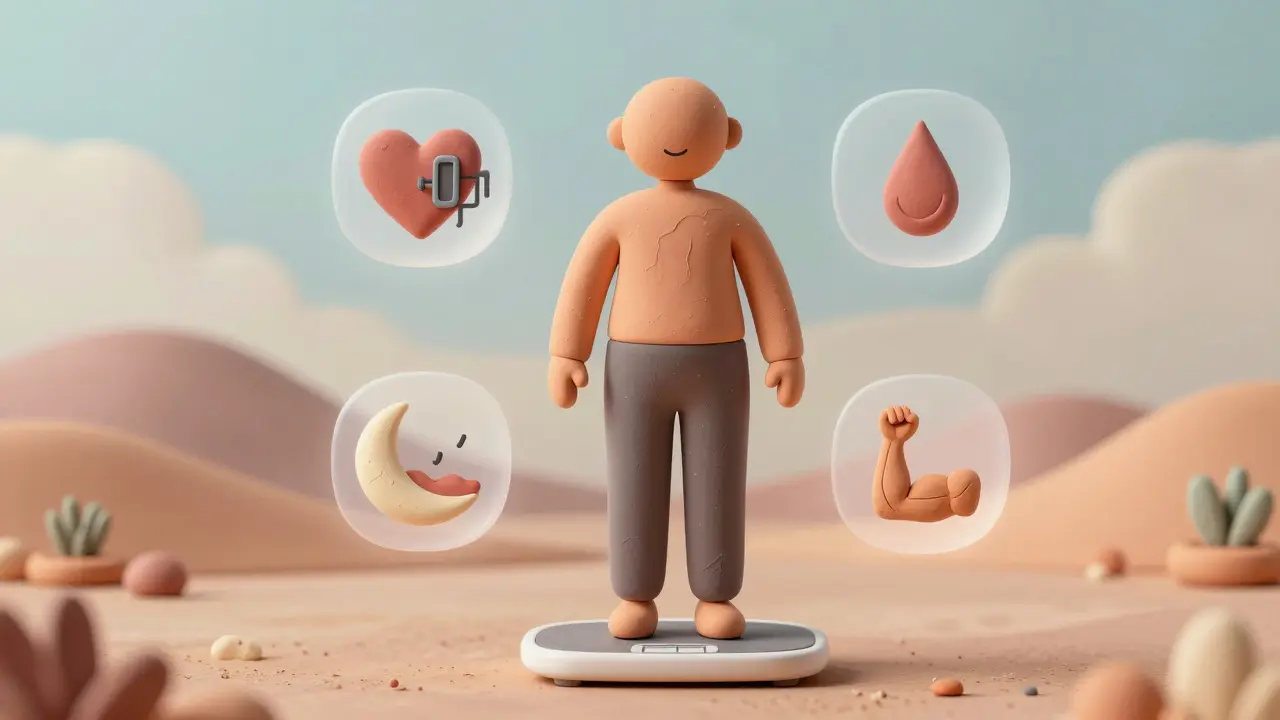
- Body Composition: Is the weight loss coming from fat or muscle? Preserving muscle mass is crucial for metabolic health.
- Blood Work: Regular checks of HbA1c (for blood sugar control), lipid panels (cholesterol), and liver enzymes.
- Blood Pressure: Significant weight loss often leads to immediate improvements in hypertension.
- Sleep Quality: Many patients report improved sleep apnea symptoms, reducing the need for CPAP machines.
You also play a role in this monitoring. Successful programs encourage daily self-monitoring of nutrition, activity, and sleep. Apps integrated with clinic systems, like the MyWVUChart app used in some university hospitals, help identify barriers in real-time. If you miss a week of logging data, your care team can reach out before you fall off track.
Costs, Accessibility, and Realistic Expectations
Let’s talk about money, because it’s a primary concern for most patients. Medical weight management is an investment. Typical clinic programs cost between $150 and $300 per month, excluding the cost of medication. Compare this to commercial weight loss programs, which might charge $20 to $60 monthly but lack medical oversight.
Does the extra cost pay off? Yes, if you look at the outcomes. A 2024 study in JAMA Internal Medicine found that medically supervised programs achieved a mean weight loss of 9.2% at 12 months, compared to just 5.1% in commercial programs. Furthermore, medical programs have significantly lower complication rates. Bariatric surgery, while effective for extreme obesity (BMI ≥40), carries a 4.7% complication rate. Medical weight management has a complication rate of just 0.2%, making it a safer option for those with moderate obesity (BMI 30-35).
However, accessibility issues persist. Black and Hispanic patients are 43% less likely to be offered pharmacotherapy despite meeting eligibility criteria, according to the ACC 2025 guidance. This disparity highlights the need for patients to advocate for themselves and seek out providers who specialize in obesity medicine rather than relying on general practitioners who may not be up-to-date on the latest guidelines.
Expectations must also be realistic. Weight loss is not linear. You will have plateaus. The goal is not perfection but consistent improvement. The Academy of Nutrition and Dietetics notes that "one-size-fits-all approaches have demonstrated failure rates exceeding 80% in long-term weight maintenance." This is why personalized care-adjusting meds, tweaking diets, and addressing behavioral hurdles-is essential.
Future Directions and Next Steps
The field of medical weight management is evolving rapidly. By 2030, experts predict that weight management will be as routinely integrated into diabetes care as HbA1c monitoring is today. New drugs like retatrutide, a triple agonist showing 24.2% weight loss in phase 2 trials, promise even greater efficacy in the near future.
If you are considering medical weight management, here are your next steps:
- Check Eligibility: Calculate your BMI and note any comorbidities. If your BMI is 27+ with health issues, you likely qualify.
- Verify Insurance Coverage: Call your insurer and ask specifically about "anti-obesity medications" and "intensive behavioral therapy" coverage. Do not assume it’s covered.
- Find a Specialist: Look for clinics affiliated with academic medical centers or practices with Obesity Medicine Association-certified physicians.
- Prepare for Commitment: This is not a quick fix. Plan for 2-4 hours of monthly engagement with appointments and self-monitoring.
Medical weight management offers a path forward for those who have exhausted other options. It combines the science of modern pharmacology with the human touch of compassionate care. By treating obesity as the chronic disease it is, we can finally achieve sustainable health improvements that last a lifetime.
What is the difference between medical weight management and a commercial weight loss program?
Medical weight management treats obesity as a chronic disease using evidence-based medical interventions, including prescription medications, regular blood work, and multidisciplinary care teams (doctors, dietitians, coaches). Commercial programs typically focus on lifestyle changes, group support, and generic diet plans without medical oversight or prescription drugs. Medical programs generally yield higher weight loss results (9.2% vs 5.1% at 12 months) but cost more.
Do insurance plans cover weight loss medications like Wegovy or Zepbound?
Coverage varies significantly. As of 2025, approximately 68% of commercial insurance plans cover anti-obesity medications, but only 12% of Medicare Advantage plans do. Many plans require prior authorization and proof of failed lifestyle interventions. You must contact your specific insurer to verify coverage details, as this is not always automatic.
What BMI is required to start medical weight management?
Generally, a BMI of 30 kg/m² or higher qualifies as obesity and makes you eligible for treatment. However, if you have obesity-related comorbidities such as type 2 diabetes, hypertension, or sleep apnea, you may qualify at a BMI of 27 kg/m² or higher. Specific criteria can vary by clinic and insurance provider.
Which medication is more effective: Semaglutide or Tirzepatide?
Clinical trials suggest that tirzepatide (Zepbound) is slightly more effective, with average weight loss of 20.2% compared to 14.9% for semaglutide (Wegovy) over 72 weeks. However, individual responses vary. Factors like insurance coverage, availability, and personal side effect profiles often determine which medication is prescribed.
How often do I need to visit the clinic for medical weight management?
During the active treatment phase, visits typically occur every 2 to 4 weeks. This includes follow-ups with your physician, dietitian, and potentially a behavioral coach. Once you reach your goal weight, maintenance visits may become less frequent, occurring every 3 to 6 months to monitor stability and prevent regain.
Is medical weight management safe compared to bariatric surgery?
Yes, medical weight management has a much lower complication rate. Studies show a 0.2% complication rate for medical management versus 4.7% for bariatric surgery. It is considered a safer option for patients with moderate obesity (BMI 30-35) or those who are not candidates for surgery due to other health risks.
Can medical weight management reverse type 2 diabetes?
Sustained weight loss of greater than 10% of body weight can lead to the remission of type 2 diabetes in many patients, according to the American Diabetes Association’s 2025 guidelines. This is why weight management is now considered a primary goal of diabetes treatment, alongside glycemic control.
Menu