
Medication errors are not just a hospital problem. They happen at home, often because we assume the pill in our hand is the right one without looking. The Food and Drug Administration (FDA) estimates that these mistakes contribute to thousands of deaths annually in the United States. It sounds alarming, but the good news is that you hold the primary defense against these errors in your hands every time you take a dose. That defense is the label on your bottle.
Checking the label before every single dose isn't about mistrusting your pharmacist. It’s about building a safety net for yourself. Studies show that consistent label verification can reduce personal medication error risk by up to 76%. But knowing you *should* check it is different from actually doing it every time. This guide will help you train your brain to make label checking an automatic, non-negotiable part of your daily routine.
The "Three-Touch" Method for Active Verification
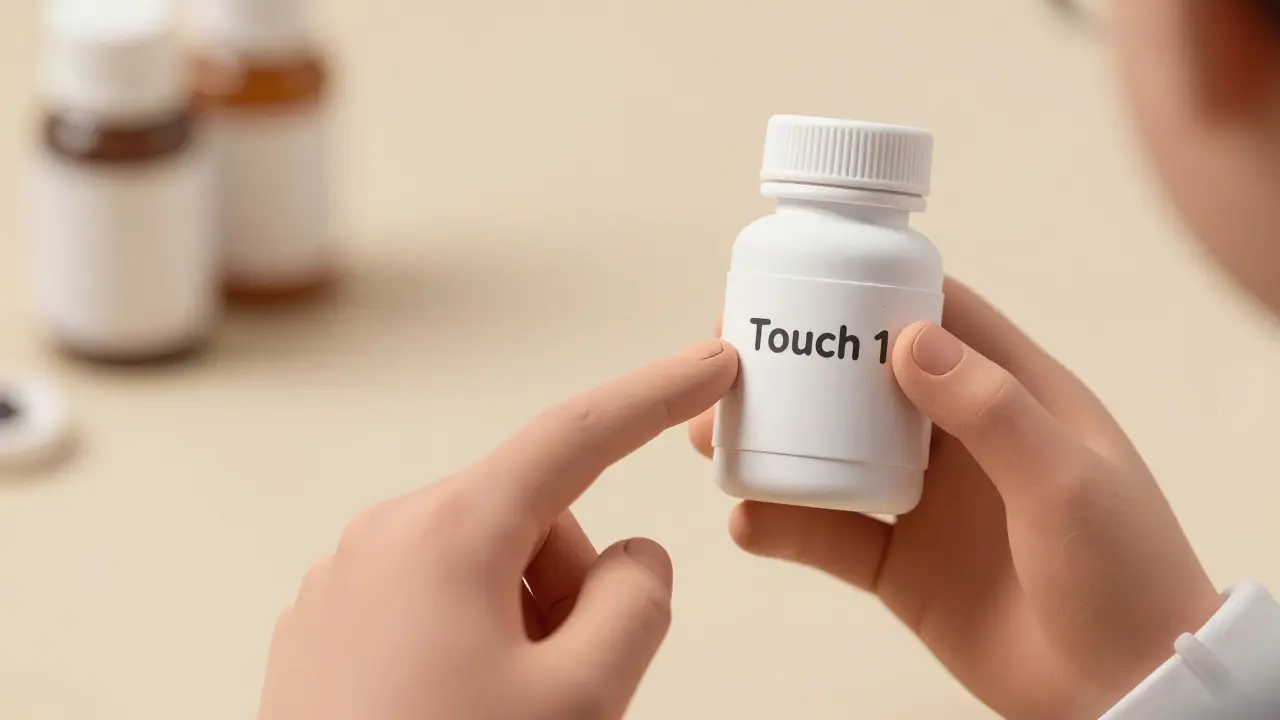
Most people glance at a bottle while their mind is elsewhere-thinking about work, breakfast, or the day ahead. Passive glancing doesn’t count as checking. To build a reliable habit, you need a physical ritual. The American Society of Health-System Pharmacists (ASHP) endorses a technique called the "Three-Touch Method," which forces your brain to engage with the information.
Here is how you do it:
- Touch 1: Physically point to the patient name on the label. Say it out loud: "This is [Your Name]." If the name doesn’t match yours exactly, stop immediately.
- Touch 2: Point to the drug name (both brand and generic). Say: "This is [Drug Name] for [Condition]." This connects the pill to its purpose.
- Touch 3: Point to the dosage instructions. Say: "I am taking [Dose Amount] now."
Research from SmithRx shows that this verbalization increases adherence accuracy to 92% after 30 days, compared to just 64% for silent checking. The act of speaking aloud slows you down and engages different parts of your brain, making it harder to skip steps.
What Exactly Are You Looking For?
You don’t need to memorize the entire label. You need to verify ten specific elements. Think of this as a quick checklist. According to guidelines from the Institute for Safe Medication Practices (ISMP), these are the critical data points:
- Patient Name: Must match yours exactly. No nicknames unless prescribed that way.
- Drug Name: Check both the brand (e.g., Lipitor) and generic (e.g., atorvastatin) names.
- Dosage Strength: Look for milligrams (mg) or units. Is it 10mg or 20mg? These look similar but act very differently.
- Prescriber’s Name: Ensures this was filled by your current doctor, not an old prescription.
- Quantity Remaining: Helps you track if you’re running low or have accidentally taken too many.
- Warnings: Specifically look for food or drug interactions (e.g., "Take with food").
- Date of Filling: Most medications should be used within a certain window of being dispensed.
- Expiration Date: Never use expired medication. Efficacy drops, and safety risks rise.
- Pharmacy Information: Have the phone number ready in case you need to call for clarification.
- Administration Instructions: "Sublingual" means under the tongue; "QD" means once a day. Know what the abbreviations mean.
Under the new FDA labeling standards effective January 1, 2025, labels must feature high-contrast colors and larger fonts (minimum 8-point for warnings) to make these details easier to read. Use this improved readability to your advantage.
Building the Habit: From Conscious Effort to Automatic Action
Dr. Angela Smith, a medication safety director, notes that over-reliance on memory fails 83% of patients within two weeks. You cannot rely on willpower alone. You need environmental cues. Behavioral science suggests that habits form best when tied to existing routines.
Use the concept of "habit stacking." Attach your label check to something you already do without thinking.
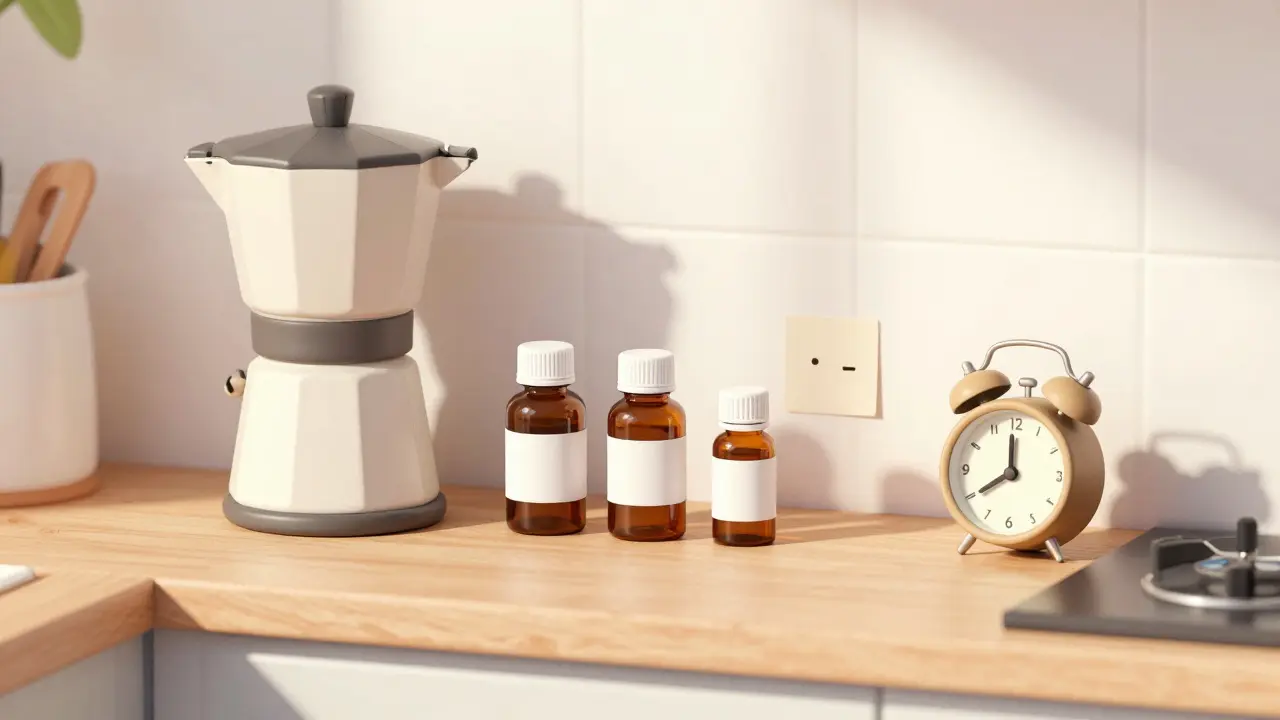
- Morning Coffee: Place your medication bottles directly next to your coffee maker. You cannot start the machine without seeing them. This reduces missed checks by 53%, according to MedPak behavioral research.
- Toothbrushing: Keep meds in the bathroom, but only take them after you’ve finished brushing. The label check happens between brushing and rinsing.
- Lunch Break: If you take afternoon doses, set a phone alarm that says "Check Label" rather than just "Take Meds."
It takes approximately 18 to 22 repetitions to automate a behavior. For the first three weeks, expect to feel like you’re slowing down your morning. That friction is normal. It means your brain is rewiring. Don’t rush through it.
Overcoming Common Barriers
Even with the best intentions, obstacles arise. Here is how to handle the most common ones.
Poor Vision: About 21% of U.S. adults aged 65+ experience vision impairment. If you squint at labels, you are at higher risk. Invest in a handheld magnifier or ask your pharmacist for large-print labels. The FDA recommends minimum 500 lux lighting for reading labels-this is brighter than typical ambient room light. Consider a dedicated task lamp near your med station.
Cognitive Overload: If you manage five or more prescriptions (polypharmacy), the mental load is heavy. Use color-coded systems. Ask your pharmacist to use specific colored stickers for morning vs. evening meds. Outsource Pharma surveys show 82% of pharmacists recommend this method because it allows for visual verification before even reading the text.
Rushed Routines: When you’re late, skipping the label check feels tempting. Remember the statistic: 33% of medication errors are linked to packaging confusion. Rushing is the enemy. Build a buffer into your morning. If you know you’ll be rushed, prepare your pills the night before using a weekly organizer, but still perform the Three-Touch Method when transferring them from the bottle to the organizer.
Technology as a Safety Net, Not a Replacement
Apps and smart devices are helpful, but they have limitations. A study found that medication apps without mandatory verification steps had lower user retention and higher error rates compared to those requiring label scans.
If you use an app, choose one that requires you to photograph the label or scan the barcode before logging the dose. This creates a digital record and forces a moment of pause. However, never trust the app blindly. Always cross-reference the screen with the physical bottle. Technology can glitch; your eyes and voice are the final checkpoint.
Smart packaging is emerging, with pilot programs showing containers that require scanning before opening. While not yet widespread, keeping an eye on these tools can add another layer of security for complex regimens.
The Teach-Back Method for Caregivers
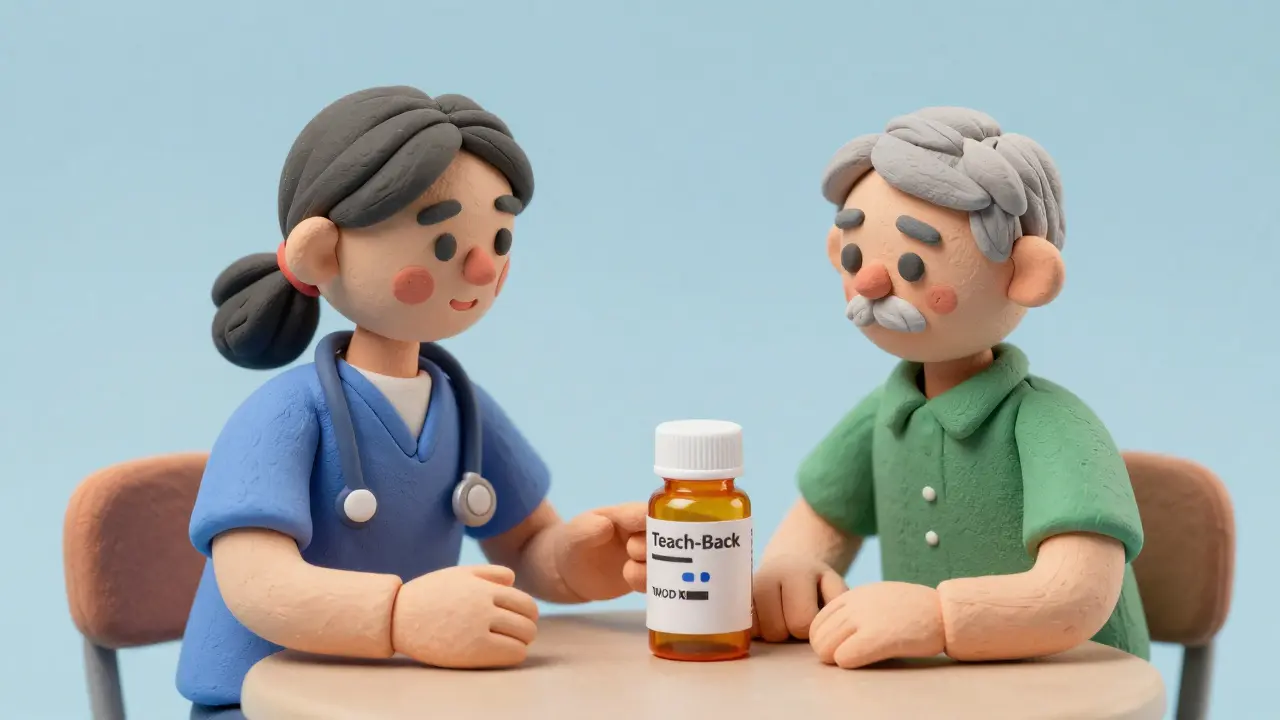
If you care for someone else, or if a family member helps you, use the "Teach-Back" method. Instead of asking, "Do you understand?" ask them to explain the label back to you. "Can you tell me what this bottle says we should avoid eating with it?" This confirms comprehension and catches errors early. Caresfield data shows this improves retention by 57%.
How long does it take to build the habit of checking labels?
Most adults require 18 to 22 repetitions to automate the behavior. With consistent practice using techniques like the Three-Touch Method, you should see significant improvement in adherence within 30 days.
What should I do if I can't read the label clearly?
Never guess. Use a magnifying glass, improve your lighting to at least 500 lux, or ask your pharmacist for large-print labels. If you still cannot read it, call the pharmacy listed on the bottle for immediate assistance.
Is it safe to rely on medication reminder apps instead of checking labels?
No. Apps are helpful reminders but can contain outdated information or user input errors. Always verify the physical label against the app notification. Apps with mandatory label scanning features are safer than basic reminder-only apps.
Why is verbalizing the label information important?
Speaking aloud engages multiple senses (hearing and speech) and slows down your processing speed. This prevents autopilot mode where you might grab the wrong bottle without realizing it until it's too late.
What are the signs that my medication label is outdated?
Look for the expiration date and the date of filling. If the medication is past its expiration date, dispose of it safely. Also, ensure the prescriber's name matches your current doctor, as old labels may reflect discontinued treatments.
Dat Alexander
May 9, 2026 AT 04:21its not just about the pills its about respecting your own body enough to pay attention when you feed it
i used to just grab whatever was in my hand while scrolling through emails on my phone and honestly i felt like i was treating myself like a machine that just needed fuel without checking the specs
the three touch method sounds silly at first because speaking out loud feels vulnerable but once you do it a few times it becomes this weirdly grounding ritual
it forces you to be present in the moment instead of living in your head worrying about work or bills
we are so disconnected from our physical needs these days that we forget that taking medication is an intimate act of care
if we cant take thirty seconds to verify what we are putting into our systems how can we expect to handle bigger life decisions with clarity
start small dont worry if you feel awkward saying the drug name out loud to your cat or your empty kitchen
your brain will thank you for the engagement later
Raymond Roberts
May 10, 2026 AT 22:52honestly this article makes me think about how much trust we place in systems that arent perfect and i mean no offense to pharmacists they are great but human error is inevitable everywhere
i have seen people mix up their morning meds with their evening ones just because the bottles look similar and its scary how easy it is to slip up when you are tired or distracted
the part about habit stacking really resonated with me because i am always looking for ways to automate good behaviors without relying on willpower which is such a finite resource
putting the meds next to the coffee maker is genius because you already have a routine there and adding one more step doesnt feel like a burden
i started doing something similar by only taking my vitamins after i have brushed my teeth and it has helped me remember more often than not
we should stop pretending that memory is reliable when we are juggling so many responsibilities every single day
external cues are just smarter than internal reminders
Nisha Koshti
May 12, 2026 AT 11:05why do we need to check labels when the big pharma companies control everything anyway??!! :(
they put whatever chemicals they want in those pills and then blame us for reading the label wrong??!! it is all a conspiracy to keep us dependent on their products!!! :((((
i bet the new labeling standards are just a way to sell more fancy packaging materials to pharmacies who already make too much money off of us poor consumers!!! :(((
who cares if you say the name out loud if the drug itself is designed to fail you eventually anyway??!! the system is rigged against everyone who tries to stay healthy naturally!!! :((
just throw away all your meds and eat raw vegetables instead because at least plants dont lie to you about what they are made of!!! :((((
Jannet Suen
May 13, 2026 AT 10:59oh wow nisha some of us actually rely on medicine to survive so maybe tone down the drama a bit? :P
but seriously the point about apps being unreliable is spot on because i have had my reminder app glitch twice now and i almost missed doses
it is funny how we trust technology more than our own eyes even though our eyes have been around for millions of years
the teach back method is also really useful for anyone caring for elderly parents because assumptions are dangerous
just because someone nods does not mean they understood the instructions especially if they are hearing impaired or confused
asking them to repeat it back ensures that the information landed correctly
small steps like this can prevent huge headaches later on so kudos to the author for breaking it down simply :)
Claire A
May 14, 2026 AT 13:07this is such a positive approach to safety!
instead of making people feel guilty for forgetting it gives them practical tools to succeed
i love the idea of using color coded stickers because visual cues are so powerful
my mom struggles with her meds sometimes and this guide could really help her feel more confident
thank you for sharing this valuable information!
andrew iregbayen
May 14, 2026 AT 14:51hey guys i was wondering if anyone else has tried the smart packaging mentioned in the post?
i am curious if it is worth the extra cost since i have heard mixed reviews about tech integration in healthcare
also does anyone know if the large print labels are available at all pharmacies or just specific chains?
i would love to switch to a system that reduces the mental load of remembering every detail
any tips would be greatly appreciated thanks!
Laura ciotoli
May 16, 2026 AT 05:57Stop asking questions and start reading the article properly.
The text clearly states that smart packaging is still in pilot programs and not widespread yet.
You need to understand that verification is a personal responsibility regardless of technology.
If you cannot read the label you must call the pharmacy immediately.
Do not guess.
Guessing leads to errors.
Errors lead to hospital visits.
Hospital visits are expensive and painful.
Follow the three touch method exactly as described.
It is not optional.
It is mandatory for safety.
End of discussion.
Sarah O'Donnell
May 16, 2026 AT 15:42people who skip the label check are morally bankrupt 🙄💔
you are literally gambling with your life every time you reach for a bottle without verifying
it shows a lack of respect for the medical professionals who prescribed it and the pharmacists who filled it
how can you expect society to trust you with anything if you cannot even manage your own health responsibly?? 😡
the fact that you are here asking about smart packaging instead of just following the basic steps proves that you are part of the problem 📉🚫
shame on you for not taking ownership of your actions 💅✨