
When your tendon hurts—not just after a workout, but for weeks or months—you’re likely dealing with tendinopathy, a degenerative condition of the tendon caused by overuse, not just inflammation. Also known as tendinosis, it’s what happens when the tendon’s repair system gets overwhelmed and starts breaking down faster than it can rebuild. This isn’t a sprain or a sudden tear. It’s the quiet, frustrating wear-and-tear that sneaks up on runners, office workers, weightlifters, and anyone who repeats the same motion too often.
Tendinopathy doesn’t respond to rest alone. Ice and NSAIDs might mask the pain, but they don’t fix the problem. The real fix? Controlled loading. Studies show that specific strength exercises—like eccentric heel drops for Achilles tendinopathy or isometric holds for patellar tendinopathy—trigger the tendon to rebuild collagen properly. You need to move it, but not too hard, not too fast. That’s why physical therapy isn’t just helpful—it’s essential. And if you’ve been told to "just rest it," you’ve been given outdated advice. Tendons need load to heal, not silence.
What makes tendinopathy tricky is how it connects to other things. Poor foot mechanics can strain your Achilles. Weak glutes can overload your hip tendons. Even stress and sleep deprivation slow down tissue repair. It’s rarely just one muscle or one movement. That’s why treatment has to be personalized. Someone with elbow tendinopathy from typing all day needs a different plan than a tennis player with the same diagnosis. And while corticosteroid injections might give quick relief, they can weaken the tendon long-term. That’s why many clinicians now recommend platelet-rich plasma or shockwave therapy as safer, longer-lasting options.
You’ll find real-world guidance here—not theory, not ads. The posts below cover how to build a tendon-friendly rehab routine, what supplements might actually help (and which ones are just hype), how to tell if your pain is tendinopathy or something else, and why some people recover in weeks while others take months. You’ll also see how medications like statins and corticosteroids can make tendon problems worse, and how to manage pain without relying on pills that mask symptoms instead of healing the tissue. This isn’t about quick fixes. It’s about understanding your body’s signals and working with them, not against them.
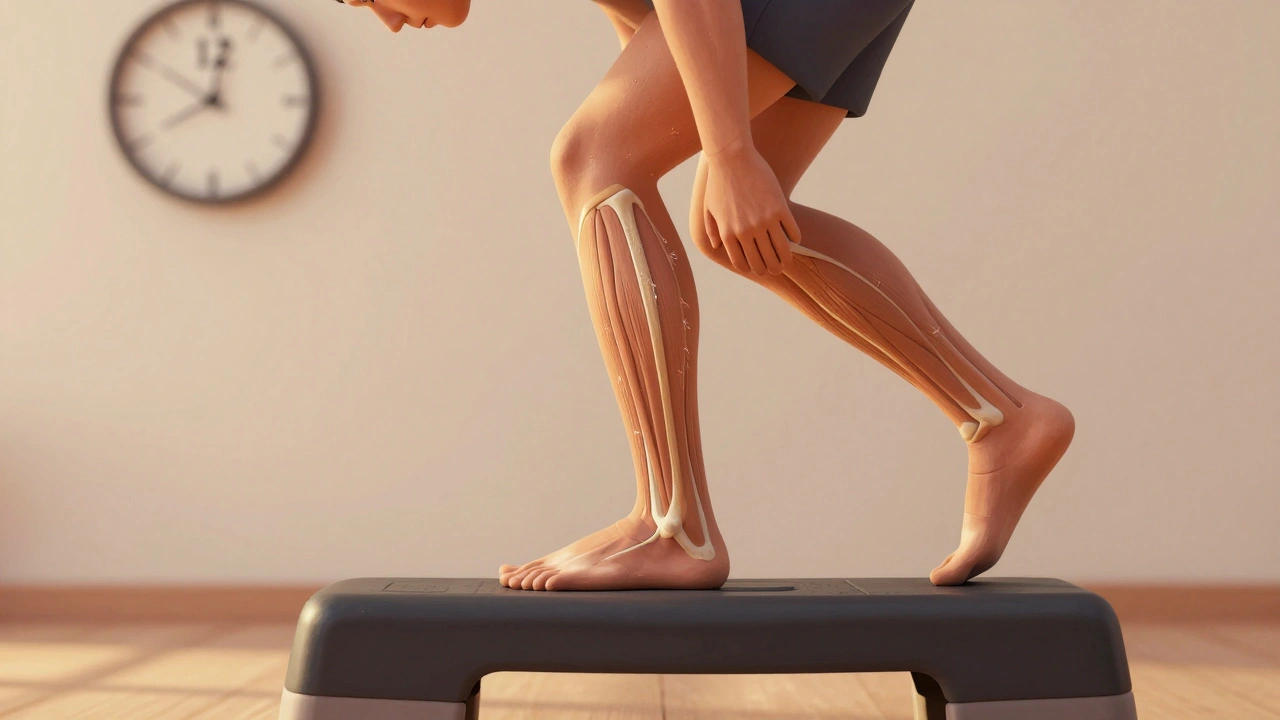
Tendinopathy is a degenerative tendon condition that responds best to eccentric training, not injections or rest. Learn how heavy slow resistance, isometrics, and proper loading can help you recover without surgery.
Dec 6 2025
© 2026. All rights reserved.
Menu