
When you take an SSRI, a type of antidepressant that increases serotonin in the brain to improve mood. Also known as selective serotonin reuptake inhibitor, it's one of the most prescribed drugs for depression and anxiety. Many people also use NSAIDs, nonsteroidal anti-inflammatory drugs like ibuprofen or naproxen used to reduce pain, swelling, and fever. Also known as painkillers or anti-inflammatories, they’re among the most common over-the-counter medications. The problem? Mixing them isn’t as harmless as it seems. Studies show that combining SSRIs with NSAIDs can raise your risk of internal bleeding—especially in the stomach and gut—by up to 60% compared to taking either drug alone. This isn’t theoretical. Real patients have ended up in the ER because they took Advil for a headache while on Lexapro, not knowing the danger.
Why does this happen? SSRIs affect platelets, the blood cells that help clots form. NSAIDs irritate the stomach lining and block protective enzymes. Together, they weaken your body’s natural defenses against bleeding. It’s not just about stomach issues either. People on these drugs together have reported nosebleeds, bruising easily, and even bleeding in the brain after minor falls. If you’re on an SSRI like sertraline, fluoxetine, or escitalopram, and you’re popping ibuprofen for back pain or naproxen for arthritis, you’re playing with fire. The risk goes up with age, if you’re on blood thinners, or if you drink alcohol. And here’s the kicker: your doctor might not bring it up. Most patients assume if a drug is FDA-approved and sold over the counter, it’s safe to mix. That’s not true. The FDA has issued warnings, and multiple medical journals have flagged this interaction as under-recognized and dangerous.
What can you do? First, don’t stop your SSRI without talking to your provider. Second, talk to your pharmacist or doctor before taking any NSAID—even the ones in your medicine cabinet. Ask about alternatives like acetaminophen (Tylenol), which doesn’t carry the same bleeding risk. If you need long-term pain relief, consider physical therapy, heat therapy, or even low-dose antidepressants that help with chronic pain without the NSAID combo. The posts below cover real cases, safer alternatives, and how to spot early signs of trouble. You’ll find guides on what to do if you’re already mixing them, how to monitor for bleeding, and which medications are safer to pair with your antidepressant. This isn’t about fear—it’s about making smart choices with the drugs you’re already taking.
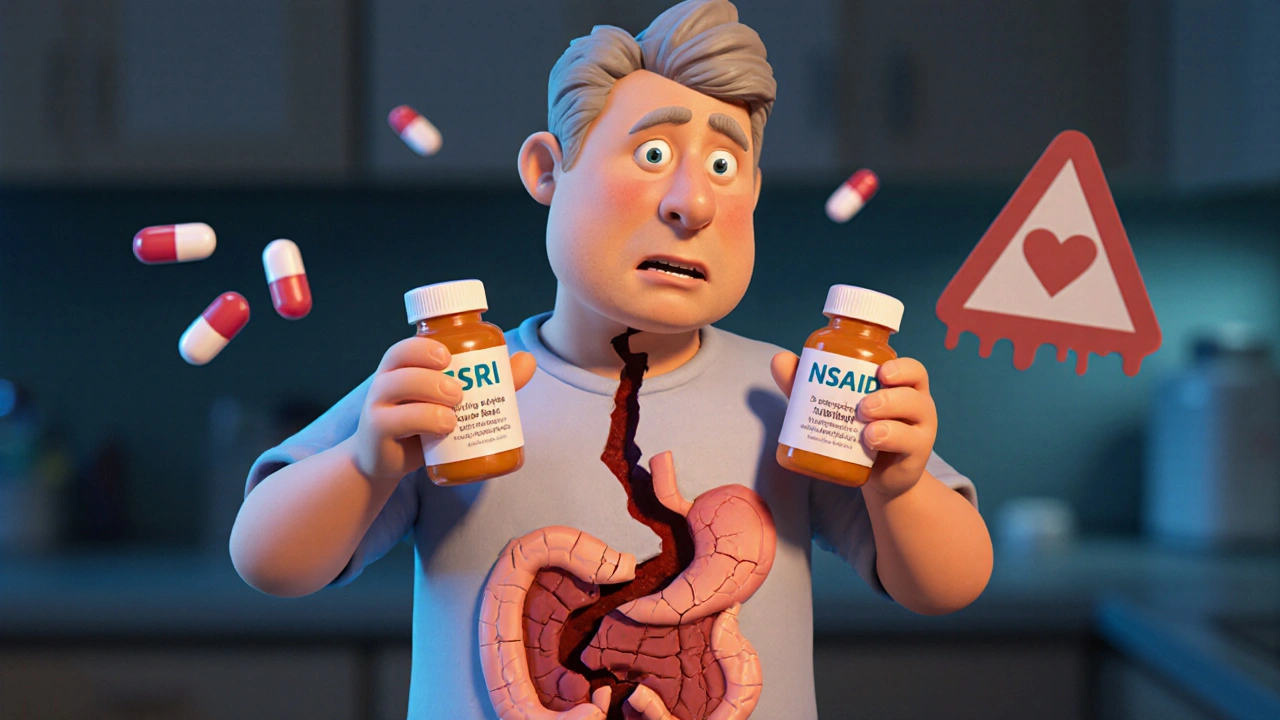
Combining SSRIs and NSAIDs can increase the risk of serious stomach bleeding by 75%. Learn why this happens, which medications are most dangerous, safer alternatives like acetaminophen, and how PPIs can protect you.
Oct 30 2025
© 2026. All rights reserved.
Menu