
When your doctor sends your prescription directly to the pharmacy through a secure system, you’re using an electronic prescription, a digital version of a traditional paper prescription that’s sent securely from clinician to pharmacy. Also known as e-prescribing, it cuts out the middleman—no more lost slips, smudged handwriting, or trips back to the office just to get a copy. This isn’t just convenience. It’s safety. Studies show e-prescribing reduces medication errors by up to 30%, especially when it comes to dosage mistakes or dangerous drug interactions that paper can’t catch.
Behind every electronic prescription is a network of systems that talk to each other: your doctor’s EHR (electronic health record), the pharmacy’s software, and sometimes even your insurance. These systems check for allergies, duplicate therapies, and coverage limits in real time. If you’re on blood thinners or antidepressants, this matters. A system might flag a dangerous combo like SSRIs and NSAIDs before the script even leaves the office. It’s not magic—it’s data. And it’s working. Pharmacies report fewer calls from patients asking, "Did my doctor mean 5 mg or 50 mg?" because the number is typed, not handwritten.
But it’s not perfect. Sometimes the system glitches. Your pharmacy might not recognize the prescriber’s digital signature. Or your insurance might reject the claim because the code didn’t sync right. That’s why you still need to follow up. But when it works, it’s smooth: you walk into the pharmacy, your name is pulled up, and your meds are ready. No waiting for the fax. No calling the doctor’s office. No risking a misread script that could send you to the ER.
Electronic prescriptions also help track what’s being prescribed across the board. That’s why you’ll see posts here about medication disposal, drug interactions, and even how certain pills like dexamethasone or atorvastatin are being monitored more closely now. When every script is digital, patterns emerge—overuse of nasal sprays, risky combos with grapefruit juice, or sudden spikes in certain antibiotics. That data helps doctors make smarter choices, and it helps regulators spot problems before they become epidemics.
And if you’ve ever struggled with chronic conditions like fibromyalgia, diabetes, or fatty liver disease, you’ve probably benefited from this system without even knowing it. Your insulin glargine, your Cymbalta, your lamivudine—all of these are now more likely to be prescribed digitally, with built-in safety checks that keep you from accidentally doubling up or mixing with something dangerous. Even when you’re buying generic warfarin or Celexa online, the prescription trail starts with an electronic record.
What you’ll find below are real stories and clear guides about how medications work, how they interact, and how digital systems are making them safer. From how to dispose of phenazopyridine properly to why grapefruit juice can turn a statin into a hazard, every post connects back to the same truth: when prescriptions go digital, your health gets a better shot.
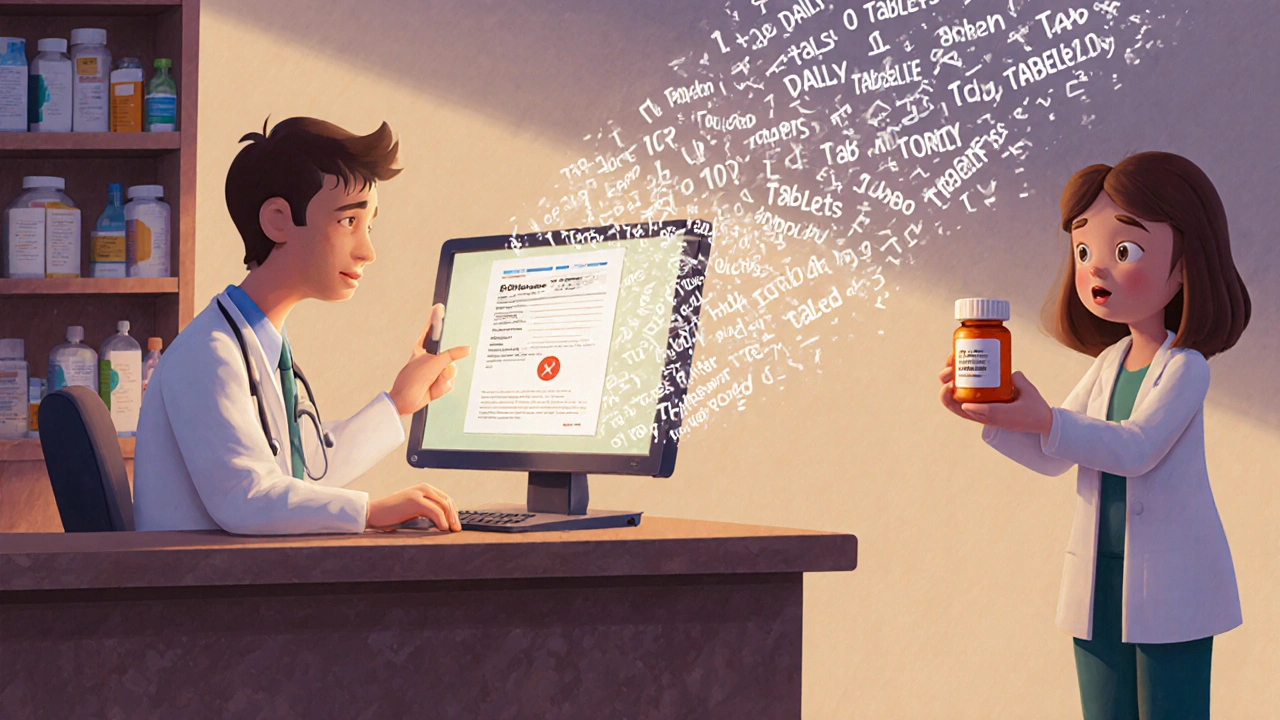
E-prescribing was meant to cut medication errors-but transcription errors are now the biggest risk. Learn the six proven strategies to stop digital prescription mistakes before they reach the patient.
Nov 19 2025
© 2026. All rights reserved.
Menu