
When you lower a weight slowly—like the downward part of a bicep curl or the descent in a squat—you’re doing eccentric training, a type of muscle contraction where the muscle lengthens under tension. Also known as negative training, it’s not just the easy part of the lift—it’s where real strength gains happen, often with less joint stress than the lifting phase.
Most people focus on lifting weights, but eccentric training triggers more muscle damage (in a good way), leading to greater repair and growth. Studies show it can increase muscle size and strength faster than concentric-only work, especially for athletes and older adults trying to maintain mobility. It’s used in rehab for tendon injuries like Achilles tendinopathy because it strengthens tissue without overloading it. And unlike regular strength training, you can handle heavier loads during the lowering phase—sometimes up to 30% more—because your muscles are built to resist lengthening better than they are to shorten.
This kind of training isn’t just for bodybuilders. Physical therapists use it to rebuild strength after knee surgery. Runners use it to prevent hamstring pulls. Even people with chronic pain benefit because it improves control and reduces joint impact. It requires no special gear—just control. Lower your body slowly during a push-up. Take four seconds to come down in a squat. Hold the descent in a pull-up. That’s all it takes to tap into its power. The key is slowing down, not adding more weight.
But there’s a catch: eccentric training causes more soreness. That’s normal. It’s not a sign you’re injured—it’s a sign your muscles are adapting. You don’t need to do it every day. Once or twice a week is enough, especially if you’re new to it. Pair it with regular strength work, and you’ll see progress faster than you expect.
Below, you’ll find real-world guides on how to use this technique safely, how it interacts with recovery and medication, and why it matters for people managing long-term health conditions. Whether you’re rehabbing an injury, training for performance, or just trying to stay strong as you age, these articles give you the tools to do it right.
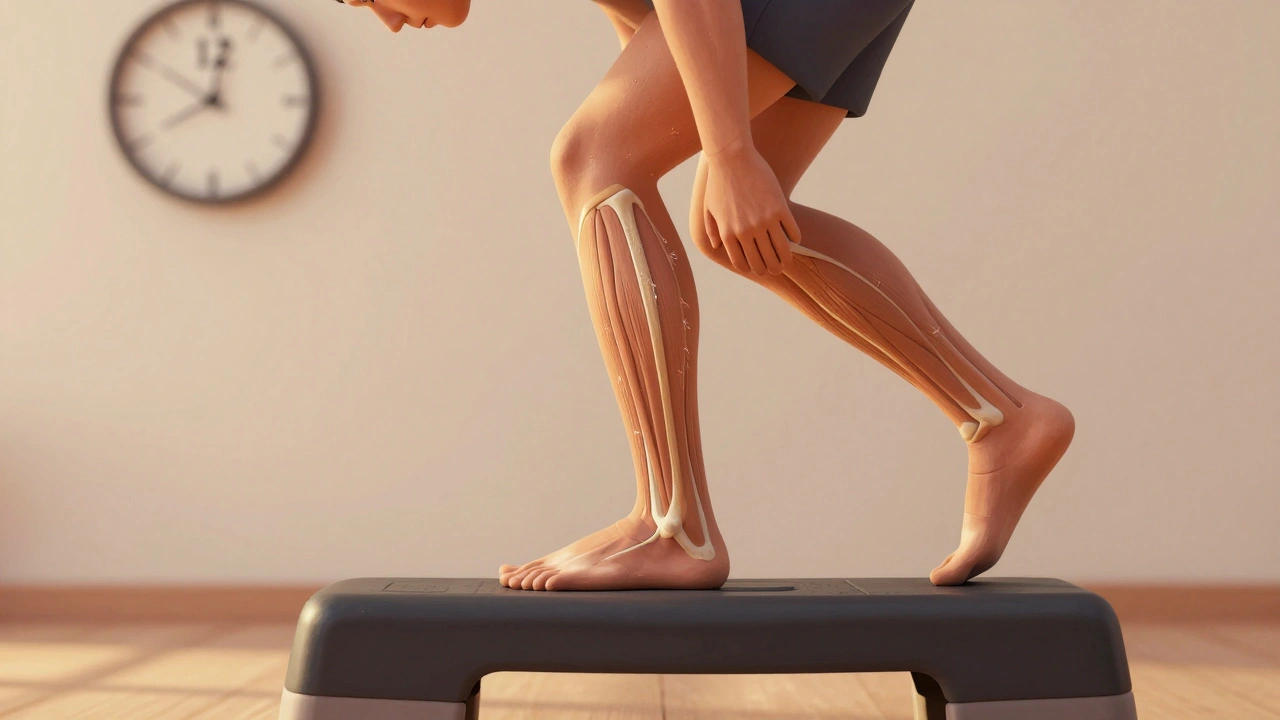
Tendinopathy is a degenerative tendon condition that responds best to eccentric training, not injections or rest. Learn how heavy slow resistance, isometrics, and proper loading can help you recover without surgery.
Dec 6 2025
© 2026. All rights reserved.
Menu