
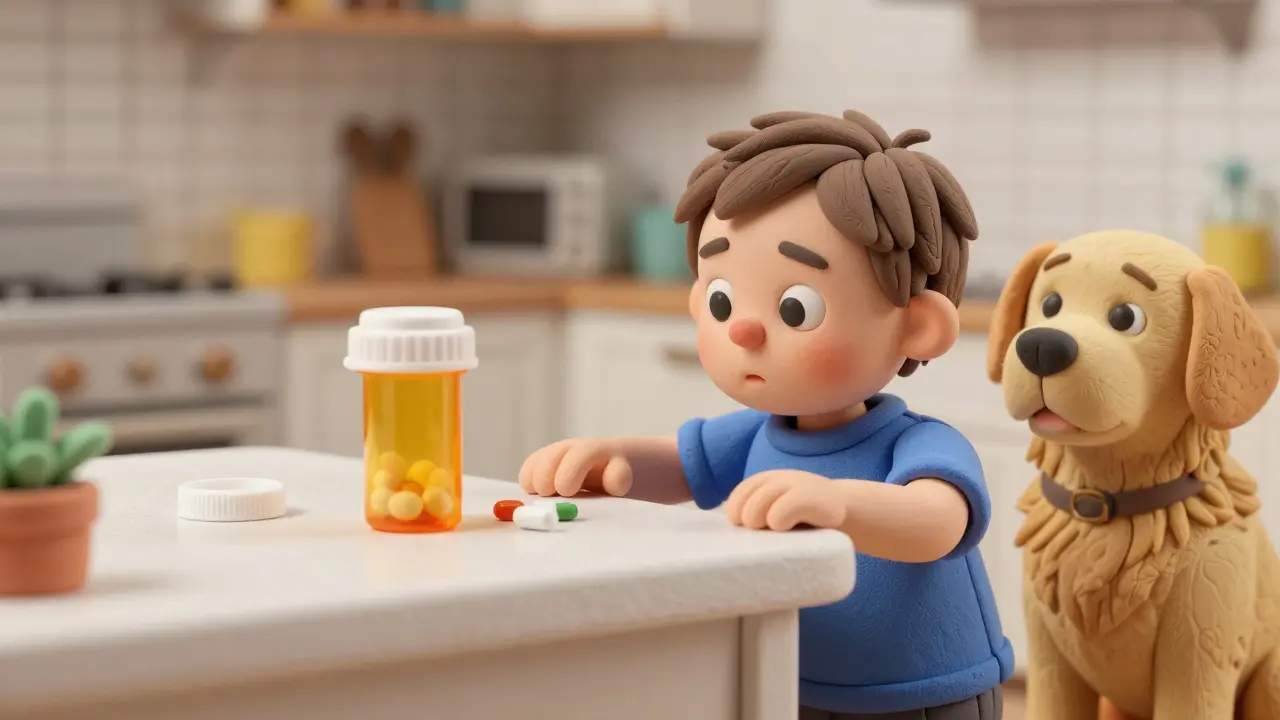
Think about the last time you took a pill. Did you leave the bottle on the kitchen counter for a few minutes? Or maybe you tucked your prescription in the bedside drawer? It seems harmless, but for a curious toddler or a determined dog, those few inches of space are an open invitation. The reality is sobering: roughly 60,000 children under five end up in the emergency room every year because of accidental medication ingestion. Most of these cases happen when drugs are left unattended in places like purses or nightstands. Whether it is a human prescription or a flavored pet treat, a single mistake can lead to a life-threatening emergency.
The good news is that these accidents are almost entirely preventable. While many of us rely on those tricky "child-proof" caps, the safe medication storage is the practice of creating physical and procedural barriers between pharmaceuticals and vulnerable populations to prevent accidental poisoning. Data from the Consumer Product Safety Commission shows that child-resistant packaging alone only prevents 50-80% of poisonings. To truly protect your home, you need a system that goes beyond the cap.
The Danger of the "Child-Proof" Myth
We've all struggled to open a bottle while our hands were wet, but that struggle doesn't always stop a child. Modern containers must meet ASTM D3475-19 standards, requiring significant force to open, yet kids are remarkably creative. Research from Nationwide Children's Hospital shows that toddlers as young as 18 months can climb three-foot furniture to reach a countertop. If your meds are sitting there, the cap is the only thing standing between your child and a toxic dose.
It is even riskier for pets. While a child might struggle with a screw-top, VCA Animal Hospitals reports that 65% of dogs can open standard pill vials within two minutes. Pets don't have the patience to read a label; they just see a plastic container and an interesting smell. This is why relying on the bottle's design is a gamble you shouldn't take.
Creating a High-Security Storage Zone
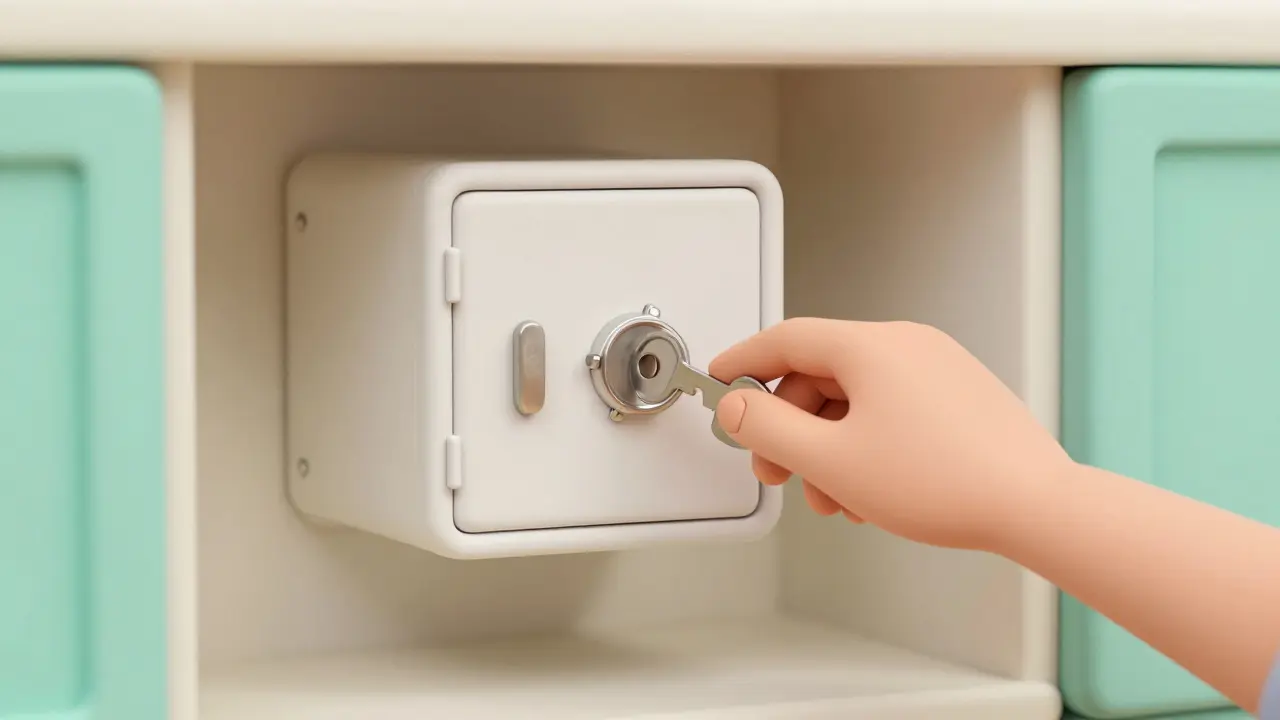
The gold standard for safety is locked storage. According to pediatric emergency physicians, using a lockbox can reduce medication exposures by 92% compared to simple latches. But it isn't just about the lock; it is about where you put it. Many people default to the bathroom medicine cabinet, but this is often the worst choice due to humidity. Moisture can degrade up to 40% of common medications within 30 days.
For the best results, aim for a location that is non-obvious and high up. The Centers for Disease Control and Prevention (CDC) recommends storing medications at least 4 feet above the floor, though some experts suggest 5 feet to account for climbing children. A kitchen pantry, if locked and elevated, is often safer and drier than a bathroom.
| Solution | Security Level | Best For | Main Drawback |
|---|---|---|---|
| Child-Resistant Caps | Low | Daily low-risk meds | Doesn't stop determined kids/pets |
| Cabinet Latches | Medium | General vitamins | Easily bypassed by older toddlers |
| Wall-Mounted Lockbox | High | Prescriptions | Requires key/code management |
| UL TRTL-30x6 Safe | Maximum | Opioids/Controlled substances | Higher cost and weight |
The Hidden Risks of Pet Medications
Many homeowners make the mistake of keeping human and pet medications in the same drawer. This is a recipe for disaster. The FDA notes that 42% of pet medications are flavored with things like banana or strawberry. This makes them 300% more attractive to children than unflavored human drugs. A child might mistake a veterinary liquid for syrup, but a 5mL dose of some pet medications can be ten times the toxic limit for a human child.
There is also the danger of the opposite happening: a pet getting into human meds. Some human creams, like 5-fluorouracil, have a 100% fatality rate in cats even with tiny exposures. To stop these mix-ups, the American Academy of Pediatrics now recommends keeping human and pet medications in separate locations, ideally at least 15 feet apart. This simple distance can reduce mix-up errors by 94%.
Managing the Environment: Temperature and Humidity
Storage isn't just about keeping things *out*; it is about keeping the medicine *effective*. If you store your pills in a humid bathroom or a hot garage, you might be taking a drug that has already broken down. About 70% of medications need to stay between 68-77°F (20-25°C). If your medication requires refrigeration, it must stay between 36-46°F (2-8°C).
Keep everything in its original packaging. It is tempting to move pills into a daily organizer for convenience, but CDC studies show that 35% of medication errors happen when drugs are transferred to unmarked containers. If an emergency happens and you have to call poison control, having the original label allows the experts to tell you exactly what the risk is and how to treat it.
Putting Your Safety Plan into Action
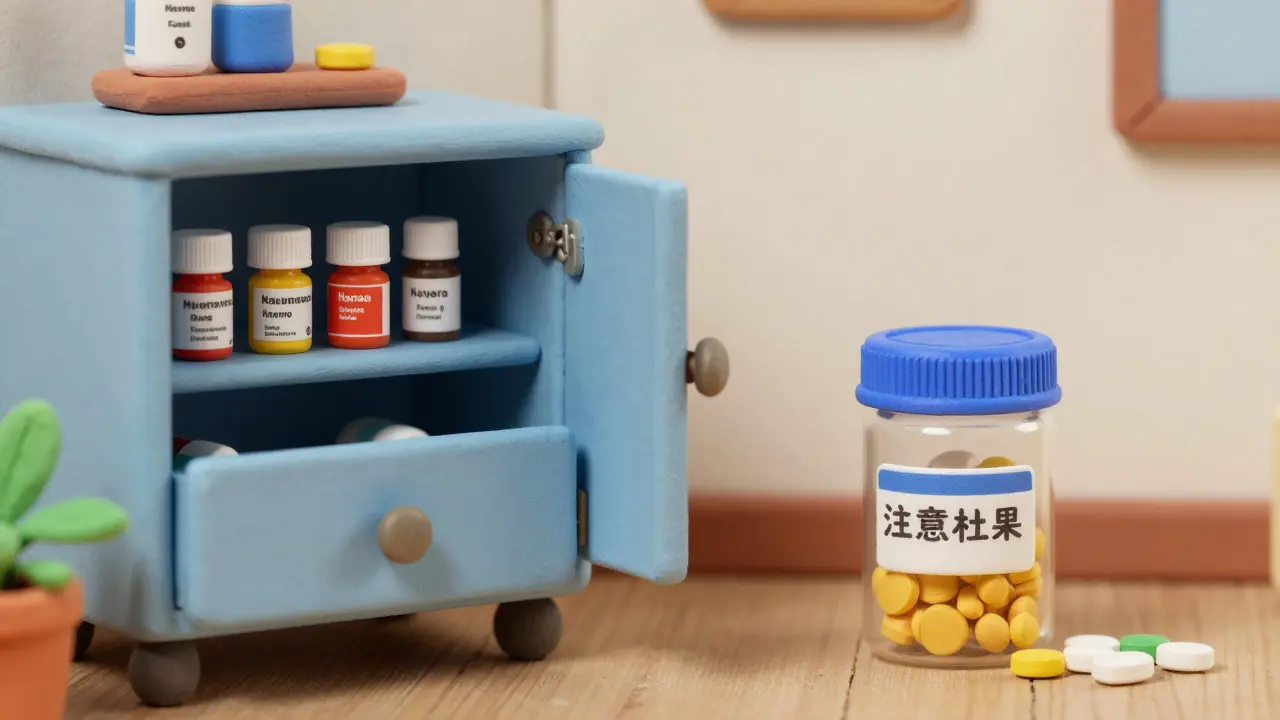
Changing your habits takes time. The CDC's "Up and Away" program suggests it takes about 21 to 30 days of deliberate practice to make locked storage a permanent habit. You don't need to spend a fortune to be safe; a basic wall-mounted lockbox is an affordable starting point, and some people even use small gun safes to ensure total security.
Start with a weekly medication audit. Go through your cabinets and drawers. Check for expired drugs and identify any that are stored in high-risk areas, like nightstands or near pet food bowls. When you find something that needs to be moved, don't just put it in a higher cabinet-lock it up. If you have elderly family members who struggle with child-resistant caps, consider a lower lockbox with an emergency release mechanism so they can still access their meds safely.
Finally, deal with your old medications properly. Many people flush pills down the toilet, but the FDA warns against this. Instead, look for community take-back programs. Using designated collection sites ensures that expired drugs don't end up in the wrong hands or the water supply.
Are child-resistant caps enough to keep my toddler safe?
No, they are not. While they provide a first line of defense, they only prevent 50-80% of poisonings. Children can often figure out how to open them, or they may find a bottle that wasn't closed tightly. The only way to ensure safety is to store all medications in a locked container, at least 4 feet above the floor.
Should I store pet and human medications together?
Absolutely not. Storing them together increases the risk of a mix-up by 4.7 times. Pet medications are often flavored to be tasty, which attracts children, while some human medications are lethal to pets. Keep them in separate rooms or at least 15 feet apart to minimize the risk of accidental ingestion.
Where is the safest place in the house to store medicine?
A locked cabinet in a cool, dry place like a kitchen pantry is generally safer than a bathroom. Bathrooms are often too humid, which can degrade the medicine. The key is that the storage must be locked and placed high enough (4-5 feet) that a climbing child cannot reach it.
What should I do with expired medications?
Do not flush them down the drain or throw them in the trash where pets or children might find them. The best option is to take them to a pharmacy or a designated drug take-back location. This prevents environmental contamination and removes the risk of accidental poisoning from old drugs.
Can dogs actually open child-proof bottles?
Yes, they can. Testing has shown that 65% of dogs can open standard pill vials within two minutes. This means that "child-proof" technology is not "pet-proof." Your medications should be kept in a locked box or a high cupboard that is completely inaccessible to your pets.
Next Steps for a Safer Home
If you have children or pets, your priority should be a full home sweep. Start by moving all medications off countertops and nightstands today. If you don't have a lockbox, a high shelf with a sturdy latch is a temporary fix, but a dedicated safe is the best long-term goal. For those with controlled substances, ensure you are using a certified high-security container. Make a habit of double-checking labels every time you administer a dose to prevent the kind of mix-ups that lead to emergency room visits.
Robin Walton
April 9, 2026 AT 17:49This is such a helpful reminder for everyone. It is so easy to forget that a simple habit can save a life!
Rakesh Tiwari
April 10, 2026 AT 01:12Oh wow, thank you so much for explaining that toddlers can climb. Truly a revelation. I'm sure the 60,000 parents who didn't know this are just thrilled by your groundbreaking discovery.
Chad Miller
April 11, 2026 AT 19:32ppl r just lazy. if u cant lock a box ur a bad parent tbh... common sense isnt so common
Suchita Jain
April 13, 2026 AT 00:52It is profoundly distressing to observe the lack of discipline in modern households. One must strictly adhere to these protocols or risk the most severe consequences for one's progeny. I shall be monitoring the comments here to ensure a standard of moral rectitude is maintained regarding child safety.
emmanuel okafor
April 14, 2026 AT 04:11we all just want the best for our kids and pets so we should try to be patient with each other while we learn these things
Simon Stockdale
April 15, 2026 AT 03:39I lavez my dog and i dont care what some fancy a-s-t-m standard says because we do things the american way in this house and if a dog wants to try and open a bottle then thats just a test of his wit and strength, but seriously though, these lockboxes sound like a total ripoff and probably made in some place that isnt even here!
Danny Wilks
April 16, 2026 AT 18:17I find the point about bathroom humidity quite fascinating, as I have spent many years placing my various prescriptions in the medicine cabinet without a second thought, yet the scientific data regarding the degradation of active pharmaceutical ingredients in high-moisture environments suggests that my storage habits have been suboptimal for quite some time now.
Julie Bella
April 17, 2026 AT 01:54Omg i can't believe some ppl still leave meds on the counter!! 😱 That is just plain wrong and honestly irresponsible!! You need to get a lockbox RIGHT NOW or you're basically asking for a trip to the ER!! 😡 Just do it!!
kalpana Nepal
April 18, 2026 AT 12:38This is simple truth. In my country we value the home and the family above all. Safe storage is the only way to keep the spirit of the home pure and healthy.
Thabo Leshoro
April 20, 2026 AT 02:57I feel this... it is so hard!! The pharmacology of these drugs is complex, and the bioavailability can change if the stability is compromised by the HVAC system... just be careful everyone!!!