
QT Prolongation Risk Calculator
Personal Risk Assessment
Every year, hundreds of people in the U.S. die suddenly from a heart rhythm gone wrong - not because of a heart attack, but because a common medication they took quietly stretched their heart’s electrical cycle beyond safe limits. This is called QT prolongation, and it’s one of the most underrecognized dangers in modern prescribing. It doesn’t cause symptoms until it’s too late. No chest pain. No warning. Just a skipped beat… then silence.
What Exactly Is QT Prolongation?
Your heart beats because of electrical signals. The QT interval on an ECG measures how long it takes the lower chambers of your heart (ventricles) to recharge after each beat. If that recharge time gets too long - longer than 450 milliseconds in men or 470 in women - your heart becomes vulnerable to a dangerous rhythm called Torsades de Pointes. That’s a wild, chaotic quivering that can turn into sudden cardiac death within seconds. This isn’t rare. Over 100 prescription drugs can cause it. Some are well-known: certain antibiotics, antidepressants, anti-nausea meds, and even some heart rhythm drugs. But here’s the twist: most people who take these meds never have a problem. The risk isn’t about the drug alone - it’s about the combination of factors that turn a normal response into a deadly one.Who’s at Highest Risk?
Not everyone who takes a QT-prolonging drug is in danger. But some people are sitting on a ticking clock. Here’s who needs extra caution:- People with existing heart disease - Especially those with prior heart attacks, heart failure, or enlarged hearts. The American Heart Association says structural heart problems can make drug-induced arrhythmias 10 to 100 times more likely.
- Older adults - The average person over 65 takes nearly 8 medications. About 1 in 3 take at least one drug that can prolong QT. Age slows drug clearance, increases sensitivity, and often comes with low potassium or magnesium.
- People with low potassium or magnesium - Even mild electrolyte imbalances (common in diuretic users or those with eating disorders) can push QT from borderline to dangerous. Correcting potassium to above 4.0 mEq/L cuts risk by 62%.
- Those on multiple QT-prolonging drugs - Taking two or more drugs that affect the QT interval? That’s not just doubling risk - it’s multiplying it. For example, taking erythromycin with a CYP3A4 inhibitor like fluconazole increases sudden death risk fivefold.
- People with genetic risk - Some carry silent gene variants (like in the KCNQ1 or hERG gene) that make their hearts extra sensitive. The NIH’s All of Us program is now mapping these in a million volunteers to predict who’s truly at risk.
Which Medications Are the Most Dangerous?
Not all QT-prolonging drugs are created equal. Here’s a clear breakdown of the biggest offenders:| Drug Class | Example Drugs | Typical QTc Increase | Risk Level |
|---|---|---|---|
| Antiarrhythmics | Dofetilide, Sotalol | 30-80 ms | High |
| Antibiotics | Moxifloxacin | 6-15 ms | High |
| Antibiotics | Erythromycin | 10-20 ms | High (especially with CYP3A4 inhibitors) |
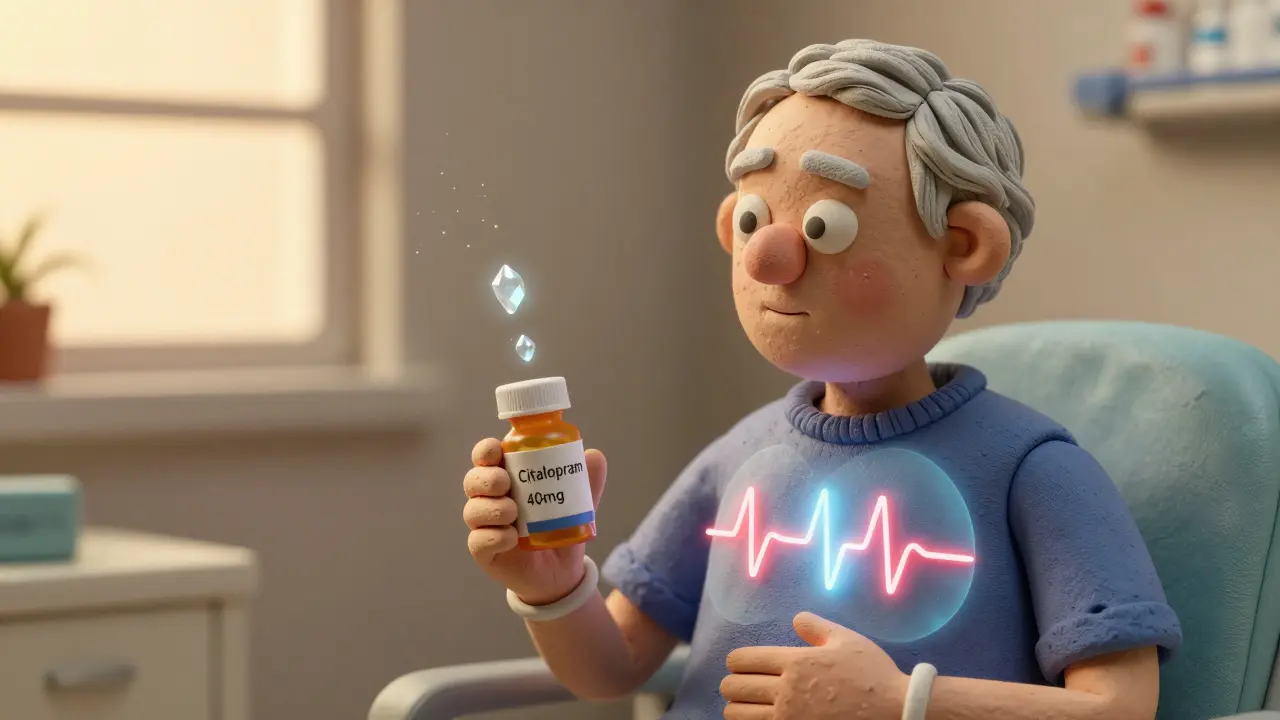
| Antidepressants | Citalopram (40mg) | 8.5 ms | Medium |
| Antidepressants | Escitalopram | 4.2 ms | Low |
| Antinausea | Ondansetron | 5-10 ms | Low to Medium |
| Antipsychotics | Haloperidol, Ziprasidone | 10-25 ms | Medium to High |
Notice something? Citalopram at 40mg is riskier than escitalopram at the same dose. Moxifloxacin is far worse than ciprofloxacin. And erythromycin? It’s not the drug itself - it’s what you take it with. If you’re on a statin or antifungal that blocks the CYP3A4 liver enzyme, your body can’t clear erythromycin fast enough. That’s when levels spike - and so does risk.
Why Do Some People Crash and Others Don’t?
This is the big mystery. In the POST SCD study, 78% of people who died suddenly while on QT-prolonging meds had no signs of arrhythmia at autopsy. Their hearts looked fine. No scar tissue. No blockages. Just a prolonged QT interval before death. Dr. Dan M. Roden from Vanderbilt says it plainly: “The link between QT prolongation and sudden death is more complex than we thought.” It’s not just the length of the interval - it’s how unevenly the heart recharges. One patch of muscle might be slow to recover while another is ready. That imbalance creates the spark for Torsades. That’s why automated ECG machines often get it wrong. They measure the QT interval from start to end - but miss the real danger: the time between the T-wave’s start and its peak. That’s the true predictor. Each 1-standard-deviation increase in T-wave dispersion raises sudden death risk by 21%.What Should Doctors Do - and What Should You Ask?
The good news? We have tools to prevent this. The FDA’s CiPA initiative (launched in 2013) now uses advanced computer models to predict drug risk before it hits the market. Hospitals like Mayo Clinic use EHR alerts that cut high-risk prescriptions by 37%. But here’s what you need to know as a patient:- Ask: “Does this drug affect my heart’s rhythm?” Especially if you’re over 60, on multiple meds, or have a history of fainting.
- Ask: “Can we check my potassium and magnesium before starting?”
- Ask: “Is there a safer alternative?” For example, switch from citalopram to escitalopram. Swap erythromycin for azithromycin. Replace ondansetron with metoclopramide if appropriate.
- Ask: “Am I taking anything that slows down how my body clears this drug?” Common culprits: antifungals (fluconazole), HIV meds, some antidepressants, and grapefruit juice.
Many doctors don’t think about QT until something goes wrong. But it’s not hard to screen. A simple ECG before starting a high-risk drug, plus a quick check of electrolytes, can prevent disaster.
The Real Problem: Too Many Alerts, Not Enough Clarity
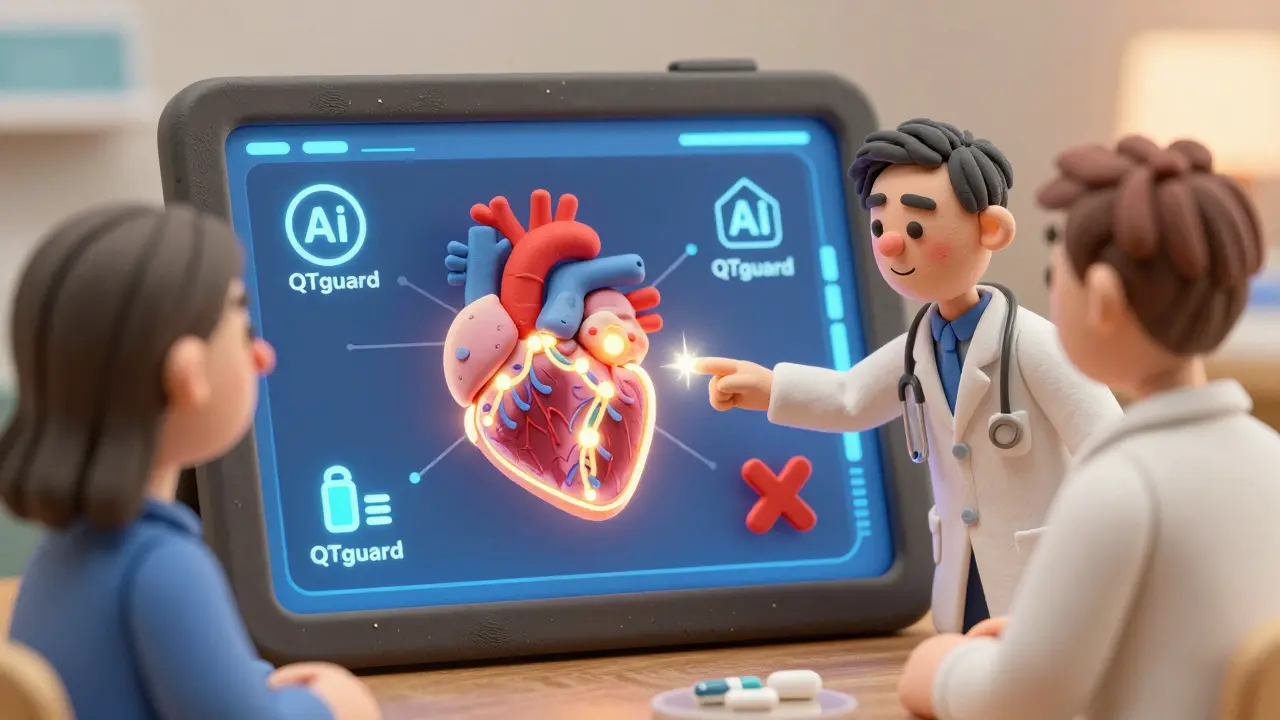
Here’s the irony: hospitals are drowning in QT alerts. A 2022 JAMIA study found that 78% of automated QTc warnings in one system were false alarms - triggered by minor variations, not real danger. Clinicians start ignoring them. That’s alarm fatigue, and it’s deadly. New AI tools like QTguard, approved by the FDA in 2023, are changing that. They don’t just measure the QT interval - they analyze the shape of the T-wave, the heart rate, and even the patient’s age and sex. They cut false alarms by over half. But tech alone won’t fix this. We need better education. The American College of Physicians found that clinicians need just 8 hours of training to reliably spot high-risk combinations. Yet most medical schools still skip it.What You Can Do Right Now
If you’re taking any of these meds - or thinking about starting one - here’s your action plan:- Check your list. Use AZCERT.org (updated weekly) to see if your meds are flagged for QT risk.
- Ask your pharmacist: “Is this drug known to affect heart rhythm?”
- Get a basic ECG if you’re on multiple meds or over 60. No need for a full stress test - just a resting 12-lead.
- Get your potassium and magnesium checked. If they’re below 4.0 mEq/L, ask your doctor about supplements or dietary changes.
- Don’t stop your meds without talking to your doctor. Abruptly quitting antidepressants or heart meds can be more dangerous than the QT risk.
The goal isn’t fear. It’s awareness. You don’t need to avoid all QT-prolonging drugs. You just need to know if you’re in the small group that could be at risk - and take simple steps to stay safe.
What’s Next?
The future is personal. The NIH’s All of Us program is collecting DNA from a million Americans to find genetic markers that predict who’s vulnerable. In five years, your doctor might run a quick genetic screen before prescribing - and know exactly whether a drug is safe for you. Until then, knowledge is your best defense. Don’t assume your doctor knows all the risks. Ask. Check. Get tested. One simple question - “Could this affect my heart rhythm?” - might save your life.Can a normal ECG rule out QT prolongation risk?
No. A single normal ECG doesn’t guarantee safety. QT prolongation can develop over days after starting a drug, especially if electrolytes drop or you add another medication. Monitoring should be ongoing if you’re on a high-risk drug.
Is QT prolongation always dangerous?
No. Many people have mildly prolonged QT without any symptoms or risk. The danger only appears when multiple factors combine - like a high-risk drug, low potassium, heart disease, and slow heart rate. Isolated QT prolongation without these factors rarely leads to sudden death.
Can I take over-the-counter meds if I’m on a QT-prolonging prescription?
Be very careful. Some OTC drugs like pseudoephedrine (in decongestants), certain antihistamines (diphenhydramine), and even herbal supplements like St. John’s wort can prolong QT or interfere with drug metabolism. Always check with your pharmacist before taking anything new.
How often should I get my QT interval checked?
If you’re starting a high-risk medication, get an ECG before and again within 3-5 days. For long-term use, check every 3-6 months if you have risk factors. If you’re on multiple QT drugs or have heart disease, your doctor may want monthly checks.
Are there any drugs that are completely safe?
There’s no such thing as “completely safe” for everyone. But some drugs carry very low risk - like escitalopram instead of citalopram, azithromycin instead of erythromycin, or loratadine instead of diphenhydramine. Always ask for the lowest-risk option available.
Ellie Stretshberry
December 25, 2025 AT 18:32i had no idea meds could do this to your heart
my grandma took that antibiotic for her sinus infection and passed away suddenly
they said it was 'natural causes' but now i wonder...
Zina Constantin
December 25, 2025 AT 20:04This is such an important post. As someone who works in public health, I’ve seen too many preventable deaths from this exact issue. Knowledge is power - and this is something every patient should be taught in simple terms. Thank you for breaking it down so clearly.
Let’s get this info into pharmacies, waiting rooms, and even OTC label inserts. It’s not just about doctors - it’s about empowering people before they even walk in the door.
Dan Alatepe
December 26, 2025 AT 16:05brooo... my uncle took that Zpack and nearly died 😳
he was fine until day 3 - then his heart started doing the cha-cha
they rushed him in, ECG looked like a seizure on paper
turns out he was on grapefruit juice and that statin
now he drinks water like it’s his job 😅
if you’re on meds - stop drinking grapefruit juice. like, just stop.
Angela Spagnolo
December 26, 2025 AT 17:45I’m so glad someone finally wrote this... I’ve been terrified to take anything for anxiety because I read about QT prolongation last year...
...and now I’m terrified of everything...
...but also... thank you? I think?
I’m going to ask my pharmacist tomorrow... I hope I remember to ask...
...I’m bad at asking questions...
...I hope I’m not too late...
...I’m going to check my potassium...
...I think I’m okay... I hope I’m okay...
...I’m going to sleep now.
...please let me wake up.
Sarah Holmes
December 28, 2025 AT 17:19How is this not a national emergency? We are allowing pharmaceutical companies to poison vulnerable populations under the guise of 'treatment.'
And yet, the FDA approves these drugs with a wink and a nod, while patients die quietly in their sleep - their deaths buried under 'natural causes' and 'unforeseen complications.'
Where is the outrage? Where are the lawsuits? Where are the headlines?
This isn't medicine. This is negligence dressed in white coats.
And you wonder why people don't trust doctors?
Jay Ara
December 30, 2025 AT 07:35my mom took citalopram for years, 20mg, never had issue
but she had low K and was on furosemide
she never got checked
she passed in her sleep at 68
they said 'heart failure'
now i think... maybe it was this
ask your doc for K and Mg test
it’s free in most clinics
just ask
it’s easy
don’t wait
Kuldipsinh Rathod
December 31, 2025 AT 08:10so if you're on antibiotics and antidepressants together... you're basically playing Russian roulette with your heart?
damn.
just checked my meds - i'm on azithromycin and sertraline
thank god i didn't pick cipro or citalopram
pharmacist saved me today
SHAKTI BHARDWAJ
January 1, 2026 AT 23:51you people are so scared of pills
my grandma lived to 92 on 12 meds a day
she drank grapefruit juice, smoked, and never checked her ECG
she died of old age, not some 'QT thing'
you're scared of ghosts
stop listening to fear-mongering blogs
trust your doctor
not some guy on Reddit with a spreadsheet
Matthew Ingersoll
January 3, 2026 AT 22:14As a cardiologist, I see this every day. The real issue isn't the drugs - it's the lack of baseline ECGs before prescribing. We don't screen for QT before starting antidepressants in 80% of cases. That's not just negligence - it's systemic failure.
And yes, the AI tools like QTguard are game-changers. But they're only in 15% of hospitals. We need policy change, not just tech.
Jody Kennedy
January 3, 2026 AT 23:51just got my potassium checked - it was 3.8
doctor gave me a banana and said 'eat more spinach'
so now i'm eating 3 bananas a day
and i'm not even that hungry
but i'll do it
because i don't want to be another statistic
thanks for the nudge
you're right - knowledge is power
even if it's just a banana
Lori Anne Franklin
January 4, 2026 AT 08:38i used to think QT was just a weird letter combo on an ECG
now i know it’s a silent killer
my cousin died at 34 after getting on Zofran for nausea
they never checked her meds or her electrolytes
she was healthy
she didn’t even have heart disease
so why didn’t anyone ask?
why didn’t anyone see it?
why did it take a dead person for someone to say ‘this matters’?
thank you for saying it
Bryan Woods
January 5, 2026 AT 12:26While the information presented is accurate and valuable, it should be noted that the risk of sudden cardiac death from QT prolongation remains statistically low for the general population. The vast majority of patients taking these medications experience no adverse events. The emphasis should be on targeted screening for high-risk individuals, rather than universal alarm. Over-screening leads to unnecessary anxiety and resource strain. Balanced, evidence-based communication is key.