

Every year, over 2 million people in the U.S. break a bone because their bones have become too weak. Most of these fractures happen in people over 50, and many could have been avoided. The usual advice? Take calcium and vitamin D. But here’s the truth: calcium and vitamin D alone don’t prevent fractures for most people - unless you’re deficient. And even then, they’re not the whole story.
Why Calcium and Vitamin D Don’t Work for Everyone
For years, doctors told everyone over 50 to take 1,000 mg of calcium and 800 IU of vitamin D daily to protect against fractures. It sounded simple. But large, well-designed studies have shown that for healthy, community-dwelling adults - especially postmenopausal women - this routine does almost nothing.
The Women’s Health Initiative, which followed nearly 36,000 women for seven years, found no reduction in hip fractures or total fractures with 1,000 mg calcium and 400 IU vitamin D. Even when the dose of vitamin D was bumped up to 800 IU, the results didn’t change unless the person was already severely deficient.
That’s the key: deficiency. If your blood level of vitamin D is below 20 ng/mL, adding 800 IU of vitamin D and 1,200 mg of calcium can cut your hip fracture risk by 16%. But if your level is already above 20 ng/mL - which is true for most people in the U.S. and U.K. - extra supplements won’t help. In fact, the 2019 JAMA Network Open review of over 34,000 people found vitamin D alone increased hip fracture risk slightly (by 19%), though not enough to be statistically significant.
Calcium supplements also come with risks. The same Women’s Health Initiative study found a 17% higher chance of developing kidney stones. Other research links high-dose calcium (over 1,000 mg/day from supplements) to a slightly increased risk of heart problems. Your body doesn’t need extra calcium if you’re already eating dairy, leafy greens, or fortified foods. Too much just ends up in your kidneys or arteries.
Who Actually Benefits from Calcium and Vitamin D?
The people who see real benefits from calcium and vitamin D are very specific:
- Older adults living in nursing homes or long-term care facilities
- People with confirmed vitamin D deficiency (blood level under 20 ng/mL)
- Those who eat less than 700 mg of calcium per day
- Anyone who’s had a previous fragility fracture
The landmark 1992 Chapuy study in France showed a 43% drop in hip fractures among nursing home residents with average vitamin D levels of just 12.3 ng/mL. That’s severe deficiency. They got 800 IU of vitamin D3 and 1,200 mg of calcium daily. The results were dramatic - and they’ve been replicated in similar high-risk groups.
But if you’re healthy, active, eating a balanced diet, and getting sunlight, you probably don’t need supplements. A blood test is the only way to know for sure. The Endocrine Society recommends testing 25-hydroxyvitamin D levels before starting any supplementation - not guessing.
When Supplements Aren’t Enough: Bone-Building Medications
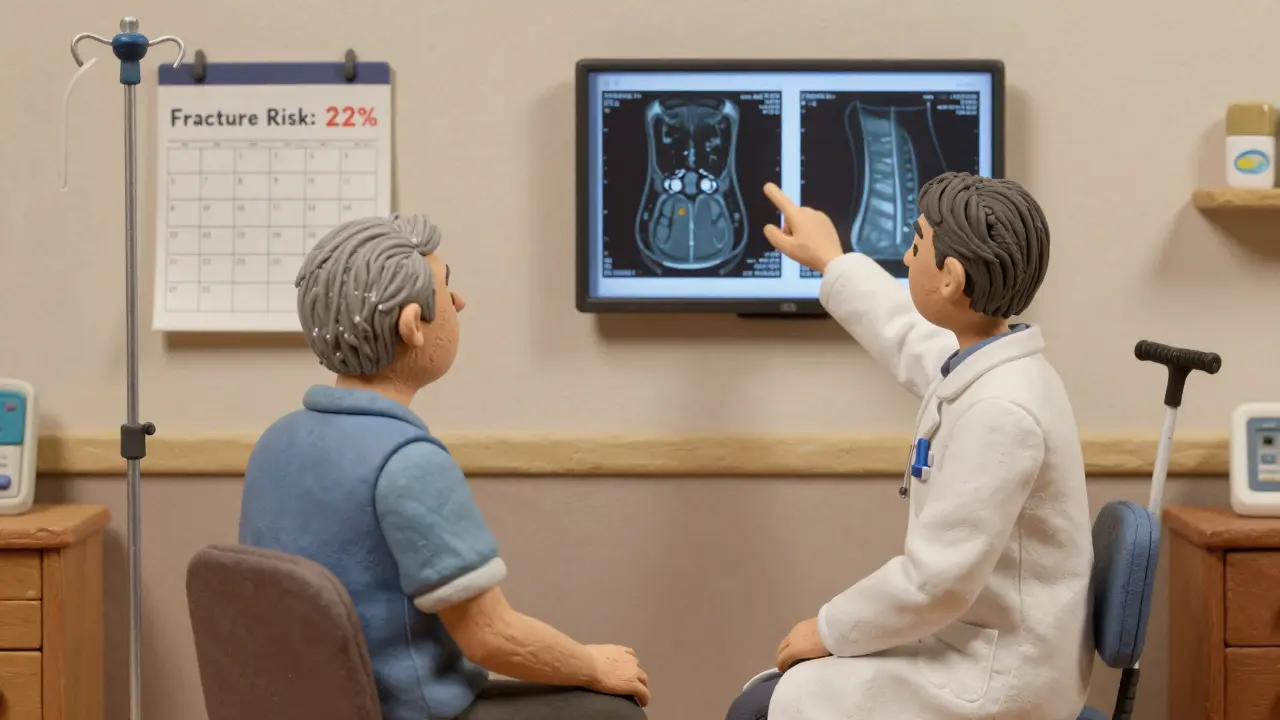
If you’ve broken a bone from a minor fall - like stepping off a curb - your bones are already in danger. Supplements won’t fix that. You need medications that actually rebuild or protect bone.
Here’s what works:
- Bisphosphonates (alendronate, risedronate, zoledronic acid): These are the most common. They slow bone loss. Alendronate reduces spine fractures by 44% and hip fractures by 20-50%. Zoledronic acid, given as an annual IV infusion, cuts hip fracture risk by 41% over 18 months.
- Denosumab (Prolia): An injectable drug given every six months. It works faster than bisphosphonates and reduces spine fractures by 68% and hip fractures by 40%.
- Teriparatide and Abaloparatide: These are anabolic agents - they actually build new bone. Teriparatide, given as a daily injection, reduces spine fractures by 65%. Abaloparatide, approved in 2017 for women and expanded in 2023 to include men, cuts spine fractures by 86%.
- Romosozumab: A newer option that builds bone and slows loss at the same time. It reduces spine fractures by 73% in the first year.
These aren’t magic pills. They’re powerful tools - and they come with risks. Bisphosphonates can rarely cause jawbone death (osteonecrosis) or unusual thigh bone fractures after long-term use. Denosumab can cause rapid bone loss if stopped suddenly. Anabolic drugs are expensive and limited to two years of use.
But here’s the thing: the risk of another fracture is far higher than the risk of these side effects. If you’ve already broken a bone, your chance of breaking another within a year is 20%. That’s why guidelines say: if you’ve had a fragility fracture, start medication - don’t wait.
Who Gets Prescribed What? The Real-World Picture
Doctors don’t all follow the same rules. A 2022 survey of 1,200 primary care doctors found that 40% still prescribe low-dose calcium and vitamin D to older patients - even though the U.S. Preventive Services Task Force says it doesn’t work for healthy people. Why? Because patients ask for it. They’ve heard vitamin D is a "miracle cure." And many doctors don’t have time to explain why it’s not.
At the same time, many patients stop their bone medications. In one study, 22% of people taking oral bisphosphonates quit within a year because of stomach upset. Others can’t remember to take pills weekly or monthly. That’s why zoledronic acid - a once-a-year IV - is becoming more popular. No daily pills. No missed doses.
And it’s not just about the drug. Success depends on timing. The DATA-Switch trial showed that starting with teriparatide (to build bone) for two years, then switching to denosumab (to protect it), reduced new spine fractures by 73% compared to bisphosphonates alone. Sequential therapy is the new gold standard for high-risk patients.
Testing and Tracking: Know Your Risk
You can’t treat what you don’t measure. The Fracture Risk Assessment Tool (FRAX®) is used worldwide to estimate your 10-year chance of breaking a major bone. It takes into account your age, sex, weight, previous fractures, family history, smoking, steroid use, and more.
In the U.K., treatment is recommended if your 10-year risk of a major osteoporotic fracture is over 15%. In the U.S., it’s 20%. If you’re above that threshold, you’re a candidate for medication - not just supplements.
Before starting any treatment, get a bone density scan (DXA). It’s quick, painless, and covered by most insurance. It tells you if your T-score is below -2.5 (osteoporosis) or between -1 and -2.5 (osteopenia). It also helps track whether your treatment is working.
And don’t forget: if you’re on bisphosphonates, get a dental checkup first. These drugs can interfere with jaw healing. If you need a tooth extraction or implant, your dentist needs to know you’re on them.
The Bottom Line: What You Should Do
Here’s what actually works for fracture prevention in 2025:
- Get tested. Ask for a 25-hydroxyvitamin D blood test and a DXA scan if you’re over 65 or have had a fracture.
- If you’re deficient in vitamin D (under 20 ng/mL), take 800-2,000 IU daily with 1,000-1,200 mg calcium. Stop once your level hits 30-50 ng/mL.
- If you’ve had a fragility fracture, talk to your doctor about medication. Don’t rely on supplements alone.
- Don’t take calcium supplements unless you’re not getting enough from food. Better to eat yogurt, cheese, sardines, kale, or fortified plant milks.
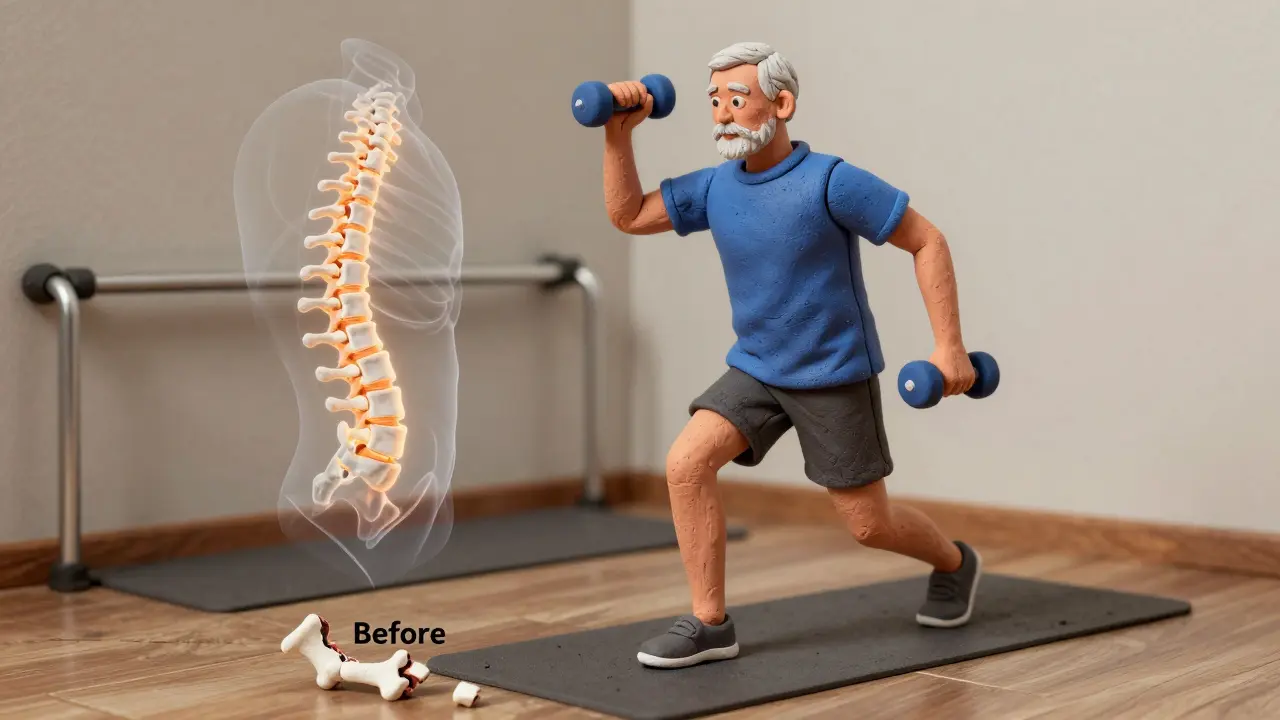
- Move your body. Weight-bearing exercise (walking, dancing, lifting) is as important as any pill. It strengthens bones and improves balance - which prevents falls.
Fracture prevention isn’t about popping a daily pill. It’s about knowing your risk, testing your levels, and choosing the right tool - whether it’s a vitamin, a shot, or a change in how you live. The science is clear. The next step is yours.
Do calcium and vitamin D supplements prevent fractures in healthy older adults?
No, for most healthy older adults, especially those living at home, taking calcium and vitamin D supplements does not reduce fracture risk. Large studies like the Women’s Health Initiative found no benefit from 1,000 mg calcium and 400 IU vitamin D daily. The only group that benefits is those with severe vitamin D deficiency (below 20 ng/mL) or very low calcium intake.
What’s the best medication for preventing fractures after a break?
For most people who’ve had a fragility fracture, bisphosphonates like alendronate or zoledronic acid are the first choice. They’re effective, well-studied, and affordable. For those at very high risk - like those with multiple fractures or very low bone density - doctors may start with an anabolic drug like teriparatide or romosozumab, which build new bone faster. The best option depends on your health, risk level, and ability to stick with treatment.
Can I get enough calcium from food instead of supplements?
Yes, and it’s often safer. A cup of yogurt has about 300 mg calcium, a serving of sardines with bones has 350 mg, and fortified plant milks or tofu can provide 200-400 mg per serving. Most adults need 1,000-1,200 mg per day - easily achievable with diet. Supplements are only needed if your diet falls short, and even then, aim for the lower end of the range (1,000 mg) to avoid kidney or heart risks.
Why do some doctors still recommend low-dose vitamin D and calcium?
Many doctors prescribe them out of habit or because patients ask for them. Some believe it’s harmless, but research shows low doses (400 IU vitamin D, 1,000 mg calcium) provide no benefit and may cause harm. Guidelines from the U.S. Preventive Services Task Force and the American College of Physicians now recommend against this practice for healthy adults. It’s changing slowly - but awareness is growing.
How long should I take bone-building medications?
It varies. Bisphosphonates are often taken for 3-5 years, then paused if bone density is stable - a "drug holiday." Denosumab requires continuous use; stopping it causes rapid bone loss. Anabolic drugs like teriparatide are limited to two years because they’re designed to stimulate new growth, not long-term maintenance. After anabolic therapy, most patients switch to an antiresorptive like bisphosphonates or denosumab to protect the new bone.
Are there alternatives to pills and injections for bone health?
Yes - movement. Weight-bearing exercise like walking, stair climbing, dancing, or resistance training strengthens bones and improves balance, reducing fall risk. Fall prevention is just as important as bone strength. Remove tripping hazards at home, install grab bars, get vision checked, and review medications that cause dizziness. No drug works if you fall.
Nicole Rutherford
December 21, 2025 AT 11:29bhushan telavane
December 22, 2025 AT 19:16Mahammad Muradov
December 24, 2025 AT 11:09Kelly Mulder
December 25, 2025 AT 20:07Tim Goodfellow
December 27, 2025 AT 14:37mark shortus
December 27, 2025 AT 16:26Elaine Douglass
December 29, 2025 AT 12:54Takeysha Turnquest
December 30, 2025 AT 20:31Emily P
December 31, 2025 AT 20:11Vicki Belcher
January 1, 2026 AT 18:25