
Opioid-Induced Adrenal Insufficiency (OIAI) Risk & Symptom Checker
This tool helps you gauge whether it is worth discussing cortisol monitoring with your provider. It is an educational aid, not a medical diagnosis.
Tap any symptom you are currently experiencing. These mimic other conditions, so be honest about what you notice.
- Extreme fatigue that does not improve with rest Check
- Dizziness when standing up quickly Check
- New muscle weakness Check
- Unexplained GI issues Check
- Unexplained weight loss Check
- Poor tolerance to minor stressors Check
Enter your details and press “Calculate My Risk Level” to see your estimated risk category.
Check the symptoms above and press “Review Symptoms” to interpret your findings.
You are taking opioids for chronic pain, and you feel fine. Or do you? Maybe you just feel tired, weak, or like your body isn't responding to stress the way it used to. You might blame it on the pain itself, aging, or lack of sleep. But there is a hidden mechanism at play that many doctors overlook until it becomes an emergency.
Opioid-induced adrenal insufficiency (OIAI) is a condition where long-term opioid use suppresses your body's natural production of cortisol. It is rare, yes. But when it happens, it can be life-threatening if you don't know what to look for. This guide breaks down how opioids affect your hypothalamic-pituitary-adrenal (HPA) axis, who is at risk, and how to spot the warning signs before they turn into a crisis.
The Hidden Link Between Opioids and Your Hormones
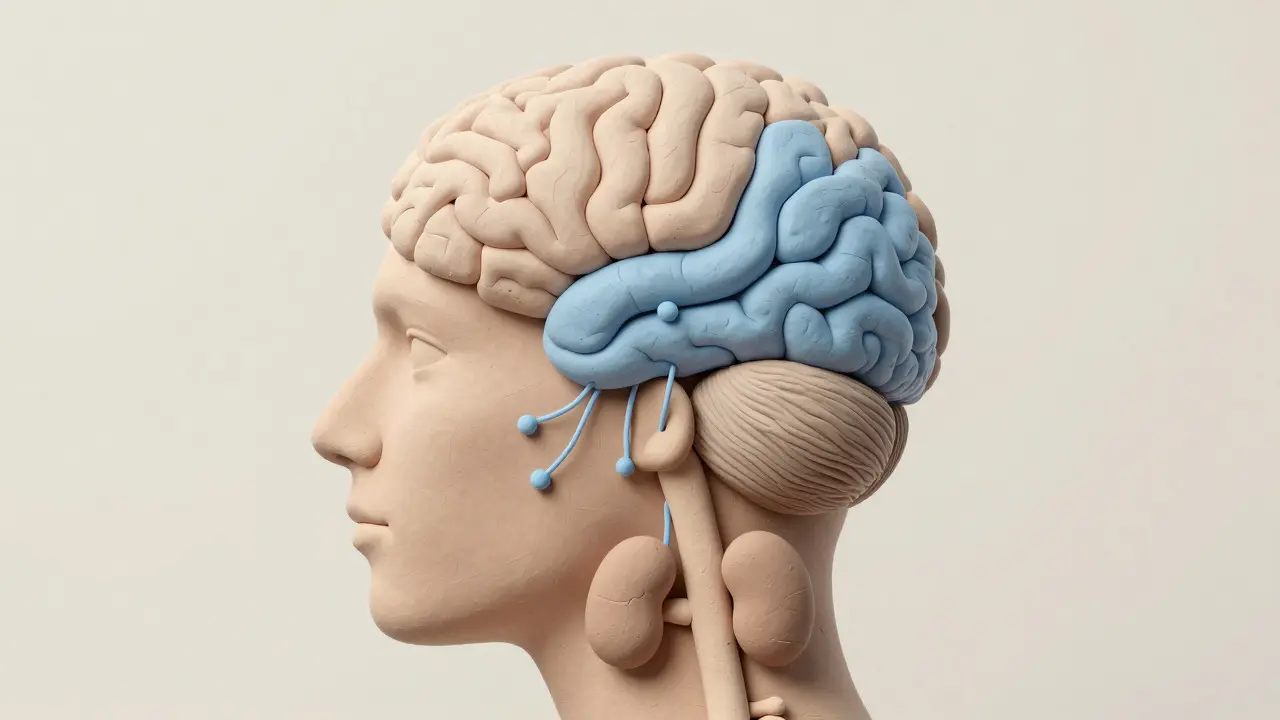
To understand why this happens, you need to know how your body handles stress. When you face physical or emotional stress, your brain sends a signal to your pituitary gland. That gland then tells your adrenal glands to release cortisol, the hormone that helps you stay alert, manage blood pressure, and process energy. This entire chain is called the HPA axis.
Opioids interfere with this chain. They bind to specific receptors in the hypothalamus and pituitary gland, effectively putting the brakes on the production of adrenocorticotrophic hormone (ACTH). Without enough ACTH, your adrenal glands don't get the message to make cortisol. The result is low cortisol levels, even though your adrenal glands themselves are healthy. This is known as secondary adrenal insufficiency. It’s not damage to the gland; it’s a communication breakdown caused by the medication.
| Feature | Primary Adrenal Insufficiency (Addison's Disease) | Secondary Adrenal Insufficiency (Opioid-Induced) |
|---|---|---|
| Source of Problem | Adrenal gland failure/damage | Hypothalamus/Pituitary suppression |
| Cause | Autoimmune disease, infection, surgery | Chronic opioid therapy |
| Aldosterone Levels | Low (salt wasting occurs) | Usually Normal |
| Reversibility | Often permanent | Reversible upon stopping/tapering opioids |
Who Is Actually at Risk?
Not everyone taking opioids develops this condition. In fact, most people tolerate them without endocrine issues. However, certain factors significantly increase your risk. The biggest predictor is dosage. Research indicates that patients taking more than 20 morphine milligram equivalents (MME) per day are at higher risk. If you are on high-dose fentanyl patches or liquid morphine, you fall into this category.
Duration matters too. While acute use rarely causes lasting effects, chronic therapy-defined as using opioids for three months or longer-is where the suppression becomes measurable. A prospective study of 162 adults found that about 5% of those on long-term opioids had clinically significant adrenal insufficiency. Interestingly, those with the condition were taking significantly higher daily doses than those who didn’t have it. So, if you’ve been on moderate doses for years, your risk is lower than someone on high doses for six months, but it’s never zero.
Symptoms That Don’t Look Like Pain
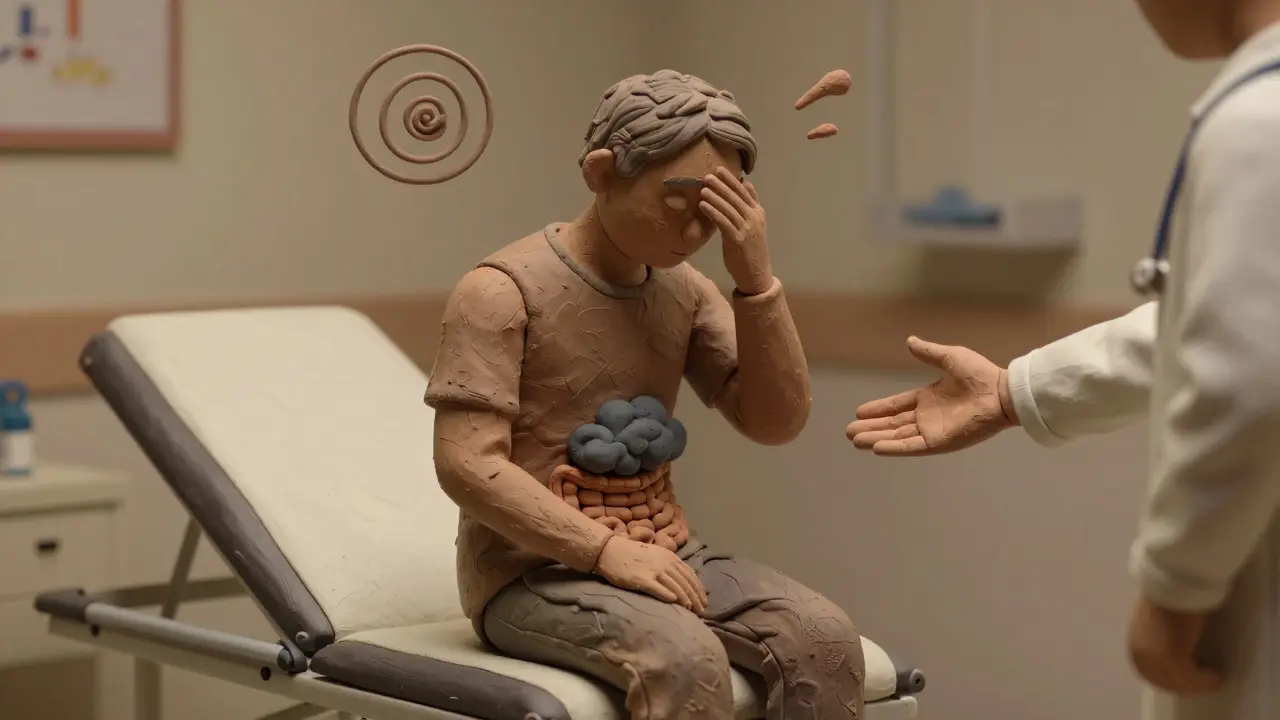
The tricky part about OIAI is that its symptoms mimic other common conditions. Because you already have chronic pain, fatigue and weakness are easy to dismiss as part of your baseline illness. But pay attention to these specific red flags:
- Extreme Fatigue: Tiredness that doesn’t improve with rest.
- Low Blood Pressure: Feeling dizzy when you stand up quickly (orthostatic hypotension).
- Muscle Weakness: Struggling with tasks that used to be easy, like climbing stairs.
- Gastrointestinal Issues: Nausea, vomiting, or loss of appetite that isn’t explained by the opioid itself.
- Unexplained Weight Loss: Losing weight despite normal eating habits.
- Intolerance to Stress: Feeling physically crushed during minor illnesses, dental work, or surgeries.
If you experience an "Addisonian crisis," it’s a medical emergency. Symptoms include severe abdominal pain, confusion, rapid heartbeat, and dangerously low blood pressure. This usually happens when your body faces a major stressor, like surgery or infection, and can’t produce enough cortisol to cope.
How Doctors Diagnose the Condition
Diagnosis isn’t straightforward because standard blood tests can sometimes miss it. Your doctor will likely order two key tests:
- Morning Cortisol Level: Drawn between 8 and 9 AM. A level below 3 mcg/dL strongly suggests insufficiency. Levels above 15 mcg/dL usually rule it out. Anything in between requires further testing.
- ACTH Stimulation Test: You receive an injection of synthetic ACTH. If your peak cortisol after 30 or 60 minutes stays below 18 mcg/dL, your adrenals aren't responding properly, confirming the diagnosis.
It’s important to note that recent studies suggest diagnostic thresholds might be shifting. Some experts argue for lower cutoffs to catch milder cases earlier. Always discuss borderline results with an endocrinologist rather than dismissing them.

Treatment and Management Strategies
The good news? OIAI is reversible. Unlike primary adrenal insufficiency, which often requires lifelong hormone replacement, OIAI typically resolves once the opioid is tapered off or discontinued. However, you can’t just stop cold turkey, especially if you’re managing severe pain.
Management involves a careful balance:
- Glucocorticoid Replacement: During periods of high stress (like surgery), you may need temporary hydrocortisone injections or pills to prevent a crisis.
- Opioid Tapering: Working with a pain specialist to slowly reduce the dose allows your HPA axis to recover. This process can take weeks or months.
- Alternative Pain Management: Incorporating physical therapy, nerve blocks, or non-opioid medications to bridge the gap while your hormones normalize.
One crucial detail: Aldosterone, the hormone that regulates salt and water balance, is usually unaffected in OIAI. This means you likely won’t experience the severe salt-wasting seen in Addison’s disease, which simplifies dietary management compared to other forms of adrenal insufficiency.
Practical Tips for Patients and Providers
If you are on chronic opioid therapy, here is how to protect yourself:
- Track Your Dose: Know your total MME per day. If it exceeds 20, ask your doctor about monitoring cortisol annually.
- Communicate Clearly: Tell every doctor, dentist, and surgeon you see that you are on chronic opioids. Ask specifically about stress-dose steroids before any procedure.
- Monitor for Red Flags: Keep a symptom diary. If you notice new dizziness or extreme fatigue, mention it to your provider immediately, not just at your next annual checkup.
- Don’t Self-Medicate: Never adjust your opioid dose without professional guidance, as rapid changes can complicate the recovery of your hormonal axis.
For clinicians, the takeaway is simple: maintain a high index of suspicion. In a patient on high-dose opioids presenting with vague complaints of fatigue and hypotension, rule out adrenal insufficiency early. It’s a treatable condition, but missing it can lead to preventable hospitalizations or worse.
Can short-term opioid use cause adrenal insufficiency?
Rarely. Most cases of opioid-induced adrenal insufficiency are associated with chronic use, typically defined as three months or longer. Acute use may cause transient suppression, but it usually resolves quickly once the drug leaves your system. Long-term exposure is the primary risk factor for persistent HPA axis suppression.
Is opioid-induced adrenal insufficiency permanent?
No, it is generally reversible. Once the opioid is tapered and discontinued, the hypothalamus and pituitary gland usually resume normal function, allowing cortisol levels to return to baseline. Recovery can take several weeks to months, depending on the duration and dose of prior opioid use.
Do I need to change my diet if I have OIAI?
Generally, no major dietary changes are required for sodium intake, unlike in primary Addison's disease. Since aldosterone production is usually preserved in OIAI, you do not typically suffer from salt-wasting. However, staying hydrated is important, especially if you experience nausea or vomiting related to low cortisol.
What is the difference between OIAI and regular fatigue from opioids?
Opioid-induced fatigue is often described as sedation or drowsiness directly linked to dosing times. Adrenal insufficiency fatigue feels more like profound exhaustion, weakness, and inability to recover from minor stressors. It is often accompanied by other symptoms like dizziness upon standing or gastrointestinal distress, which pure opioid sedation does not typically cause.
Should I stop my opioids if I suspect OIAI?
Never stop abruptly without medical supervision. Sudden cessation can trigger withdrawal and potentially worsen stress on your body. Work with your healthcare provider to develop a tapering plan that manages pain while allowing your HPA axis to recover safely.
Garry Hedges
August 23, 2026 AT 05:35the hpa axis is basically your body's internal alarm system and opioids are like smothering the fire before it even starts. its wild how we just accept 'tired' as a side effect instead of looking at the hormonal cascade. if you are on high doses check your cortisol levels now. dont wait for the crisis to hit. your adrenals are not broken they are just being ignored by the pituitary. this is a communication failure not an organ failure. treat the signal not the symptom. stop blaming the pain for everything that feels wrong in your body. wake up and test yourself.
Jamaal Johnson
August 24, 2026 AT 08:04One must acknowledge the profound significance of distinguishing between primary and secondary adrenal insufficiency, a nuance often overlooked in general medical discourse. The table provided herein offers a commendable comparative analysis, particularly regarding the preservation of aldosterone levels in opioid-induced cases. It is imperative to note that the reversibility of this condition upon cessation of therapy presents a stark contrast to the permanence typically associated with Addison’s disease. Such distinctions are vital for both patient education and clinical decision-making processes. Furthermore, the emphasis on the hypothalamic-pituitary axis suppression serves as a critical reminder of the intricate interplay between pharmacological agents and endocrine function. We should therefore advocate for more rigorous screening protocols among patients undergoing chronic opioid therapy. The potential for life-threatening crises underscores the necessity for heightened vigilance in these individuals. A thorough understanding of these mechanisms can only lead to improved outcomes and reduced morbidity. Let us not underestimate the subtle yet devastating impact of such endocrine disruptions. Precision in diagnosis remains our foremost ally in managing this complex pathology.
Ankit Sinha
August 25, 2026 AT 07:05look who thinks they know everything about hormones. 5% incidence rate means 95% of you are fine so why are you panicking? its all in your head anyway. most doctors already know this but they don't want to deal with the paperwork of testing every single person on oxycodone. the real issue is people taking too much and calling it a medical mystery when its just bad choices. stop whining about fatigue and go do some pushups or something. the article is decent i guess but you missed the point that most of this is self-inflicted. just taper off and get over it. 🙄
Jw George John Warren
August 26, 2026 AT 07:53oh great another one of those articles trying to make you think your doctor is hiding something from you 🤡. sure the HPA axis thing is real but cmon nobody talks about this because it makes them look bad. i bet pharma companies love this silence. meanwhile the rest of us are just tired because we live in a broken world. also the part about aldosterone being normal is super convenient for them isn't it? no salt wasting means less hospital visits which saves money lol. keep telling yourselves it's rare so you don't have to change anything. #conspiracy #adrenalcrisis #wakeupcall 😂
Rachel Robinson Interiors
August 27, 2026 AT 15:40This is such an important topic to bring to light. Many patients suffer in silence because they assume their symptoms are just part of living with chronic pain. Knowing that it is reversible is such a relief. It gives hope that things can improve with the right care. Please share this with anyone you know who is on long-term opioids. Early detection really does make a difference. You are not alone in this struggle. Keep advocating for better awareness. Your voice matters here. Thank you for sharing this valuable information. It is a game changer for many families. Stay strong and informed. This community needs more posts like this. Let’s support each other through this journey together. We got this! 💪
Jesse Barlau
August 28, 2026 AT 11:12While the article provides a solid overview, I believe it is crucial to emphasize the importance of consistent communication between the patient and their healthcare provider, as the complexity of managing both pain and endocrine health requires a collaborative approach that respects the individual's unique physiological responses and psychological well-being throughout the treatment process. Often, the hesitation to report vague symptoms stems from a fear of being dismissed or having one's medication adjusted abruptly, which creates a barrier to early intervention; therefore, fostering an environment where patients feel safe to express concerns without judgment is paramount to ensuring that conditions like OIAI are identified and managed effectively before they escalate into more severe complications that could compromise overall health and quality of life significantly.
teresa baldini
August 29, 2026 AT 15:51Oh, how delightful, another chance to dissect the flaws in this narrative! One might argue that the definition of 'chronic use' is arbitrarily set at three months, ignoring the biological variability of individuals. Is it not possible that shorter durations could also trigger significant suppression in susceptible populations? The data presented seems to gloss over the nuances of genetic predisposition to HPA axis dysfunction. Furthermore, the claim that aldosterone is usually normal is a broad generalization that may not hold true for all subtypes of opioid exposure. One wonders if the authors have considered the intersection of polypharmacy and its impact on adrenal function. The diagnostic thresholds mentioned are, frankly, outdated according to several recent meta-analyses. We must question whether the current standard of care is truly sufficient for detecting mild cases. Perhaps the real danger lies in the normalization of these symptoms within the chronic pain community. Do we not owe it to ourselves to demand higher standards of monitoring? The conspiracy of silence in mainstream medicine is deafening, isn’t it? One cannot help but wonder what else is being hidden in plain sight. 🧐
Daniel Cook
August 31, 2026 AT 06:12yeah cool info but did you actually read the study or just skimmed the abstract? nice try though
Michael Smith
August 31, 2026 AT 13:45honestly this is the best summary i've seen on this topic. the distinction between primary and secondary is so clear here. thanks for breaking it down so simply. finally someone explaining the acth stimulation test without making it sound like rocket science. good job. 👍