
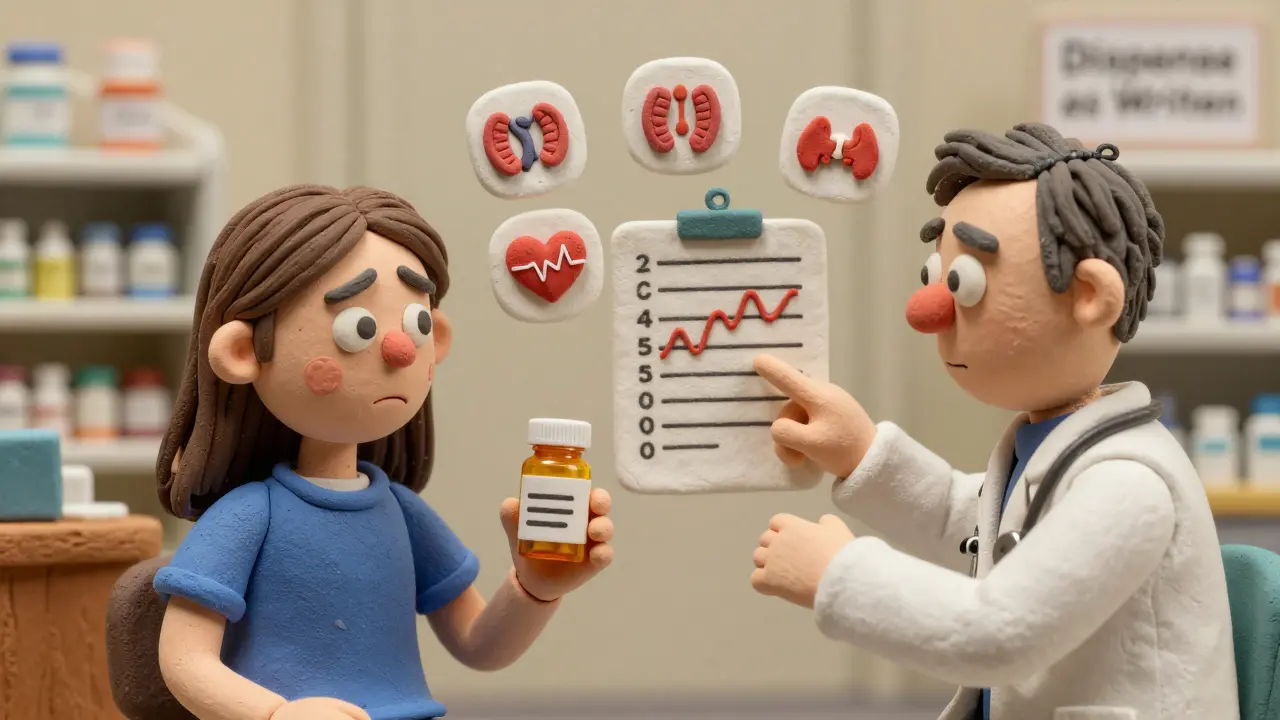
When a pharmacist hands you a pill bottle with a different name than what your doctor wrote, you might wonder: is this really the same drug? For doctors, nurses, and pharmacists, this isn’t just a patient question-it’s a daily clinical decision shaped by medical society guidelines on generic drug use. These aren’t just suggestions. They’re official stances from major medical organizations that directly influence what gets prescribed, dispensed, and taken by millions of patients every day.
Why Generic Substitution Isn’t Always Simple
The FDA says generic drugs are just as safe and effective as brand-name ones. That’s true for most medications. But when it comes to drugs with a narrow therapeutic index (NTI), even tiny differences in how the body absorbs the drug can mean the difference between control and crisis. NTI drugs include anticonvulsants like phenytoin, blood thinners like warfarin, and thyroid hormones like levothyroxine. For these, a 10% variation in blood levels might not seem like much-but for someone with epilepsy, it could trigger a seizure. For someone on warfarin, it could cause a stroke or dangerous bleeding. That’s why the American Academy of Neurology (AAN) has one of the clearest and most influential positions: they oppose automatic substitution of generic antiepileptic drugs. Their stance isn’t based on distrust of generics overall-it’s based on real-world patient outcomes. Studies show that nearly 70% of neurologists report changes in seizure control after switching to a generic version, even when the drug is technically FDA-approved as bioequivalent. That’s not a flaw in the FDA’s process-it’s a signal that bioequivalence standards, which allow for 80-125% variation in absorption, might be too wide for some drugs.Where Medical Societies Agree (and Where They Don’t)
Not all specialties see generics the same way. The American College of Physicians supports generic substitution across most drug classes, especially when the FDA assigns an “A” rating in the Orange Book-meaning the generic is therapeutically equivalent to the brand. For antibiotics, statins, and blood pressure meds, the evidence is solid. Millions of patients take generic versions daily without issue. The cost savings are massive: generics make up 90% of prescriptions but only 23% of total drug spending in the U.S. But in oncology, the picture gets more complex. The National Comprehensive Cancer Network (NCCN) doesn’t just accept generics-they actively incorporate off-label uses of generic drugs into their guidelines. That means a generic drug approved for lung cancer might be used for lymphoma, even if that use isn’t on the original label. The NCCN Compendia is the only officially recognized source for Medicare to cover these off-label uses. So while the FDA approves a drug for one condition, oncologists use it for others-and they rely on generics to make these treatments affordable. This isn’t a loophole; it’s standard practice. The American Medical Association (AMA) doesn’t take a stance on substitution itself. Instead, they focus on naming. Through their United States Adopted Names (USAN) Council, they assign nonproprietary names to every drug in the U.S. Their goal? Reduce confusion. A bad name can lead to a dangerous mix-up. The council avoids stems that sound too similar to other drugs-like making sure “-pril” for ACE inhibitors doesn’t get confused with “-sartan” for ARBs. They also avoid names that look alike on paper or sound alike when spoken. A pharmacist mishearing “metoprolol” as “metformin” could be deadly. Naming isn’t just bureaucracy-it’s patient safety.State Laws vs. Medical Guidelines
Here’s where things get messy. Federal law lets pharmacists substitute generics unless the doctor says “dispense as written.” But each state has its own rules. Some states require prescriber consent before substituting NTI drugs. Others don’t. A patient in Oregon might get the brand-name drug automatically. The same patient in Texas might get switched without a word. Pharmacists often find themselves caught in the middle-following state law, but knowing their patient’s neurologist or oncologist opposes the switch. One study found that in states with strict NTI substitution rules, generic substitution rates for antiepileptics dropped by over 40%. That’s good for safety-but bad for cost. In states without restrictions, substitution rates for generics hit nearly 90% across all drug classes. So the system works well for most drugs, but breaks down for a small, high-risk group. And that’s exactly why medical societies are pushing back: they don’t want a one-size-fits-all policy for drugs that demand precision.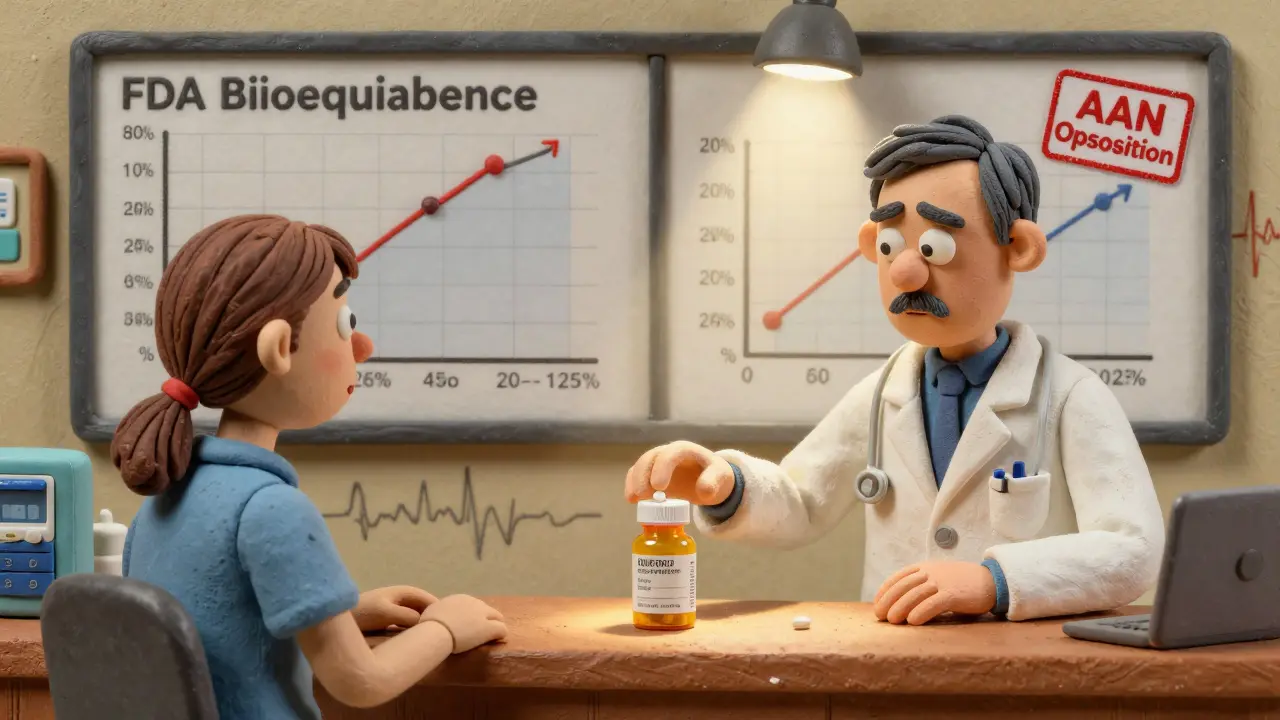
What Doctors See in Their Clinics
Behind every guideline is a real patient. A 42-year-old woman with epilepsy has been stable on brand-name lamotrigine for three years. Her insurance switches her to a generic. Within two weeks, she’s having more auras-pre-seizure warning signs. She doesn’t report it at first, thinking it’s stress. Then she has a grand mal seizure. Her neurologist reviews her logs, checks her blood levels, and finds the generic version absorbed 15% slower. She’s switched back. The insurance denies coverage again. She’s stuck in a cycle of trial, error, and fear. This isn’t rare. In clinics across the country, doctors hear the same stories: “I feel different,” “My tremors came back,” “I couldn’t sleep for a week.” These aren’t placebo effects. They’re real physiological responses to small changes in drug delivery. For many patients, especially those with chronic conditions, stability matters more than savings.The Bigger Picture: Cost, Access, and Trust
Let’s be clear: generics save billions. Without them, many patients couldn’t afford their meds. But trust is fragile. When patients feel like they’re being switched for cost reasons-not clinical ones-it erodes confidence in the whole system. Doctors know this. That’s why many now write “dispense as written” on prescriptions for NTI drugs-not because they think generics are unsafe, but because they want control over when and how a switch happens. The FDA’s approval process is rigorous. Generic manufacturers must prove their product matches the brand in strength, dosage, and bioavailability. But bioequivalence doesn’t mean identical. It means “close enough.” For most drugs, that’s fine. For a few, it’s not. Medical societies aren’t against generics. They’re against blanket policies that ignore clinical nuance.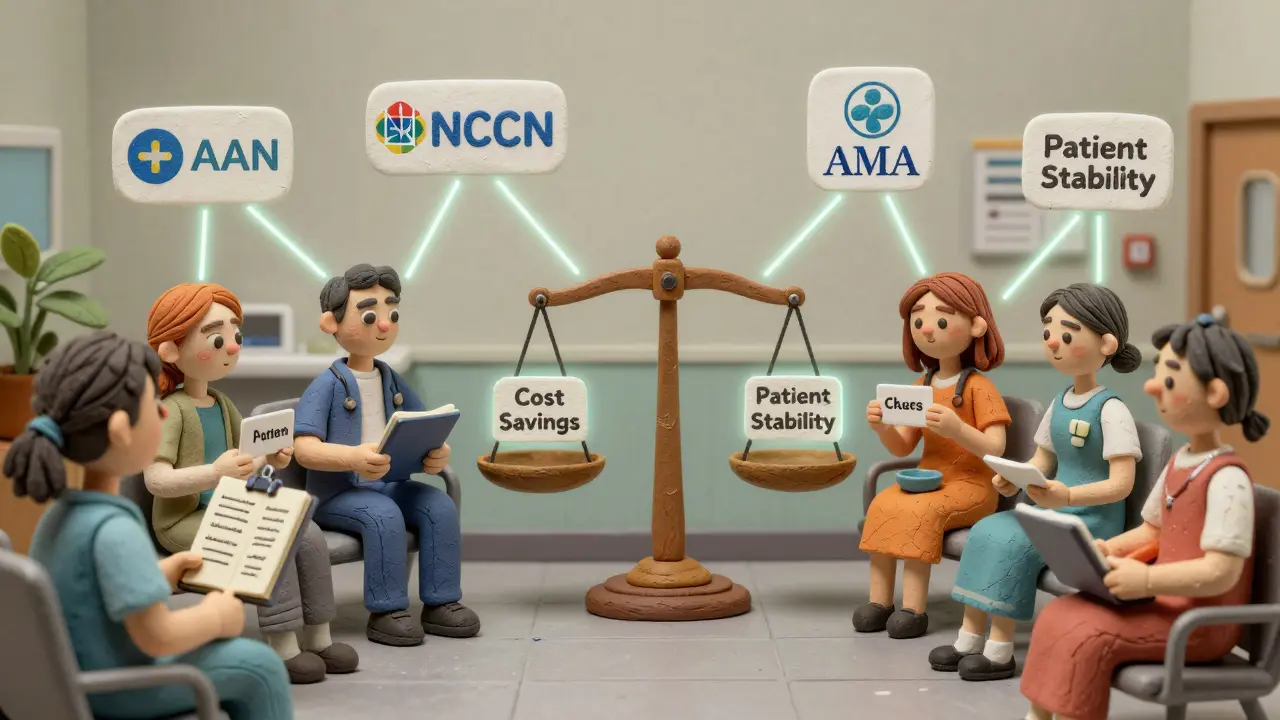
What This Means for You as a Patient
If you’re on a drug with a narrow therapeutic index-like an antiseizure medication, warfarin, levothyroxine, or digoxin-ask your doctor if you should stay on the brand name. Don’t assume the generic is automatically safe. Ask your pharmacist if a substitution was made. Keep a journal of how you feel after any switch. If something changes, speak up. Your doctor may need to write “dispense as written” on your prescription. For most other drugs-antibiotics, antidepressants, statins, insulin-generics are a safe, smart choice. The data supports it. But for those critical few, the stakes are higher. And that’s why medical society guidelines exist: to protect patients when the rules aren’t one-size-fits-all.What’s Next?
The FDA is updating its therapeutic equivalence ratings regularly. The Orange Book now includes more detailed data on bioequivalence studies. Some medical societies are starting to align more closely with these ratings. But the big players-the AAN, NCCN, and AMA-are holding firm on their specialty-specific concerns. Expect more guidance in the next two years on which NTI drugs need special handling. And expect more pressure on insurers to cover brand-name drugs when medically necessary. The bottom line? Generics are a triumph of public health. But medicine isn’t a spreadsheet. It’s people. And sometimes, stability beats savings.Are generic drugs really as good as brand-name drugs?
For most medications, yes. The FDA requires generics to have the same active ingredient, strength, dosage form, and route of administration as the brand. They must also prove bioequivalence-meaning they work the same way in the body. About 90% of prescriptions in the U.S. are for generics, and they’re used safely every day. But for drugs with a narrow therapeutic index-like antiseizure meds, warfarin, or thyroid hormone-even small differences in absorption can matter. That’s why some doctors prefer to keep patients on the brand name in these cases.
Why do some doctors oppose switching to generic antiseizure drugs?
The American Academy of Neurology opposes automatic substitution because even minor changes in blood levels of antiepileptic drugs can lead to breakthrough seizures. While generics meet FDA bioequivalence standards (80-125% absorption range), some patients experience changes in seizure control after switching. Studies show nearly 70% of neurologists have seen complications linked to generic switches. Stability is critical for epilepsy patients, and many doctors believe the risk isn’t worth the cost savings.
Can pharmacists substitute generics without my doctor’s permission?
In most states, yes-unless your doctor writes “dispense as written” on the prescription. But rules vary. Some states require prescriber consent before substituting drugs with narrow therapeutic indices, like warfarin or levothyroxine. Others allow substitutions freely. If you’re concerned, ask your pharmacist if a substitution was made. You can also ask your doctor to specify the brand name on your prescription.
What does “NTI” mean, and why does it matter?
NTI stands for Narrow Therapeutic Index. It means the difference between a safe dose and a toxic one is very small. For these drugs, even a 10-15% change in how much enters your bloodstream can cause serious problems. Examples include phenytoin, carbamazepine, levothyroxine, warfarin, and digoxin. Because of this, medical societies like the AAN recommend caution with substitution. The FDA still approves generics for these drugs, but many doctors prefer to avoid switches unless absolutely necessary.
Do medical societies oppose all generics?
No. Most medical societies support generics for the vast majority of drugs-antibiotics, blood pressure meds, statins, antidepressants. The concern is limited to a small number of drugs where precision matters most. The American College of Physicians, for example, encourages generic use where appropriate. The real debate isn’t about generics vs. brands-it’s about when to apply blanket rules and when to allow clinical judgment.
How do drug names affect generic substitution?
The American Medical Association’s USAN Council assigns nonproprietary names to all drugs in the U.S. Their goal is to reduce confusion. Names are designed so doctors, pharmacists, and nurses can quickly identify drug classes and avoid mix-ups. For example, drugs ending in “-pril” are ACE inhibitors, and “-sartan” are ARBs. The council avoids names that sound or look too similar to others-like keeping “metoprolol” from being confused with “metformin.” Poor naming can lead to dangerous errors, so names aren’t just labels-they’re safety tools.
Jody Patrick
December 16, 2025 AT 21:39Generic drugs are a socialist scam. If you can’t afford the real medicine, don’t get sick. Taxpayers shouldn’t fund your laziness.
Radhika M
December 17, 2025 AT 10:34My uncle in India takes generic epilepsy medicine for 10 years, no problem. Doctors here make it sound like magic pills, but it’s just cost-cutting. Most generics work fine.
Erik J
December 17, 2025 AT 23:45Interesting that the FDA’s 80-125% bioequivalence range is accepted for most drugs but questioned for NTIs. I wonder if the variation thresholds were set based on statistical convenience rather than clinical thresholds. Maybe we need tiered bioequivalence standards instead of one-size-fits-all.
Martin Spedding
December 19, 2025 AT 19:10LOL the AAN is terrified of generics?? 😂 Like, are they paid by Pfizer? 70% of neurologists ‘report changes’? Bro, that’s confirmation bias and placebo effect. Also, ‘dispense as written’? More like ‘dispense as profitable’.
Raven C
December 21, 2025 AT 04:37It is, indeed, profoundly troubling that the medical establishment-long entrusted with the sacred duty of patient welfare-is now, in the face of corporate profit motives, capitulating to the insidious commodification of therapeutic outcomes. One cannot help but lament the erosion of clinical autonomy under the cold, calculating gaze of insurance actuaries.
amanda s
December 21, 2025 AT 10:00They’re lying to you. The FDA and big pharma are in bed together. Generics are laced with fillers that cause seizures. My cousin’s kid went into status epilepticus after a switch. They don’t want you to know this.
Brooks Beveridge
December 22, 2025 AT 02:19Hey everyone - big picture here: generics save lives by making meds affordable. But for folks with epilepsy or on warfarin? Stability > savings. That’s not anti-generic, that’s smart medicine. 🙌 Let’s support patient choice, not corporate convenience.
Anu radha
December 22, 2025 AT 17:11I work in a clinic in Delhi. We use generics for everything. People live longer, take pills every day. Why make it hard for poor people? Not all drugs are like warfarin.
Jigar shah
December 23, 2025 AT 08:55The distinction between bioequivalence and therapeutic equivalence is critical here. While FDA regulations ensure pharmacokinetic similarity, they do not account for inter-individual variability in metabolism, gut absorption, or drug transporters. A 10% shift in Cmax may be statistically insignificant in a population study but clinically catastrophic for a single patient with a low seizure threshold.
Marie Mee
December 23, 2025 AT 18:34They’re watching you. The government, the pharma companies, the pharmacists-they all want you to take the cheap stuff so they can control your mind. I stopped taking my meds after the switch. I felt different. Too different. They’re testing on us.