
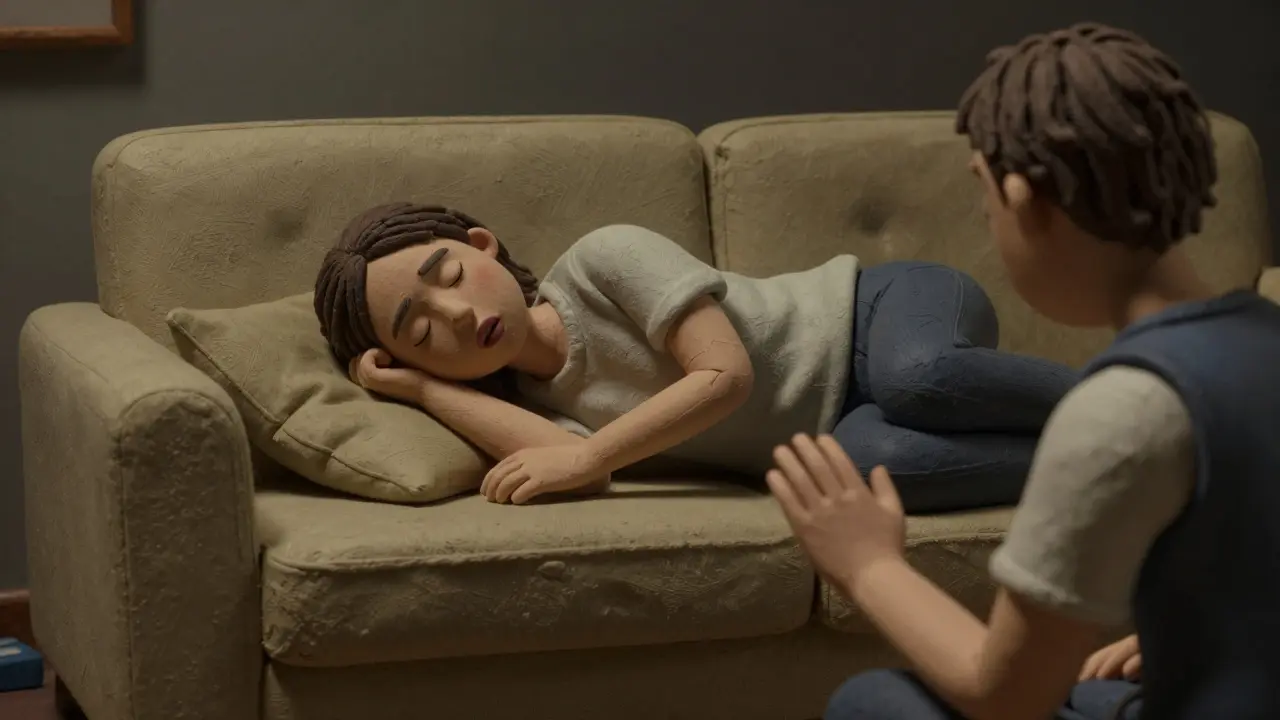
It starts with what looks like a deep nap. Your friend, family member, or partner is asleep on the couch, breathing slowly, and you assume they are just exhausted from a long week. But then you try to wake them up, and nothing happens. No stirring. No grogginess. Just silence. This is not sleep. This is a medical emergency.
Sedative and sleep medication overdose is one of the most dangerous yet misunderstood health crises today. Unlike opioid overdoses, which have become widely known through public awareness campaigns, sedative overdoses often fly under the radar because the victim appears to be simply "very tired." According to data from the National Institute on Drug Abuse, benzodiazepines were involved in approximately 12,500 overdose deaths in 2021 alone. The tragedy isn't always that people take these drugs intentionally to harm themselves; often, it's accidental. A person takes their prescribed dose, adds a glass of wine to help it kick in, and suddenly their brainstem-the part of the brain that tells your body to breathe-shuts down.
Recognizing the difference between a heavy sleeper and someone in toxicological crisis can save a life. You do not need a medical degree to spot the warning signs. You need to know what to look for, how to check vital functions quickly, and when to call for help without hesitation. Let’s break down exactly what happens during an overdose, why it is so deadly, and the specific steps you must take if you suspect someone is in danger.
The Physiology of Sedative Toxicity
To understand the signs, you first need to understand the mechanism. Sedatives are central nervous system depressants that slow down brain activity to induce relaxation, anxiety relief, or sleep. Common classes include benzodiazepines (like alprazolam/Xanax, diazepam/Valium, and lorazepam/Ativan), Z-drugs (non-benzodiazepine sleep aids like zolpidem/Ambien and eszopiclone/Lunesta), and older barbiturates.
When taken in therapeutic doses, these medications enhance the effect of gamma-aminobutyric acid (GABA), a neurotransmitter that calms nerve activity. In an overdose, this calming effect becomes overwhelming. The brain’s excitatory signals are suppressed to such a degree that essential involuntary functions begin to fail. The most critical failure is respiratory depression. The brain stops sending the signal to the diaphragm to contract. Without that signal, oxygen levels drop, carbon dioxide builds up, and organs begin to starve.
What makes sedative overdose particularly insidious is its progression. It rarely happens instantly unless a massive amount is ingested at once. More commonly, it is a slide. The person feels increasingly drowsy, their speech slurs, and their coordination fails. By the time they realize something is wrong, they may no longer have the motor skills to call for help. If they are alone, this window closes entirely.
Key Warning Signs: What to Look For
If you are checking on someone who has taken sedatives or sleep medications, look for these specific physiological markers. Do not rely on assumptions. Check these indicators systematically.
- Profound Unresponsiveness: This is the most obvious sign. Shout their name loudly. Shake their shoulders firmly. Perform a sternal rub (rubbing the heel of your hand firmly against the center of their chest). If there is no response, no grimacing, and no attempt to move, they are likely in a coma-like state caused by CNS depression.
- Respiratory Depression: Count their breaths for 30 seconds. A normal adult breathes 12-20 times per minute. In a sedative overdose, this rate drops significantly. Fewer than 8 breaths per minute is a critical emergency. Watch for shallow breathing where the chest barely rises, or irregular pauses between breaths.
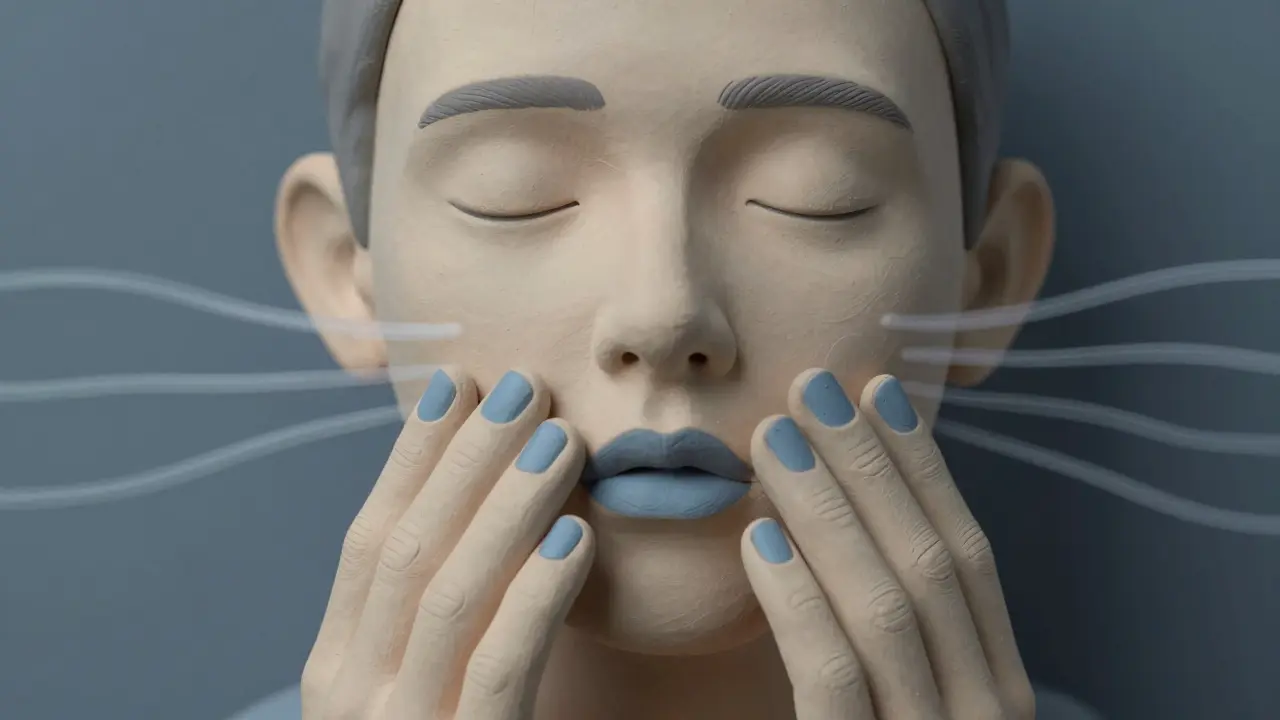
- Cyanosis: Look at their lips, fingertips, and nail beds. Are they turning blue, purple, or gray? This discoloration, known as cyanosis, indicates that oxygen saturation has dropped below 90%. It is a late-stage sign that immediate rescue breathing is required.
- Slurred Speech and Confusion: Before losing consciousness, many victims exhibit severe neurological impairment. They may speak incoherently, repeat words, or appear extremely confused about where they are. StatPearls’ 2023 review notes that slurred speech occurs in 87% of benzodiazepine overdose cases.
- Ataxia and Motor Loss: They may stumble, fall, or be unable to stand upright. Fine motor skills vanish. If you ask them to touch their nose, they may miss completely. This "drunken" behavior without alcohol consumption is a hallmark of sedative toxicity.
Differentiating Between Sedative Types
Not all sedatives behave the same way in an overdose. Knowing what was ingested can help you anticipate complications, though the emergency response remains largely the same: get help immediately.
| Sedative Class | Common Examples | Primary Overdose Risk | Distinctive Symptoms |
|---|---|---|---|
| Benzodiazepines | Xanax, Valium, Ativan, Klonopin | Respiratory depression (especially when mixed) | Stable blood pressure until late stages; pinpoint pupils are rare (unlike opioids) |
| Z-Drugs | Ambien, Lunesta, Sonata | Complex sleep behaviors, amnesia, falls | Severe anterograde amnesia (cannot form new memories); confusion upon waking |
| Barbiturates | Phenobarbital, Secobarbital | Rapid cardiovascular collapse | Lower seizure threshold; more profound hypotension (low blood pressure) than benzos |
| Antihistamines (OTC) | Diphenhydramine (Benadryl, ZzzQuil) | Anticholinergic toxicity | Dry mouth, urinary retention, hallucinations, rapid heart rate, seizures at high doses |
Note that over-the-counter sleep aids containing diphenhydramine present a different profile. While less likely to cause immediate respiratory arrest compared to prescription benzos, high doses can lead to dangerous heart rhythms, seizures, and delirium. Melatonin, conversely, has a very wide safety margin. Even at doses 60 times higher than recommended, it typically causes only headache and nausea, not life-threatening suppression.
The Deadly Combination: Polydrug Use
You cannot discuss sedative overdose without addressing the elephant in the room: mixing substances. The CDC reports that 23% of benzodiazepine-involved overdose deaths in 2021 also involved fentanyl or other opioids. Alcohol is another major culprit, appearing in 41% of fatal sedative cases.
Why is this so dangerous? Because these substances work synergistically. If a sedative reduces your respiratory drive by 20%, and alcohol reduces it by another 20%, the result is not 40% reduction-it is a multiplicative effect that can shut down breathing entirely. This is called "cross-tolerance" failure. A person might tolerate a certain dose of Xanax alone, but add two beers, and that same dose becomes lethal.
If you see empty bottles of multiple medications, or if you smell alcohol on the breath of someone who is unresponsive, assume the worst. The risk of fatality skyrockets in polydrug scenarios because the body’s compensatory mechanisms are overwhelmed from multiple angles simultaneously.
Immediate Action Protocol: What To Do
If you suspect a sedative overdose, every second counts. Delaying recognition by even 10 minutes can reduce survival probability by significant margins, according to resuscitation research. Follow this protocol:
- Check Responsiveness: Yell and shake. If no response, proceed to step 2.
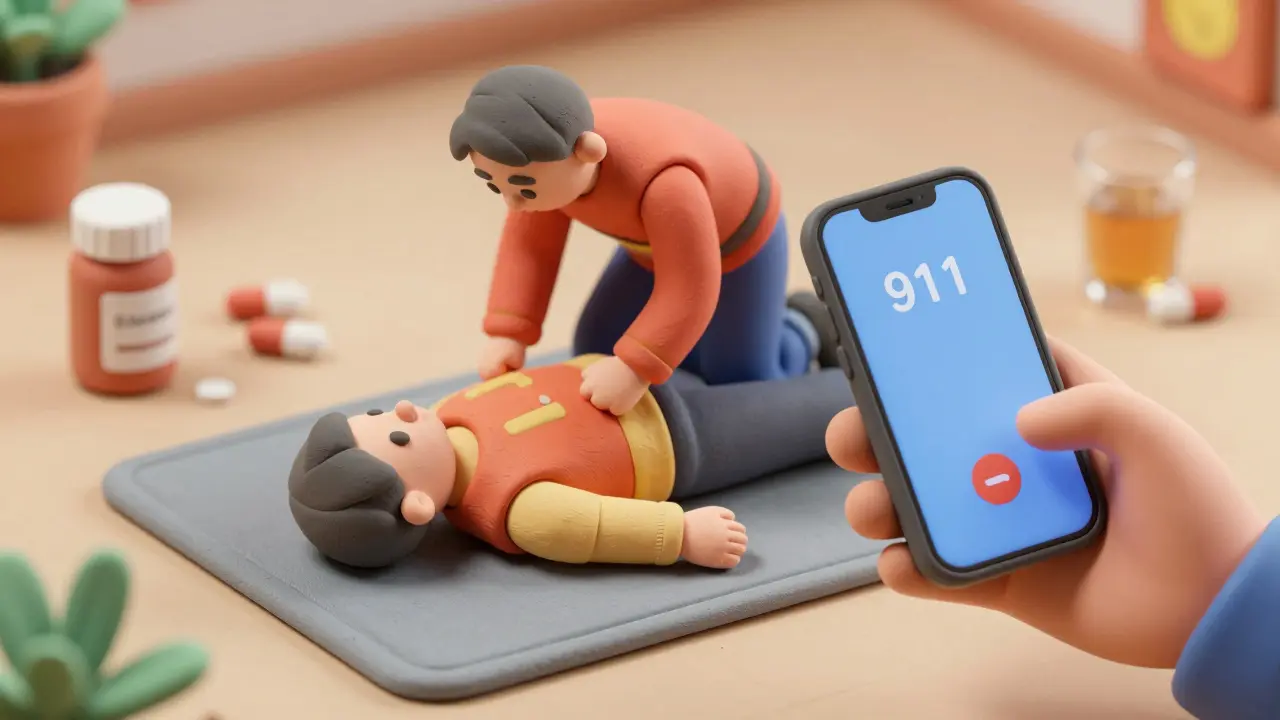
- Call Emergency Services (911): Do not wait to see if they "wake up." Tell the dispatcher explicitly: "I suspect a sedative or sleep medication overdose. The person is unresponsive and breathing slowly."
- Assess Breathing: Look, listen, and feel. Place your ear near their mouth. Is air moving? Count breaths. If fewer than 8 per minute, or if breathing is absent, prepare for rescue breathing.
- Position for Airway: If they are breathing but unconscious, place them in the recovery position (on their side) to prevent choking on vomit. Sedative overdose often induces nausea and vomiting. Aspiration of vomit into the lungs is a common secondary cause of death.
- Administer Rescue Breathing if Needed: If they are not breathing, begin CPR/rescue breathing. Give one breath every 5-6 seconds. This keeps oxygen flowing to the brain until paramedics arrive.
- Gather Information: If safe to do so, collect any pill bottles, containers, or substances found nearby. Bring these to the paramedics. This helps them determine if Narcan (naloxone) is needed (if opioids are mixed in) or if flumazenil (a benzodiazepine reversal agent) might be considered in a hospital setting.
Crucial Warning: Do not attempt to give water, coffee, or induce vomiting. An unconscious person cannot protect their airway. Pouring liquid into their mouth will cause aspiration pneumonia or drowning. Do not administer flumazenil outside of a controlled medical environment. Dr. Lewis Nelson, an emergency medicine expert, warns that flumazenil can trigger fatal seizures in patients who are physically dependent on benzodiazepines. Leave reversal agents to professionals.
Why Bystanders Miss the Signs
Studies show that 68% of bystanders initially misinterpret severe sedative overdose symptoms as "extreme sleepiness." Why does this happen?
Social normalization plays a huge role. We live in a culture where being "knocked out" after taking Ambien is sometimes joked about. People assume that if someone is sleeping deeply, they are safe. However, natural sleep involves cycling through REM and non-REM stages, with periodic micro-arousals. In a sedative-induced coma, these cycles are abolished. The brain is essentially offline.
Another factor is the gradual onset. Unlike a traumatic injury, overdose is a slow fade. Friends may watch a loved one become progressively quieter and slower over hours, rationalizing each stage as "just needing rest." By the time the breathing slows dangerously, the opportunity for early intervention has passed.
To combat this, keep an overdose recognition card or checklist visible if you or a loved one uses high-risk sedatives. The California Department of Public Health’s "Don’t Die" campaign distributed cards that improved bystander recognition rates by 22% in pilot communities. Simple visual cues-like "Can you wake them up? No? Call 911"-break through the paralysis of uncertainty.
Prevention and Long-Term Safety
Recognition saves lives in the moment, but prevention stops the crisis before it starts. If you prescribe sedatives, follow these safety rules:
- Never Mix: Strictly avoid alcohol and opioids while taking sedatives. Set a hard rule: if you drink, you don’t take your sleep med. Period.
- Adhere to Dosage: Never increase your dose without consulting your doctor. Tolerance builds quickly, leading users to chase the initial effect, which narrows the gap between therapeutic and toxic doses.
- Use Pill Organizers: Accidental double-dosing is common. Using a daily organizer prevents taking a second dose by mistake.
- Monitor with Technology: Emerging devices, such as continuous pulse oximeters, can detect oxygen desaturation before overt respiratory failure. For high-risk patients, these provide a 15-20 minute early warning window.
- Regular Review: Ask your doctor annually if you still need the medication. Benzodiazepines are intended for short-term use. Long-term dependency increases overdose risk due to tolerance changes and withdrawal complications.
Sedative overdose is a silent killer because it mimics sleep. But sleep is active; overdose is stagnation. By learning the signs-unresponsiveness, slow breathing, and blue skin-you transform from a passive observer into a life-saving responder. Knowledge is the antidote to delay.
How long does it take for a sedative overdose to kill?
There is no fixed timeline, as it depends on the substance, dose, and individual metabolism. Respiratory failure can occur within 30 minutes to several hours after ingestion. The risk is highest when sedatives are mixed with alcohol or opioids, which accelerates the shutdown of breathing. Immediate medical attention is critical regardless of the timeframe.
Can Narcan (naloxone) reverse a sedative overdose?
Narcan specifically reverses opioid overdoses. It does not work on pure benzodiazepine or Z-drug overdoses. However, because many overdoses involve mixed substances (polydrug use), administering Narcan is still recommended if opioids are suspected or unknown, as it poses no harm and may save a life if fentanyl or heroin is present.
What is the difference between a sedative overdose and an opioid overdose?
Both cause respiratory depression and unresponsiveness. Key differences include pupil size: opioid overdose typically causes pinpoint (constricted) pupils, while sedative overdose usually leaves pupils normal or slightly dilated. Additionally, sedative overdose may present with more pronounced confusion and slurred speech before loss of consciousness, whereas opioid overdose often leads to rapid unconsciousness.
Is it possible to overdose on melatonin?
Melatonin has a very high safety margin. Even at doses significantly higher than recommended (e.g., 240mg vs typical 4mg), it rarely causes life-threatening symptoms. Side effects may include headache, dizziness, nausea, and vivid dreams, but it does not cause respiratory depression or coma like prescription sedatives.
Should I try to wake someone up if I suspect an overdose?
Yes, but gently. Shout their name and shake their shoulders. If they do not respond, do not continue vigorous shaking which could cause injury. Immediately check their breathing and call 911. If they are breathing, place them in the recovery position to keep their airway clear. Do not leave them alone.
Menu