
Levodopa & Protein Interaction Planner
Your Profile
| Time | Action | Protein Target |
|---|
Enter your details to see how protein timing affects your medication.
Imagine taking your morning medication with perfect timing, only to feel its effects vanish within an hour because of what you ate for breakfast. For many people living with Parkinson’s disease, this is not a hypothetical scenario but a daily reality. The culprit? A common dietary component: protein.
This article explains why high-protein diets interfere with Levodopa, the gold-standard medication for managing Parkinson’s symptoms, and how you can adjust your eating habits to regain control over your mobility. We will look at the science behind this interaction, practical dietary strategies like the Protein Redistribution Diet (PRD), and real-world tips to make these changes sustainable without sacrificing nutrition or social life.
The Science Behind the Interaction: Why Protein Blocks Medication
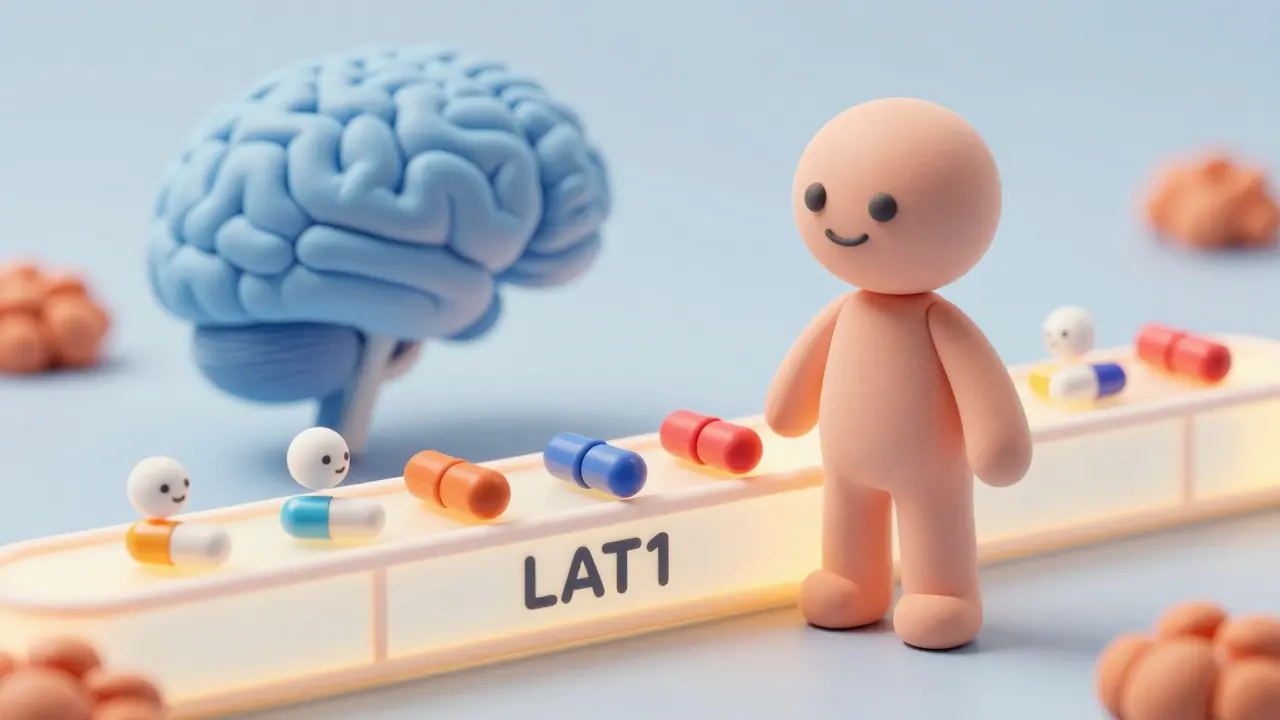
To understand why protein interferes with Levodopa, we need to look at how your body transports substances into the brain. Both Levodopa and large neutral amino acids (LNAAs)-the building blocks of protein-use the same "gatekeeper" system to cross the blood-brain barrier (BBB). This transporter is called LAT1 (L-type amino acid transporter 1).
Think of LAT1 as a narrow bridge that can only handle one type of traffic at a time. When you eat a meal rich in protein, your digestive system breaks it down into LNAAs like leucine, isoleucine, valine, phenylalanine, tyrosine, tryptophan, and methionine. These amino acids flood your bloodstream, competing fiercely with Levodopa for space on that bridge.
Research by Pardridge and Oldendorf in 1977 established this competitive inhibition mechanism. Here is what happens physiologically:
- Increased Competition: Plasma concentrations of LNAAs rise by 30-50% within 30-60 minutes after eating protein.
- Reduced Absorption: This competition reduces Levodopa’s absorption rate by 25-40%.
- Delayed Effect: The time it takes for Levodopa to reach maximum concentration in your blood (Tmax) is delayed by 45-90 minutes.
The critical threshold appears to be around 10 grams of protein per meal. Consuming more than 20 grams of protein alongside your medication can significantly reduce its bioavailability, leading to unpredictable "off" periods where your symptoms return despite having taken your dose.
Who Is Affected? Timing and Severity
Not everyone with Parkinson’s experiences this interaction immediately. In fact, it often takes years for the problem to become clinically significant. According to a 2017 study published in Frontiers in Aging Neuroscience by Wang et al., this protein-levodopa interaction typically manifests about 13 years after the onset of motor symptoms or roughly 8 years after starting Levodopa therapy.
Why does it take so long? Early in the disease, your brain has enough dopamine-producing neurons to buffer minor fluctuations in medication levels. As the disease progresses and those neurons decline, your body becomes much more sensitive to variations in Levodopa delivery. Consequently, approximately 40-50% of patients on long-term Levodopa therapy experience motor fluctuations directly linked to dietary protein interference.
If you are noticing that your medication works well in the morning but fails later in the day, especially after lunch or dinner, you might be experiencing this competitive inhibition. Studies show that motor fluctuations can increase by 32-79% when high-protein meals are consumed with Levodopa.
Dietary Strategies to Manage the Interaction
You do not need to eliminate protein entirely, which would be dangerous for muscle health and immune function. Instead, you need to manage when and how much protein you consume relative to your medication schedule. There are three primary approaches recognized by clinical guidelines, including the NICE standards for Parkinson’s care.
1. Protein Redistribution Diet (PRD)
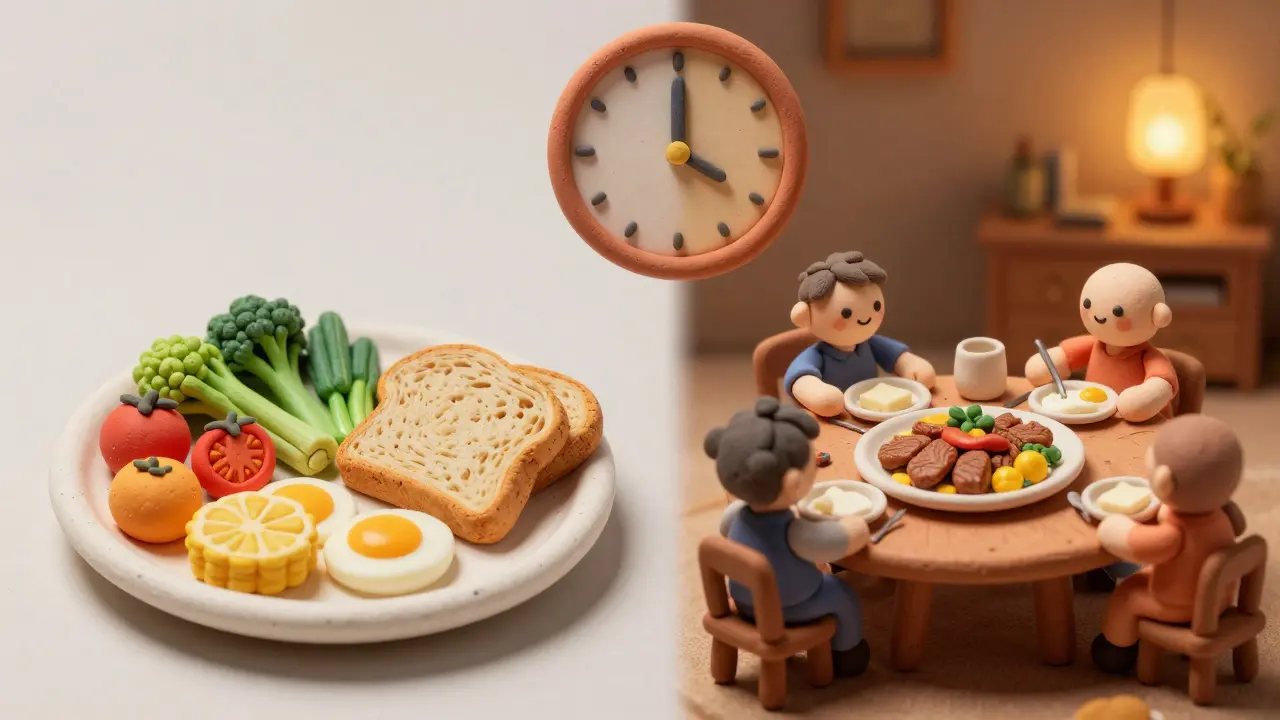
The PRD is widely considered the most effective strategy for managing motor fluctuations. The core principle is simple: shift the majority of your daily protein intake to the evening.
Here is how it works:
- Daytime (Morning to Afternoon): Keep protein intake very low, ideally under 7 grams per meal. Focus on carbohydrates, fats, fruits, vegetables, and specialized low-protein products.
- Evening (Dinner): Consume 80-85% of your total daily protein allowance during dinner. Since most people are less active in the evening and may not require immediate mobility assistance, this minimizes the impact of reduced Levodopa efficacy during sleep.
A meta-analysis by Wang et al. (2017) found that PRD responsiveness rates range from 60.7% to 100% among patients who struggle with Levodopa fluctuations. Research by Barichella et al. showed that PRD could reduce "off" time by approximately 107 minutes daily compared to a balanced protein diet.
2. Low Protein Diet (LPD)
An LPD restricts total daily protein intake to 0.6-0.8 grams per kilogram of body weight. For a person weighing 60-70 kg, this means consuming only 40-50 grams of protein per day. While this reduces competition at the blood-brain barrier, it carries higher risks of muscle loss and nutritional deficiency if not carefully monitored. It is generally less preferred than PRD because it requires strict limitation throughout the entire day.
3. Timing Adjustments
Some patients find success by simply timing their medication differently. Taking Levodopa 30-60 minutes before a meal can help ensure the drug crosses the blood-brain barrier before the amino acids from food arrive. However, this method is inconsistent, with effectiveness varying from 30-65% depending on individual gastrointestinal function. Dr. J. Eric Ahlskog recommends consuming protein-rich foods either one hour before or one hour after Levodopa doses to minimize overlap.
| Strategy | Key Mechanism | Effectiveness | Main Challenge |
|---|---|---|---|
| Protein Redistribution Diet (PRD) | Shifts 80-85% of protein to evening meals | High (60-100% responders) | Social constraints; requires planning |
| Low Protein Diet (LPD) | Restricts total daily protein to 0.6-0.8g/kg | Moderate | Risk of malnutrition; muscle loss |
| Medication Timing | Takes Levodopa 30-60 mins before meals | Inconsistent (30-65%) | Hard to maintain with irregular schedules |

Practical Implementation: Making It Work in Real Life
Knowing the theory is one thing; living it is another. The biggest hurdle for patients is adherence. A 2023 systematic review by Rusch noted that 68% of patients discontinue strict PRD within 12 months due to dietary monotony and social difficulties. To avoid this, you need practical tools and flexibility.
Use Specialized Low-Protein Products
Specialty stores and online retailers offer low-protein alternatives that taste normal but contain minimal amino acids. These include low-protein bread, pasta, milk substitutes, and snacks. Incorporating these into your daytime meals allows you to eat satisfying portions without triggering the LAT1 transporter competition. While only 22% of patients report enhanced satisfaction with these products, they are crucial for long-term adherence for those who struggle with whole-food restrictions.
Track Your Intake
Many successful users rely on technology. Apps like MyFitnessPal are cited by 47% of patients to track their protein grams accurately. Keeping a medication-food diary helps identify your personal tolerance thresholds. You might find that 10 grams of protein causes issues, while 15 grams does not, depending on your specific metabolism and disease stage.
Plan Social Meals Strategically
Social isolation is a major complaint, with 58% of users reporting difficulty maintaining relationships due to dietary restrictions. To combat this:
- Communicate Early: Inform hosts of your dietary needs before attending events.
- Focus on Non-Protein Dishes: At dinners, prioritize salads, vegetable sides, starches, and desserts.
- Save Protein for Home: If a restaurant meal is heavy on protein, consider skipping your daytime Levodopa dose (only under doctor supervision) or saving your main protein intake for when you get home.
Monitor for Nutritional Deficiencies
Long-term protein restriction can lead to deficiencies in Vitamin B12 and iron, affecting 22% of long-term PRD users. Regular blood tests are essential. If you are underweight (BMI <20), protein restriction should be approached with extreme caution or avoided, as maintaining muscle mass is critical for preventing falls and fractures.
Future Directions and Emerging Therapies
Science is actively working on solutions that remove the burden of dietary management. Researchers are developing LNAA-competitive medications designed to bypass the transporter system entirely. Additionally, a promising approach called "protein pacing" is currently in Phase II trials (NCT04876321). This method uses timed micro-dosing of protein throughout the day to maintain stable amino acid levels, potentially minimizing Levodopa competition while allowing for more flexible eating habits. Preliminary results show efficacy in 68% of participants with significantly better adherence than traditional PRD.
Until these treatments are widely available, working closely with a registered dietitian specializing in neurological diseases is the best path forward. The Parkinson’s Foundation reports that 78% of patients receiving professional guidance achieve better symptom control than those attempting self-management. Customized meal plans that incorporate cultural food preferences have been shown to improve adherence by 40%.
How much protein is too much when taking Levodopa?
There is no single number for everyone, but research suggests that consuming more than 10 grams of protein in a single meal can begin to interfere with Levodopa absorption. Meals exceeding 20 grams of protein often cause substantial reductions in medication bioavailability. For most adults, a standard serving of meat or fish contains 20-25 grams of protein, which is why splitting protein intake or moving it to dinner is recommended.
Can I still eat meat and dairy while on a Protein Redistribution Diet?
Yes, but timing is key. In a Protein Redistribution Diet (PRD), you concentrate 80-85% of your daily protein intake into your evening meal. This means you can enjoy meat, poultry, fish, eggs, and dairy for dinner. During the day, you should limit these foods and focus on carbohydrates, healthy fats, fruits, and vegetables to keep protein intake below 7 grams per meal.
Does protein affect all Parkinson's medications?
No, protein primarily affects Levodopa (often combined with Carbidopa or Benserazide). Other classes of Parkinson's medications, such as dopamine agonists (e.g., Pramipexole, Ropinirole) or MAO-B inhibitors (e.g., Selegiline, Rasagiline), do not compete with amino acids for transport across the blood-brain barrier. Therefore, dietary protein restrictions are generally unnecessary if you are not taking Levodopa.
When should I start worrying about protein interactions?
Protein interactions typically become significant 8-13 years after the onset of Parkinson's symptoms or after several years of Levodopa therapy. If you notice that your medication works well in the morning but loses effectiveness after lunch or dinner, or if you experience frequent "off" periods, it may be time to discuss dietary adjustments with your neurologist or a dietitian.
Are there risks associated with restricting protein long-term?
Yes, long-term protein restriction can lead to muscle wasting (sarcopenia), weakened immunity, and nutritional deficiencies, particularly in Vitamin B12 and iron. Approximately 27% of patients on strict Protein Redistribution Diets develop mild protein-energy malnutrition over three years without proper monitoring. It is crucial to work with a healthcare provider to ensure your total daily protein intake meets your body's needs, even if it is shifted to the evening.
Menu