
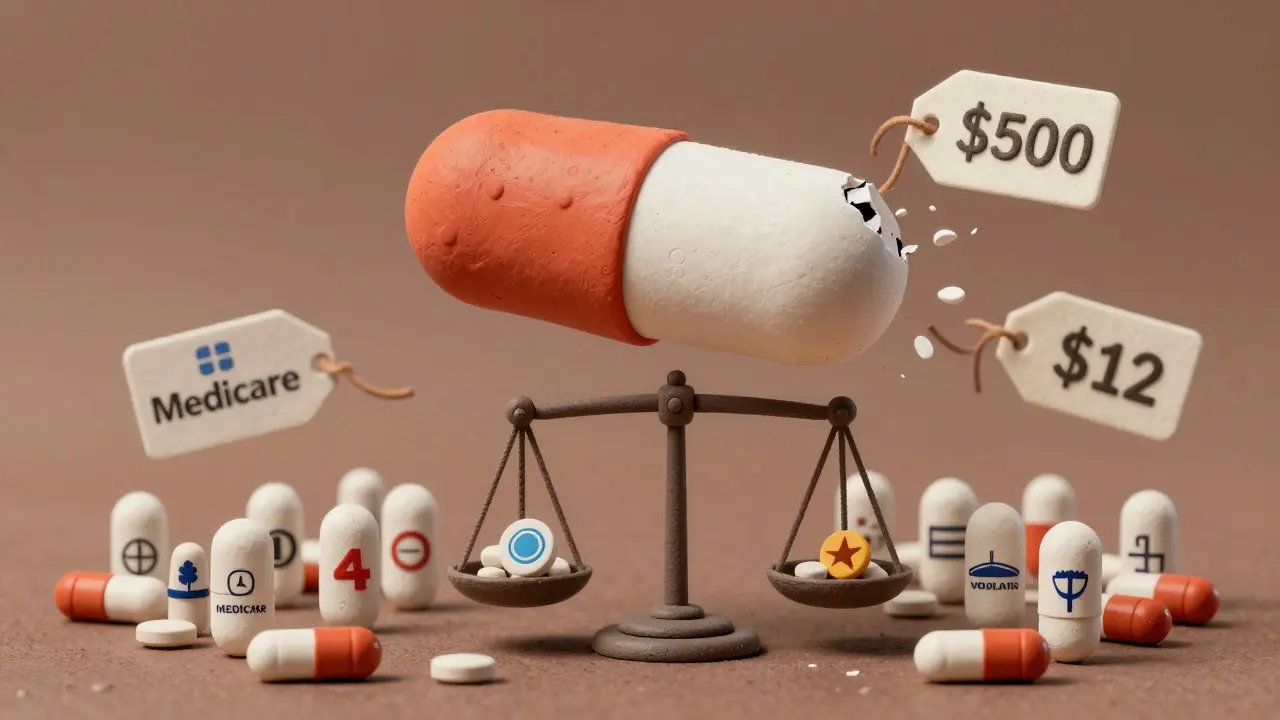
When a drug costs $500 a month, but a generic version of the same medicine sells for $12, the difference isn’t just about savings-it’s about power. Buyers in the healthcare system-Medicare, private insurers, pharmacy benefit managers (PBMs), and even government agencies-don’t just accept whatever price drugmakers set. They use one of the most effective tools in health economics: generic drug competition.
Generic drugs aren’t just cheaper copies. They’re the market’s natural check on brand-name prices. When multiple companies can make the same drug, prices don’t just drop a little-they collapse. Studies show that when six generic manufacturers enter the market, prices fall by an average of 90%. With nine or more, the drop hits 97%. That’s not theory. That’s data from the FDA and IQVIA, based on real-world sales and manufacturer pricing reports.
How Generic Competition Forces Prices Down
It’s basic economics: more sellers = lower prices. But in pharma, it’s even more dramatic. Brand-name drugs often start with monopoly pricing-no competition, no pressure to lower costs. Once generics arrive, everything changes. Generic manufacturers don’t need to spend billions on R&D. They copy the formula, prove bioequivalence, and start producing. That cuts their costs by 80-90%. They pass those savings to buyers, and suddenly, the brand-name drug is no longer the only option.
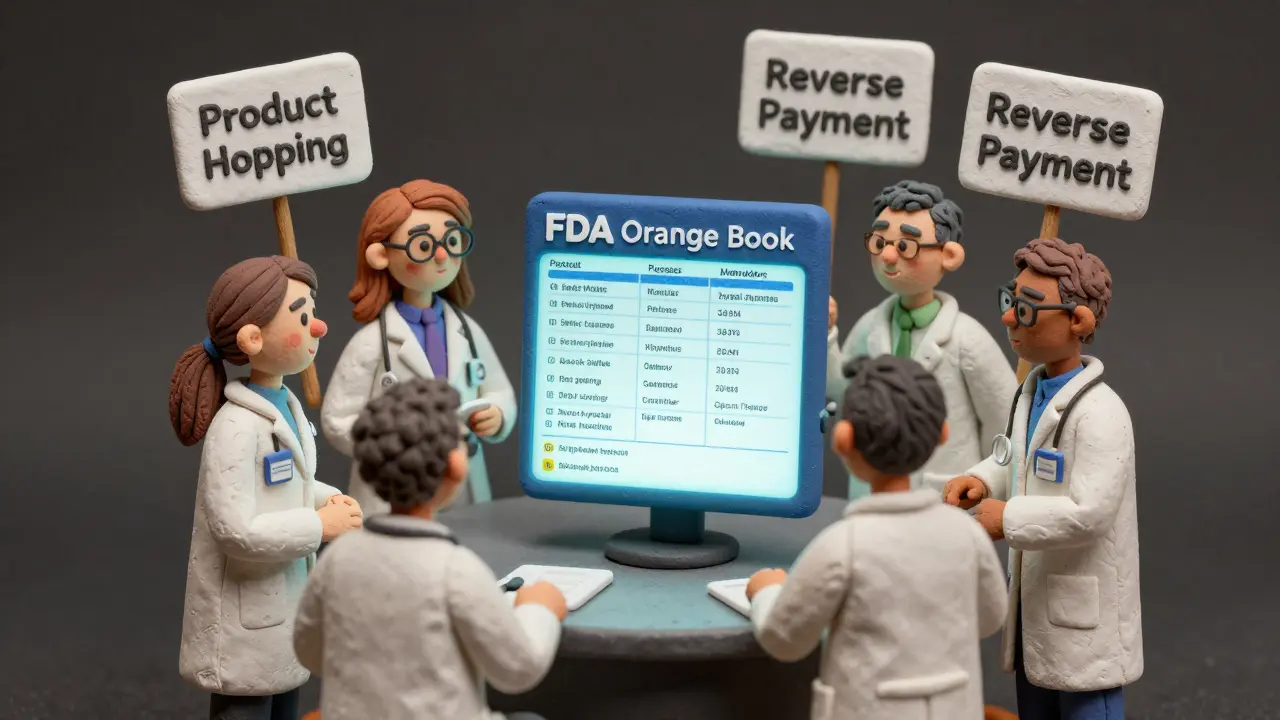
Buyers don’t just wait for this to happen. They actively watch for it. If a patent is about to expire, insurers and government programs start preparing. They track how many companies have filed to make the generic. They monitor court cases. They use data from the FDA’s Orange Book to see who’s challenging patents. The moment a generic is approved, they start negotiating. And they don’t negotiate with the brand anymore-they negotiate with the market.
The Medicare Drug Price Negotiation Program
The 2022 Inflation Reduction Act gave Medicare new power: it can now directly negotiate prices for some of the most expensive drugs. But here’s the twist-it doesn’t negotiate against the brand alone. It negotiates using generic competition as a baseline.
CMS (Centers for Medicare & Medicaid Services) looks at all the drugs in the same therapeutic class. If there are three generics already on the market, CMS uses their average price as the starting point. If there are no generics yet, CMS still looks at similar drugs that have generics. It’s not about what the brand claims it costs to make. It’s about what the market already pays for equivalent drugs.
This approach is smart because it doesn’t just lower prices-it keeps them low. If Medicare sets a price too high, generics still enter. If it sets a price too low, manufacturers might walk away. But when CMS uses actual generic prices as a reference, it creates a realistic floor. The June 2023 CMS guidance made this official: they review Prescription Drug Event (PDE) data and Average Manufacturer Price (AMP) data to confirm whether generics are truly being sold.
Why Some Buyers Fail to Leverage Competition
Not all buyers are this strategic. Many private PBMs still use opaque, proprietary algorithms. Some only look at the brand’s list price and apply a discount without checking what generics are doing. Others don’t even know how many competitors are in the market.
And then there are the tactics drugmakers use to block competition. One common trick is “product hopping”-slightly changing a drug’s form (a new pill shape, a new delivery method) and pushing patients to the new version just before generics launch. Between 2015 and 2020, there were over 1,200 of these moves, according to the FTC. Another is “reverse payments.” Brand companies pay generic makers to delay entering the market. The FTC found 106 such deals between 2010 and 2020. These aren’t just unethical-they’re illegal. But they still happen.
How Canada and Europe Do It Differently
Canada’s system is built around a tiered pricing model. If a drug has only one generic, the government allows a higher price. If five generics are available, the maximum price drops sharply. This isn’t random-it’s designed to reward competition. The more companies make the drug, the less the government pays.
Europe uses reference pricing. Countries like Germany and the UK set prices based on what other countries pay for the same drug. If a drug costs $30 in France and $25 in Spain, the UK won’t pay more than $25. This creates cross-border pressure. Generic manufacturers know they can’t charge more than their neighbors.
The U.S. doesn’t have a national price cap, but CMS’s approach is slowly moving toward this model. The difference? In Europe, the government sets the ceiling. In the U.S., buyers use market prices as a guide-but they still have to negotiate.
The Hidden Cost of Undermining Generic Competition
There’s a dangerous irony in how some policies are being shaped. The Inflation Reduction Act lets Medicare negotiate prices-but it prohibits direct negotiation if a generic is already on the market. That sounds fair. But here’s the catch: if Medicare sets a low price for a brand drug before generics even enter, it kills the incentive for generics to come in.
Imagine this: a brand drug costs $1,000 a month. Medicare negotiates it down to $400. A generic manufacturer sees that and thinks: “Why spend $50 million to get FDA approval and fight patents if I can’t make a profit against a $400 government price?” That’s not hypothetical. Avalere Health’s 2023 analysis found that government-set prices before generic entry can reduce generic market entry by 30-40%.
This isn’t just about one drug. It’s about the whole pipeline. If generics stop entering, prices stay high. And when prices stay high, patients skip doses, hospitals pay more, and the system breaks.

Who’s Winning and Who’s Losing
Patients win when generics enter. The Association for Affordable Medicines says generics make up 90% of U.S. prescriptions but only 22% of spending. That’s $300 billion in annual savings. Medicare beneficiaries alone could save $6.8 billion a year from the first 10 negotiated drugs, according to CMS data.
But manufacturers are split. Big pharma, through PhRMA, spends millions lobbying against price negotiations. They argue it kills innovation. But the data doesn’t back that up. Most innovation happens in new drugs-not in extending monopolies on old ones. Meanwhile, generic manufacturers like Teva, Sandoz, and Viatris-the top three global players-report that predictable pricing helps them invest. But if prices are set too low too soon, they can’t afford to build new factories or hire chemists.
And then there’s the rise of complex generics and biosimilars. These aren’t simple pills. They’re injectables, inhalers, biologics. They cost more to make. Their competition is slower. Their market share? Only 45%, compared to 90% for traditional generics. Buyers need new tools to negotiate these-not just price comparisons, but cost-of-production analysis, manufacturing capacity checks, and clinical equivalence studies.
What Buyers Need to Succeed
Successful price negotiation isn’t about yelling louder. It’s about knowing the numbers. Buyers need:
- Access to real-time data on generic approvals and patent challenges
- Integration of AMP, PDE, and wholesale invoice data to confirm true market prices
- Pharmacoeconomic expertise to understand therapeutic alternatives
- Transparency in how PBMs negotiate-most still operate as black boxes
- A policy environment that discourages reverse payments and product hopping
Health systems that have built this infrastructure report a 6-9 month learning curve. Eighty-five percent say they need dedicated teams with pharmaceutical economics training. It’s not easy. But the savings? They’re real.
The Future of Generic Competition
The next big shift is coming. The proposed EPIC Act would delay Medicare negotiation until after generics have had time to enter the market. That’s a win for competition. The UK just updated its pricing rules to track European prices in real time. ISPOR says 73% of health tech agencies will use real-world evidence by 2025 to judge whether a drug actually works better than its generics.
But the biggest threat isn’t policy-it’s complacency. If buyers stop watching the market, if they stop tracking patent expirations, if they stop demanding transparency, then the power shifts back to manufacturers. And prices will climb again.
The lesson is simple: generic competition isn’t just a side effect of drug pricing. It’s the most powerful lever buyers have. Use it right, and you save billions. Ignore it, and you pay more-for everyone.
Diane Croft
March 3, 2026 AT 03:18Generic competition is the quiet hero of affordable medicine. When six manufacturers enter the market, prices don’t just dip-they crater. I’ve seen this firsthand with my dad’s blood pressure med. Went from $480 to $11. No magic, just math. And it works every time.
Donna Zurick
March 4, 2026 AT 20:31The real win is how buyers use data to force the hand of pharma. Tracking patent filings and FDA approvals isn’t sexy but it’s how we stop price gouging before it starts. It’s not about being tough-it’s about being smart.
RacRac Rachel
March 5, 2026 AT 12:36Just think about it-90% of prescriptions are generics but only 22% of spending. That’s $300 billion saved every year. We’re not talking about pennies here. We’re talking about people who can afford to eat, pay rent, or get their insulin. This isn’t policy-it’s survival. 🙌
Jane Ryan Ryder
March 6, 2026 AT 20:21So let me get this straight-we’re supposed to feel bad for Big Pharma because Medicare might pay $400 instead of $1000? Meanwhile, I’m choosing between my asthma inhaler and groceries. Wake up. The system is rigged and you’re defending the riggers.
Chris Beckman
March 7, 2026 AT 07:44idk if this is all real or just stats from some study. i mean like how do you even track all that? and what about when the brand changes the pill shape to stop generics? that sounds like a scam to me. also i heard the fda is kinda slow so i dunno.
Levi Viloria
March 7, 2026 AT 14:18Canada’s system is actually kinda brilliant. They don’t just guess at prices-they look at what’s working elsewhere. If Germany pays $25, why should we pay $50? It’s not about being anti-business. It’s about being reasonable. The U.S. could learn a lot from that.
Jeff Card
March 8, 2026 AT 15:54I’ve worked in hospital pharmacy for 18 years. I’ve seen the shift firsthand. When generics hit, the savings aren’t just numbers on a spreadsheet. They’re patients who stop skipping doses. They’re families who don’t have to choose between medicine and rent. This isn’t theoretical. It’s lived. And when the system works, it works beautifully.
But when PBMs hide behind opaque formulas or when reverse payments slip through, it’s not just unfair-it’s deadly. We need more transparency, not less. Real data. Real accountability.
And yes, complex generics and biosimilars are harder. They cost more to make. But that doesn’t mean we stop trying. It means we get smarter. We invest in real pharmacoeconomic teams. We train people who understand not just chemistry, but cost, access, and equity.
It’s not about being anti-corporate. It’s about being pro-patient. And that should be the only metric that matters.
Matt Alexander
March 9, 2026 AT 11:10Simple version: more companies making the same drug = lower price. That’s basic. If only one company makes it, they can charge whatever. But if five do, they fight for business. That’s why prices drop 90%. No magic. Just competition.
Also, don’t let them trick you with new pill shapes. That’s a dodge. And don’t let them pay generic makers to wait. That’s illegal. But it still happens. We need to call it out.
Diane Croft
March 10, 2026 AT 16:54Chris Beckman makes a fair point about data access. The FDA’s Orange Book is public, but most people don’t know how to use it. Hospitals and insurers should make this data dashboard public. If we can track Netflix viewing habits, we can track generic approvals. It’s doable.
Gretchen Rivas
March 11, 2026 AT 23:21Levi Viloria nailed it. Reference pricing works because it creates pressure. If the UK pays less than we do, why are we still overpaying? The U.S. doesn’t need a top-down cap. We need market awareness. Buyers just need to stop being lazy.