
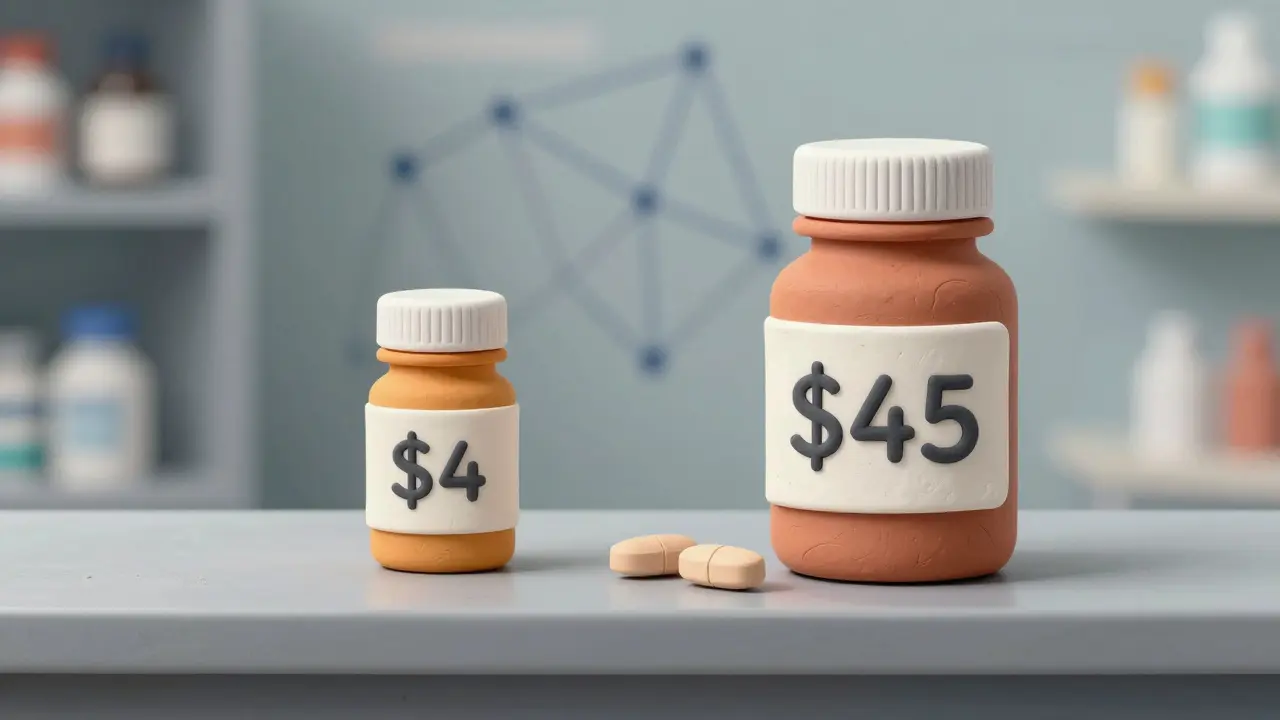
Why does a bottle of generic blood pressure medication cost $4 at one pharmacy and $45 at another? For millions of Americans, the answer isn't just about market competition-it's about a complex web of drug pricing regulation that blends federal mandates, state rules, and private negotiations. While brand-name drugs often grab headlines for their skyrocketing costs, the story behind generic drugs is equally intricate. The U.S. government doesn't simply set a single price tag for every pill. Instead, it uses a mix of rebate programs, insurance subsidies, and recent legislative changes to influence what you pay at the counter.
If you're trying to understand why your prescription costs what it does, or how policies like the Inflation Reduction Act (IRA) are changing the landscape in 2026, this guide breaks down the mechanics. We'll look at who sets the prices, where the money goes, and what new rules mean for your wallet.
How the Government Influences Generic Prices
Unlike many other developed nations that directly cap drug prices, the United States relies heavily on indirect controls. The federal government generally lets market forces determine the wholesale price of generic drugs but steps in aggressively through public health programs. The biggest lever here is the Medicaid Drug Rebate Program (MDRP).
Established in 1990, MDRP requires manufacturers to pay rebates to state Medicaid programs. For generic drugs, the rule is specific: manufacturers must pay a rebate equal to the greater of 23.1% of the Average Manufacturer Price (AMP) or the difference between the AMP and the best price offered to any commercial customer. This ensures that if a manufacturer sells a drug cheaply to a large buyer, Medicaid gets a similar discount. These calculations happen quarterly, keeping the system somewhat responsive to market shifts.
In fiscal year 2024, these generic rebates totaled $14.3 billion, making up 78% of all Medicaid drug rebates. This mechanism doesn't set the shelf price, but it significantly impacts the net cost to the government, which in turn influences how much insurers and pharmacies are willing to pay.
The Role of Medicare Part D and the Inflation Reduction Act
For older Americans and those with disabilities, Medicare Part D is the primary driver of out-of-pocket costs. Historically, beneficiaries faced high deductibles and coinsurance rates. However, the landscape shifted dramatically with the passage of the Inflation Reduction Act (IRA) in 2022, with major provisions taking effect in 2025 and 2026.
Starting in 2025, the IRA capped annual out-of-pocket spending for Medicare Part D beneficiaries at $2,000. This was a game-changer for patients relying on multiple generic medications. Additionally, the deductible for generic drugs dropped from $595 in 2024 to $545 in 2026. During the initial coverage phase, beneficiaries typically pay 25% coinsurance for generics, but those qualifying for the Low-Income Subsidy (LIS) pay between $0 and $4.90 per prescription.
The IRA also introduced direct drug price negotiation by Medicare. While the first round focused on high-cost brand-name drugs, the second round in 2027 will include generic versions of popular medications like apixaban (Eliquis) and rivaroxaban (Xarelto). Analysts predict this could reduce prices for these select generics by 25-35%, affecting over 5 million beneficiaries.
Generic vs. Brand: The Competition Factor
The core philosophy of U.S. generic pricing is competition. Once a patent expires, multiple manufacturers can produce the same drug. This usually drives prices down sharply. According to 2025 data from IQVIA, generic drugs cost 80-85% less than their brand-name equivalents. In therapeutic areas with many competitors, such as statins and ACE inhibitors, prices have dropped 75-90% since patent expiration.
| Metric | Value / Status |
|---|---|
| Market Share by Volume | 90% of prescriptions filled with generics |
| Average Price Discount | 80-85% lower than brand-name equivalents |
| Number of Manufacturers | ~1,500 (down from 2,100 in 2015) |
| Primary Pricing Driver | Post-patent market competition |
| Key Regulatory Program | Medicaid Drug Rebate Program (MDRP) |
However, this system has flaws. In "orphan" generic markets where only one or two manufacturers remain, competition disappears. Prices can spike by 300% or more, as seen with pyrimethamine in 2024. Without regulatory intervention, these low-competition markets become volatile, leaving patients vulnerable to sudden cost increases.
International Comparison: Why U.S. Prices Differ
When comparing the U.S. to other countries, the differences are stark. Nations like Canada, the UK, and Germany use direct price controls or reference pricing systems. The UK's National Institute for Health and Care Excellence (NICE) negotiates prices based on cost-effectiveness, while Germany evaluates early benefit assessments.
A 2025 analysis by the Kaiser Family Foundation (KFF) found that U.S. generic drug prices are 1.3 times higher than the average of 32 other OECD countries. While this gap is smaller than the 3-5x disparity for brand-name drugs, it still highlights a significant inefficiency. Dr. Peter Bach of Memorial Sloan Kettering Cancer Center argues that the U.S. pays 138% more for generics due to fragmented purchasing power. He advocates for centralized negotiation, similar to the Veterans Affairs (VA) system, which achieves 40-60% discounts through bulk buying.
Who Actually Pays: PBMs and Transparency Issues
You might wonder why your copay doesn't reflect the actual savings from rebates. Enter Pharmacy Benefit Managers (PBMs). These intermediaries negotiate rebates with manufacturers on behalf of insurers. A July 2025 Senate HELP Committee report revealed that 68% of generic drug savings from rebates never reach consumers. Instead, they stay within the PBM or insurer ecosystem.
To combat this opacity, new transparency rules promulgated in April 2025 require manufacturers to disclose actual costs before dispensing. This aims to give patients and doctors clearer visibility into pricing, though implementation challenges remain. Independent pharmacists report spending over 11 hours weekly managing reimbursement claims, highlighting the administrative burden of the current system.
What Experts Say About Future Regulations
The debate over government control of generic prices is far from settled. Industry groups like the Academy of Managed Care Pharmacy (AMCP) oppose direct price controls, arguing they create unintended consequences and stifle innovation. They advocate for removing barriers to competition instead.
Conversely, policy experts point to the Congressional Budget Office's estimate that expanding Medicare negotiation to select generics could save $12.7 billion over ten years. While this is a small fraction of total spending, it signals a shift toward more active government involvement. The Mercatus Center warns that excessive controls could reduce R&D investment by 15% through 2030, while the Roosevelt Institute argues strategic regulation could stabilize the market.
Does the US government set the price of generic drugs?
No, the US federal government does not directly set retail prices for generic drugs in the commercial market. Instead, it influences costs through rebate programs like Medicaid, insurance subsidies in Medicare Part D, and recently, negotiated prices for select drugs under the Inflation Reduction Act.
How much do I pay for generic drugs with Medicare in 2026?
In 2026, Medicare Part D beneficiaries face a reduced generic deductible of $545. Most pay 25% coinsurance during the initial coverage phase, but annual out-of-pocket costs are capped at $2,000. Those with Low-Income Subsidies pay between $0 and $4.90 per prescription.
Why are generic drug prices sometimes so high?
Prices spike when there is little competition. If only one or two manufacturers produce a specific generic drug, they can raise prices significantly without fear of losing customers. This is common in "orphan" generic markets.
What is the Medicaid Drug Rebate Program?
The Medicaid Drug Rebate Program (MDRP) requires manufacturers to pay rebates to state Medicaid programs. For generics, the rebate is the greater of 23.1% of the Average Manufacturer Price or the difference between that price and the best commercial price offered.
Will Medicare negotiate prices for generic drugs?
Yes. Starting in 2027, Medicare will begin negotiating prices for select generic drugs, including popular blood thinners like apixaban and rivaroxaban. This is part of the Inflation Reduction Act's expansion of price negotiation powers.
Cecilia McGuinness
June 14, 2026 AT 07:02thats wild how the pbms keep all that money instead of letting us see lower copays feels like a scam honestly
Brett Webster
June 14, 2026 AT 07:11The PBM model is fundamentally broken because it aligns incentives with volume rather than value. When you look at the data, manufacturers raise list prices knowing PBMs will capture the rebate spread, leaving the patient with high deductibles and no actual savings. It’s not just opaque; it’s structurally predatory.
Callie Skipper
June 14, 2026 AT 17:11i mean yeah but whats the alternative if we just let the gov set prices wont companies stop making cheap stuff then? seems risky to me
Aditya Singh
June 14, 2026 AT 21:55From an international perspective, the US approach is an outlier. In India, we have generic manufacturing hubs where competition drives prices down naturally without heavy government intervention on every single SKU. The issue here isn't just regulation but market fragmentation. You have thousands of small pharmacies negotiating individually versus massive consolidated buying power in Europe or Asia. The IRA negotiations are a step toward correcting this arbitrage, but until we see bulk purchasing mechanisms similar to the VA system applied broadly, the inefficiency remains. The jargon around 'best price' vs 'AMP' creates loopholes that manufacturers exploit. We need streamlined procurement strategies.
Erin Livengood
June 16, 2026 AT 13:51It's a tangled web indeed, isn't it? Like trying to untangle a knot of yarn in the dark. I find it fascinating how the MDRP tries to mimic market forces by tying rebates to the 'best price,' yet the best price is often hidden behind closed doors. It feels like a game of musical chairs where the music never stops and the seats are made of gold that only some people can sit on. The irony is thick enough to cut with a knife. We pay more for less, wrapped in layers of bureaucratic tape. Perhaps the real cost isn't just monetary but the erosion of trust in the system itself. A philosophical nightmare disguised as healthcare policy.
Sherry Wheeler
June 16, 2026 AT 14:58Oh my gosh, reading about the orphan drug spikes gives me chills! Imagine relying on a life-saving med and then BAM, triple the price overnight because one company decided to play hardball. It’s terrifyingly dramatic. But hey, maybe this is our wake-up call to demand better! We can’t just accept this chaos. Let’s rally together and push for those transparency rules mentioned in the article. Change starts with awareness, right? Don’t let them hide behind the complexity!
Daniella Renzon
June 17, 2026 AT 07:19it is really interesting to see how different countries handle this. in south africa we have our own struggles with access but seeing the us spend so much more for generics is eye opening. i hope the new ira rules help people out there. keeping things calm and hoping for better outcomes for everyone involved
Talilla Bailey
June 17, 2026 AT 22:15The assertion that industry groups oppose direct price controls due to innovation concerns is a disingenuous defense of profit margins. The data clearly indicates that R&D investment is driven by patent exclusivity periods, not post-patent pricing strategies for generic equivalents. To suggest that capping generic prices stifles innovation is logically flawed. Generic drugs do not require significant R&D investment; they require regulatory approval and manufacturing scale. Therefore, aggressive negotiation by Medicare, as outlined in the IRA, should be viewed as a necessary correction to market failure, not a threat to scientific progress. We must hold policymakers accountable for implementing these provisions without dilution.