
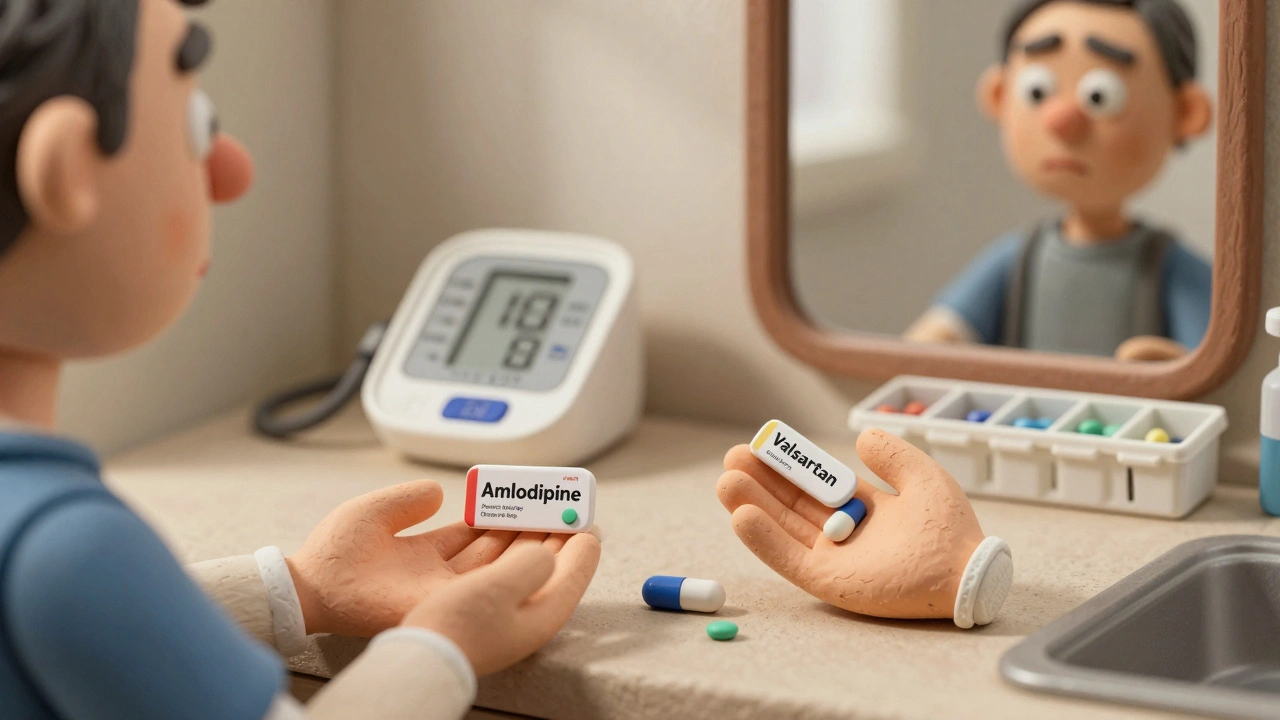
Imagine you’re managing high blood pressure. Your doctor used to give you one pill that combined two drugs - amlodipine and valsartan - in a single tablet. Now, they’ve switched you to two separate pills. Why? You’re not alone. Thousands of patients in the U.S. and around the world are being prescribed de facto combinations: taking multiple generic pills instead of a single fixed-dose combination (FDC). It’s not a mistake. It’s a growing trend - and it comes with real trade-offs.
What Exactly Is a De Facto Combination?
A de facto combination happens when a doctor prescribes two or more separate generic drugs that, together, do the same job as a single FDC pill. For example, instead of a pill with metformin and sitagliptin for diabetes, you get two pills: one with metformin, one with sitagliptin. The combination works the same way medically - but it’s not approved as a single product. That’s the key difference.
Fixed-dose combinations (FDCs) are FDA- or EMA-approved pills that contain two or more active ingredients in a fixed ratio, tested together for safety, stability, and how well they work as a unit. De facto combinations skip that testing. They’re put together by the prescriber, not the drugmaker. That means no official studies on how the two drugs interact in your body - just the assumption that they’ll behave the same as if taken separately.
Why Do Doctors Choose Separate Generics?
There are three big reasons doctors pick separate generics over FDCs: dosing flexibility, cost, and lack of suitable FDC options.
Let’s start with dosing. Not everyone needs the same amount of each drug. Say you need 5 mg of amlodipine and 160 mg of valsartan. The only FDC available is 10 mg/160 mg. You’d be forced to take more amlodipine than you need - which might cause swelling or dizziness. With separate generics, your doctor can give you exactly 5 mg of amlodipine and 160 mg of valsartan. That’s precision. And for patients with kidney or liver problems, that precision matters.
Cost is another driver. In some cases, two separate generic pills cost less than the branded FDC. In India, for example, a parliamentary report found that many FDCs offered no real benefit over individual drugs - and were often more expensive. Even in the U.S., when multiple manufacturers make the same generic, competition can drive prices down. One 2022 analysis showed that for certain hypertension regimens, separate generics were up to 30% cheaper than the FDC.
And sometimes, there’s just no FDC available. For newer drugs or niche combinations - say, a diabetes drug paired with a newer GLP-1 agent - FDCs haven’t been developed yet. So doctors do the next best thing: prescribe the components separately.
The Hidden Costs: Adherence and Risk
But here’s the catch: taking more pills usually means taking them less consistently.
A 2021 study in PubMed found that each extra pill in a daily regimen reduces adherence by about 16%. For patients on an FDC, adherence was 22% higher than for those on the same drugs taken separately. That’s not a small difference. Missed doses mean higher blood pressure, worse blood sugar control, and more hospital visits.
Patients on de facto combinations report real struggles. One Reddit user with hypertension wrote: “I switched from a single Amlodipine/Benazepril pill to two generics to save $15 a month. Now I forget which blue pill is which. I’ve missed doses twice.”
Pharmacists see it too. A 2022 survey of 1,532 U.S. pharmacists found that 72% worried about medication errors with de facto combinations. Color-coded pills, synchronized refill schedules, and pill organizers help - but they add work for patients and providers. The Centers for Medicare & Medicaid Services found that regimens using separate generics generated 28% more documentation errors in electronic health records.

Are There Safety Risks?
Yes - and they’re mostly invisible.
FDCs go through rigorous testing. Regulators like the FDA and EMA require proof that the combination is safe, that the drugs don’t interfere with each other’s absorption, and that the final product stays stable over time. That’s why you see expiration dates on FDCs - they’ve been tested to last.
De facto combinations? Not so much. When you take two generics together, you’re mixing products from different manufacturers. One might be a slow-release tablet. The other, a quick-dissolve capsule. Do they interact? Does one affect how the other gets absorbed? No one’s studied it.
Dr. Kenneth H. Fye of the University of Pennsylvania called this a “therapeutic Wild West” in a 2021 JAMA commentary. He wasn’t exaggerating. The FDA’s own bioequivalence review in 2020 found that 12.7% of generic drugs showed clinically meaningful differences in how they released into the bloodstream compared to the original brand. That’s not a problem if you’re taking one pill - but if you’re combining two, the risks multiply.
When Are De Facto Combinations a Good Idea?
They’re not always bad. Sometimes, they’re the best option.
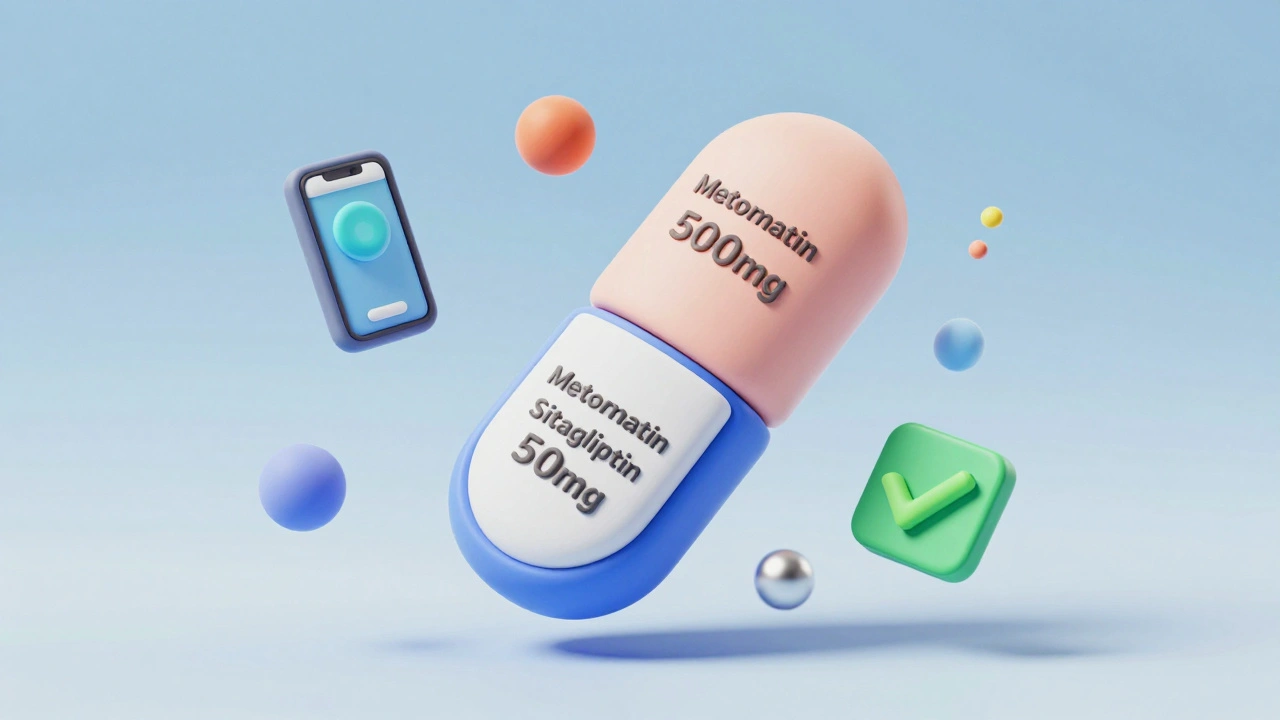
Take a patient with type 2 diabetes and kidney disease. They need metformin, but their kidneys can’t handle more than 500 mg per day. They also need sitagliptin, but the only FDC available is 500 mg/100 mg. That’s too much metformin. Separate generics let the doctor dial in exactly 500 mg metformin and 50 mg sitagliptin. One patient on Drugs.com reported their A1c stayed at 6.2% for 18 months after switching to separate pills - because the FDC didn’t fit their body.
Same goes for HIV treatment in some cases. Patients on antiretrovirals often need dose adjustments based on weight, kidney function, or drug interactions. While most HIV patients use FDCs for adherence, some complex cases benefit from separate pills.
The key is intentionality. When a doctor chooses separate generics for a clear clinical reason - not just because it’s cheaper or easier - it can be the right move.
What’s Changing in the Industry?
Drugmakers are starting to respond. AstraZeneca patented a modular FDC system in 2022 that lets patients adjust doses within a single pill - keeping the adherence benefits while offering flexibility. That’s the future: smart combinations that adapt to the patient, not the other way around.
The FDA and EMA are also paying attention. In January 2023, the FDA issued a safety alert about 147 adverse events potentially linked to untested combinations. The EMA launched a 2023-2025 project to study off-label combinations. And in 2023, the WHO updated its Essential Medicines List to include guidance on when separate components are preferable to FDCs - a sign that regulators now recognize both sides of the issue.
Meanwhile, tech is stepping in. PillPack by Amazon’s Combination Therapy Support Program, launched in 2021, packages separate pills with color-coded labels and refill reminders. Patients using it saw a 41% drop in missed doses.
What Should You Do?
If you’re on separate generics instead of an FDC, ask yourself:
- Is this change based on my specific needs - like kidney function, weight, or side effects?
- Am I taking the right dose of each drug, or just what’s available in the FDC?
- Do I have a system to remember which pill is which? (Color-coding, pill boxes, phone alarms?)
- Have I talked to my pharmacist about potential interactions between these specific generics?
If you’re unsure, don’t guess. Ask your doctor: “Is there an FDC that would work for me? If not, why not?”
And if you’re a provider: document why you chose separate generics. Don’t assume the patient knows the risks. Use tools like medication reconciliation, visual aids, and refill synchronization. The goal isn’t to eliminate de facto combinations - it’s to make them safe, intentional, and supported.
De facto combinations aren’t inherently wrong. But they’re not harmless, either. They’re a workaround - and like any workaround, they need care, attention, and oversight.
Are de facto combinations legal?
Yes, it’s legal for doctors to prescribe separate generic drugs together. This is called “off-label prescribing,” and it’s common in medicine. What’s not legal is for drug companies to market unapproved combinations as a single product. The practice itself is permitted - but not always safe or optimal.
Can I switch back to an FDC if I’m on separate generics?
Yes - but only if a suitable FDC exists and your doctor agrees. If your current regimen works well and you’re managing adherence, switching might not be necessary. But if you’re struggling to remember pills or your blood pressure or blood sugar isn’t controlled, ask your doctor about FDC options. Some FDCs now offer adjustable doses, so the flexibility gap is narrowing.
Why don’t all combination drugs come as FDCs?
Developing an FDC is expensive and time-consuming. Drugmakers need to prove the combination works better than the individual drugs - and that the fixed ratio suits most patients. If the market is small, or if dosing needs vary widely (like in diabetes or HIV), companies often skip FDC development. That’s why separate generics fill the gap.
Do generic versions of the same drug behave the same way in a combination?
Not always. The FDA found that 12.7% of generic drugs differ in how quickly or completely they release into the bloodstream. If you’re taking two generics from different manufacturers, their absorption rates might not match. That’s why FDCs - made by one company with tested compatibility - are more predictable.
Is there a way to make de facto combinations safer?
Absolutely. Use a pill organizer with labeled compartments. Set phone reminders. Ask your pharmacist for color-coded labels. Consider services like PillPack that pre-sort your meds. And always review your full list of medications with your doctor every 6 months. These steps don’t eliminate risk - but they cut it in half.
Jade Hovet
December 14, 2025 AT 10:44OMG I JUST REALIZED I’VE BEEN TAKING TWO BLUE PILLS AND I CAN’T EVEN REMEMBER WHICH IS WHICH 😭 I switched to separate generics to save cash, but now I’m just guessing like a confused raccoon in a pantry. Pill organizer + phone alarms saved me. Also, why is the metformin pill slightly chalky?? 🤔
Constantine Vigderman
December 14, 2025 AT 11:42Yo this is wild but also kinda genius. I used to take the FDC for my BP until my doc switched me because my kidneys were acting up. Separate pills = exact dosing. No more ankle swelling. Yeah, I forget sometimes, but I got a little box with labels and now I’m killing it. 6 months clean, A1c down, no hospital trips. Small effort, huge win. 💪
Cole Newman
December 15, 2025 AT 06:34Bro, you’re all overreacting. It’s just pills. If you can’t remember two pills, maybe you shouldn’t be managing your own meds. My grandma takes 14 pills a day and she’s fine. You just need discipline. Also, generics are all the same, stop being paranoid. FDA says so. End of story.
Tom Zerkoff
December 16, 2025 AT 05:49While the clinical rationale for de facto combinations is often sound-particularly in cases of renal impairment or idiosyncratic pharmacokinetics-the absence of formal pharmacodynamic interaction studies presents a non-trivial risk profile. The FDA’s 2020 bioequivalence data indicates a statistically significant variance in Cmax and AUC among certain generic formulations, which, when compounded across multiple agents, may yield unpredictable therapeutic outcomes. I strongly recommend clinicians document the specific rationale for off-label combinations and utilize pharmacy-led medication reconciliation protocols to mitigate error potential.
Yatendra S
December 17, 2025 AT 00:12Life is a combination of separate pills, isn’t it? We take what we can get, adjust the dose, and hope the universe doesn’t throw a curveball. One pill for the body, one for the soul. Maybe the real FDC is inner peace. 🌿
kevin moranga
December 18, 2025 AT 10:43Let me tell you, I was skeptical too. I thought, ‘Why not just take the one pill?’ But my doctor sat me down and said, ‘Your creatinine’s up, so we’re cutting your metformin in half.’ The FDC had 1000mg-way too much. So I got two pills: one 500mg metformin, one 50mg sitagliptin. Took me a week to get used to it, but now I’ve got a little pill box with red and blue compartments, and I even set a reminder that says ‘Don’t be a dummy, take your meds.’ My A1c’s been 6.1 for a year now. Honestly? It’s better than the FDC. I just wish my pharmacy didn’t change the color of the sitagliptin pill last month… I panicked for two days. 😅
Alvin Montanez
December 18, 2025 AT 15:09People are so lazy. They want everything handed to them in one pill. Then they complain when they have to think for five seconds. If you can’t remember to take two pills, you shouldn’t be allowed to manage your own health. This isn’t a game. This is your body. And if you’re too careless to use a pill organizer or set an alarm, then you deserve the consequences. The system isn’t broken-you are. Stop blaming the doctors and the generics. Take responsibility. Or don’t. But don’t act surprised when your numbers go haywire.
Lara Tobin
December 20, 2025 AT 09:08I just wanted to say… I get it. I’ve been there. That moment when you stare at two identical-looking pills and your brain just goes blank. I cried once. It’s not just about remembering-it’s the shame, the fear you’re doing it wrong. But I found a pharmacist who gave me stickers with tiny labels and now I feel so much better. You’re not alone. 💛
Jamie Clark
December 20, 2025 AT 16:26This whole system is a corporate scam. Drug companies don’t make FDCs because they’re too hard-they make them because they’re profitable. Separate generics? They’re cheaper for patients, but the manufacturers don’t get the same margins. So they lobby to keep FDCs expensive. Meanwhile, patients are stuck playing Russian roulette with bioequivalence. The FDA’s asleep at the wheel. This isn’t medicine-it’s capitalism with a stethoscope.
Keasha Trawick
December 20, 2025 AT 19:40Okay, buckle up, because this is the most chaotic medical drama since the 2008 financial crash. We’ve got generics from five different factories, each with their own little personality-some dissolve like sugar in tea, others are stubborn as a mule. You’re combining them like a mad alchemist, hoping the chemistry gods don’t throw a tantrum. And the FDA? They’re like, ‘Meh, it’s off-label, we’ve got bigger fish to fry.’ Meanwhile, your pharmacist is scribbling on a napkin, ‘Blue pill = metformin, green = sitagliptin, unless it’s Tuesday, then it’s purple.’ It’s not a regimen-it’s a performance art piece. And we’re all just trying not to die while keeping our insurance premiums low. 🎭💊