

What Is Compulsory Licensing?
Compulsory licensing is a legal tool that lets a government allow someone else to make or sell a patented product - like a medicine - without the patent holder’s permission. The patent owner still gets paid, but they don’t get to say no. This isn’t about stealing ideas. It’s about making sure people can get life-saving drugs when prices are too high or supplies are too low.
This isn’t new. The idea goes back to the 1883 Paris Convention, but it became a global standard in 1994 with the TRIPS Agreement under the World Trade Organization. That agreement says countries can issue these licenses, but only under strict conditions: the license must be for the domestic market, the patent holder must be paid fairly, and usually, the government must try to negotiate first.
But here’s the catch: those rules bend in emergencies. When a pandemic hits or a disease spreads fast, countries can skip the negotiation step and move straight to issuing a license. That’s exactly what happened in 2020. Over 40 countries, including Canada, Germany, and Israel, prepared to use compulsory licensing for COVID-19 tests, treatments, and vaccines.
Why Do Governments Use It?
Patents give companies a monopoly. That’s good for innovation - it lets them recoup billions in R&D costs. But when that monopoly means a cancer drug costs $100,000 a year, and only 1 in 10 patients can afford it, the system breaks.
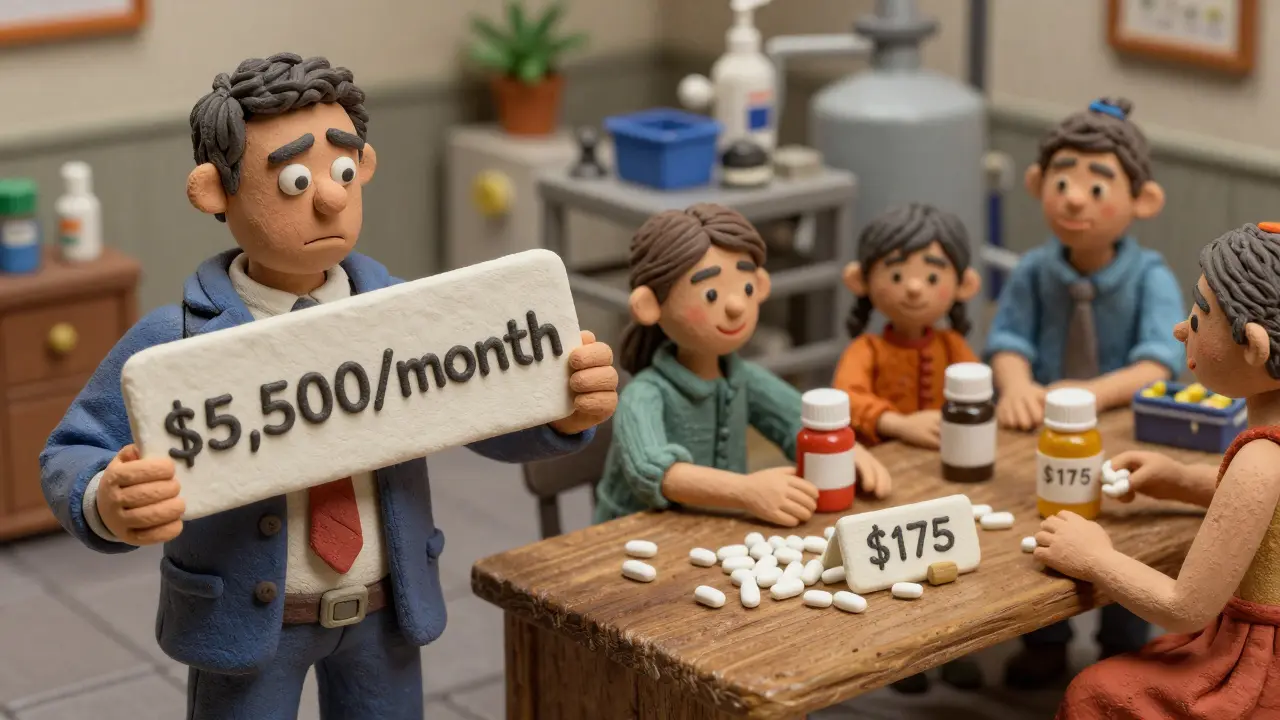
Compulsory licensing steps in when public health is at risk. In India, for example, the government issued its first compulsory license in 2012 for Nexavar, a liver and kidney cancer drug made by Bayer. The price dropped from $5,500 a month to $175. That’s not charity. That’s a legal reset. The Indian court found Bayer wasn’t making the drug available at a reasonable price, and Natco Pharma was allowed to make a generic version.
Thailand did something similar in 2007 with HIV drugs. Lopinavir/ritonavir went from $1,200 a year to $230. Efavirenz dropped from $550 to $200. These weren’t random decisions. They were responses to tens of thousands of people dying because the drugs were unaffordable.
Even the U.S. has tools like this. Under Title 28, U.S.C. § 1498, the federal government can use any patented invention - from military tech to medical devices - without permission. The company gets paid, but the government decides when and how. The Bayh-Dole Act also lets the government force a license if a company isn’t making a federally-funded invention available to the public.
How It Works in Different Countries
Not every country uses compulsory licensing the same way. The U.S. has the legal power, but it rarely uses it. Between 1945 and 2020, there were only about 10 cases - all for government use, mostly defense tech. The NIH has received 12 requests to force licenses on federally-funded drugs since 1980. Not one was granted. Why? The agency always claimed the company was “making reasonable efforts” to distribute the drug.
India, by contrast, has issued 22 compulsory licenses since 2005 - almost all for cancer medicines. Brazil issued three for HIV drugs, slashing prices by over 70%. South Africa and Thailand have used it to bring down prices for HIV and heart disease drugs.
Europe is mixed. Germany has the law, but never used it. Spain, however, passed emergency rules in 2020 allowing compulsory licensing for COVID-19 tech without even asking the patent holder first. The UK’s Patents Act 1977 allows it if the public’s “reasonable requirements” aren’t met - but no one’s pulled the trigger yet.
The biggest difference? Speed. In India, the process takes 18-24 months. In Spain, it took days during the pandemic. The U.S. system is slow and expensive - lawsuits under Section 1498 take an average of 2.7 years to resolve.
Who Benefits?
Patients do. Generic drugmakers do. Governments do.
Between 2000 and 2020, compulsory licensing helped cut the price of first-line HIV drugs by 92% in low- and middle-income countries. That’s millions of people getting treatment who otherwise wouldn’t have. Teva Pharmaceuticals, one of the world’s largest generic makers, made $3.2 billion extra between 2015 and 2020 from these licenses.
But it’s not just about money. It’s about access. In 2012, Canada used a special WTO rule to export a generic HIV drug made under compulsory license to Rwanda. That’s the only time that mechanism has ever been used - but it proved it could work.
And here’s something surprising: the threat of compulsory licensing often works better than actually using it. Professor Brook Baker found that since 2000, 90% of HIV drugs in developing countries saw voluntary price cuts - just because companies feared governments would issue licenses.
What Are the Downsides?
It’s not all clear wins. Big pharma argues that compulsory licensing kills innovation. A 2018 study in the Journal of Health Economics found that countries with active licensing programs saw 15-20% less investment in new drug research. When India issued the Nexavar license, Bayer’s stock dropped 10%. The IFPMA says each announcement causes an average 8.2% decline in company share prices.
There’s also the legal risk. Bayer fought India’s Nexavar license for eight years - and won some points on appeal. The process is messy, slow, and expensive. Only 12 out of 34 countries with licensing laws have ever actually used them. Why? Because most lack the legal expertise, technical capacity, or political will.
And then there’s the fear factor. The U.S. government has listed countries that issue compulsory licenses as “priority watch list” members in its Special 301 Report - a diplomatic warning. No sanctions have followed since 2012, but the message is clear: use this tool, and you might face trade pressure.

What’s Changing Now?
The biggest shift came in June 2022, when the WTO agreed to a temporary waiver for COVID-19 vaccine patents. For the first time, developing countries could legally produce vaccines without permission - until 2027. But adoption has been slow. Only 12 facilities in 8 countries are authorized to use it. Why? Because setting up manufacturing takes time, money, and regulatory approval.
The EU is pushing new rules. Its 2023 Pharmaceutical Strategy says patent holders must respond to licensing requests within 30 days - or risk automatic compulsory licensing. That’s a game-changer. No more waiting years for a response.
And the WHO is drafting a Pandemic Treaty. Draft Article 12 says: when a global health emergency is declared, licenses for essential health products should be automatic. No negotiation. No delays. Just speed.
Experts predict compulsory licensing will become more targeted. By 2030, 75% of licenses may be limited to emergencies, cancer drugs, or antimicrobial resistance - not just any patent.
When Is It the Right Move?
Compulsory licensing isn’t a weapon. It’s a safety valve. It’s meant for when the market fails - when people are dying because a drug is too expensive or too scarce.
It’s not for routine price disputes. It’s not for companies that just want cheaper generics. It’s for when the patent system stops serving the public.
The best cases - India, Thailand, Brazil - all had three things: a clear public health crisis, transparent pricing data, and a legal process that moved quickly. The worst cases? When governments issue licenses without planning for production, distribution, or quality control. That’s when you get shortages, fake drugs, or wasted effort.
And here’s the truth: if you’re waiting for a company to lower prices voluntarily, you might be waiting forever. Compulsory licensing isn’t the first tool. But when all others fail, it’s the only one that works.
Babe Addict
December 29, 2025 AT 03:52Satyakki Bhattacharjee
December 30, 2025 AT 21:09Kishor Raibole
December 31, 2025 AT 21:31John Barron
January 1, 2026 AT 19:24Liz MENDOZA
January 3, 2026 AT 11:40Jane Lucas
January 3, 2026 AT 17:04Elizabeth Alvarez
January 3, 2026 AT 19:45Miriam Piro
January 4, 2026 AT 05:01dean du plessis
January 4, 2026 AT 05:09