
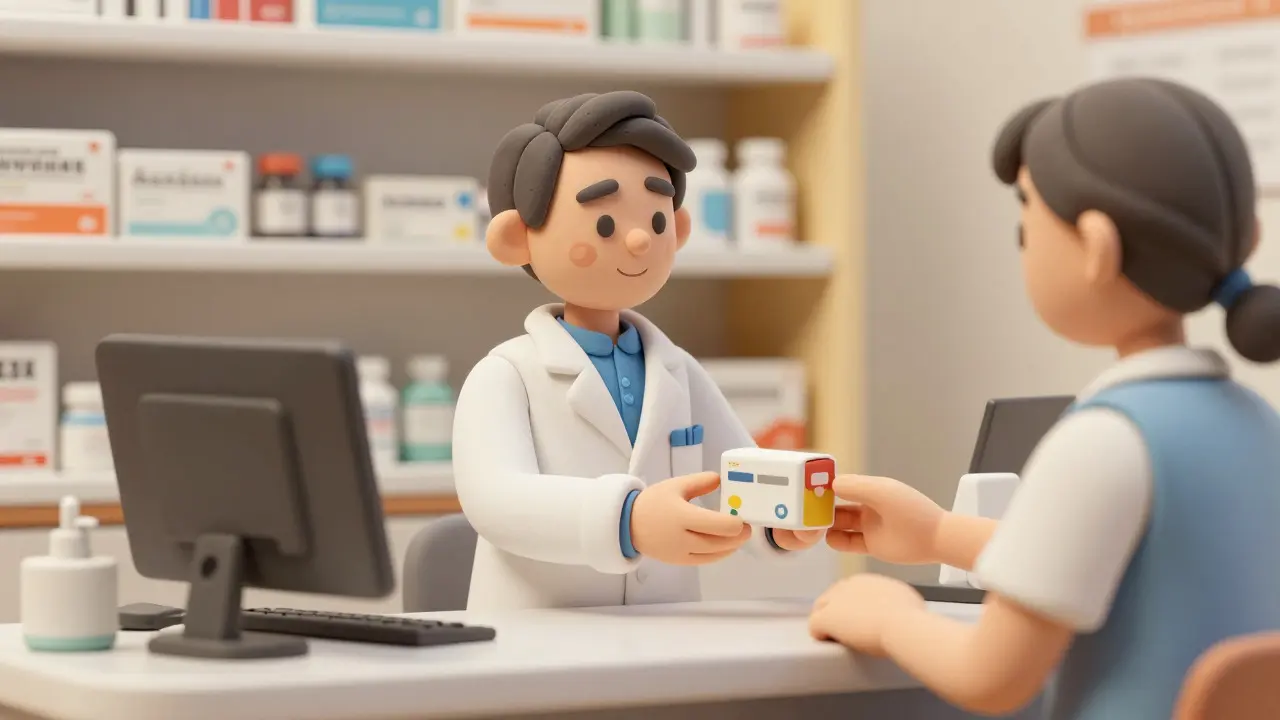
Imagine walking into your pharmacy with a prescription for a high-cost biologic drug like Humira or Enbrel. You hand over the script, and the pharmacist hands you a different brand name in return. It’s not a mistake. It’s called biosimilar interchangeability, and it is changing how we access life-saving medications in the United States.
If you have ever used generic pills, you know that pharmacists swap them out automatically. You ask for Tylenol, you get store-brand acetaminophen. No questions asked. For years, biologics-complex drugs made from living cells-didn’t work that way. But thanks to a specific regulatory designation created by the U.S. Food and Drug Administration (FDA), some biosimilars can now be substituted at the pharmacy counter without calling your doctor first.
This isn't just about saving money on your co-pay. It is about unlocking access to treatments that cost thousands of dollars less while maintaining the same safety standards as the original brand-name drugs. Understanding when and how this happens is crucial for patients, prescribers, and pharmacists navigating the modern healthcare landscape.
What Is Biosimilar Interchangeability?
To understand interchangeability, you first need to separate two terms that are often confused: biosimilarity and interchangeability.
A biosimilar is a biological product that is highly similar to an already approved reference biologic, with no clinically meaningful differences in safety, purity, and potency. Think of it as the biological equivalent of a generic pill, but much more complex to manufacture. Because these drugs are made in living systems, tiny variations can occur between batches. The FDA ensures these variations don't affect how the drug works in your body.
Interchangeability is a higher regulatory designation that allows pharmacists to substitute the biosimilar for the reference product without the intervention of the healthcare provider who wrote the prescription.
Here is the key distinction: All interchangeable biosimilars are biosimilars, but not all biosimilars are interchangeable. As Dr. Sarah Yim, Deputy Division Director at the FDA's Center for Drug Evaluation and Research, explained in a 2023 interview, "interchangeables are not a higher level, quote unquote, of biosimilar." They meet the exact same rigorous safety and efficacy standards. The only difference is the legal permission for automatic substitution.
The United States is currently the only country in the world with this distinct "interchangeable" pathway. In Europe, for instance, the European Medicines Agency (EMA) approves biosimilars, but substitution decisions are generally left to the discretion of the prescribing doctor, not the pharmacist.
The Science Behind Automatic Substitution
Why does the FDA require extra steps for interchangeability? It comes down to switching studies.
For small-molecule generics (like ibuprofen), chemistry allows us to prove they are identical to the brand name. For biologics, because they are large, complex molecules, proving identity is harder. To earn the interchangeable label, a manufacturer must provide additional evidence beyond standard biosimilarity data.
According to the FDA’s guidance finalized in January 2023, sponsors must conduct clinical trials that demonstrate alternating between the reference product and the biosimilar does not increase safety risks or reduce effectiveness. Specifically, these studies must include:
- At least two switches: Patients start on the reference product, switch to the biosimilar, then switch back to the reference product.
- Homogeneous patient populations to ensure clear data.
- Pharmacokinetic and pharmacodynamic endpoints to measure how the body processes and responds to the drug.
The goal is to prove that even if a patient goes back and forth between the two products, their treatment remains stable. This is critical for chronic conditions where consistent dosing matters.
As of November 2023, the FDA had approved 41 biosimilars, but only 10 held the interchangeable designation. Semglee (insulin glargine-yfgn) was the first, approved in July 2021. Cyltezo (adalimumab-adbm) became the first monoclonal antibody with this status in August 2023. These milestones show that while the bar is high, manufacturers are meeting it.
State Laws: The Patchwork Reality
Even if the FDA says a biosimilar is interchangeable, your state might say otherwise. This is where things get complicated for patients and pharmacists alike.
Healthcare regulation in the U.S. is a mix of federal authority and state control. While the FDA sets the scientific standard for what makes a drug interchangeable, individual states decide whether pharmacists are allowed to actually perform the substitution.
| Substitution Rule | Number of States | Key Details |
|---|---|---|
| Automatic Substitution Allowed | 40 | Pharmacists can substitute without prescriber approval (e.g., Arizona, California). |
| Cost-Based Substitution Only | 6 + D.C. | Substitution allowed only if it lowers patient cost (e.g., Arkansas, Ohio). |
| Prescriber Approval Required | 4 + Puerto Rico | Doctor must explicitly approve before substitution (e.g., Alabama, Washington). |
In states like Arizona, which enacted its law in late 2016, pharmacists have broad authority. However, they must follow strict protocols: notify the patient, record the specific manufacturer, inform the prescriber within five business days, and keep records for seven years.
In contrast, in states like Alabama or Indiana, the pharmacist cannot touch the prescription unless the doctor gives the green light. This creates a fragmented experience. A national pharmacy chain operating in both California and Washington has to train staff on two completely different rules for the same drug.
A 2022 survey by the National Community Pharmacists Association found that 67% of independent pharmacists reported confusion about these state-specific requirements. If you travel frequently or live near a state border, this patchwork can directly impact your medication access.

Impact on Costs and Patient Access
So, why go through all this trouble? The answer is simple: price.
Biologics make up a massive portion of pharmaceutical spending. According to industry data, the U.S. biologics market is valued at around $300 billion. Biosimilars typically launch at prices 15-30% lower than their reference products, according to a 2022 study by the RAND Corporation. But true competition drives prices down further.
When pharmacists can automatically substitute interchangeable biosimilars, uptake increases dramatically. A 2023 study published in JAMA Health Forum showed that states with automatic substitution laws saw an 18.7% higher utilization rate for biosimilar insulin compared to states without such laws.
Consider the case of Semglee. As the first interchangeable insulin, it captured 17.3% of the market share within six months of approval. Non-interchangeable biosimilars in similar timeframes averaged only 9.8%. That gap highlights the power of automatic substitution to shift market behavior quickly.
For patients, this translates to real savings. One user on the Psoriasis Foundation forum shared in March 2023: "My dermatologist switched me from Humira to Hyrimoz (an interchangeable biosimilar) and I've saved $800 per month with no change in effectiveness." Those savings can mean the difference between adhering to a treatment plan and skipping doses due to cost.
Patient Perspectives and Safety Concerns
Despite the financial benefits, automatic substitution isn't without friction. Some patients worry about being switched without their knowledge.
In May 2023, another forum user reported a negative experience: "My pharmacy automatically substituted Hadlima for Humira without telling me and I had an adverse reaction-turned out I was allergic to one of the excipients." While rare, cases like this highlight the importance of transparency.
Excipients-the inactive ingredients in a drug-can differ between the reference product and the biosimilar. Even if the active ingredient is highly similar, a patient might react to a stabilizer or preservative in the new formulation. This is why notification matters.
A 2022 survey by the National Psoriasis Foundation found that while 63% of patients switched to biosimilars were satisfied, 28% expressed concerns about lack of notification. Many patients feel a loss of control when their medication changes behind their back.
Furthermore, there are concerns about treatment persistence. Dr. Kevin Winthrop from Oregon Health & Science University noted in a 2021 editorial that non-medical switching in psoriasis patients led to a 20.3% higher discontinuation rate. If patients are anxious about the switch, they may stop taking the drug altogether, which defeats the purpose of therapy.

How Prescribers and Pharmacists Navigate the System
Doctors aren't powerless in this process. In all 50 states and Washington D.C., prescribers can prevent substitution by writing "dispense as written" (DAW) on the prescription. They use specific codes to signal that the patient should receive exactly the brand named.
However, many doctors are still learning the nuances. A pharmacist in California noted on Reddit in January 2023: "In California, I have to check if it's lower cost, but in Arizona I don't, and my pharmacy system doesn't differentiate between states." This technological lag adds to the human error risk.
Education is bridging this gap. The American Pharmacists Association offers a 2.5-hour Biosimilars Certificate Program, which had trained over 12,000 pharmacists by October 2023. Pharmacists are also spending an average of 8.7 hours annually updating their knowledge of these regulations, according to recent surveys.
Insurance companies play a huge role too. A 2022 analysis found that 78% of commercial health plans require automatic substitution for interchangeable biosimilars when permitted by state law. Your insurance card might dictate your drug choice before you even walk into the pharmacy.
The Future of Biosimilar Regulation
The debate over interchangeability is far from settled. There is a growing push to simplify the process.
The Biosimilar Red Tape Elimination Act (H.R. 9500), introduced in fall 2022, proposes eliminating the requirement for switching studies entirely. Under this bill, any FDA-approved biosimilar would automatically be considered interchangeable. Proponents, including the Biosimilars Council, argue this will boost competition and lower costs faster. Opponents, like PhRMA, warn it could compromise safety oversight.
Meanwhile, the FDA continues to refine its guidelines. The 2023 draft guidance aims to streamline switching study requirements, making it easier for manufacturers to seek the designation without compromising rigor.
By 2026, analysts project that biosimilars will capture nearly half of the biologics market volume. As more blockbuster drugs lose patent protection, interchangeability will become the norm rather than the exception. Patients, doctors, and pharmacists need to stay informed to navigate this shifting landscape effectively.
Is an interchangeable biosimilar safer than a regular biosimilar?
No. Both interchangeable and non-interchangeable biosimilars meet the same rigorous FDA standards for safety, purity, and potency. The "interchangeable" designation only refers to the legal ability for pharmacists to substitute the drug automatically; it does not imply a higher quality or safety profile than other approved biosimilars.
Can my doctor stop me from getting a biosimilar substitution?
Yes. In every U.S. state, prescribers can prevent substitution by marking the prescription as "dispense as written" (DAW). If you prefer to stay on the original brand-name biologic, talk to your doctor about adding this instruction to your prescription.
Why does the US have an interchangeable designation but Europe does not?
The U.S. created a unique regulatory pathway under the Biologics Price Competition and Innovation Act (BPCIA) of 2009 to encourage competition through automatic pharmacy-level substitution. In Europe, the EMA approves biosimilars, but substitution decisions are typically handled by the prescribing physician rather than the pharmacist, so a separate "interchangeable" label is not necessary.
Do I need to be notified if my pharmacy substitutes a biosimilar?
It depends on your state. In many states with automatic substitution laws, pharmacists are required to notify the patient and sometimes the prescriber. However, practices vary. Always check with your pharmacist to confirm which specific product you are receiving, especially if you have known allergies to certain inactive ingredients.
What are switching studies?
Switching studies are clinical trials required for FDA interchangeability designation. They involve patients alternating between the reference biologic and the biosimilar multiple times. The goal is to prove that switching back and forth does not negatively impact safety or effectiveness, ensuring stability for patients who might alternate between products.
Are biosimilars the same as generic drugs?
Not exactly. Generic drugs are carbon copies of small-molecule chemical drugs. Biosimilars are "highly similar" to complex biologic drugs made from living cells. Because of their complexity, biosimilars allow for minor variations that generics do not, requiring more extensive testing to prove similarity.
How much cheaper are biosimilars compared to brand-name biologics?
Biosimilars typically launch at prices 15% to 30% lower than their reference products. As competition increases with more interchangeable options entering the market, prices can drop even further, potentially leading to significant savings for patients and the healthcare system.
Menu