

Your liver is a tireless worker. It filters toxins, processes nutrients, and keeps your blood clean without you ever having to think about it. But for some people, the body’s own defense system turns against this vital organ. This is autoimmune hepatitis, a condition where the immune system mistakenly attacks healthy liver cells, causing chronic inflammation that can lead to severe damage if left unchecked.
It’s not a virus. It’s not caused by alcohol or poor diet in the traditional sense. It’s an internal conflict. Understanding how this happens, what the signs are, and most importantly, how to stop the damage before it becomes irreversible, is the key to managing this condition effectively.
What Is Autoimmune Hepatitis?
To understand autoimmune hepatitis (AIH), you first need to picture the immune system as a security team. Normally, this team identifies invaders like bacteria and viruses and destroys them. In AIH, the security team gets confused. It starts seeing healthy liver cells-called hepatocytes-as threats.
This confusion leads to an attack. The immune cells infiltrate the liver tissue, causing inflammation. Over time, this constant assault damages the liver cells. If the inflammation isn't stopped, scar tissue forms. This scarring is known as fibrosis. As more scar tissue builds up, it replaces healthy liver tissue, leading to cirrhosis. Cirrhosis stiffens the liver and blocks blood flow, which can eventually cause liver failure.
The National Institute of Diabetes and Digestive and Kidney Diseases (NIDDK) notes that this disease was first clearly identified in the 1950s. Doctors noticed that some patients with chronic hepatitis didn’t have a viral cause but responded well to corticosteroids. This observation distinguished AIH from viral hepatitis and opened the door to modern treatment protocols.
Who Gets Autoimmune Hepatitis?
Autoimmune hepatitis doesn't pick its victims randomly, but it does have clear patterns. It affects women far more often than men. According to the American Association for the Study of Liver Diseases (AASLD), the female-to-male ratio is about 3.6 to 1 for Type 1 AIH and even higher at 8 to 1 for Type 2 AIH.
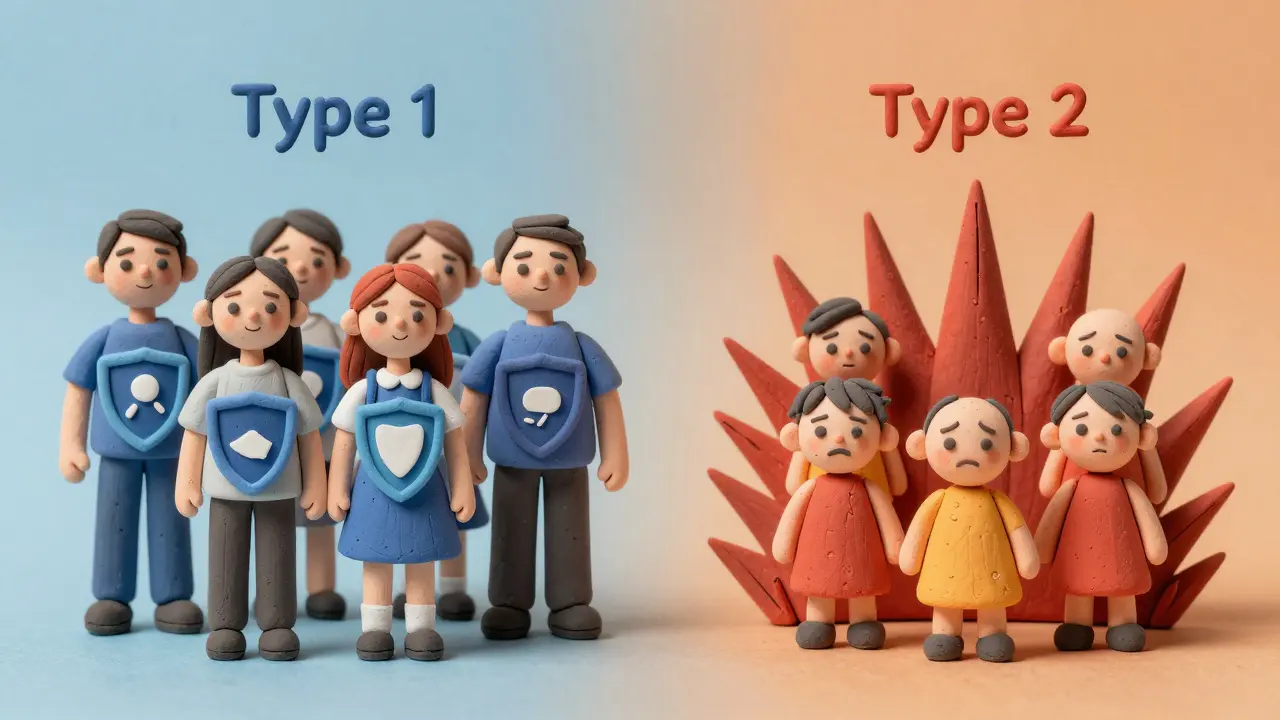
Age also plays a role, though AIH can strike at any stage of life. There are two main types:
- Type 1 AIH: This is the most common form, accounting for 80-90% of cases in North America and Europe. It typically affects adolescents and young adults, but it can also appear in older adults.
- Type 2 AIH: This type is rarer and primarily affects children between the ages of 2 and 14. It tends to be more aggressive and harder to treat than Type 1.
In terms of numbers, the prevalence is estimated at 1-2 new cases per 100,000 people annually in North America and Europe. A 2019 systematic review published in the Journal of Hepatology documented a point prevalence of approximately 17 cases per 100,000 population. While these numbers might seem small, the impact on those affected is profound.
Symptoms: What Does It Feel Like?
One of the trickiest parts of autoimmune hepatitis is that it can hide in plain sight. About 15-20% of people with AIH have no symptoms at all. They only find out they have it when routine blood tests show abnormal liver enzymes. This is why regular check-ups matter, especially if you have other autoimmune conditions.
For those who do experience symptoms, they can vary widely. Some people present with acute symptoms that mimic viral hepatitis, such as sudden jaundice (yellowing of the skin and eyes), dark urine, and severe fatigue. Others develop insidious, chronic symptoms that creep up slowly over months or years.
Patient experiences shared on platforms like the American Liver Foundation’s forum highlight the daily reality of living with AIH. In a survey of 412 respondents, 78% reported persistent fatigue as their most debilitating symptom. Another 63% noted joint pain that interfered with daily activities. Many describe feeling constantly drained, regardless of how much sleep they get.
If the liver damage progresses to cirrhosis, symptoms become more severe. You might notice swelling in the legs and abdomen (ascites), itching all over the body, easy bruising, and confusion due to toxin buildup in the brain (hepatic encephalopathy). These are late-stage signs, which is why early detection is critical.
Diagnosis: How Do Doctors Know?
Diagnosing autoimmune hepatitis requires a combination of blood tests, imaging, and sometimes a biopsy. Because the symptoms overlap with many other liver diseases, doctors must rule out other causes first.
Blood Tests: The first clue usually comes from standard liver function tests. People with AIH often have elevated levels of transaminases (ALT and AST), sometimes 5 to 10 times the upper limit of normal. They also typically have high levels of immunoglobulin G (IgG), a type of antibody produced by the immune system. Hypergammaglobulinemia, or IgG levels greater than 1.5 times the normal range, is a hallmark of AIH.
Specific autoantibodies help distinguish the type of AIH:
- Type 1: Associated with antinuclear antibodies (ANA) and/or anti-smooth muscle antibodies (ASMA) in about 80% of cases.
- Type 2: Features anti-liver kidney microsomal type 1 (LKM-1) and/or anti-liver cytosol type 1 (LC-1) antibodies.
Liver Biopsy: While blood tests provide strong clues, a liver biopsy is often needed to confirm the diagnosis and assess the extent of damage. During a biopsy, a doctor removes a small sample of liver tissue using a needle. Under a microscope, pathologists look for specific features like interface hepatitis (also called piecemeal necrosis), lymphoplasmacytic infiltrate, and rosette formation of hepatocytes. The biopsy also helps stage fibrosis, ranging from F0 (no fibrosis) to F4 (cirrhosis), using systems like METAVIR.
The Revised International AIH Group Scoring System, updated in 2022, provides standardized criteria for diagnosis. When used by experienced hepatologists, this system has a sensitivity of 92% and specificity of 97%, making it a reliable tool for confirming AIH.
| Feature | Type 1 AIH | Type 2 AIH |
|---|---|---|
| Prevalence | 80-90% of cases | Rare, mostly in children |
| Typical Age | Adolescents and young adults | Children aged 2-14 |
| Key Antibodies | ANA, ASMA | LKM-1, LC-1 |
| Aggressiveness | Variable | Often more aggressive |
Treatment: Stopping the Attack
The good news about autoimmune hepatitis is that it is treatable. The goal of therapy is to suppress the immune system’s attack on the liver, reduce inflammation, and prevent progression to cirrhosis. Without treatment, the 10-year survival rate drops to just 10%. With appropriate therapy, that number jumps to 94%, according to longitudinal studies cited by the Mayo Clinic.
First-Line Therapy: The standard treatment involves a combination of corticosteroids and azathioprine. Prednisone, a potent steroid, is used initially to quickly calm inflammation. Azathioprine, an immunosuppressant, is added to allow for lower doses of prednisone, reducing side effects. The typical starting dose is prednisone 0.5-1 mg/kg/day (maximum 60 mg) plus azathioprine 50 mg/day. This regimen is tapered over 6-12 months based on biochemical response. Most patients achieve initial biochemical response within 3-6 months, defined as transaminase levels falling below 3 times the upper limit of normal.
Maintenance Therapy: Once remission is achieved, patients move to maintenance therapy. About 60-65% of patients achieve complete remission within 18-24 months. However, AIH is a chronic condition, and most people will need long-term medication. Roughly 25% require low-dose maintenance therapy indefinitely to keep the disease in check.
Side Effects: Living with AIH means managing medication side effects. Steroids can cause weight gain, insomnia, mood swings, and increased risk of infections. In Reddit discussions among the r/liverdisease community, 82% of patients on prednisone reported weight gain, while 67% struggled with insomnia. To mitigate these issues, doctors may switch to steroid-sparing agents like mycophenolate mofetil, which is effective in 70-80% of patients who cannot tolerate azathioprine.
Living with Autoimmune Hepatitis
Managing AIH goes beyond taking pills. It requires a proactive approach to health and lifestyle. Here are some practical steps to consider:
- Regular Monitoring: You’ll need blood tests every 2-4 weeks during induction therapy and every 3 months during maintenance. These tests track liver enzymes and IgG levels to ensure the treatment is working.
- Bone Health: Long-term steroid use can weaken bones, increasing the risk of osteoporosis. The National Osteoporosis Foundation recommends calcium and vitamin D supplementation, along with weight-bearing exercises when possible.
- Infection Prevention: Since immunosuppressants lower your defenses, you’re more susceptible to infections. Practice good hygiene, stay up-to-date on vaccinations (avoiding live vaccines while on immunosuppression), and seek medical care promptly for fevers or illnesses.
- Avoid Alcohol: Your liver is already under stress. Alcohol adds another burden. Complete abstinence is strongly recommended to prevent further damage.
- Healthy Diet: Focus on a balanced diet rich in fruits, vegetables, whole grains, and lean proteins. Avoid excessive sugar and processed foods, which can contribute to fatty liver disease, compounding your liver issues.
Emotional health matters too. A 2022 patient survey found that 71% of AIH patients experienced significant anxiety about disease progression. Connecting with support groups, both online and offline, can provide valuable emotional support and practical tips from others who understand the journey.
When Treatment Isn’t Enough
Despite best efforts, about 10% of AIH patients are treatment-refractory. This means their disease progresses despite optimal medical management. For these individuals, liver transplantation may be the only option. Dr. Marlyn Mayo of UT Southwestern Medical Center noted that these patients progress to end-stage liver disease requiring transplant.
According to the United Network for Organ Sharing (UNOS) 2022 annual report, AIH is the fourth leading indication for adult liver transplantation, accounting for 6.2% of 9,177 transplants performed that year. Transplant outcomes for AIH are generally good, with high survival rates post-surgery. However, there is a small risk that the autoimmune disease could recur in the new liver, so lifelong monitoring remains essential.
The Future of AIH Care
Research into autoimmune hepatitis is advancing rapidly. Scientists are looking for better ways to diagnose and treat the disease with fewer side effects. One promising area is personalized medicine. Researchers at the Mayo Clinic suggest that genetic profiling, specifically looking at HLA-DRB1*03:01 and *04:01 alleles, could improve treatment selection within the next 5-7 years. This approach aims to increase remission rates to 85-90% while reducing side effects through precision dosing.
New therapies are also in development. Several biologics, including rituximab and vedolizumab, are currently in clinical trials. Additionally, the European Medicines Agency granted orphan drug designation to obeticholic acid for AIH treatment in 2022, based on phase 2 trial data showing improved remission rates. These developments offer hope for more targeted and effective treatments in the near future.
Is autoimmune hepatitis contagious?
No, autoimmune hepatitis is not contagious. It is an internal immune system disorder, not caused by a virus or bacteria. You cannot catch it from someone else, nor can you pass it on to family members through contact.
Can autoimmune hepatitis go away on its own?
Spontaneous remission is rare. Without treatment, the disease typically progresses, leading to liver damage. Early intervention with immunosuppressive therapy is crucial to halt inflammation and prevent complications like cirrhosis.
What foods should I avoid with autoimmune hepatitis?
While no specific diet cures AIH, you should avoid alcohol completely. Limiting processed foods, excess sugar, and saturated fats helps prevent fatty liver disease, which can worsen liver inflammation. A balanced, nutrient-rich diet supports overall liver health.
How long does it take to see results from treatment?
Most patients see improvement in liver enzyme levels within 3 to 6 months of starting treatment. Achieving full biochemical remission, where enzymes and IgG levels normalize, may take 18 to 24 months. Regular blood tests monitor progress.
Is autoimmune hepatitis hereditary?
AIH is not directly inherited, but there is a genetic predisposition. Having a family member with AIH or other autoimmune diseases increases your risk slightly. Specific genes, like HLA-DRB1, play a role in susceptibility, but environmental triggers are also likely involved.
Menu