
When you're taking prescription drugs, medications legally prescribed by a doctor to treat specific medical conditions. Also known as controlled substances, they're meant to be used under medical supervision. and considering CBD, a non-intoxicating compound from the cannabis plant used for pain, anxiety, and inflammation. Also known as cannabidiol, it's sold as oils, gummies, and topical creams., you're stepping into a gray zone. Many people assume CBD is harmless because it’s "natural," but it doesn’t play nice with a lot of common prescriptions. It affects the same liver enzymes—CYP3A4 and CYP2C19—that break down statins, blood thinners, antidepressants, and even seizure meds. That means CBD can make those drugs build up to dangerous levels in your body, or worse, stop them from working at all.
Think about it: if you’re on atorvastatin for cholesterol, and you start taking CBD for sleep, your body might not clear the statin properly. That raises your risk of muscle damage. Or if you’re taking warfarin and use CBD for joint pain, your INR could spike, leading to internal bleeding. Even SSRIs like sertraline or fluoxetine can have their side effects worsened by CBD—more dizziness, more nausea, more fatigue. And it’s not just about pills. Topical CBD might seem safe, but if you’re using it daily on large areas of skin, your body still absorbs enough to interfere. Doctors don’t always ask about CBD because they weren’t trained to, and many patients don’t mention it because they think it’s "just a supplement." But when you combine prescription drugs and CBD, you’re playing with your liver, your heart, and your nervous system.
Some people swear CBD helps with chronic pain, anxiety, or sleep issues—especially when traditional meds don’t work or cause too many side effects. But the truth is, the science is still catching up. What we do know is this: if you’re on any medication with a narrow therapeutic index—like digoxin, amiodarone, or clozapine—even small changes in blood levels can be life-threatening. And CBD? It’s unpredictable. Doses vary wildly between brands, and there’s no regulation forcing companies to test for purity or potency. So you might think you’re taking 25mg, but your bottle actually has 60mg. That’s not a typo. That’s the market.
So what should you do? Talk to your doctor. Not just once, but regularly. Bring your CBD product with you—yes, the actual bottle. Ask: "Does this interact with anything I’m taking?" If your doctor shrugs, find one who knows the science. You don’t need to quit your meds or give up CBD. You just need to know how they work together. The articles below break down real cases: how people managed CBD with antidepressants, what happened when someone mixed it with blood pressure pills, and why some patients had to stop cold turkey after a hospital visit. These aren’t hypotheticals. These are real people who learned the hard way. You don’t have to.
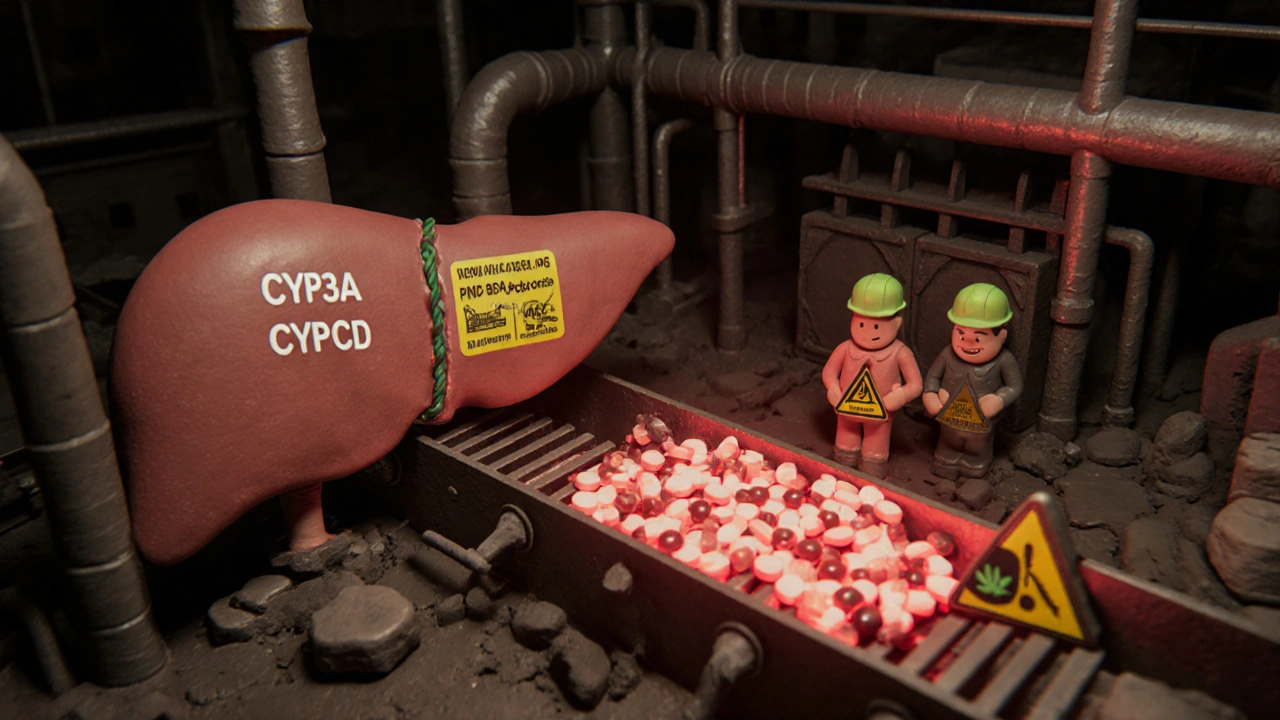
CBD can dangerously interfere with prescription medications by blocking liver enzymes that process drugs like blood thinners, seizure meds, and heart medications. If your pill has a grapefruit warning, CBD is likely unsafe. Learn which drugs are risky and what to do if you're already using both.
Nov 23 2025
© 2026. All rights reserved.
Menu