
When a drug has a narrow therapeutic index, the range between a safe, effective dose and a harmful or toxic dose is very small. Also known as a thin therapeutic window, this means even a tiny mistake in dosage—whether from a pharmacy error, drug interaction, or changing metabolism—can turn treatment into danger. It’s not just about taking too much. Sometimes, taking the right amount but at the wrong time, with the wrong food, or alongside another medication can push you over the edge.
Drugs with a narrow therapeutic index don’t play nice. They’re like a scalpel—precise when used right, but dangerous if handled carelessly. Think of warfarin, used to prevent blood clots. Too little, and you risk a stroke. Too much, and you could bleed internally. Or lithium, for bipolar disorder: a slight increase in blood levels can cause tremors, confusion, or kidney damage. Even common drugs like digoxin for heart failure or cyclosporine after a transplant sit in this high-risk zone. These aren’t rare exceptions—they’re used by millions. And because their effects are so tightly balanced, they need constant monitoring. Blood tests aren’t optional. Skipping them isn’t risky—it’s reckless.
This isn’t just about the drug itself. It’s about how your body handles it. Liver enzymes, kidney function, even what you eat can change how much of the drug stays in your system. Grapefruit juice? It can spike levels of some of these drugs. CBD? Same problem. That’s why so many of the articles here focus on interactions—CBD with blood thinners, SSRIs with NSAIDs, statins with vitamin A. They all tie back to the same core issue: when your body’s ability to process a drug shifts, even slightly, a drug with a narrow therapeutic index can go from healing to harmful. And because these drugs are often used for serious, long-term conditions, the stakes are higher than with a simple antibiotic or pain reliever.
You’ll find articles here that show you exactly how these risks show up in real life: how e-prescribing errors can mislead a pharmacist, how generic versions of these drugs need extra scrutiny, how patient communication can prevent a disaster. This isn’t theoretical. People get hurt because no one asked if they were eating grapefruit. Because a nurse didn’t check the last blood level. Because a doctor assumed the generic was interchangeable without realizing the window was this thin. You’re not just reading about drugs—you’re learning how to protect yourself, your family, or your patients from something that’s silent, invisible, and deadly if ignored.
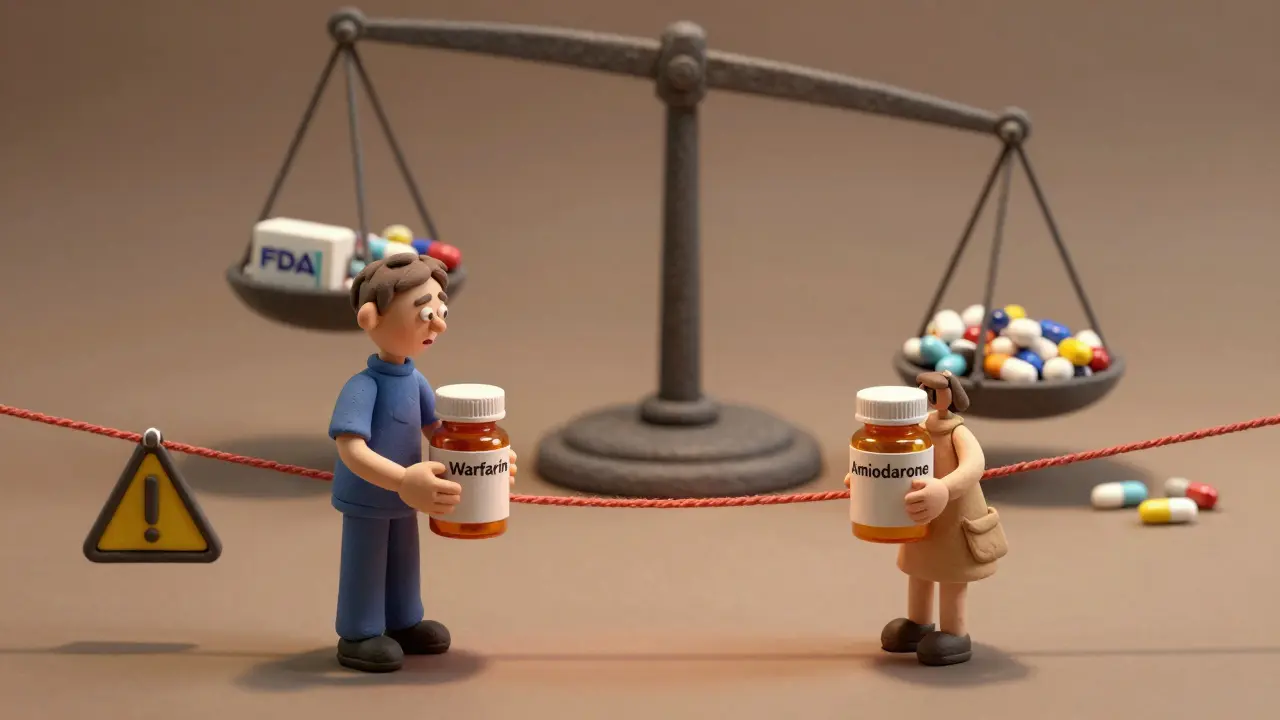
Combination NTI drugs offer powerful treatment for complex conditions, but generic versions are nearly nonexistent due to strict bioequivalence challenges. Patients face higher risks, costs, and gaps in care.
Jan 31 2026
Digoxin generics may be bioequivalent on paper, but individual variations in absorption can lead to toxicity or treatment failure. Learn why therapeutic drug monitoring is essential when switching formulations.
Nov 21 2025
© 2026. All rights reserved.
Menu