
Generic drugs make up about 90% of prescriptions filled in the United States. They save billions of dollars and keep healthcare accessible. But when something goes wrong with a generic medication, how do we know? The answer lies in a system called MedWatch. It’s the U.S. Food and Drug Administration’s (FDA) primary tool for collecting safety data after drugs hit the market. Yet, despite its importance, many people don’t realize that reporting generics through this system comes with unique challenges-and opportunities.
If you’ve ever switched from a brand-name drug to a generic and noticed different side effects or reduced effectiveness, your experience matters. In fact, these reports can trigger investigations, label changes, or even product recalls. This article breaks down exactly how MedWatch works for generic drugs, why distinguishing between manufacturers is so critical, and what you can do to ensure your report makes an impact.
What Is MedWatch and Why Does It Matter for Generics?
MedWatch, formally known as the FDA Safety Information and Adverse Event Reporting Program, has been operating since 1993. It allows healthcare professionals, consumers, and manufacturers to voluntarily report adverse events, product quality issues, therapeutic failures, and medication errors. For generic drugs-which are bioequivalent versions of brand-name medications-MedWatch serves as a vital post-marketing surveillance mechanism.
The problem? Generic drugs often lack the same level of scrutiny as their brand-name counterparts once they’re approved. While generics must demonstrate bioequivalence within an 80-125% range compared to the original drug, real-world performance can vary due to differences in inactive ingredients or manufacturing processes. These variations may lead to subtle but significant clinical outcomes that only surface after widespread use.
That’s where MedWatch steps in. By capturing real-world experiences, it helps identify potential safety signals specific to certain generic formulations. However, because generics account for such a large share of prescriptions, ensuring accurate identification of which manufacturer produced the reported issue is crucial-and currently remains one of the biggest hurdles in pharmacovigilance.
How Are Generic Drug Reports Processed Through FAERS?
All MedWatch submissions flow into the FDA Adverse Event Reporting System (FAERS), a massive database containing over 9 million reports on adverse events and medication errors as of 2023. FAERS organizes this information using seven key tables:
- Patient demographics
- Drug or biologic reported
- Adverse events described
- Patient outcomes
- Report sources
- Drug therapy start and end dates
- Indications for use/diagnosis
For generic drugs, the challenge arises during data entry. Many reporters struggle to specify which exact manufacturer produced the problematic batch. According to FDA analysis of 2023 data, only 32.7% of consumer-submitted reports included the specific generic manufacturer name, compared to nearly 90% of brand-name reports.
This gap creates blind spots in detecting patterns tied to particular manufacturers. To address this, researchers developed an algorithm capable of identifying generic products in FAERS with 92.4% sensitivity and 88.7% specificity. Fully integrated into FAERS processing by January 2024, this advancement marks progress-but more work remains.
Why Distinguishing Between Manufacturers Matters
Imagine taking two different brands of levothyroxine-a common thyroid hormone replacement-and experiencing vastly different results. One version stabilizes your levels; another leaves you feeling fatigued. Without knowing which manufacturer made each pill, it becomes impossible to pinpoint whether the issue stems from formulation differences, production inconsistencies, or individual patient factors.
In August 2024, pharmacist John M. shared his frustration on Reddit’s r/pharmacy community: “I’ve submitted 17 MedWatch reports for generic medications over the past three years, mostly concerning therapeutic inequivalence with levothyroxine generics. Only two responses from the FDA, but one led to a label change.” His story highlights both the value and limitations of current reporting practices.
Therapeutic inequivalence occurs when patients perceive reduced efficacy or altered side effect profiles compared to previous treatments. Though rare under strict regulatory standards, these cases underscore the need for precise tracking at the manufacturer level. Unfortunately, patient-reported concerns frequently omit essential details like National Drug Code (NDC) numbers or company names, making follow-up difficult.
Challenges Faced by Reporters and Regulators Alike
Let’s face it: filling out forms isn’t everyone’s idea of fun. And when those forms involve technical jargon or require obscure identifiers, completion rates drop significantly. Here are some common pain points:
- Lack of Awareness: Patients rarely recognize the distinction between brand-name and generic versions unless explicitly told.
- Missing Manufacturer Details: Approximately 63% of consumer reports fail to include the producing company’s name.
- Time Constraints: Pharmacists cite busy schedules as a barrier to submitting detailed reports, according to a 2024 ASHP survey.
- Underreporting Bias: Voluntary systems inherently miss countless incidents simply because no one thinks to report them.
Dr. Sarah Thompson, a pharmacovigilance expert at Harvard Medical School, noted in a 2023 JAMA Internal Medicine commentary: “The voluntary nature of MedWatch reporting creates significant underreporting bias, particularly for generics where patients may not recognize the need to distinguish between brand and generic versions when reporting.”
To combat these issues, the FDA offers resources like Spanish-language consumer forms and specialized training modules for pharmacists focused on generic product identification. Still, there’s room for improvement.
Real-World Impact: When Reports Lead to Action
Not all stories end in frustration. Consider the case of bupropion XL manufactured by Mylan. Multiple MedWatch reports flagged therapeutic failure among users switching to this generic version. Within 11 months of receiving initial alerts, the FDA launched an investigation resulting in updated labeling guidelines.
This example demonstrates the power of collective vigilance. Even if individual voices feel small, aggregated data can drive meaningful change. As Dr. Robert Reynolds, Director of the FDA’s Division of Pharmacovigilance, stated in a 2024 Drug Info Rounds video: “Distinguishing between brand and generic products in adverse event reports remains one of our most persistent data quality challenges-but every report brings us closer to solutions.”
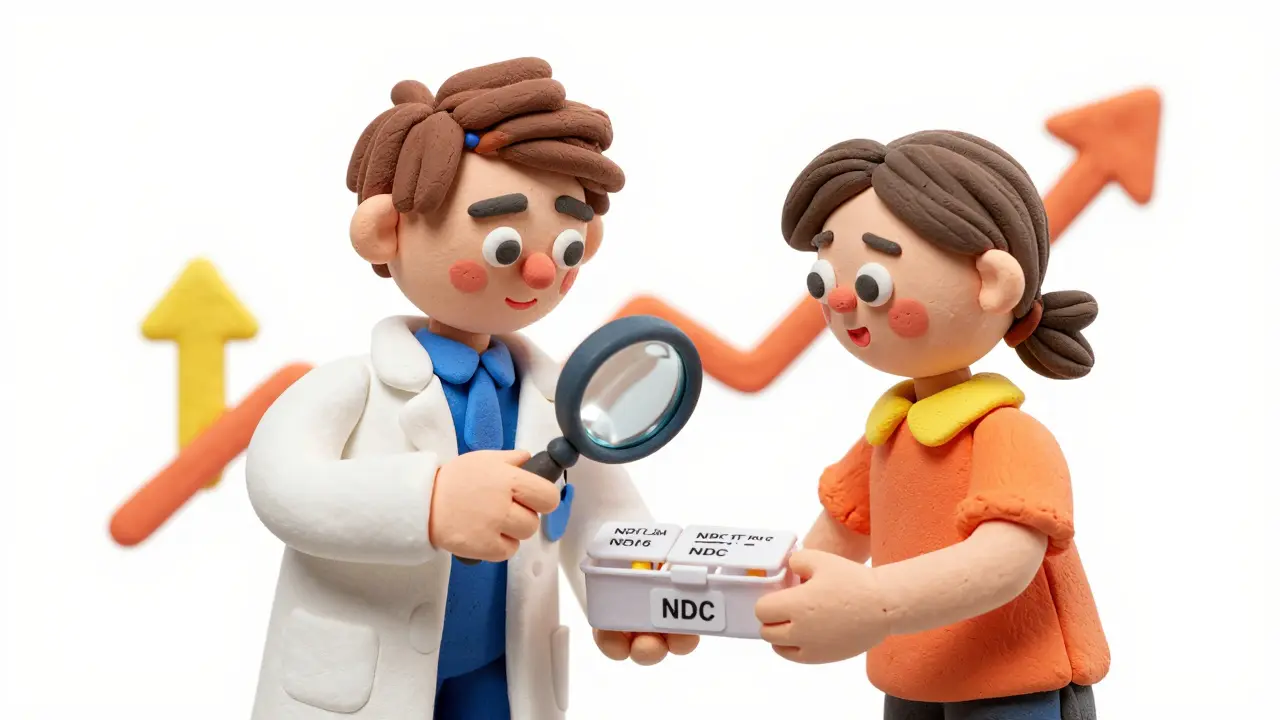
Tips for Effective Reporting
If you suspect a problem with your generic medication, here’s how to maximize the usefulness of your report:
- Record the NDC Number: Found on the packaging, this code uniquely identifies the manufacturer and dosage form.
- Note Specific Symptoms: Include timing, severity, and any relevant lab results.
- Mention Prior Medications: If you previously took a brand-name version without issues, highlight this contrast.
- Use Clear Language: Avoid vague terms like “didn’t work”-instead describe observable effects.
- Follow Up: Keep records of submission confirmations and monitor updates related to your case.
Healthcare providers play a pivotal role too. Encouraging staff to document thorough histories during consultations ensures richer datasets for analysts reviewing trends later.
Future Developments in Generic Drug Surveillance
The landscape continues evolving. Under the Generic Drug User Fee Amendments (GDUFA) III action plan introduced in 2023, the FDA committed to enhancing signal detection capabilities specifically for generic drugs. Planned integrations with electronic health record systems by 2026 aim to automate capture of NDC codes and other critical metadata.
Meanwhile, global counterparts like Europe’s EudraVigilance have already implemented stricter protocols for generic identification. With projected increases in generic-specific adverse event reports expected by 2027, staying informed about advancements will benefit both regulators and patients alike.
| Metric | Brand-Name Drugs | Generic Drugs |
|---|---|---|
| Manufacturer Identification Rate | 89.4% | 32.7% |
| Average Completion Time | 12 minutes | 15 minutes |
| Reports Leading to Label Changes | Higher frequency | Lower frequency |
| Consumer Awareness Levels | High | Moderate |
Frequently Asked Questions About MedWatch and Generics
Who can submit a MedWatch report for a generic drug?
Anyone-including patients, caregivers, healthcare professionals, and manufacturers-can file a MedWatch report. No special qualifications are required beyond access to the online portal or paper form.
Is my identity kept confidential when I report?
Yes, personal information provided in MedWatch reports is protected under privacy laws. Your contact details won’t be publicly disclosed unless necessary for follow-up communication.
How long does it take for the FDA to review a report?
Processing times vary depending on complexity and volume. Simple queries might receive acknowledgment within days, while comprehensive reviews could span weeks or months.
Can I track the status of my submitted report?
Currently, there’s no public-facing tracker for individual submissions. However, keeping your confirmation number handy enables easier reference should you wish to inquire directly.
What happens if multiple people report similar issues with the same generic?
Clusters of comparable complaints prompt deeper analysis. Depending on findings, actions may range from issuing warnings to mandating recalls or revising prescribing instructions.
Are international reports considered alongside domestic ones?
While MedWatch primarily handles U.S.-based submissions, collaborative efforts exist with agencies worldwide sharing insights via platforms like the International Council for Harmonisation (ICH).
Do all generic drugs undergo equal testing before approval?
Generics must meet rigorous bioequivalence criteria set by the FDA. Nevertheless, minor discrepancies in non-active components occasionally influence tolerability or absorption rates.
Should I stop taking my medication immediately upon noticing problems?
Consult your healthcare provider first. Abrupt discontinuation without guidance poses risks, especially for chronic conditions requiring consistent management.
Where can I find additional support regarding generic drug concerns?
Visit the official MedWatch website ([www.fda.gov/MedWatch](http://www.fda.gov/MedWatch)) for tutorials, FAQs, and downloadable materials designed to assist reporters throughout the process.
Will improvements in technology enhance future reporting accuracy?
Absolutely. Initiatives linking MedWatch with electronic health records promise automated extraction of vital parameters like NDC codes, streamlining documentation efforts substantially.
Menu