

Most people don’t think about earwax until it starts hurting. That blocked feeling, the muffled hearing, the pressure behind the ear - it’s not just annoying. It’s real. And it’s more common than you think. About 6% of adults deal with earwax blockage every year. For people over 65, that number jumps to 30%. The good news? You don’t need to rush to the doctor right away. Cerumenolytics - earwax softeners - can help you clear it safely at home, if you know how to use them.
What Exactly Are Cerumenolytics?
Cerumenolytics are solutions designed to break down earwax, or cerumen, so it can drain out naturally or be flushed out easily. They’re not magic. They don’t dissolve wax like acid on metal. Instead, they soften and loosen it. Think of them like a conditioner for your ear canal. Once the wax is soft, your body can push it out on its own, or you can gently irrigate it with warm water. These products have been around since the 1900s, but they became widely available over-the-counter in the 1980s. Today, they’re the first-line treatment recommended by the American Academy of Otolaryngology and Mayo Clinic for earwax blockage. They’re safer than cotton swabs, which cause over 65% of ear injuries treated in emergency rooms.Types of Cerumenolytics and How They Work
Not all earwax softeners are the same. Each works differently depending on the type of wax you have and how hardened it is. Here are the most common types:- Carbamide peroxide - Found in brands like Debrox and Murine. This breaks down into hydrogen peroxide and urea when it touches moisture. The peroxide bubbles, which helps lift and loosen wax. It’s fast-acting, usually working in 1-2 days. Use 5-10 drops twice daily for up to 7 days.
- Hydrogen peroxide (3%) - Diluted with equal parts sterile water. The bubbling action is strong, so it works well if your wax is wet or sticky. But don’t use it straight from the bottle - it can burn. Apply 5 drops, wait 5 minutes, then let it drain.
- Mineral oil, baby oil, or olive oil - These are gentle lubricants. Best for dry, crumbly wax. They don’t bubble, so they take longer - 3 to 4 nights of nightly drops. But they’re less likely to irritate sensitive skin.
- Baking soda solution - Mix ¼ teaspoon (1.25 mL) of baking soda with 2 teaspoons (10 mL) of sterile water. This creates a 15% solution. Use twice a day for 4 days. It’s effective but requires precision. Too strong, and it can dry out your ear canal.
- Docusate sodium - This is the active ingredient in Colace, a stool softener. Some doctors recommend using 1 mL (about 20 drops) of the liquid form, or the contents of one capsule mixed with water, left in the ear for 30 minutes. It’s off-label but backed by research from the American Academy of Family Physicians.
Studies show carbamide peroxide works about 65% of the time. Mineral oil works slightly less - around 58%. But the difference isn’t huge. What matters more is how you use them.
How to Use Cerumenolytics Correctly
Using ear drops wrong is the #1 reason people say they didn’t work. Here’s the right way:- Wash your hands. Clean hands prevent infection.
- Warm the bottle by holding it in your hand for a minute. Cold drops can make you dizzy.
- Lie on your side with the affected ear facing up.
- Put in the number of drops your product recommends - usually 5 to 10.
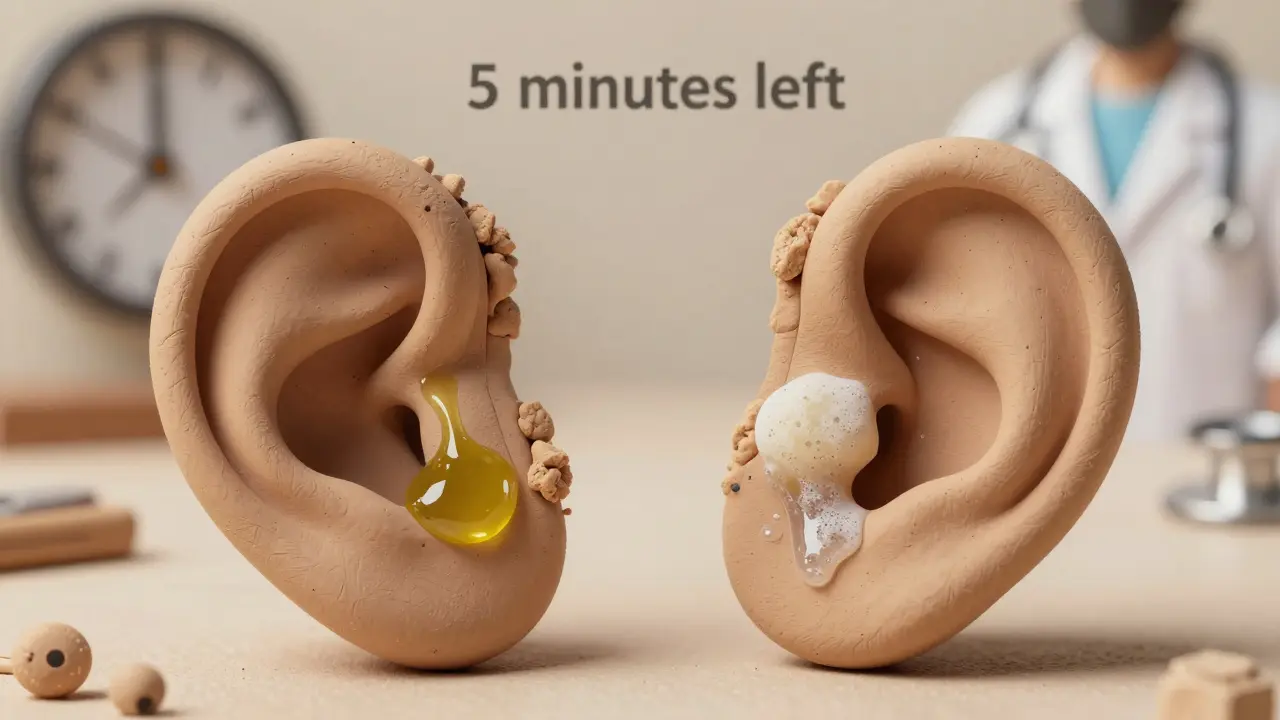
- Stay still for 5 to 10 minutes. Don’t sit up. Don’t tilt your head. Let the drops soak in.
- Turn your head to let the liquid drain out. Use a tissue to catch it.
- Repeat once or twice a day, as directed.
Seattle Children’s Hospital found that people who stayed lying down for 10 minutes after applying drops had a 40% higher success rate than those who stood up right away. Time matters. So does positioning.
What Doesn’t Work - And What’s Dangerous
Many people try things that make things worse:- Cotton swabs - Push wax deeper. Risk of puncture.
- Ear candles - No evidence they work. Burn risk.
- Undiluted hydrogen peroxide - Causes burning, pain, and irritation. Always mix with equal parts sterile water.
- Tap water for irrigation - Can contain bacteria. Use sterile or distilled water only.
- Using drops if you have an ear infection - Can spread infection deeper.
Harvard Health and Mayo Clinic both warn: never use cerumenolytics if you have a perforated eardrum, recent ear surgery, or signs of infection - like pus, fever, or sudden hearing loss. If your ear hurts, is red, or drains fluid, see a doctor. Don’t try to soften wax if your ear is already inflamed.
When to See a Doctor
Home treatment works for most people - about 75% of cases. But if after 7 days of using drops you still feel blocked, it’s time to get help. About 25% of earwax blockages are too hard or too deep to clear at home. Also, if you have:- Severe pain or dizziness
- Sudden hearing loss
- Fluid draining from your ear
- A history of ear surgery or tubes
These aren’t signs of simple wax buildup. They need professional evaluation. Doctors use microscopes and special tools to remove wax safely. It’s quick, painless, and usually covered by insurance.
Why Some People Still Struggle
Even when people follow instructions, it doesn’t always work. Why?- Not waiting long enough - 34% of negative reviews on Amazon say they used the drops but didn’t let them sit. You need at least 5 minutes. Better to leave them in for 10.
- Using the wrong product - If your wax is dry and flaky, hydrogen peroxide won’t help much. Oil works better. If it’s sticky and wet, peroxide is the way to go.
- Trying to irrigate too soon - Don’t flush your ear with water after one day. Wait 3-4 days. Wax needs time to soften.
- Using non-sterile water - Tap water can introduce bacteria. Always use distilled or boiled-and-cooled water if you’re irrigating.
One Reddit user, u/AudiologyTech, shared that after 5 nights of olive oil, followed by gentle irrigation, they removed 90% of their impaction. Another user, u/EarPainSurvivor, said using straight hydrogen peroxide caused 20 minutes of burning pain. The difference? Technique.
What’s New in Earwax Softeners
The market is evolving. In January 2023, Debrox launched Debrox Max, a time-release formula that stays in the ear 30% longer than the original. Clinical trials showed it improved complete wax clearance by 27%. Also in 2022, the FDA approved a new combination formula: 2.5% hydrogen peroxide with 86% glycerin. It’s the first new active ingredient in 15 years. Glycerin helps keep the ear moist, reducing irritation. Research from the University of Washington in 2023 found that using mineral oil for 3 nights, then one irrigation with hydrogen peroxide, cleared 89% of cases - better than using carbamide peroxide alone.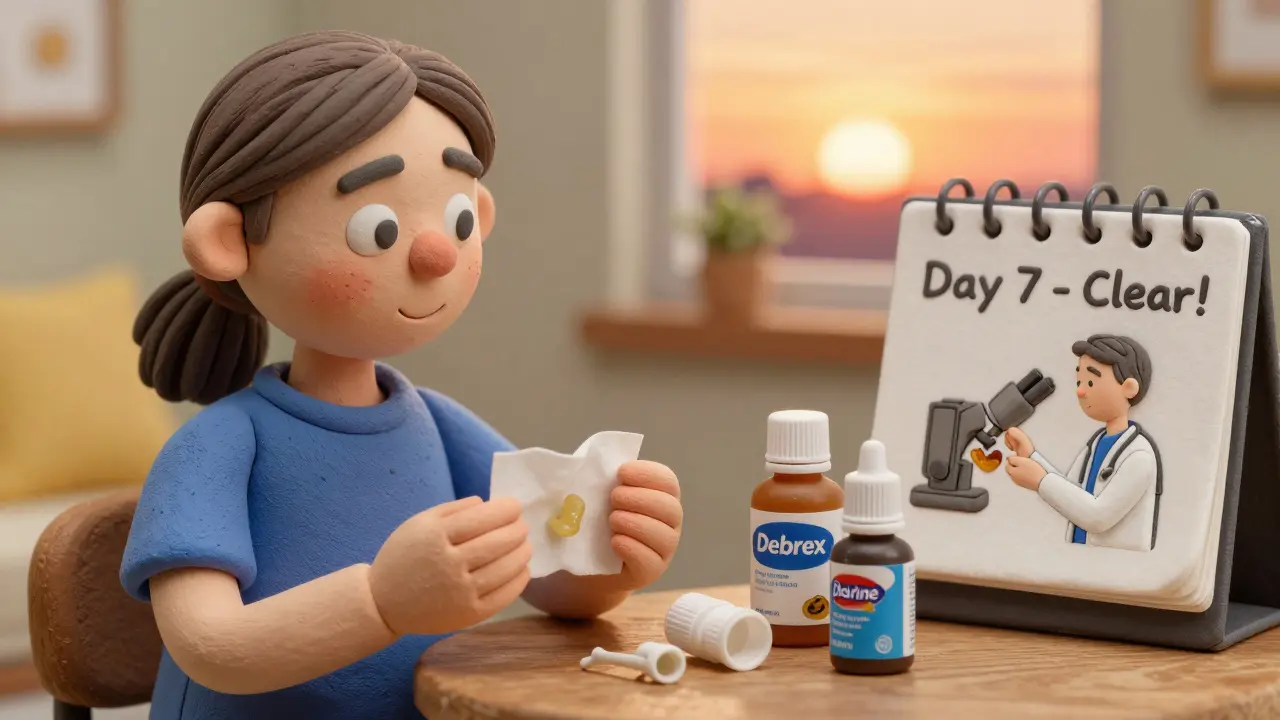
Market and Cost
Cerumenolytics are a $287 million market in the U.S., growing 4.7% yearly. Debrox holds 38% of the market. Murine has 29%. Both cost between $10 and $15 per kit. They’re cheaper than a doctor’s visit - which can run $100-$200 without insurance. The rise in earbud use has made earwax problems more common. ENT clinics report a 22% increase in impaction cases since 2019. More people are wearing in-ear devices for hours, trapping wax inside.Final Thoughts
Cerumenolytics aren’t a cure-all. But they’re the safest, most effective first step for earwax buildup. You don’t need to be a doctor to use them. You just need to follow the rules: use the right product, give it time, lie still, and never force anything into your ear. If you’ve been living with muffled hearing or that plugged-up feeling, try a cerumenolytic. Give it 3-4 days. Be patient. Most people feel better. And if you don’t? That’s your sign to see a professional - not to dig deeper.Can I use hydrogen peroxide straight from the bottle to soften earwax?
No. Hydrogen peroxide sold for household use is typically 3% or higher, and using it undiluted can burn the sensitive skin inside your ear canal. Always mix equal parts hydrogen peroxide with sterile or distilled water before applying. Even then, some people feel a mild stinging - that’s normal. Sharp pain is not.
How long should I leave earwax drops in my ear?
Stay lying on your side with the affected ear up for 5 to 10 minutes after applying drops. This gives the solution time to soak into the wax. Standing up too soon reduces effectiveness by up to 40%, according to clinical studies. Don’t rush it.
Is olive oil as effective as commercial earwax drops?
Yes, for many people. Olive oil, mineral oil, and baby oil work well for dry, hardened wax. They don’t bubble like peroxide, so they take longer - 3 to 4 nights - but they’re gentler and less likely to cause irritation. Studies show about 58% effectiveness, which is close to carbamide peroxide’s 65%.
Can I irrigate my ear with a syringe after using drops?
Yes - but only after 3 to 4 days of using cerumenolytics. Use warm (not hot) sterile or distilled water. Gently squirt into the ear canal - never force it. Do not irrigate if you have a history of ear infections, perforated eardrums, or ear tubes. If you’re unsure, skip irrigation and see a doctor.
What if the earwax doesn’t come out after a week?
If you’ve used the drops correctly for 7 days and still feel blocked, it’s likely a deep or hardened impaction. At this point, home methods are unlikely to work. See a healthcare provider. They can remove the wax safely with specialized tools under magnification. Don’t keep trying - you risk injury.
Are earwax softeners safe for children?
Yes, but only under adult supervision. For kids, mineral oil or olive oil are preferred because they’re gentle. Avoid peroxide-based products unless a doctor recommends them. Always use the smallest recommended dose. Never insert anything into a child’s ear canal - not even a dropper tip. Let the drops work, then let the ear drain naturally.
Can I use cerumenolytics if I have ear tubes?
No. If you have ear tubes (tympanostomy tubes), you should avoid all ear drops unless your doctor specifically says it’s safe. Drops can travel into the middle ear, causing infection or discomfort. Always check with your ENT before using any product if you have tubes or a history of ear surgery.
Why do some earwax softeners say to use them for up to 7 days?
It takes time for the solution to fully penetrate and soften hardened wax. Most people start to feel relief after 2-3 days, but complete clearance often requires the full 5-7 days. Stopping early means the wax may not be loose enough to drain. Stick to the full course unless you develop pain or irritation.
Next Steps
If you’re dealing with earwax buildup right now:- Check your symptoms. No pain? No drainage? Then it’s likely just wax.
- Choose a cerumenolytic - carbamide peroxide for sticky wax, oil for dry wax.
- Follow the instructions exactly - especially the waiting time.
- After 3-4 days, try gentle irrigation with warm water, if you’re comfortable.
- If it doesn’t help after a week, book an appointment with your doctor or audiologist.
Earwax isn’t dirty. It’s protective. But when it builds up, it becomes a problem - and one you can solve safely at home. Just don’t rush it. Let the drops do their job.
Nicholas Miter
January 24, 2026 AT 13:31also, never trust those ear candle videos. i saw one guy light a candle in his ear and thought it was a prank. turns out it was real. people are wild.
Suresh Kumar Govindan
January 26, 2026 AT 03:42TONY ADAMS
January 26, 2026 AT 15:03Josh josh
January 28, 2026 AT 06:32Rakesh Kakkad
January 29, 2026 AT 10:15Betty Bomber
January 30, 2026 AT 07:37Mohammed Rizvi
February 1, 2026 AT 03:48eric fert
February 1, 2026 AT 08:26and don't get me started on the 'time-release' formula. that's just marketing jargon for 'we added a polymer'.
also, why is glycerin the first new ingredient in 15 years? because no one wanted to actually fix the problem. they just made the bottle prettier.
Ashley Karanja
February 1, 2026 AT 23:24Karen Droege
February 3, 2026 AT 17:11bella nash
February 3, 2026 AT 22:08Geoff Miskinis
February 5, 2026 AT 00:46Sally Dalton
February 5, 2026 AT 04:56Shawn Raja
February 5, 2026 AT 18:44also, earbuds are the real villain here. i used to have perfect hearing. now i wear wireless buds 10 hours a day and wonder why i can't hear my own voice. maybe stop plugging your ears with plastic and let your ears breathe.
but hey, if you wanna spend $15 on 'Debrox Max' and feel like a genius for using it - go ahead. i’ll be over here, cleaning my ears with a damp washcloth and laughing at the whole thing.